


Shop Counter Vitrine
A shop counter vitrine puts merchandise on show at eye level, bringing utilitarian glass and timber into domestic rooms.
Shop Counter Vitrine
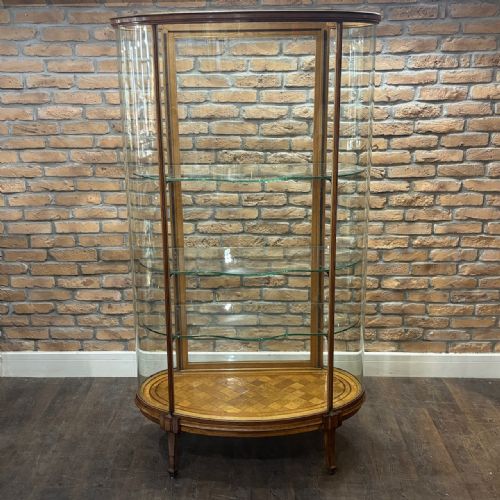
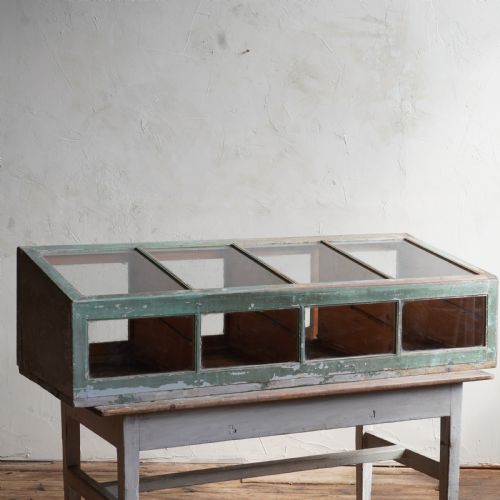
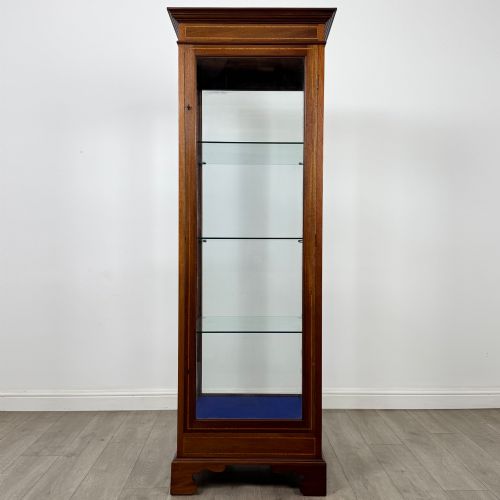
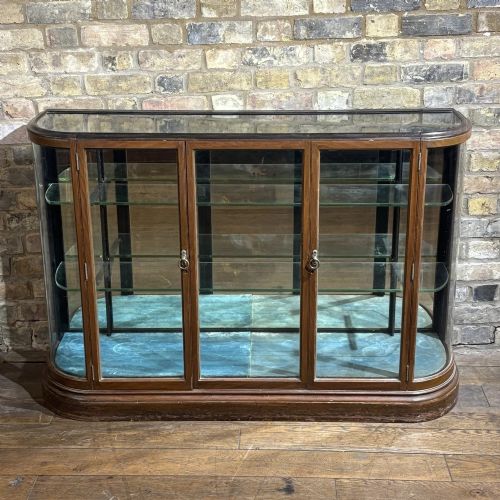
A shop counter vitrine is designed to sit upon retail timber bases or stand directly on floors, housing small goods safely behind glazed panels. The pieces on this page span the late nineteenth century through the nineteen-thirties, taking the form of tabletops, bow ends, pentagonal counters, and tall freestanding cases.
Edwardian and nineteen-twenties commercial examples dominate the selection, often constructed by notable shopfitters for confectioners, apothecaries, and general merchants. You encounter both compact countertop boxes and substantial mahogany or oak units built to command a room.
Makers such as F. Sage and Co. and E. Pollard and Co. Ltd stamped their identity into pieces that moved from high street stores into private interiors. The styles range from plain utilitarian frames to French museum cases in oak and ebonised wood with mirror backs.
Gradations in build and finish
The distinction between standard commercial joinery and finer shopfitting lies in the proportion of the timber framing and the clarity of the glass. Superior cabinets employ bent glass for bow ends and intricate brass fittings that operate smoothly after decades of commercial use.
Original maker plaques and specialised retail sign-writing elevate an ordinary display case into a documented piece of commercial history. The survival of internal velvet linings, original mirror backs, and working locks determines the integrity of the piece.
Some counter cabinets bear the ghost of Fry's Chocolate and Terry's of York, having once tempted sweet-toothed Victorian buyers.
F. Sage & Co.·John Stow Ltd of Bradford·E. Pollard & Co. Ltd.·Quincy Showcase Works Illinois
The Shop Counter Vitrine Glossary
- Bow end
- A curved glass front designed to give unobstructed views from multiple angles along a counter.
- Ebonised wood
- Timber treated with a dark stain or finish to imitate ebony, common in late nineteenth-century cabinetmaking.
- Countertop
- A smaller display format built to rest upon an existing shop counter rather than standing on the floor.
- Museum case
- A heavier glazed housing traditionally used for delicate artefacts, constructed with tighter seals against dust.
Shop Counter Vitrine: Frequently Asked Questions
What fits inside a countertop vitrine?
These cabinets suit collections of small curiosities, pocket watches, ceramics, or botanical specimens that benefit from dust-free enclosure.
Because the depth is often restricted by original retail counter dimensions, bulky objects give way to linear arrangements of smaller items.
How do I access the interior?
Most units feature hinged or sliding glazed doors positioned at the back where the shop assistant once stood.
Original brass hardware and working locks remain common, though keys can sometimes require professional replacement.
Where should I place a freestanding case?
Tall freestanding versions require stable floor space and benefit from positioning near natural light sources to illuminate the internal shelves.
Their substantial mahogany or oak frames anchor a room, functioning well in hallways, living spaces, or dining areas.
How do I identify the period?
Look to the combination of timber choice, brass fittings, and structural proportions to separate Victorian examples from nineteen-twenties pieces.
Maker plaques, where present, provide the most reliable indicator of a specific decade and workshop origin.