

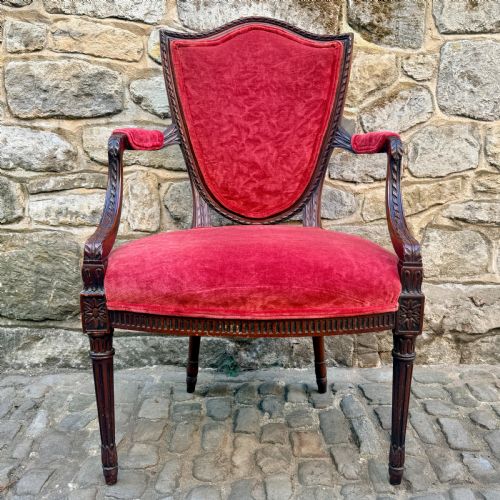
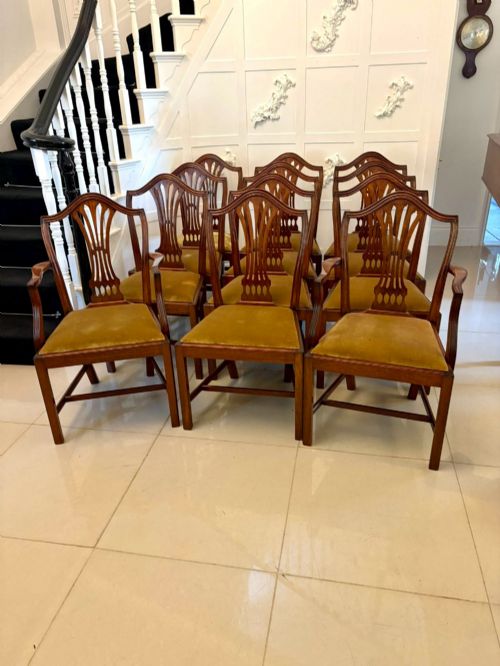
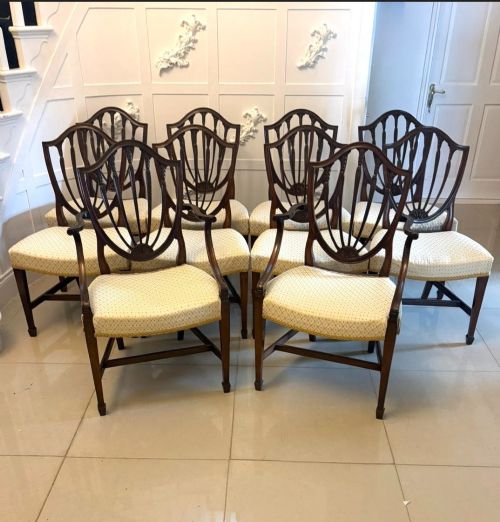
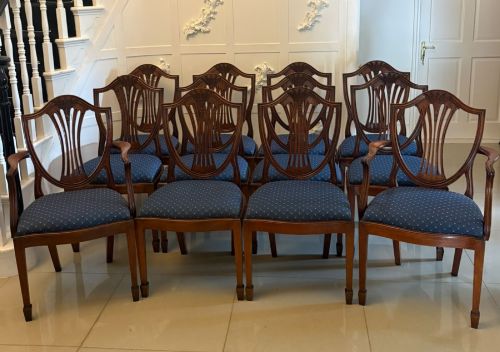
Shield Back Style Chairs
Shield back style chairs are classic seating options defined by their carved, curved frames, prized by collectors for bringing formal elegance to dining spaces.
Shield Back Style Chairs
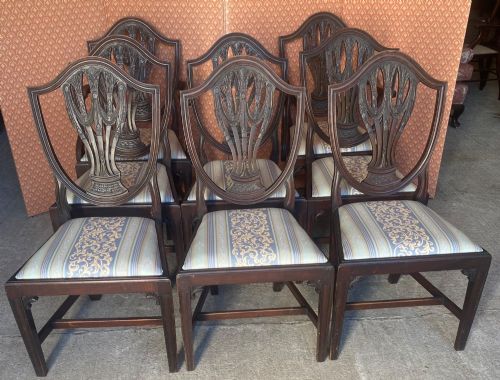
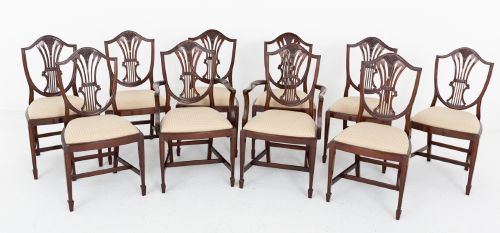
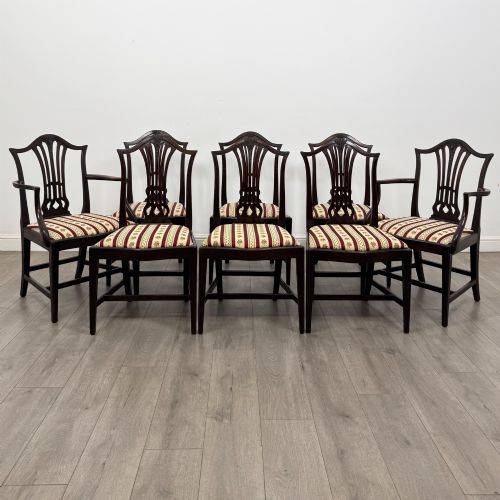
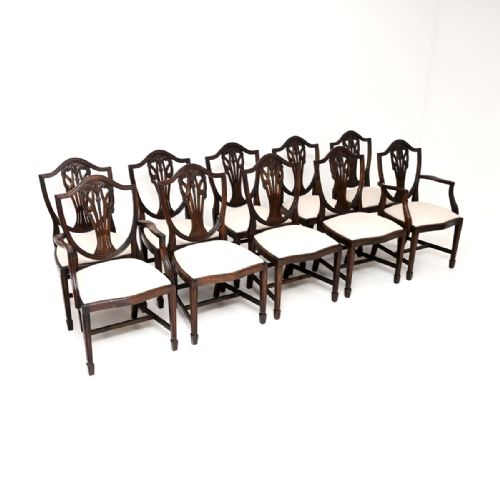
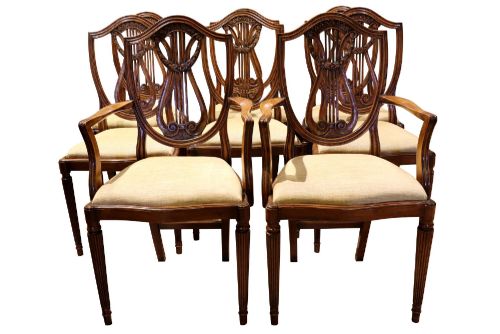
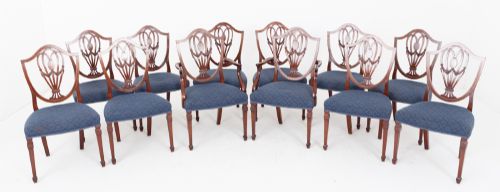
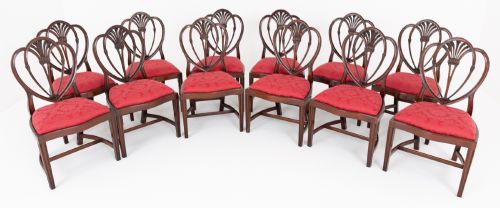
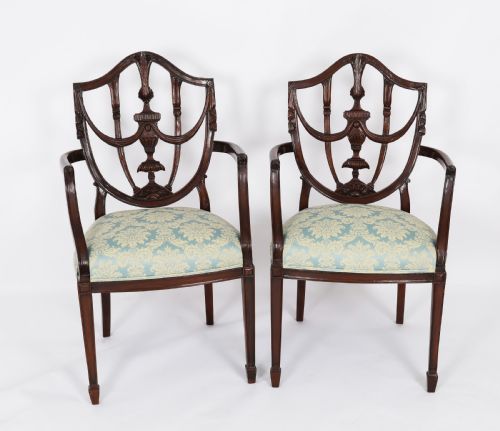
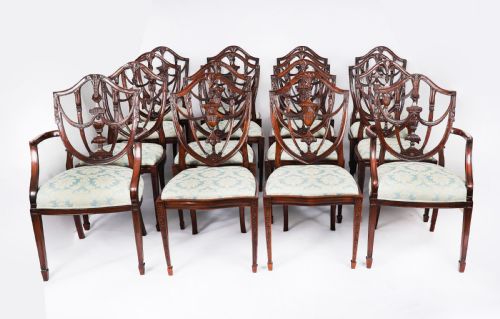
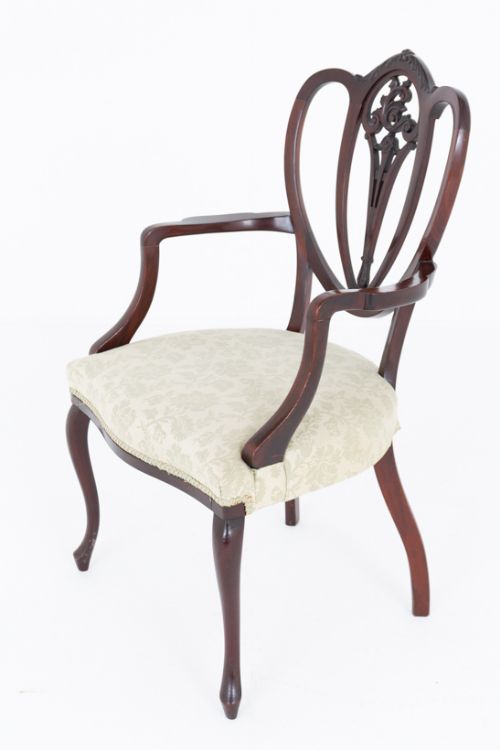
When you search for shield back style chairs, you are looking at formal seating featuring an enclosed, shield-shaped wooden framework supporting the upper back. The forms on this page span single side chairs, carvers with arms, and larger matched sets suited for dining rooms.
The version you are most likely to meet here is the mahogany dining chair produced during later revival periods, alongside original Georgian examples and Edwardian interpretations. These pieces frequently appear in larger assembled groups rather than isolated singles.
Makers drew heavily on traditional eighteenth-century proportions, adapting them for nineteenth-century Victorian households and twentieth-century Edwardian dining rooms. The silhouette remains distinct through its carved splat design, tapering legs, and upholstered drop-in seats.
How they were made
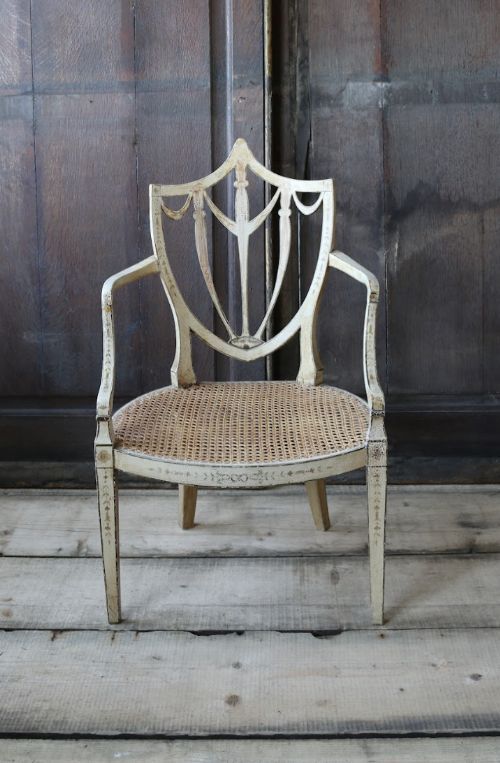
Makers relied primarily on solid mahogany for the structural frames, carving the intricate pierced splats and crest rails by hand. Selected pieces incorporate contrasting inlay or painted decoration on the wooden surfaces.
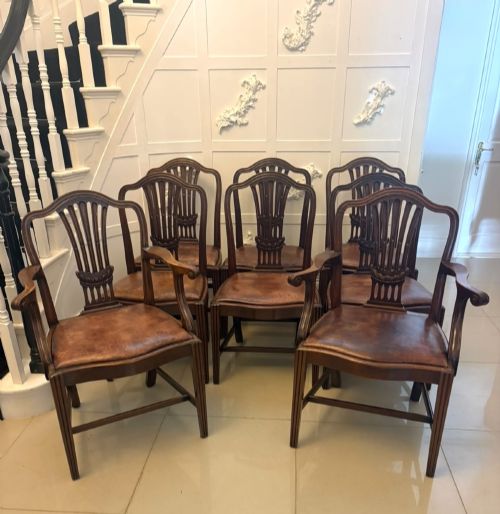
Seats were constructed using traditional upholstery methods, covered in various textiles including leather, velvet, and woven fabrics. Brass tacks frequently secure the edges of the upholstered pads to the wooden seat rails.
Shield Back Style Chairs Retail Price Guide 2026
Typical asking prices for shield back style chairs among the pieces listed under this phrase on Sellingantiques today, from the lower quarter to the upper quarter. They describe what is for sale here now, not the wider market.
Some sets survived intact through centuries of family meals, still waiting for their next host.
What varies in quality
The definition and depth of the hand carving on the shield back frame separate standard production from superior work. Crisp edges on the pierced splat and smooth curves on the crest rail indicate careful workshop execution.
The scale and consistency of a matched set heavily influence desirability, particularly when dining chairs retain their original carvers. The selection of timber grain on the front legs and overall structural rigidity further divide the range.
Maple and Co·Gillows
The Shield Back Style Chairs Glossary
- Shield back
- A chair back shaped like a heraldic shield, typically featuring a curved top rail tapering down to a narrow base. This profile defines the primary aesthetic of the style.
- Carver
- An armchair designed with open armrests, traditionally placed at the heads of a dining table. These matching seats accompany side chairs in larger sets.
- Splat
- The vertical wooden member down the middle of a chair back, often pierced and carved into intricate patterns. In these pieces, the splat connects the crest rail to the seat.
- Revival
- A later period of design that reinterprets historical styles from earlier centuries. Many pieces on this page date from nineteenth and twentieth-century revival movements.
- Drop-in seat
- A removable upholstered wooden frame that fits into the seat rails of a chair. This construction method allows for straightforward re-covering.
Shield Back Style Chairs: Frequently Asked Questions
How do I spot a revival chair?
Revival chairs usually exhibit machine-finished timber work, standardised turnings, and secondary woods typical of the nineteenth and twentieth centuries.
Examining the construction methods underneath the drop-in seat helps clarify whether the piece originates from the Georgian period or a later revival.
Are carvers different from side chairs?
Carvers are fitted with armrests on either side, making them broader than standard side chairs. They were traditionally positioned at the head and foot of a dining table.
In many sets, the carvers share the exact shield back design and leg styling as the armless dining chairs.
What wood was used?
Mahogany is the predominant timber found across these listings, valued for its strength and rich grain. Selected pieces also incorporate maple or painted satinwood.
The choice of dense hardwoods allowed makers to carve delicate openwork splats without weakening the structural frame.
How do I care for leather seats?
Leather upholstery requires gentle cleaning with appropriate conditioning products to maintain suppleness and prevent the material from drying out. Avoid placing the chairs in direct sunlight to protect the finish.
Original leather should be handled with particular care to preserve its historic patina.