


Sheraton Style Shelving
Sheraton style shelving brings refined neoclassical lines to any room, offering versatile storage for books and display.
Sheraton Style Shelving
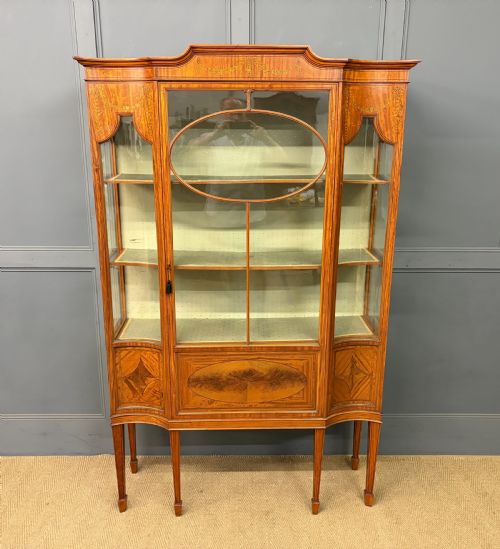
Sheraton style shelving encompasses open bookcases, display cabinets, wall shelves, and corner units originating from periods spanning the late 18th century through to the 1930s. Buyers encountering these pieces will frequently find them belonging to the Sheraton Revival and Edwardian eras, alongside George III, Georgian Revival, and Aesthetic Movement examples.
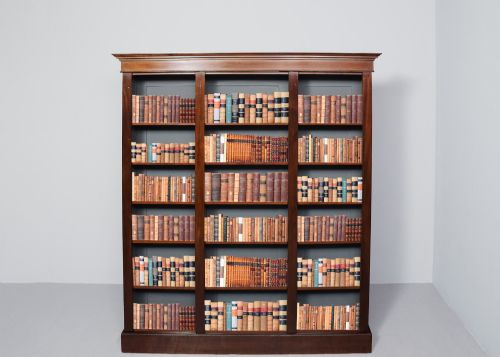
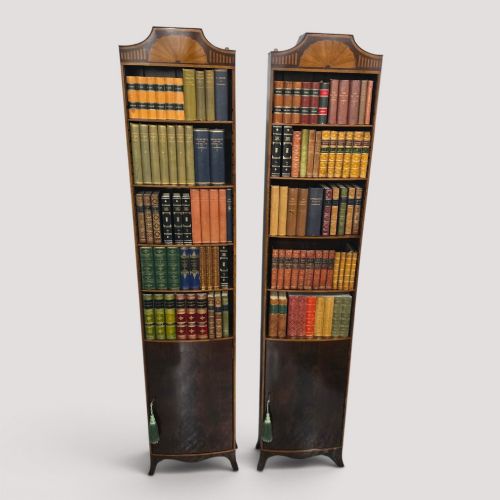
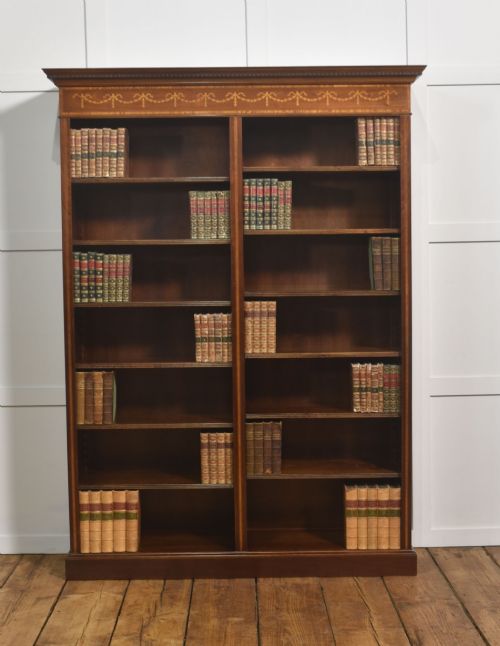
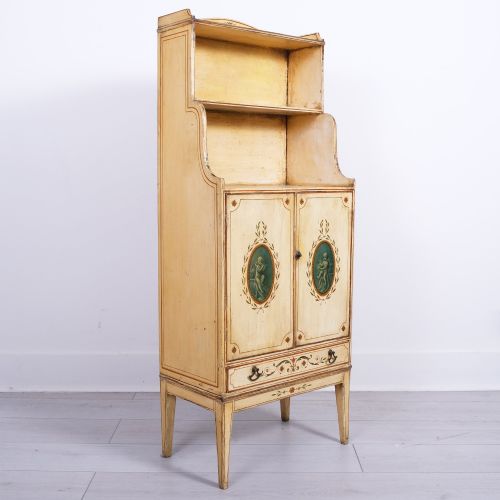
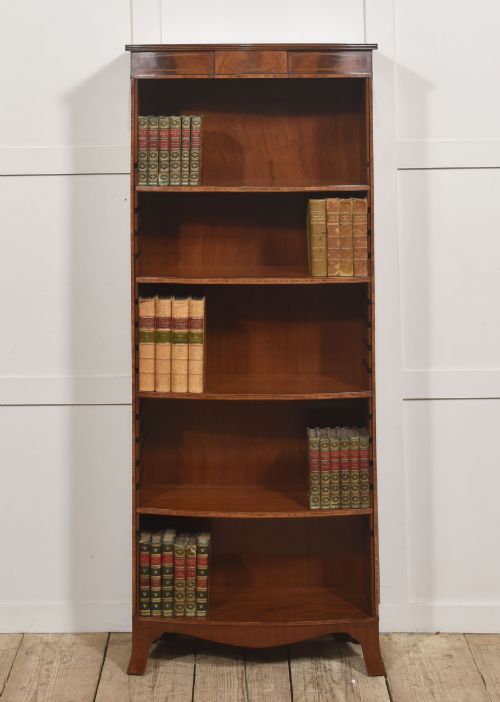
The forms vary from slim open adjustable bookcases and bow fronted library shelves to hanging shelves and breakfront waterfall bookcases. Satinwood and mahogany form the primary timber foundations of these pieces, often enhanced with distinctive inlay work.
Origins stretch across the 18th, 19th, and early 20th centuries, capturing both original Georgian craftsmanship and later revival interpretations. These shelving units serve practical book storage and decorative display functions within domestic interiors.
Materials and construction
Makers utilised solid timber foundations of mahogany and satinwood, frequently enriched with boxwood and satinwood inlay to create delicate contrasting borders and friezes. Crossbanding techniques add geometric precision to shelf edges and breakfront surfaces.
Even hanging shelves demand respect; nothing ruins a study wall faster than a sudden cascade of heavy leather-bound classics.
Judging quality
Quality reveals itself in the crispness of the inlay work and the selection of the timber grain, where finely figured satinwood and rich mahogany distinguish superior pieces from plain timber construction. The precision of crossbanding and the subtlety of painted decoration elevate the visual merit.
Proportion and structural harmony separate standard production from exceptional examples, particularly in bow fronted and breakfront configurations. Maker attribution, such as work by Maple & Co., adds documented provenance that influences standing.
Maple & Co.
The Sheraton Style Shelving Glossary
- Satinwood
- A light-coloured tropical timber prized for its lustrous sheen and smooth texture, frequently utilised for fine inlay and veneering in neoclassical furniture.
- Crossbanding
- A strip of veneer laid perpendicularly to the grain of the surrounding wood along the edge of a shelf or panel, creating a neat decorative border.
- Frieze
- The flat decorative band running horizontally beneath the upper cornice or top edge of a bookcase or cabinet, often detailed with marquetry or inlay.
- Waterfall bookcase
- A tiered shelving unit where each successive shelf steps back from the one below it, creating a descending profile reminiscent of falling water.
Sheraton Style Shelving: Frequently Asked Questions
What defines Sheraton style shelving?
Sheraton style shelving draws inspiration from the neoclassical designs of the late 18th century, favouring straight tapered legs, balanced proportions, and restrained decorative elements. These pieces often feature contrasting wood inlays and light timber veneers.
Revival pieces produced during the Edwardian era adopt these same design principles while accommodating the storage needs of later homes.
How do I identify a revival piece?
Revival pieces from the 1900s or 1910s typically display machine-sawn timber uniformity and modern construction joints hidden beneath classic neoclassical styling. The use of satinwood and mahogany in these later items mimics original 18th-century production.
Examining the backboards, fixings, and secondary woods helps determine whether a piece originates from the Georgian period or a subsequent revival era.
Where were wall shelves placed?
Hanging shelves and wall-mounted bookcases were designed to utilise vertical wall space in smaller rooms or libraries where floor standing units would not fit. They provided accessible storage for frequently read volumes or decorative ceramics.
Their lightweight construction allowed secure attachment to plaster walls using integrated hanging brackets.
Are the shelves adjustable?
Many open bookcases feature adjustable shelf mechanisms, allowing the internal spaces to accommodate books of varying heights. This practical adaptation appears across both 19th-century and Edwardian examples.
Fixed shelves remain common in smaller display cabinets and specialised waterfall bookcases where structural tiers dictate the layout.