

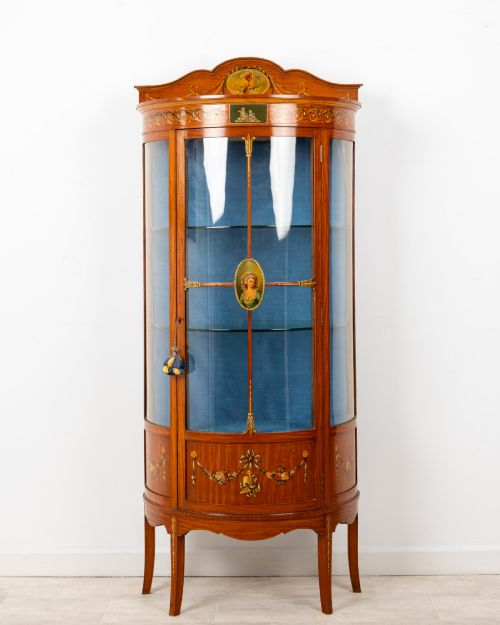


Sheraton Style Painted Cabinet
These sheraton style painted cabinet pieces bring classical grace and hand-painted artistry into a room.
Sheraton Style Painted Cabinet
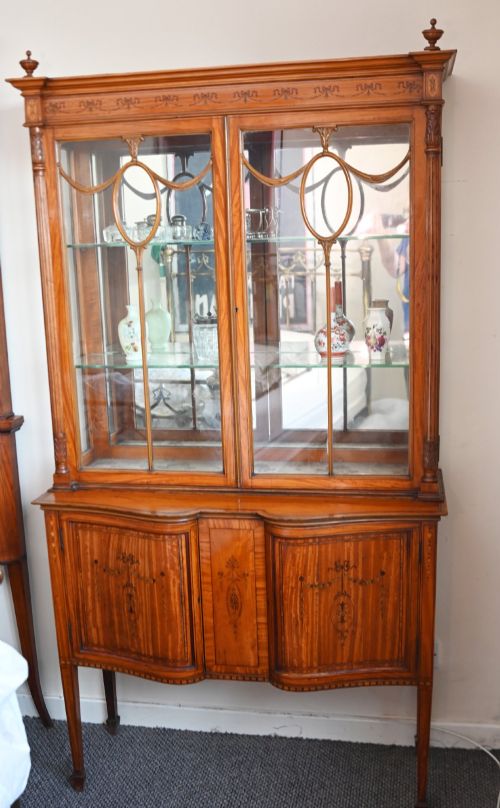
A sheraton style painted cabinet combines light timber foundations with delicate painted decoration, drawing on eighteenth-century design principles. Surviving examples span from the eighteenth century through the Edwardian era and into the early twentieth century.
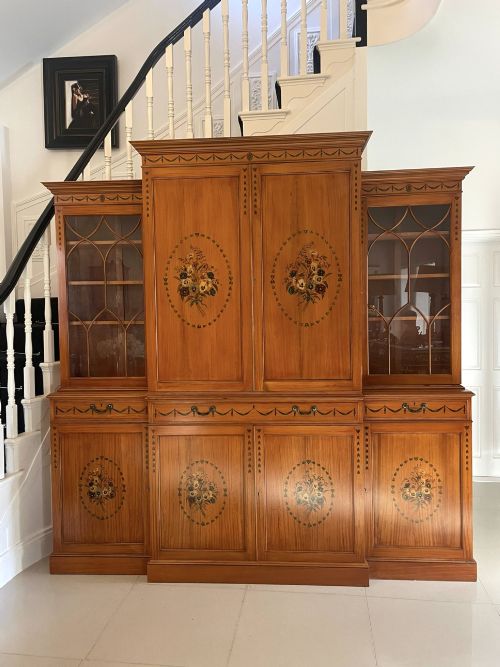
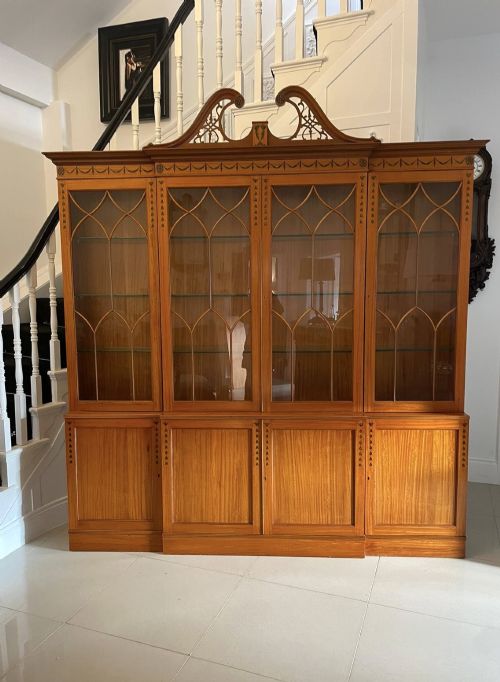
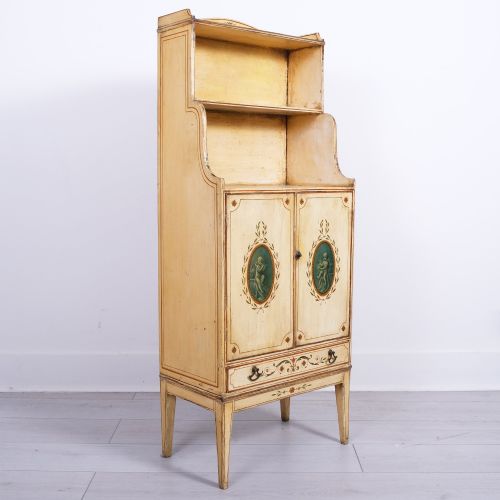
The form appears in several distinct configurations on this page, including display cabinets, breakfront bookcases, demi-lune commodes, and bedside cabinets. Many pieces exhibit revival movements such as Sheraton Revival, Edwardian Neoclassical, and Adam Revival.
Buyers seeking this aesthetic find surfaces adorned with classical panels, floral motifs, and inlaid details. The underlying construction utilises timber such as satinwood and mahogany, often paired with glass doors and brass mounts.
How they were made
Cabinetmakers utilised satinwood and mahogany as the primary timbers, building sturdy carcases for side cabinets, bookcases, and commodes. Timber selection dictated the base tone, upon which artisans applied hand-painted detailing.
Decoration relied on fine brushwork for classical panels and floral garlands, complemented by inlaid veneers and brass hardware. Glass panels were fitted into astral-glazed doors for display cabinets and vitrines.
Forms include breakfront bookcases, demi-lune commodes, bedside cabinets, and wall-hanging display cases.
What varies in quality
The refinement of the hand-painted decoration separates standard production from superior examples, with finer brushwork showing distinct control and depth. Original painted surfaces hold greater significance than later embellishments.
Timber choice and grain selection contribute to the visual weight of the piece, particularly where satinwood veneers are matched across serpentine or demi-lune fronts. The crispness of inlay and the retention of original brass fittings further distinguish the range.
Edwards & Roberts
The Sheraton Style Painted Cabinet Glossary
- Satinwood
- A lustrous tropical timber with a golden sheen, frequently used as a veneer on refined cabinet work. It provides a pale canvas suited for painted classical decoration.
- Demi-lune
- A half-moon shape in plan, commonly found on commodes and side cabinets designed to sit flat against a wall. This profile allowed makers to display curved painted panels.
- Breakfront
- A piece of furniture where the central section projects forward from the flanking wings. This architectural arrangement appears on larger bookcases and display cabinets.
- Astral glazing
- A network of slender wooden bars dividing the glass panes of a cabinet door into geometric patterns. It lightens the visual mass of large bookcases and vitrines.
Sheraton Style Painted Cabinet: Frequently Asked Questions
What rooms suit a painted cabinet?
These cabinets suit drawing rooms, studies, and bedrooms where their light satinwood surfaces and painted details can be appreciated up close. They function well as focal points or display spaces for cherished objects.
Because many examples feature glass doors or open shelving, they protect contents while adding architectural interest to the wall space they occupy.
How do I care for satinwood?
Satinwood benefits from placement away from direct sunlight and sudden temperature changes, which can dry out timber and affect painted surfaces. Regular dusting with a soft, dry cloth preserves the finish.
Avoid liquid polishes and chemical cleaners, relying instead on gentle maintenance to protect the original painted decoration and delicate veneers.
Are these pieces Edwardian or Georgian?
The pieces span multiple periods, originating from the late eighteenth-century George III era through the nineteenth century and into the Edwardian period. Revival movements in the late nineteenth and early twentieth centuries frequently recreated earlier designs.
Examining the construction methods, timber characteristics, and style markers helps determine whether a specific piece is an original eighteenth-century work or a later revival.
How were demi-lune commodes used?
Demi-lune commodes served as decorative storage items in formal reception rooms and hallways. Their curved shape softened room layouts while offering surface space for lamps or decorative objects.
Cupboard space within these cabinets held linens or papers, combining practical containment with elaborate painted facades.