





18th Century Painted Bookcase
An 18th century painted bookcase brings architectural presence and rich surface colour into a room, offering both display and storage for a serious collector.

18th Century Painted Bookcase
When you search for an 18th century painted bookcase, you enter a field defined by substantial timber cabinetry finished in historic paint, lacquer, or gilt decoration. These pieces serve as functional libraries and display furniture, combining upper shelving or glazed cabinets with lower cupboards or slant-front desks.
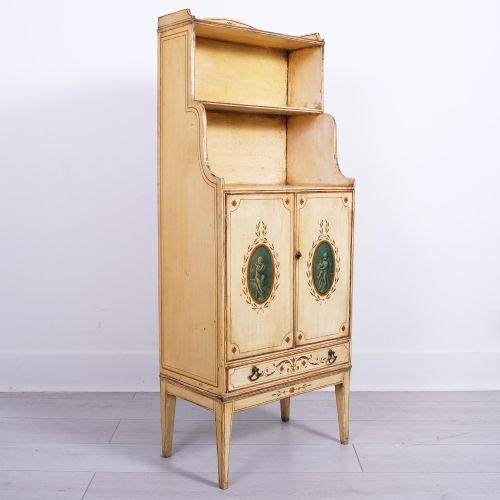
The versions you are most likely to meet on this page hail from English and Dutch workshops spanning the Georgian and Queen Anne periods. Forms range from towering breakfronts and bureau bookcases to corner cupboards, waterfall shelves, and bombé display cabinets.
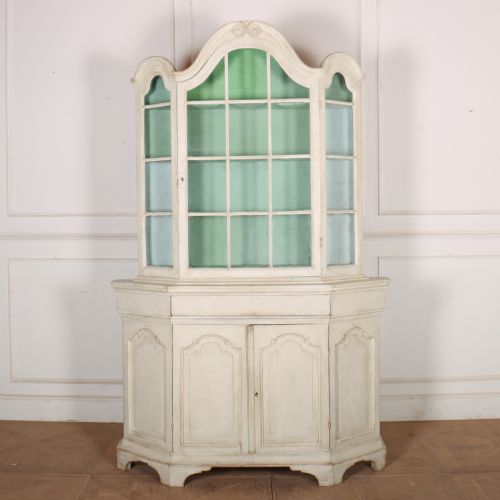
Regional variations strongly influence the character of these items, with Dutch makers favouring curvaceous vitrines and baroque profiles while English craftsmen lean towards rectilinear Georgian proportions and breakfront formats.
Construction and materials
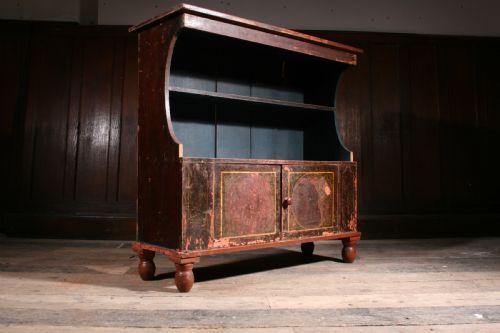
Makers constructed these carcasses primarily from pine and structural timber, applying layered oil paint or lacquer directly to the wood surface. Glass panels were integrated into upper doors to protect treasured volumes and porcelain.
Metalwork played a functional and decorative role, with brass hinges, escutcheons, and handles fitted to doors and drawers. Gilt highlights often accented carved mouldings on high-status Dutch and English pieces.
18th Century Painted Bookcase Retail Price Guide 2026
Typical asking prices for 18th century painted bookcase among the pieces listed under this phrase on Sellingantiques today, from the lower quarter to the upper quarter. They describe what is for sale here now, not the wider market.
Listings feature pine and general timber carcasses finished in paint, lacquer, and gilt, spanning Georgian, Queen Anne, and Dutch Baroque styles.
Evaluating quality and finish
The distinction between ordinary and exceptional examples rests in the survival of the original decorative surface. Pieces retaining their primary paint or lacquer layer without heavy later repainting command greater appreciation from purists.
Proportion and joinery integrity dictate the architectural success of the piece, where crisp carved details, well-balanced door panels, and robust internal shelving separate fine cabinet work from simpler vernacular output.
The 18th Century Painted Bookcase Glossary
- Bureau bookcase
- A combination form featuring a sloping desk flap above lower drawers, surmounted by a glazed or panelled upper bookcase. This dual-purpose furniture became popular in elite domestic interiors.
- Breakfront
- A large cabinet design where the central section projects forward from the flanking wings. This configuration adds visual depth and architectural weight to the piece.
- Vitrine
- A glass-fronted display cabinet designed specifically for showing porcelain and curiosities. These pieces often feature delicate glazing bars framing the glass panes.
- Bombe
- A swelling, convex furniture contour characteristic of Dutch baroque design. This curving profile requires advanced woodworking skill to achieve successfully.
- Waterfall bookcase
- A set of graduated open shelves where each tier steps back from the one below. It provides a lighter alternative to enclosed cabinet furniture.
18th Century Painted Bookcase: Frequently Asked Questions
How do I spot original paint?
Examine the surface under natural light for craquelure, wear patterns, and pigment depth that match the age of the timber substrate. Later overpainting often feels flat and uniform compared to historic layered finishes.
Look closely at protected recesses and edges where original colour persists beneath decades of cleaning and handling. Professional conservation reports can also confirm the age of the underlying pigment layers.
Where should I place a large bookcase?
Position these substantial pieces against a sturdy interior wall away from direct sunlight and radiators. The dry heat of modern heating systems can cause historic timber to warp and painted surfaces to crack.
Ensure the room has stable humidity levels to protect both the structural pine framing and the delicate glass or brass hardware. Generous ceiling height is essential given the towering proportions of breakfronts and vitrines.
How do English and Dutch styles differ?
English examples from the Georgian period typically exhibit restrained architectural lines, classical cornices, and rectilinear proportions. They rely on mahogany or painted pine carcasses with balanced, formal arrangements.
Dutch makers embraced more exuberant forms, including bombé curves, ornate Rococo carving, and elaborate vitrine framing. Their painted finishes often incorporate rich lacquer effects and gilded accents.
Can these hold heavy modern books?
Most antique shelving is designed for lighter historical volumes and decorative objects rather than dense modern compendiums. Check the depth and support of each shelf before loading heavy collections.
Many period bookcases feature adjustable wooden ratchets or fixed ledges that suit display better than heavy duty storage. Distribute weight evenly to protect the historic timber framing from sagging over time.