






Sheraton Style Box
Sheraton style box pieces are refined containers and small tables defined by neoclassical geometry, graceful timber framing, and meticulous marquetry.
Sheraton Style Box
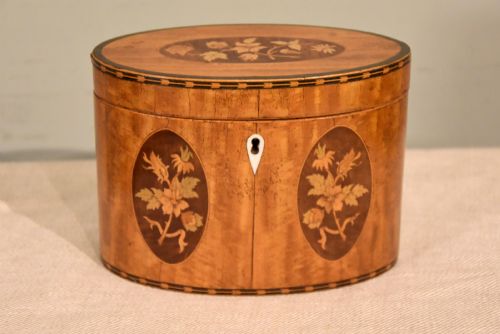
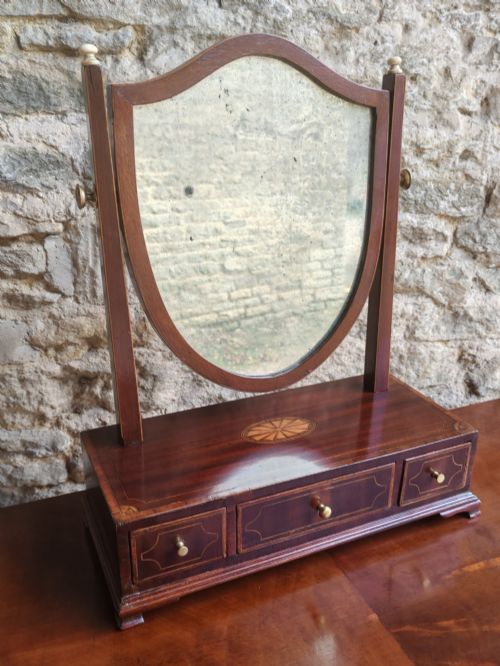
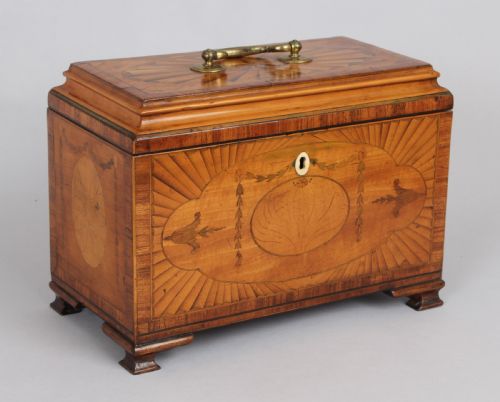
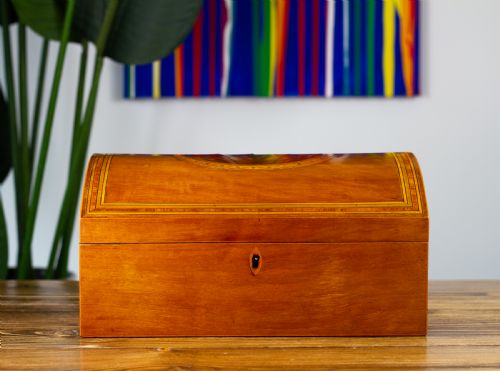
When you search for a sheraton style box, you encounter an array of Georgian originals and later revival pieces designed to hold tea, cosmetics, or sewing implements. These objects span tea caddies, dressing mirrors, work tables, and small cabinets produced across the eighteenth, nineteenth, and early twentieth centuries.
The pieces on this page are most commonly satinwood or mahogany containers, alongside occasional tables and workboxes featuring delicate inlaid motifs. Forms range from oval and octagonal tea caddies to shield-shaped toilet mirrors and kidney-shaped bijouterie tables.
Origins stretch from the late eighteenth century Georgian era through Victorian interpretations and Edwardian revivals. Each iteration applies the light, proportioned elegance associated with the original cabinetmaking tradition.
Materials and Construction
Makers utilised fine cabinet timbers, predominantly satinwood and mahogany, often accented with contrasting veneers of harewood, rosewood, and partridge wood. These primary woods provide a smooth, dense canvas for decorative enrichment.
Surface ornamentation relies on precision inlay and marquetry, incorporating boxwood, ebony, bone, and shell motifs into geometrical panels. Brass hardware, from escutcheons to carrying handles, finishes the construction of caddies and small tables.
Sheraton Style Box Retail Price Guide 2026
Typical asking prices for sheraton style box among the pieces listed under this phrase on Sellingantiques today, from the lower quarter to the upper quarter. They describe what is for sale here now, not the wider market.
Partridge wood appears in the selection, offering a speckled, feathered grain pattern that mimics the plumage of its namesake bird.
Standards of Execution
Quality rests in the crispness of the inlay and the selection of figured timber veneers. Superior examples display tight, seamless joints where contrasting stringing and shell medallions meet the primary wood.
Proportion and structural restraint govern the finer pieces, separating restrained neoclassical design from heavier revival interpretations. The finesse of the internal fittings, such as original foil linings in tea caddies or fitted compartments in workboxes, further distinguishes finer work.
The Sheraton Style Box Glossary
- Marquetry
- Decorative veneer work forming pictures or geometrical patterns by assembling small pieces of wood, shell, or bone. This technique defines the surface ornamentation of many finer caddies and tables.
- Satinwood
- A durable tropical timber with a lustrous, golden-yellow sheen frequently utilised in eighteenth-century and revival cabinetmaking. It serves as the primary ground for painted or inlaid decoration.
- Caddy
- A small container originally designed for storing tea leaves securely under lock and key. Georgian examples often feature internal lidded compartments.
- Cheveret
- A small freestanding writing table fitted with a small bookshelf or compartment tier above a drawer. They appear in late eighteenth-century satinwood forms.
- Stringing
- Thin inlay lines of contrasting wood used to outline panels, drawers, and borders. This linear detail frames the structural geometry of the pieces.
Sheraton Style Box: Frequently Asked Questions
What is a sheraton style box?
A sheraton style box is a container or small occasional table influenced by the neoclassical designs of the late eighteenth century, characterised by geometric forms and light wood veneers.
These pieces encompass tea caddies, workboxes, and dressing mirrors produced during the Georgian period and subsequent Victorian and Edwardian revivals.
How do I date a satinwood box?
Dating relies on timber selection, construction methods, and the style of inlay. Eighteenth-century pieces typically show hand-cut dovetails and subtle marquetry.
Later Victorian and Edwardian revival pieces often utilise machine-sawn elements alongside standard decorative motifs inspired by earlier Georgian cabinetmakers.
Were tea caddies meant to be locked?
Tea was an expensive commodity in the Georgian period, making security essential for domestic hosts. Most period caddies incorporated functional brass locks and matching keys to protect the contents.
Servants typically kept the tea under lock, presenting the caddy to the master or mistress when hospitality required it.
What is a bijouterie table?
A bijouterie table is a glazed display case designed to hold small decorative objects, medals, or jewellery. They gained popularity during the Victorian and Edwardian eras.
These tables combine the structural lightness of earlier Sheraton forms with the display requirements of later collectors.