
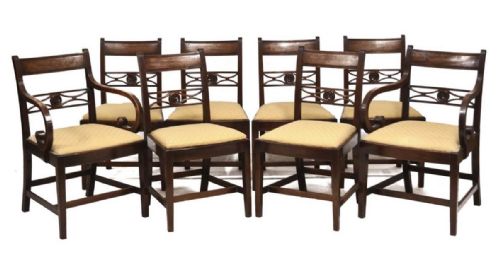
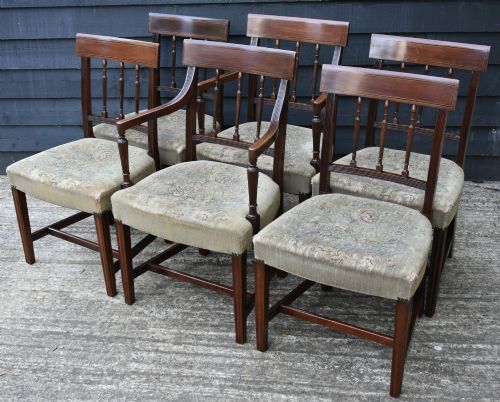
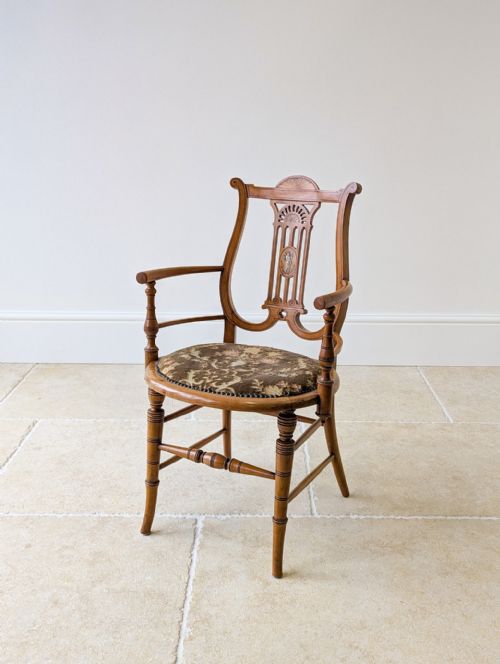
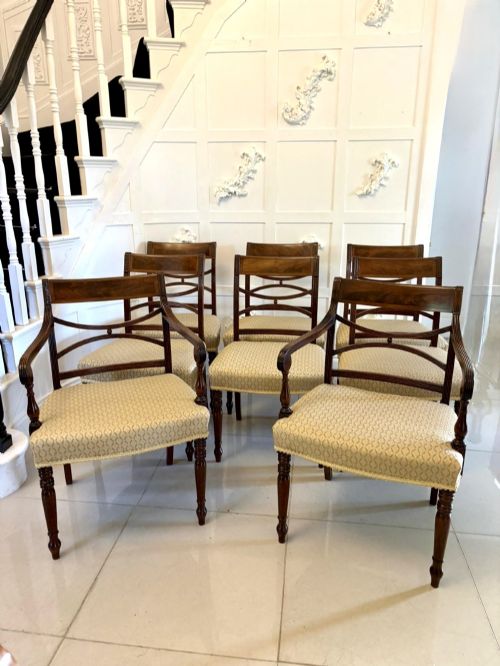

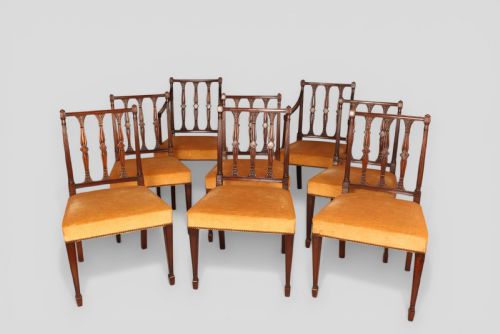


Sheraton Style Armchair
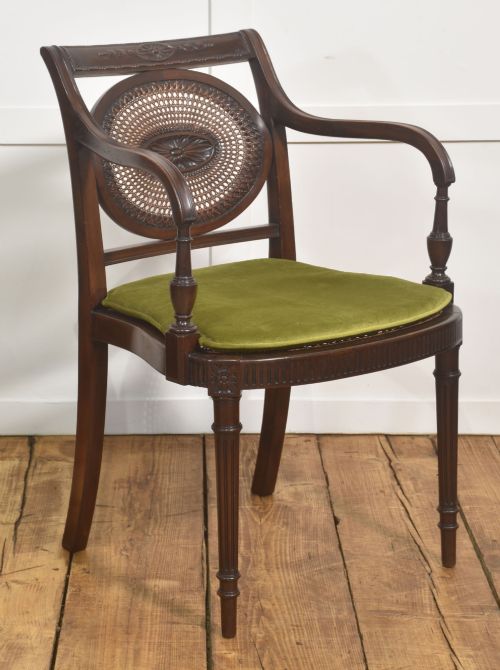
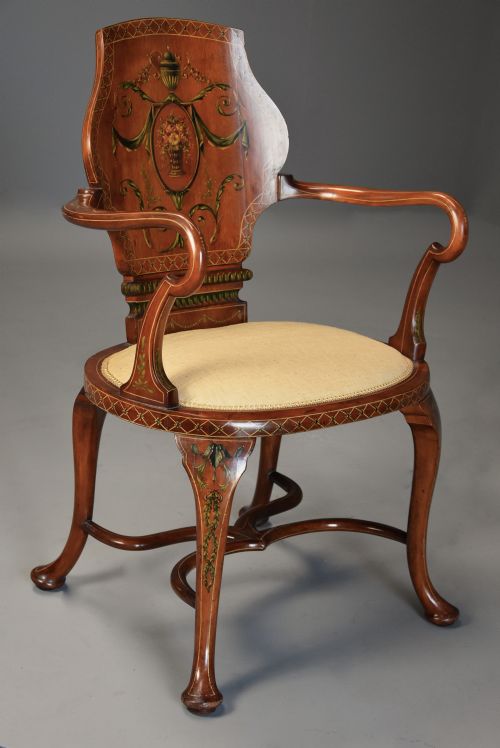
These sheraton style armchair examples bring light mahogany frames, satinwood panels and painted details into domestic rooms.
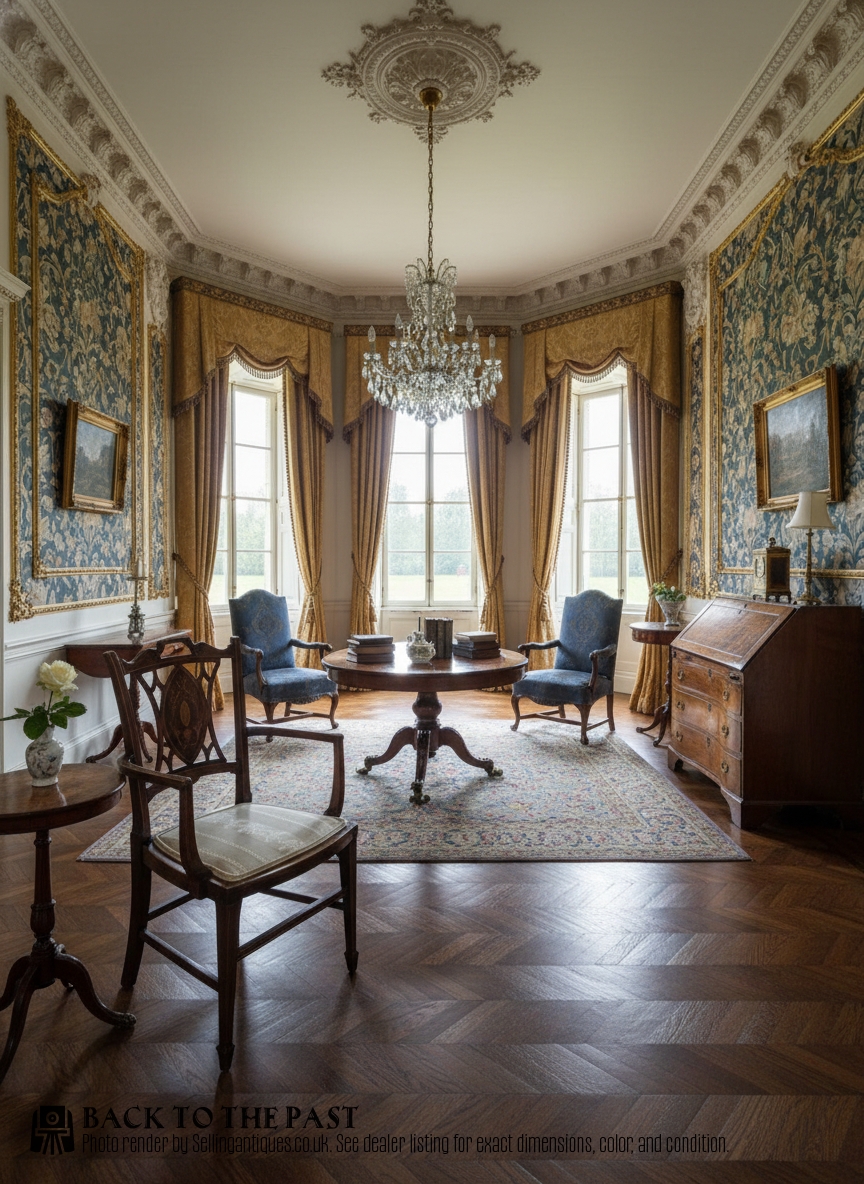
What a sheraton style armchair is
When you search for a sheraton style armchair, you encounter seating that reflects the refined neoclassical taste of the late eighteenth and early nineteenth centuries. The listings show forms ranging from compact elbow seats and morning room chairs to child's armchairs and bergere models.
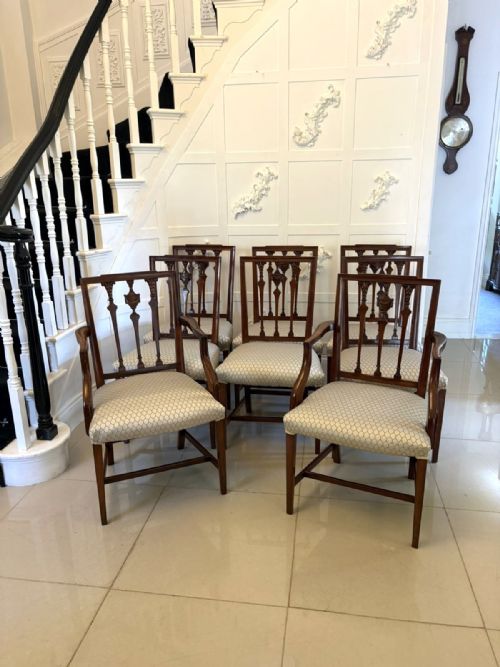
You are most likely to meet Edwardian interpretations and nineteenth-century pieces alongside genuine Georgian examples. These chairs often appear singly or as pairs, with some surviving as part of larger dining sets that include open armchairs.
How they were made
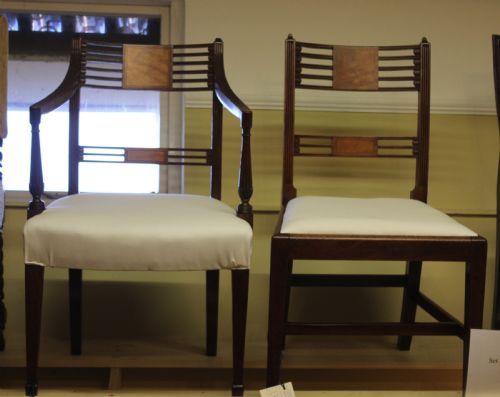
Cabinetmakers constructed these frames primarily in mahogany, cherry and fruitwood, adding boxwood stringing and delicate wood inlay to accentuate the clean lines. Satinwood panels provide contrasting light colour to the timber surfaces.
Many examples feature painted decoration, incorporating floral motifs and musical themes directly onto the wood. Upholstery finishes the seats, utilising fabric and tapestry fabric to provide comfort.
Retail Price Guide 2026
Typical UK retail prices for sheraton style armchair, calculated from the Sellingantiques database of over a million retail prices indexed since 2003. This retail price guide relies exclusively on Sellingantiques data; no external sources or auction records are used, so the figures do not describe the wider market.
Listings demonstrate that mahogany and satinwood remain the dominant timbers, frequently enhanced by painted floral motifs and boxwood inlay.
What varies in quality
The distinction between standard examples and superior pieces rests upon the precision of the inlay and the subtlety of the painted decoration. Fine stringing and crisp floral painting elevate a simple frame into a decorative focal point.
Material selection also dictates distinction, with finely figured mahogany and rich satinwood displaying superior grain movement. The retention of original painted surfaces and early upholstery adds considerable character to the piece.
The Sheraton Style Armchair Glossary
- Elbow chair
- An armchair designed with low arms that typically sits at a desk or the end of a dining table. These pieces offer comfortable support without the bulk of a full-sized armchair.
- Inlay
- A technique where contrasting woods or other materials are inserted into recessed portions of the base timber. This creates decorative patterns and geometric borders along the frame.
- Satinwood
- A durable, yellowish wood prized for its reflective sheen and smooth texture. It appears frequently in veneered panels and decorative banding.
- Bergere
- An enclosed upholstered armchair with a wooden frame, often featuring cane panels on the back and sides. This form provides a lighter visual weight than fully upholstered seating.
- Stringing
- Thin lines of contrasting wood inlay used to outline panels and structural edges. It defines the geometry of the furniture.
Frequently Asked Questions
What defines a sheraton style armchair?
These armchairs are defined by straight tapering legs, rectilinear or shield-shaped backs, and neoclassical ornamentation. The aesthetic prioritises elegance and lightness over heavy carved details.
Craftsmen achieved this through delicate proportions, contrasting timber veneers, and painted floral or musical motifs rather than bulky structural elements.
Are these chairs suitable for daily use?
Many of these pieces function well in modern reception rooms, studies, or bedrooms as occasional seating. Their sturdy wood construction allows for regular domestic placement.
Buyers often position them at desks or in corners where their decorative painted surfaces and inlaid wood remain visible.
How do I identify the period of the chair?
Dating relies on examining the timber construction, the crispness of the inlay, and the style of the painted decoration. Georgian originals display specific age patination in the mahogany.
Later Edwardian and nineteenth-century interpretations often incorporate revival details while utilising machine-cut veneers and distinct secondary woods.