

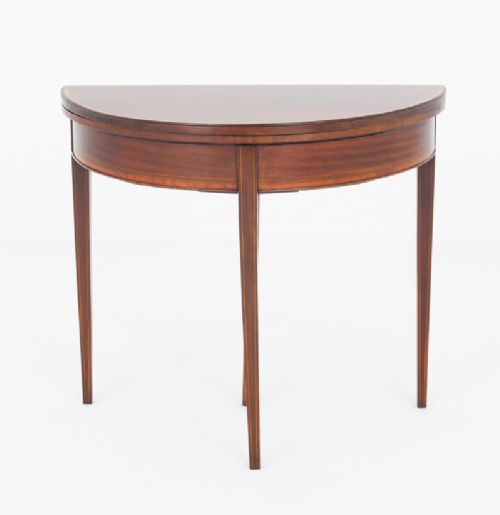


Sheraton Revival Console
When you want a sheraton revival console, you look for the elegance of satinwood and mahogany shaped by late nineteenth and early twentieth century cabinetmakers.
Sheraton Revival Console
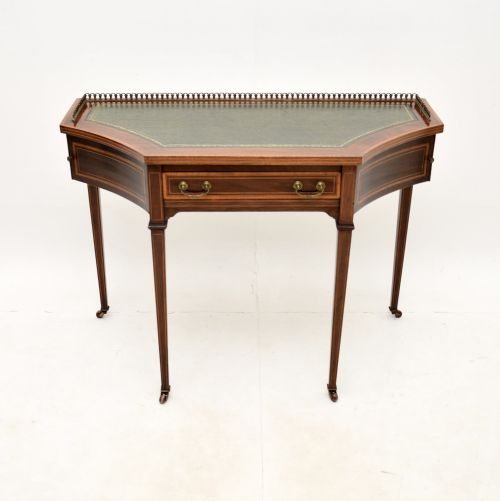
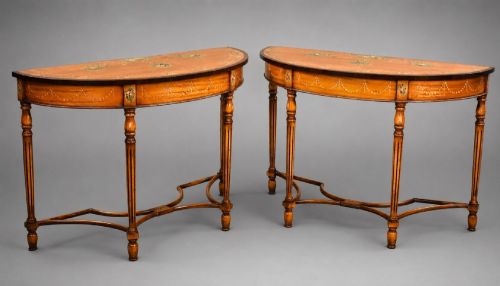
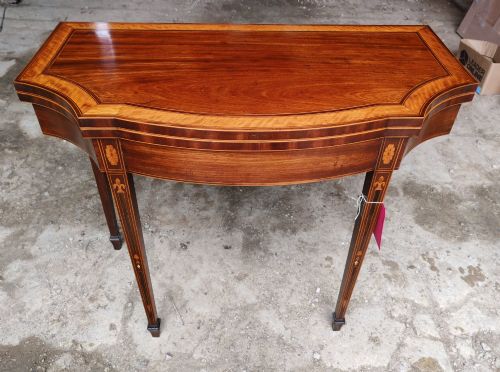
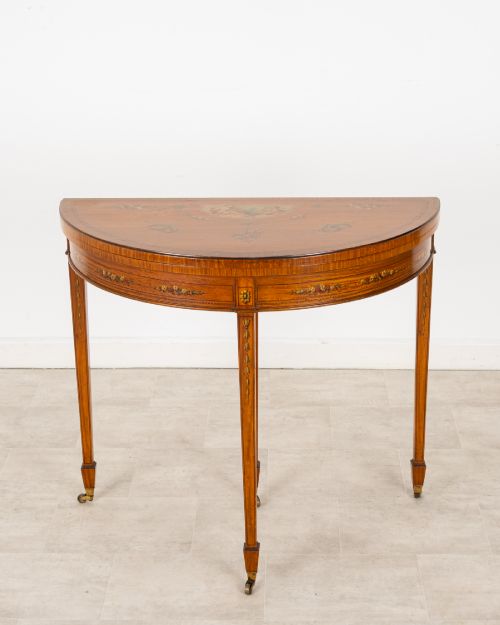
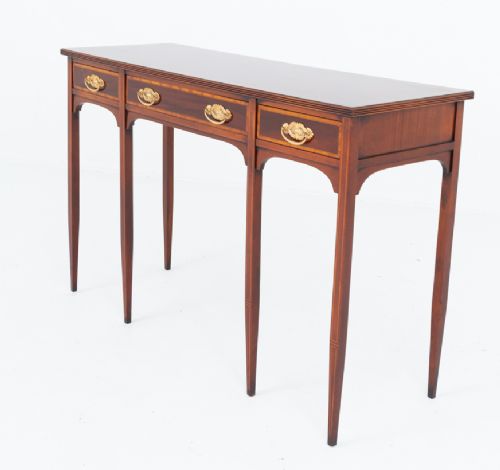
A sheraton revival console brings neoclassical grace to a room through demi-lune shapes, serpentine fronts, and slender tapered legs. These tables and side pieces often echo eighteenth-century proportions while belonging to the Victorian, Edwardian, or later periods.
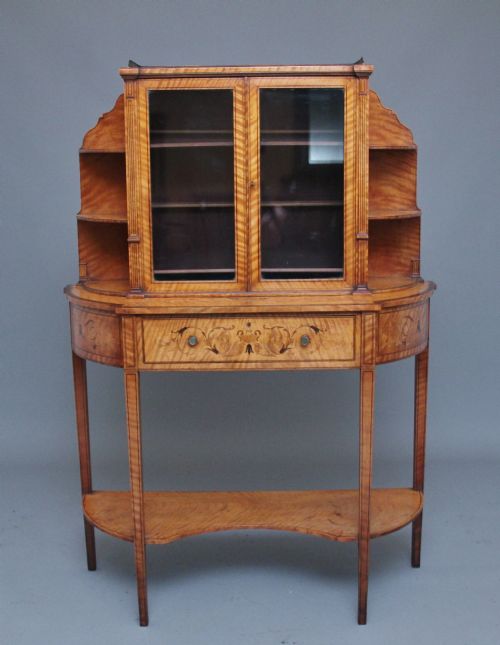
You meet console tables paired with matching card tables, games tables, and cabinets sharing the same decorative vocabulary. The form serves as a focal point in a hallway or drawing room, functioning as a surface for display or as a writing and games table.
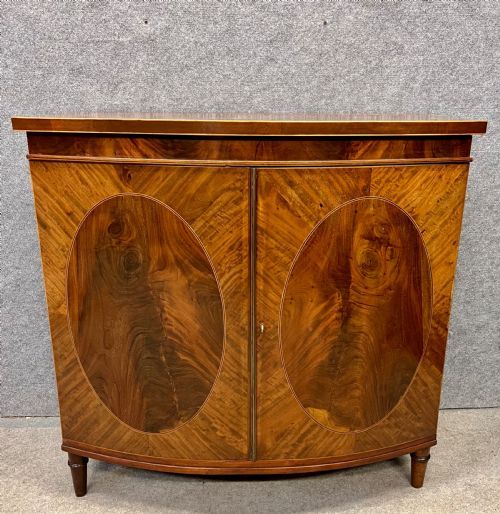
The design borrows heavily from Thomas Sheraton's neoclassical repertoire, translated through the craftsmanship of the nineteenth and twentieth centuries. Satinwood and mahogany form the primary carcasses, frequently shaped into semi-circular profiles to fit flush against a wall.
Materials and Construction
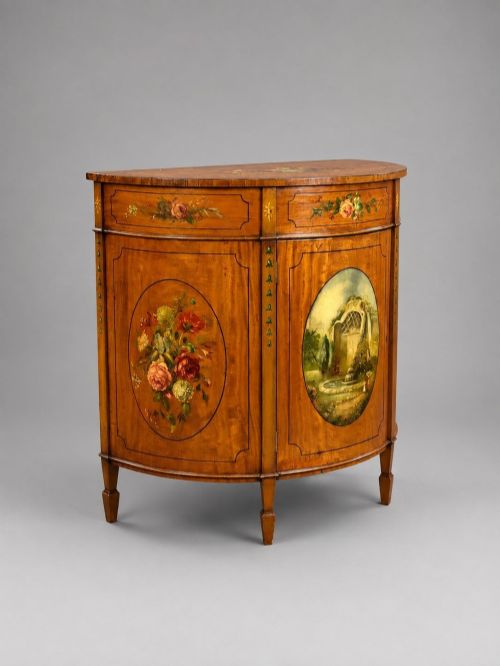
Cabinetmakers utilised dense timbers like mahogany and exotic satinwood as the foundation for these consoles, often applying intricate wood inlay, boxwood stringing, and marquetry. Painted panels and floral motifs frequently decorate the satinwood surfaces, showing the hand of specialised decorators.
Construction relies on timber framing, cross-banding, and careful veneer application over solid wood bases. Brass hardware, leather inserts, and subtle paintwork complete the construction of tables and cabinets from the Edwardian and Victorian eras.
Some console tops fold down to reveal hidden green leather surfaces designed for Victorian card games.
Judging Quality and Finish
The distinction between tiers of work rests on the crispness of the inlay and the depth of the timber figuring. Subtle boxwood stringing executed with precision separates standard production from finer cabinet work.
Painted decoration dictates the upper tier of value, where hand-painted panels and delicate floral motifs show genuine artistic skill rather than mechanical transfer. The choice of rich satinwood or finely grained mahogany anchors the visual weight of the piece.
Edwards & Roberts·Maples of London
The Sheraton Revival Console Glossary
- Demi-lune
- Having a half-moon shape. This semicursal form allows console tables and commodes to sit snugly against interior walls.
- Satinwood
- A yellow-toned, lustrous timber native to India and Ceylon. It provides a pale, reflective surface favored for high-status Edwardian and nineteenth-century furniture.
- Cross-banding
- A border of veneer laid with the grain running perpendicular to the main surface. This technique frames table tops and drawer fronts.
- Marquetry
- Decorative patterns formed by fitting together contrasting pieces of veneer. It creates pictorial or geometric designs on cabinet doors and tabletops.
- Stringing
- Thin lines of contrasting wood inlaid into channels in the furniture surface. Boxwood is frequently used for this linear detail.
Sheraton Revival Console: Frequently Asked Questions
Where do you put a console table?
A demi-lune console finds its natural home in an entrance hall or against a drawing room wall where floor space is limited. Its shallow profile provides a surface for lamps or decorative objects without obstructing passage.
Many examples include fold-over tops that transform the console into a card or games table when entertaining guests. This dual utility made them popular in Victorian and Edwardian parlours.
How do you date these pieces?
Dating relies on examining timber selection, construction methods, and stylistic cues from the Victorian and Edwardian eras. Pieces from the late nineteenth century often feature dense mahogany and hand-cut inlay, while later Edwardian versions lean towards lighter satinwood and painted decorations.
Makers' marks or stamps, when present, offer precise attribution to workshops like Edwards & Roberts or Maples. Without marks, secondary woods and hardware styles guide the estimation of the period.
What is the difference between satinwood and mahogany?
Satinwood offers a pale, golden-yellow ground with a natural sheen that reflects light across a room. It served as a canvas for painted decoration and delicate inlay during the Sheraton revival period.
Mahogany provides a darker, reddish-brown tone with a robust grain structure. It forms the structural carcass for many tables and serves as a contrasting border for satinwood panels.
How do you care for painted satinwood?
Painted satinwood surfaces require protection from direct sunlight to prevent the pigments and pale timber from fading. Dusting with a dry, soft cloth maintains the finish without moisture damage.
Avoid chemical polishes that can degrade aged varnish or lift delicate painted panels. Wax should be applied sparingly and only to unpainted wooden sections.