


Sheraton Revival Commode
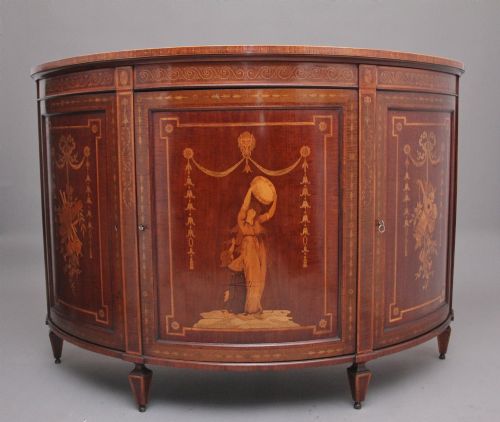
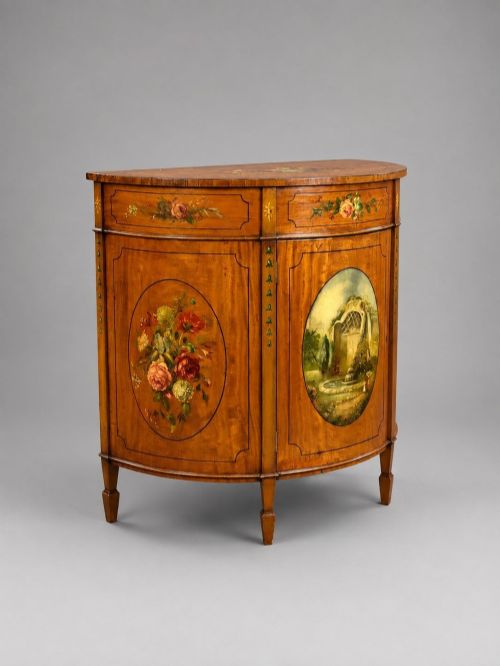
These Sheraton revival commode pieces bring late nineteenth and early twentieth century elegance to a room through fine satinwood and marquetry.
Sheraton Revival Commode
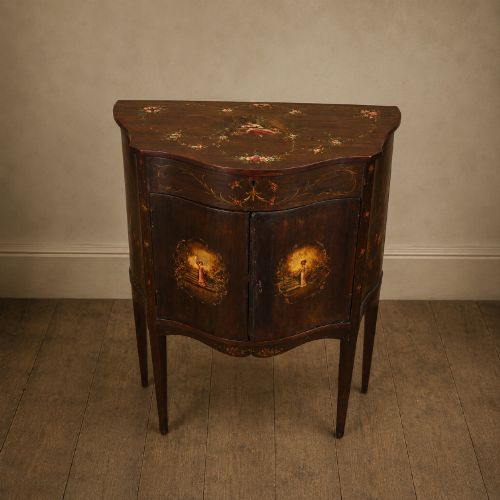
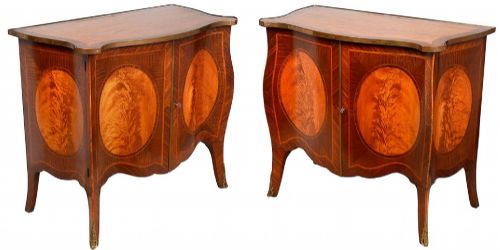
A sheraton revival commode is a refined storage piece that echoes eighteenth-century neoclassical designs through serpentine or demi-lune fronts. The versions met on this page date from the nineteenth century, the Edwardian era, and around nineteen twenty.
Makers of these cabinets chose sophisticated forms like bowed side cabinets, bedside cupboards, and painted chests of drawers. They combine practical storage with decorative presence, often featuring glass or painted surfaces.
The style draws heavily on the legacy of Thomas Sheraton, reinterpreted by later Victorian and Edwardian cabinetmakers. Buyers encounter these items as side cabinets or commodes that suit both traditional and modern interiors.
Materials and construction methods
Construction relies primarily on timbers such as satinwood, mahogany, and rosewood, selected for their grain and warmth. Craftsmen applied intricate inlaid marquetry wood to create floral or geometric patterns across the surfaces.
Many examples incorporate hand-painted details directly onto the timber, alongside brass hardware for handles and mounts. Timber carcasses are shaped into serpentine, bowed, or demi-lune fronts requiring advanced carpentry skill.
Some Edwardian cabinetmakers clearly decided that if a surface was flat, it simply begged to be painted with flowers.
Assessing quality in the pieces
The standard of painted decoration and inlaid marquetry largely determines the distinction between ordinary and superior examples. Fine quality pieces show precise hand painting and tight joints in the satinwood or mahogany veneers.
Original brass mounts and well-fitted drawers indicate careful cabinetmaking from the Victorian and Edwardian periods. The complexity of the serpentine or demi-lune timber shaping also separates standard production from finer work.
James Hicks·Edwards and Roberts
The Sheraton Revival Commode Glossary
- Demi-Lune
- A half-moon shape used for the footprint and top of a cabinet or commode. This curved design allows the piece to sit flush against a wall while offering a softer profile than a rectangular chest.
- Marquetry
- The art of applying decorative veneer pieces in various woods to form geometric patterns or pictures. Craftsmen cut these thin slices of timber to fit precisely together before gluing them to the carcase.
- Satinwood
- A lustrous hardwood with a yellowish sheen used extensively in high-end furniture of the revival periods. Its reflective surface takes polish and paint exceptionally well.
- Serpentine
- A furniture front shape that curves outward in the middle and inward at the sides. This flowing contour requires advanced woodworking techniques to shape the timber accurately.
- Edwardian
- Pertaining to the reign of King Edward VII, spanning the start of the twentieth century. Furniture from this era often lighter in proportion than Victorian pieces.
Sheraton Revival Commode: Frequently Asked Questions
What periods do these commodes come from?
The pieces span the late nineteenth century, the Edwardian period, and up to around nineteen twenty. They represent revival movements rather than original eighteenth-century production.
Cabinetmakers during these decades reinterpreted earlier neoclassical designs using contemporary workshops and traditional timber techniques.
How do I tell a demi-lune from a serpentine commode?
A demi-lune cabinet has a flat back and a semicircular front shaped like a half-moon. These fit neatly against flat walls while projecting into the room.
Serpentine commodes feature an undulating front line that curves outward at the centre and inward towards the edges. Both shapes required skilled timber shaping.
What woods were used for these cabinets?
Satinwood is the dominant timber, valued for its bright, pale grain and smooth finish. Mahogany and rosewood also appear frequently in the construction of the carcases and frames.
Inlaid marquetry wood combines various tinted timbers to create decorative motifs across the drawer fronts and tabletops.
Where should I place a side cabinet at home?
These compact cabinets work well in hallways, drawing rooms, or as bedside cupboards. Their decorative painted finishes and inlaid surfaces suit spaces where visual detail matters.
They offer useful surface space for lamps or display while providing concealed storage behind doors or inside drawers.