


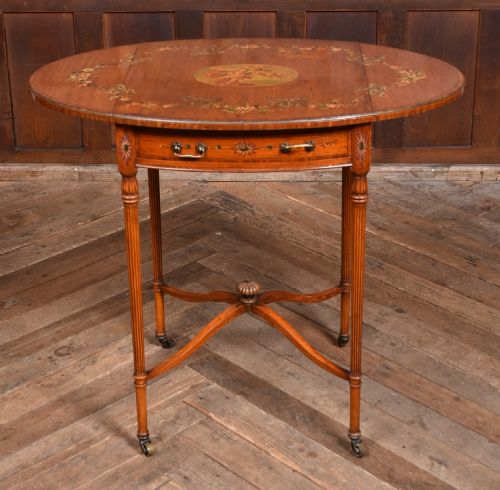

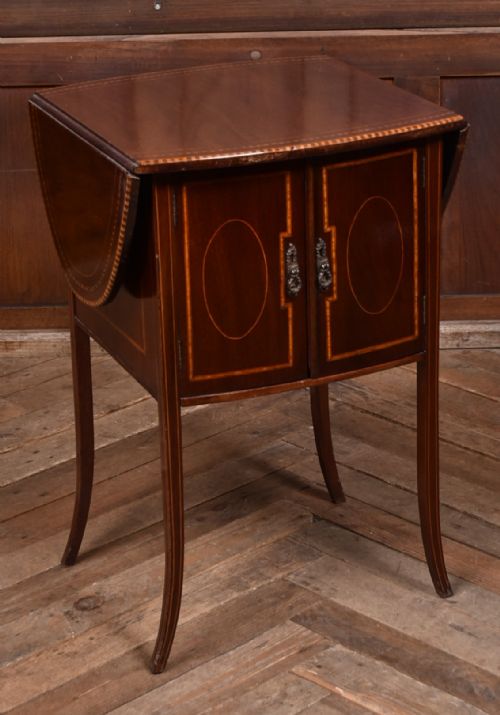


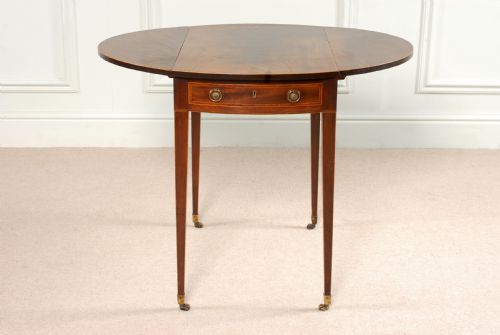


Sheraton Mahogany Pembroke Table
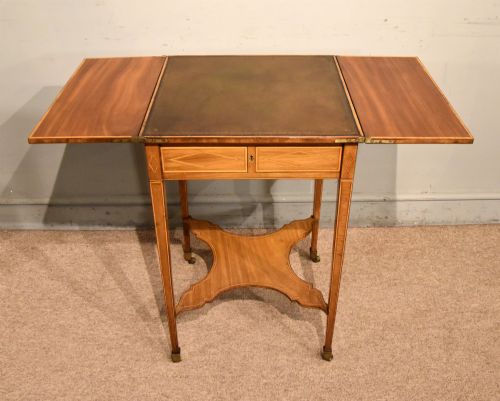
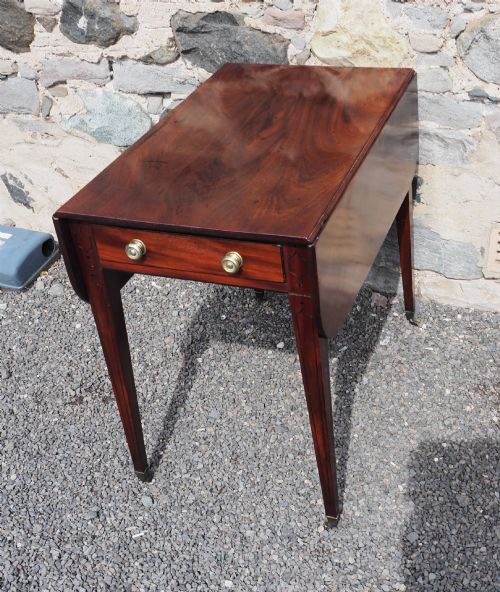
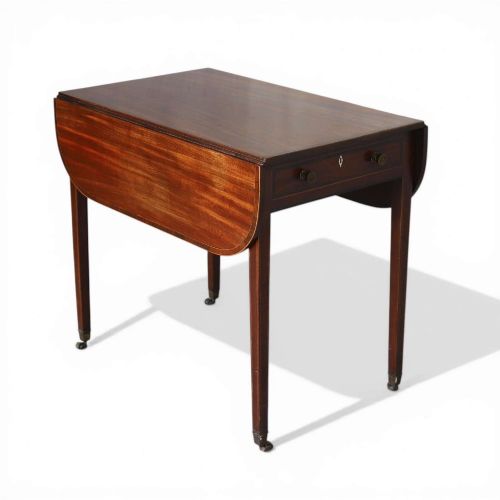
A sheraton mahogany pembroke table brings adaptable surface space and refined neoclassical lines into a room, offering drop leaves and slender tapering legs.
Sheraton Mahogany Pembroke Table
A sheraton mahogany pembroke table is a small drop-leaf occasional table characterised by its rectangular or oval top and hinged flaps on either side. These tables appear most frequently from the eighteenth century and the Georgian period, often built with a single drawer or dummy drawer in the frieze.
The form developed to serve multiple functions within domestic spaces, acting as a writing table, lamp table or breakfast table. Pieces found here span eighteenth-century examples alongside later nineteenth-century interpretations and Edwardian revivals.
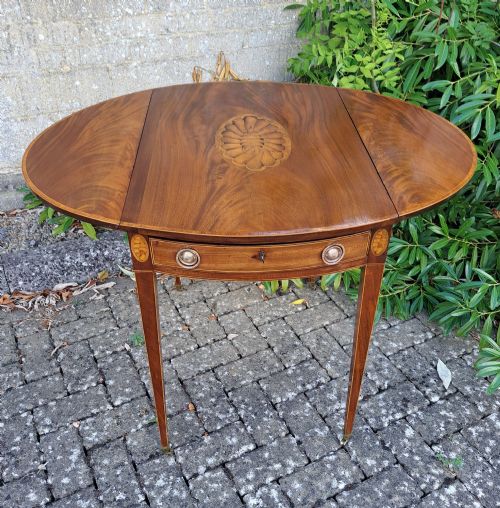
Makers designed these pieces with versatility in mind, allowing the leaves to drop when space was required or lift to create an extended surface. Oval and rectangular formats dominate the selection, resting upon slender square-tapered or turned supports.
Construction and Materials
Cabinet makers built these tables primarily using solid and veneered mahogany, selected for its rich grain and stability. Secondary timbers provided structural support within the drawer framing and interior components.
Decoration relied heavily on contrasting timber inlays, incorporating satinwood, boxwood and partridge wood crossbanding to frame the tops and drawer fronts. Hand-painted motifs and brass hardware appear on specific examples from the late eighteenth century onwards.
Sheraton Mahogany Pembroke Table Retail Price Guide 2026
Typical asking prices for sheraton mahogany pembroke table among the pieces listed under this phrase on Sellingantiques today, from the lower quarter to the upper quarter. They describe what is for sale here now, not the wider market.
Some work tables concealed sewing bags beneath the top, keeping embroidery out of sight until tea time.
Standards of Execution
Quality rests in the crispness of the inlay work and the selection of figured mahogany veneers for the top. Superior examples display precise mitring in the crossbanding and fine grain matching across the drop leaves.
The proportion of the legs relative to the top determines the visual balance of the piece. Tables with delicately tapered legs and well-fitted original brass castors demonstrate superior workshop execution.
The Sheraton Mahogany Pembroke Table Glossary
- Pembroke table
- A small table with hinged flaps on two opposite sides supported by swinging brackets. This form became popular during the eighteenth century for breakfast and occasional use.
- Crossbanding
- A strip of veneer applied to the border of a table top so that the grain runs perpendicular to the central panel. This technique created a neat visual frame on superior pieces.
- Satinwood
- A durable hardwood with a lustrous yellowish grain used extensively for contrasting inlay work. Cabinet makers utilised it alongside boxwood to create delicate line patterns.
- Drop leaf
- A hinged flap attached to the main table top that can be raised and supported by pivoting wooden arms. It allowed small tables to expand when needed.
Sheraton Mahogany Pembroke Table: Frequently Asked Questions
How were pembroke tables originally used?
These tables served flexible domestic purposes, functioning as writing desks, work tables for sewing, or small dining surfaces for one or two people.
Their mobility allowed servants to move them easily around a drawing room or parlour as daily activities shifted.
What is the difference between Georgian and Edwardian examples?
Georgian pieces date from the eighteenth and early nineteenth centuries, featuring period construction methods and native timber patination. Edwardian pieces often reflect revival styles with lighter frames and occasionally hand-painted floral decoration.
Examining the internal drawer construction and timber ageing helps distinguish the original eighteenth-century tables from later revivals.
Can I use a pembroke table daily?
These tables adapt well to modern rooms as bedside surfaces, lamp tables or small desks. Raising and lowering the leaves requires care to protect the hinges and supporting brackets.
Placing them away from direct heat sources preserves the mahogany timber and prevents the veneer from lifting.
How do I identify a sheraton style table?
Sheraton style pieces feature rectilinear geometry, slender tapered legs and neoclassical decorative elements such as urn or patera inlays. The design prioritises lightness and proportion over heavy ornamentation.
Makers achieved elegance through contrasting boxwood and satinwood stringing against the dark mahogany background.