

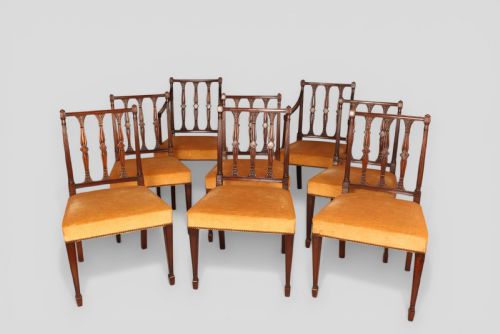


Sheraton Mahogany Carver
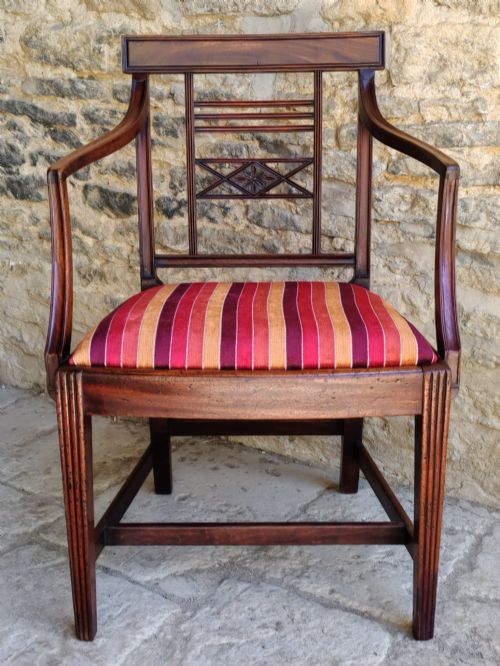
A sheraton mahogany carver is a sturdy seat with armrests that brings classical grace and fine timber into a dining room or study.
Sheraton Mahogany Carver
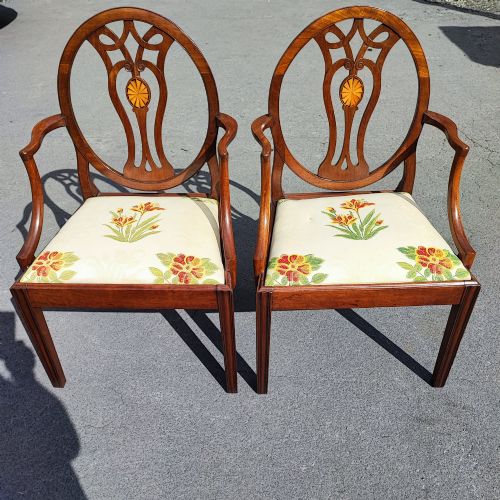
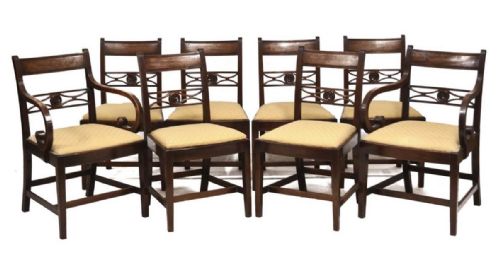
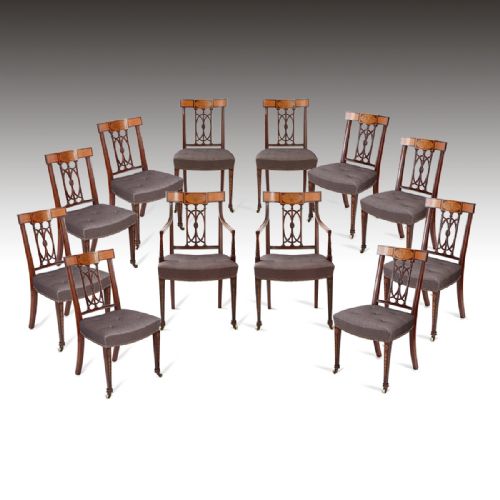
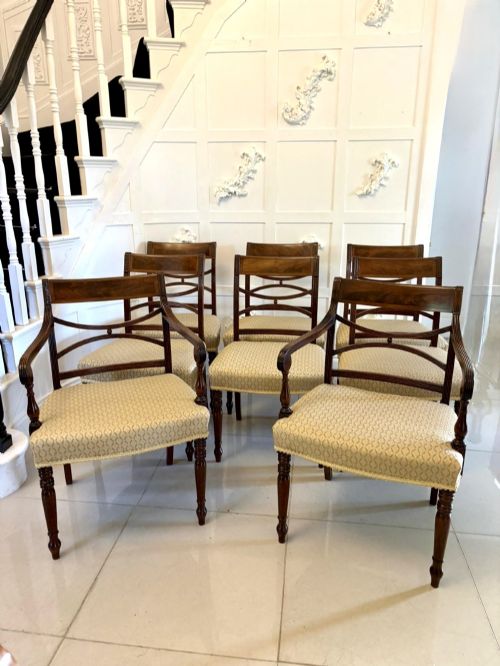
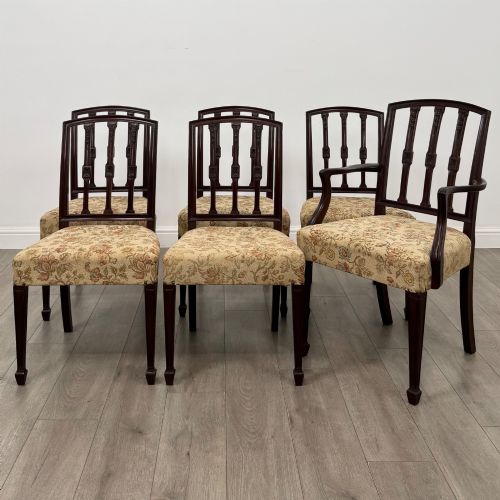
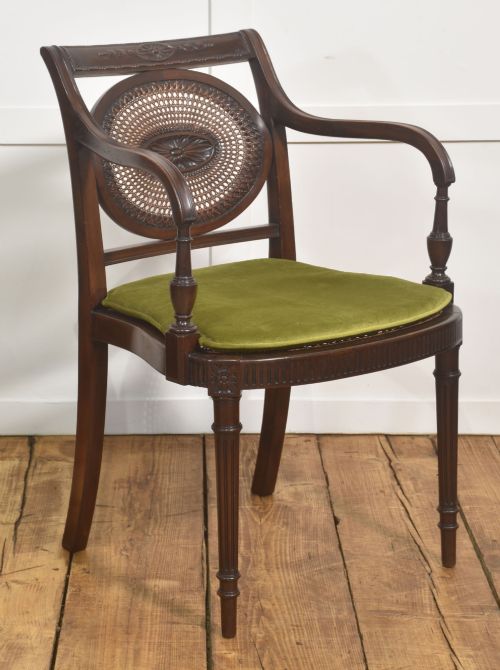
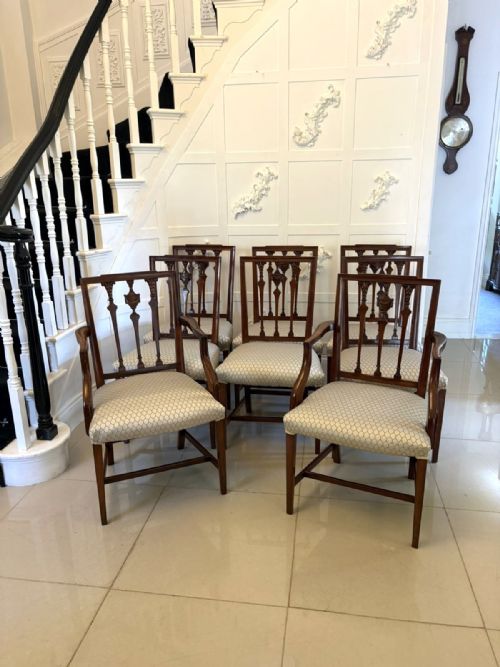
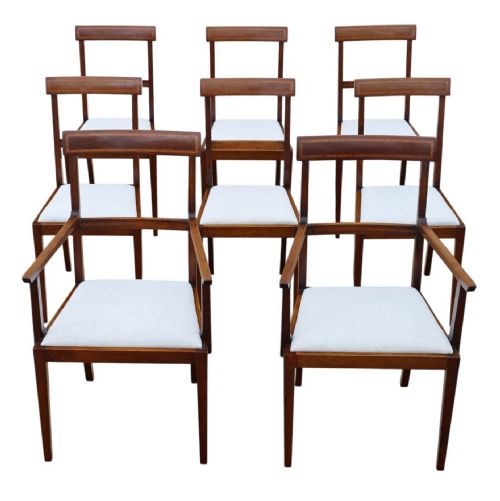
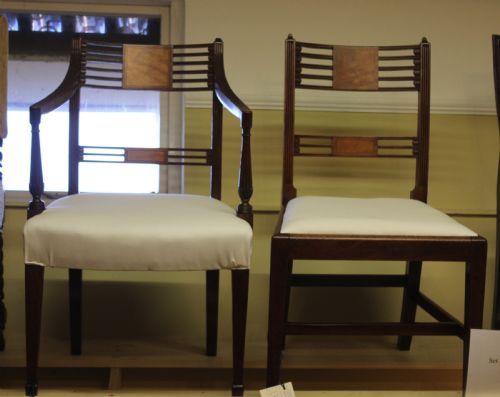
A sheraton mahogany carver is an armchair designed for dining, library or desk use, often found paired with matching single chairs or standing alone as an elbow chair. Buyers searching this phrase look for pieces defined by straight tapering legs, understated geometry and supportive armrests.
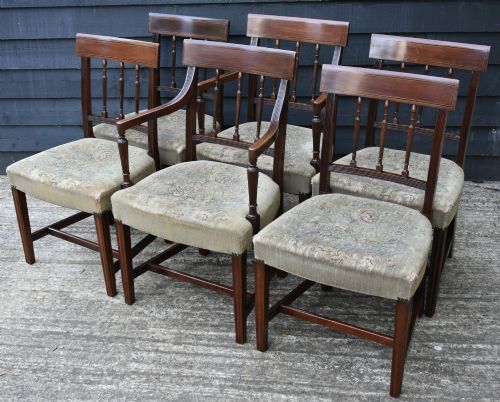
The versions most common on this page span the late eighteenth century, the Georgian and Regency periods, and the later revival eras including Edwardian and Sheraton Revival interpretations. They appear as individual seat furniture, pairs or larger sets intended for formal dining spaces.
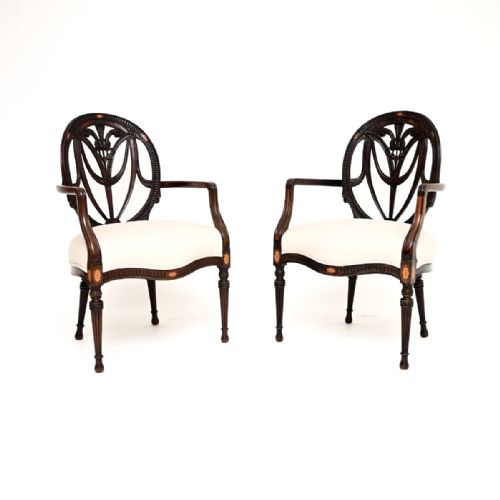
Makers and cabinet makers of these periods adopted distinct neoclassical forms such as shield backs or square frames, enriched with subtle curves. The overarching aesthetic relies on proportion and linear balance rather than heavy carving.
How they were made
Makers built these carvers primarily using solid mahogany, selecting the timber for its rich grain and structural strength. Workshops frequently embellished the mahogany framework with contrasting stringing and banding in satinwood and boxwood.
Upholstered drop-in seats or padded squabs were covered in fabric, velvet or dedicated upholstery materials to ensure comfort. Joinery techniques relied on mortise and tenon joints to secure the arms and legs under daily use.
The furniture styles represented include Georgian, Regency, Edwardian and Sheraton Revival forms.
What varies in quality
The distinction between standard and superior pieces rests on the crispness of the inlay and the selection of figured mahogany. Finer examples display meticulous geometric stringing in boxwood and satinwood rather than simple painted lines.
Structural integrity and the retention of original timber components dictate the standing of a carver. Pieces that maintain their proportional grace without heavy restoration hold a distinct appeal for collectors.
The Sheraton Mahogany Carver Glossary
- Carver
- An armchair, typically designed as part of a set of dining chairs to sit at the head of a table. These seats feature supportive armrests for added comfort during long meals.
- Sheraton Revival
- A late nineteenth to early twentieth century style that emulates the lighter neoclassical designs of the eighteenth century. Makers utilised classic mahogany frames and delicate inlay work.
- Shield back
- A chair back shaped in the outline of a heraldic shield, popular in neoclassical furniture design. This form provides a broad canvas for pierced splats and carved drapery.
- Inlay
- A decorative technique where contrasting timbers such as boxwood and satinwood are fitted into recesses in the mahogany base. This creates crisp linear patterns and geometric borders.
- Elbow chair
- An alternative term for an armchair, often used to describe seating with low supports for the arms. They complement standard dining chairs without overwhelming smaller rooms.
Sheraton Mahogany Carver: Frequently Asked Questions
Are sheraton mahogany carvers comfortable?
These carvers provide supportive seating through their upright backs and well-positioned armrests, making them suitable for long dinner parties or desk work. Their ergonomic design reflects the refined domestic requirements of the late eighteenth and nineteenth centuries.
Most examples feature upholstered drop-in pads or cushioned seats that can be recovered in modern or traditional fabrics to suit your interior. The sturdy mahogany frames ensure they remain practical for daily use alongside contemporary dining tables.
How do I date a carver chair?
Dating relies on examining the timber grain, construction methods, and stylistic cues such as leg shapes and inlay patterns. Georgian and late eighteenth-century examples display hand-cut joinery and dense, aged mahogany.
Revival pieces from the Edwardian era often show machine-sawn elements or brighter secondary woods underneath. Comparing the proportions and decorative motifs against known historical periods helps narrow down the decade of manufacture.
Can I mix these with modern furniture?
The clean lines and warm timber tones of these carvers allow them to blend effortlessly with contemporary dining or office tables. Their classical geometry provides a striking contrast against minimalist modern interiors.
Placing a single elbow chair at a desk or incorporating a pair into a modern dining arrangement adds historical character without cluttering the space. The restrained ornamentation ensures they complement various design schemes.
What is the difference between original and revival pieces?
Original pieces date from the Georgian and Regency periods, carrying the natural patina and wear accumulated over two centuries. They represent the primary execution of neoclassical chair design by period craftsmen.
Revival pieces were manufactured during later periods such as the Edwardian era, when cabinet makers consciously reproduced eighteenth-century aesthetics. While both utilise fine mahogany and inlay, revival items generally display less oxidation in the timber.