



Sheraton Dressing Table
A sheraton dressing table brings refined classical geometry and warm timber tones to a bedroom, uniting practical mirrors with delicate craftsmanship.
Sheraton Dressing Table
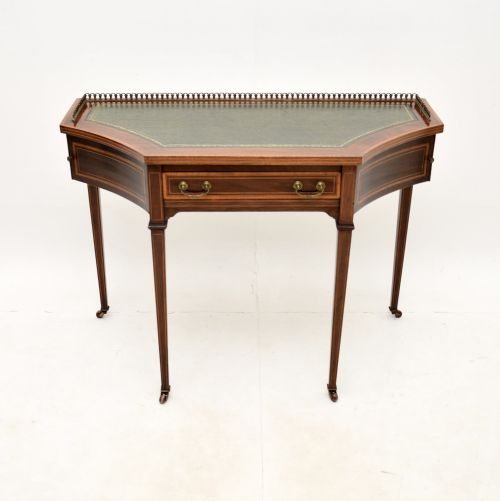
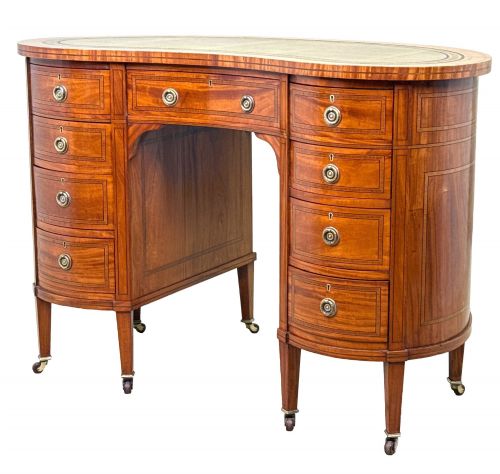
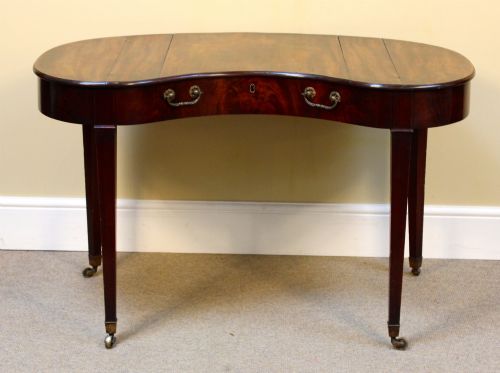
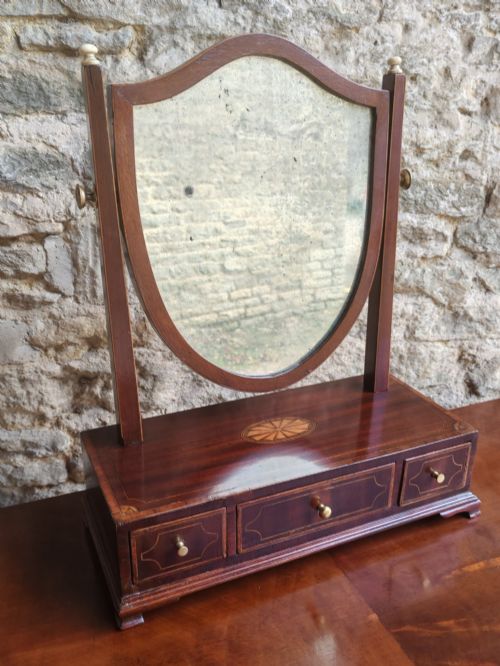
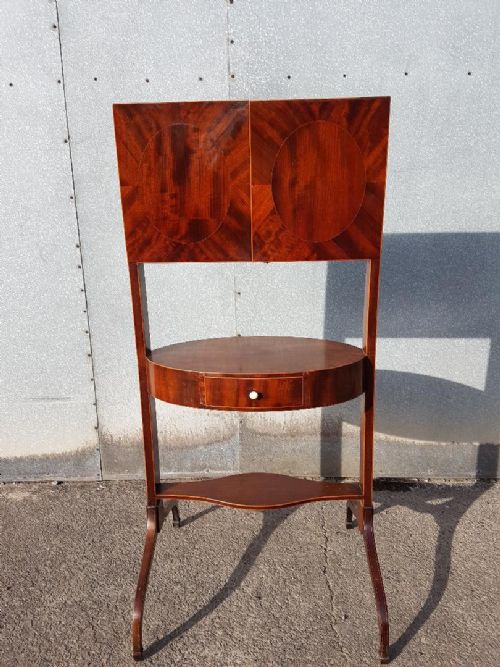
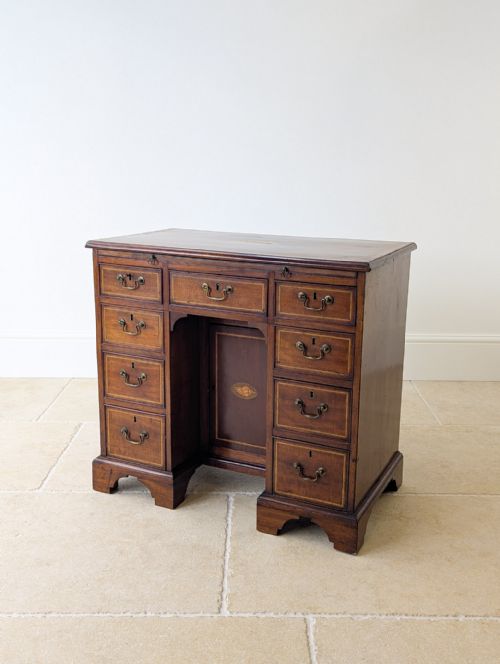
A sheraton dressing table represents the elegant neoclassical forms popular during the late eighteenth century and revived with enthusiasm during the Edwardian era. These pieces combine fitted drawers, writing surfaces, and pivoting toilet mirrors designed for personal grooming and correspondence.
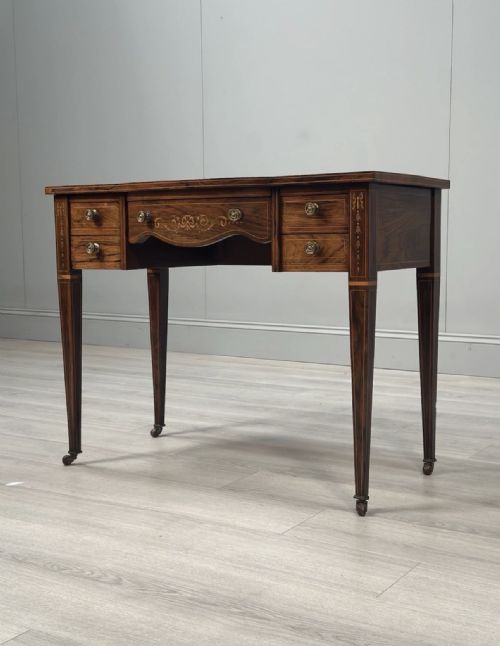
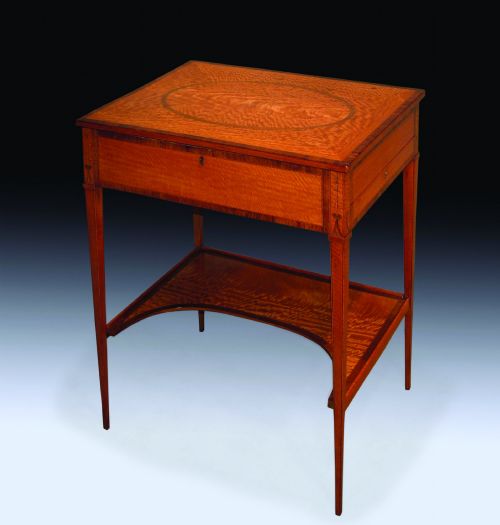
Buyers will encounter two main chronological phases on this page: original Georgian examples dating back to the seventeen-eighties and nineties, alongside Edwardian Sheraton Revival pieces built around nineteen hundred. Both categories utilise sophisticated cabinetry, though the later revival versions often incorporate larger integrated mirrors and painted satinwood decoration.
How they were made
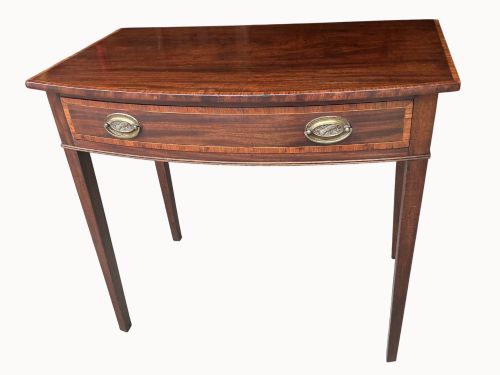
Cabinetmakers constructed these tables using solid mahogany or framing timbers overlaid with figured veneers such as satinwood and flame mahogany. Timber selection determined the visual movement across the drawer fronts and tabletops.
Decoration relied heavily on contrasting stringing and banding utilising boxwood, bone, and darker woods, often combined with hand-painted floral motifs or delicate brass hardware.
Secret compartments and tiny drawer configurations hide quietly within these tables, built for private letters and mysterious trinkets.
What varies in quality
The sophistication of the timber figure and the crispness of the inlaid boxwood and satinwood stringing largely distinguish standard examples from superior ones. Hand-painted detailing on satinwood surfaces adds another layer of distinction.
Construction details such as dovetailed drawer linings, original brass swing handles, and intact pivoting mirror frames dictate the integrity and desirability of individual pieces.
James Shoolbred of London·Edwards & Roberts·Maple & Co.·Gillows
The Sheraton Dressing Table Glossary
- Sheraton Revival
- A late nineteenth and early twentieth century design movement that recreated the neoclassical lightness, proportions, and inlay techniques associated with eighteenth century furniture.
- Toilet Mirror
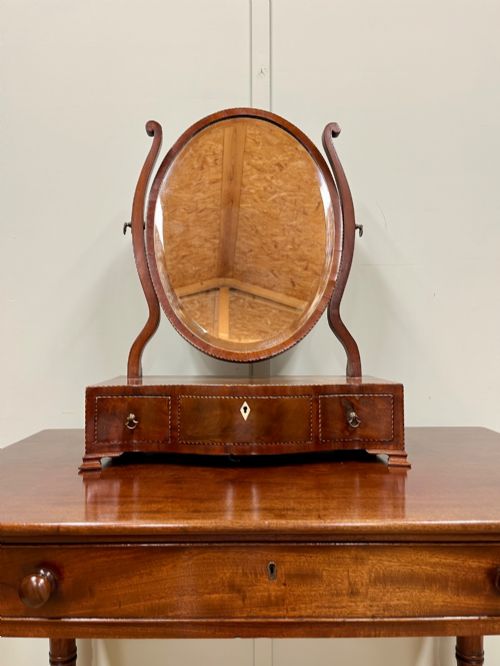
- A small adjustable looking glass mounted on a miniature drawer base, designed to sit upon a table or chest.
- Satinwood
- A lustrous, yellowish timber native to the tropics, prized by cabinetmakers for fine veneers and contrasting crossbanding.
- Boxwood Inlay
- Thin strips of pale boxwood inserted into grooves in darker wood surfaces to create geometric borders and linear patterns.
Sheraton Dressing Table: Frequently Asked Questions
How do I distinguish an original Georgian piece from a later revival?
Original eighteenth-century pieces display construction methods, timber ageing, and hand-cut dovetails consistent with the Georgian period. Revival pieces from around nineteen hundred often feature softer secondary timbers and machine-finished elements beneath the surface.
Examining the drawer linings, backboards, and block fixings helps reveal the true age of the cabinetry.
Were these tables used purely for grooming?
Many examples served a dual purpose for both toilet preparation and correspondence. The inclusion of clever compartments, fold-down flaps, and writing surfaces reflects the varied social demands of the period.
Compact drawer layouts allowed owners to store letters, cosmetics, and small personal valuables securely.
What is a toilet mirror compared to a full dressing table?
A toilet mirror is a tabletop looking glass fitted with small drawers, designed to sit on top of a separate surface. A full dressing table stands independently as a complete piece of furniture with integrated legs and drawers.
Both forms share the characteristic classical geometry and veneer work associated with the style.
How should I care for a satinwood or mahogany surface?
These polished timber surfaces require protection from direct sunlight and excessive moisture to prevent fading and veneer lifting. Regular dusting with a soft, dry cloth preserves the natural lustre of the finish.
Applying occasional appropriate wax polish helps maintain the moisture balance of antique wood.