





Shepherd Artwork
These shepherd artwork pieces capture rural pastoral life through historic paintings and watercolours.
Shepherd Artwork
When you search for shepherd artwork, you encounter pastoral scenes depicting figures tending flocks across various European landscapes. The selection spans centuries of fine art, featuring oil paintings, watercolours, and mixed-media works.
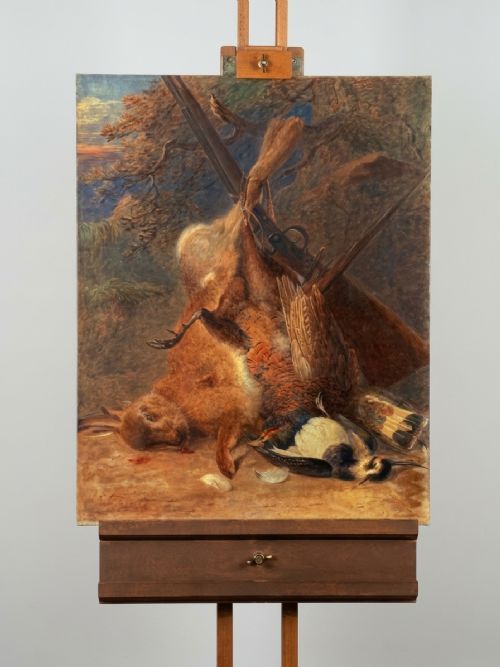
The most common pieces on this page originate from the nineteenth and early twentieth centuries. These works range from intimate watercolours to large oil paintings on canvas and wood panel.
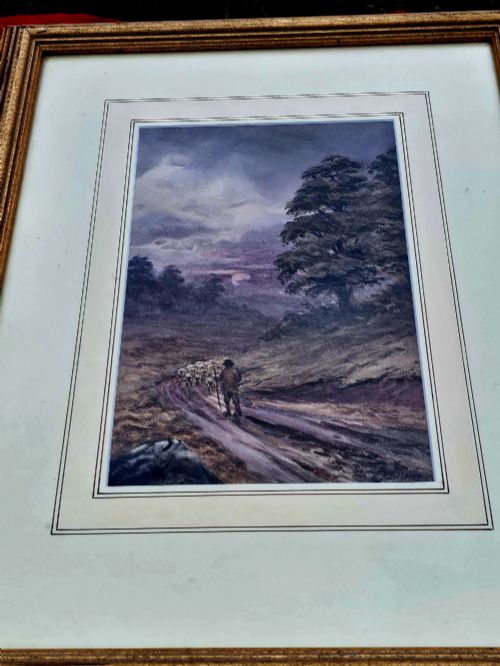
Subjects typically involve drovers, animals, and rural vistas associated with Victorian pastoral and British impressionist movements. Several examples incorporate specific regional British views alongside continental European settings.
How they were made
Artists painted primarily with oil or watercolour pigments applied to stretched canvas, heavy paper, wood panels, or glass surfaces. Oil paint provided rich depth for nineteenth-century pastoral landscapes, while watercolour suited detailed atmospheric sketches.
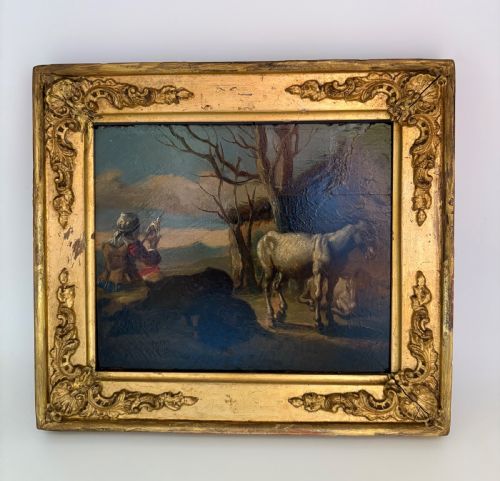
Supports often include original giltwood frames that complement the painting techniques of the period. Mixed-media pieces combine drawing materials like charcoal with bodycolour or washes to create texture.
Materials documented across the page include wood, paper, canvas, giltwood, glass, and oil paint.
What varies in quality
The standard of execution depends upon the artist's handling of light and anatomical accuracy within the figures and animals. Finer works display confident brushwork and balanced composition that elevate a standard rural scene.
Condition of the medium and the integrity of the original frame influence overall desirability. Pieces preserved on canvas or panel without extensive restoration retain their original character most successfully.
George Sydney Shepherd·Eugène Verboeckhoven·Henry Charles Fox·David Shepherd·George Turner·Anthonij Anton Mauve
The Shepherd Artwork Glossary
- Watercolour
- A painting method where fine pigment is suspended in a water-based solution and applied to paper. It allows for delicate translucent washes.
- Bodycolour
- Watercolour mixed with a white pigment to make it opaque. This technique adds solid highlights to works on paper.
- Giltwood
- Wood carved and coated with gold leaf or a gold-coloured finish. It provides ornate framing for historic paintings.
- Pastoral
- A genre of art depicting rural life and shepherds tending flocks in idealized countryside settings. It emphasises peace and simplicity.
- Pietre dure
- An artistic technique using cut and fitted coloured stones to create mosaic-like pictures. It appears in stone and marble panel works.
Shepherd Artwork: Frequently Asked Questions
What periods do these paintings represent?
The works span from the eighteenth through to the mid-twentieth century. Most examples originate from the nineteenth and early twentieth centuries.
Victorian and Edwardian eras dominate the selection, alongside mid-century interpretations of rural and aviation subjects.
What materials were used for these artworks?
Artists utilised oil paint on canvas, wood panels, and glass. Watercolours and charcoal appear frequently on paper supports.
Many paintings retain their period giltwood frames, which contribute to the historic presentation of the piece.
How do I identify a pastoral landscape?
Pastoral scenes typically feature shepherds, flocks of sheep, cattle, and rustic farm buildings in open countryside. The atmosphere emphasises traditional rural labour and scenic vistas.
Artists from various European traditions applied this theme to British, French, and Italian landscapes.
Are these works original or reproductions?
The inventory consists of original paintings, watercolours, and mixed-media works created by listed artists and period followers. Signatures and attribution details help verify individual pieces.
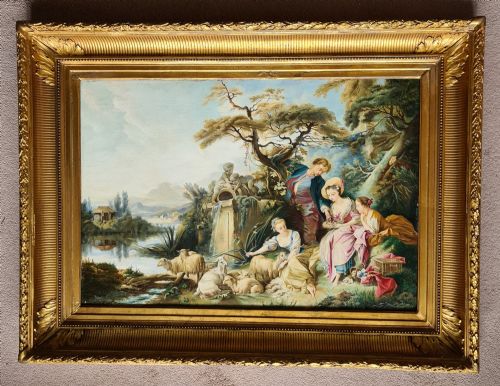
Some works are period interpretations created after earlier masters such as Francois Boucher.