
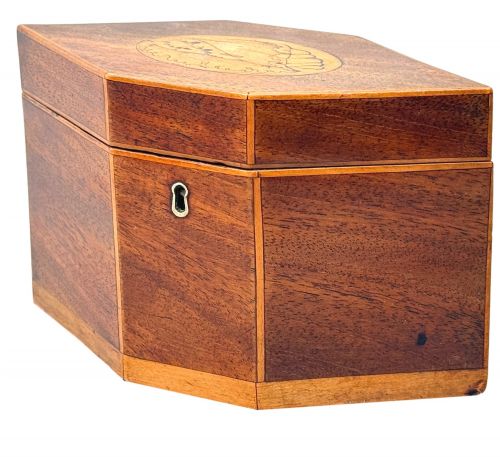


Shell Inlay Tea Chest
These shell inlay tea chest pieces are fine antique caddies in mahogany, satinwood and tortoiseshell that bring Georgian and Victorian elegance to any room.
Shell Inlay Tea Chest
When you search for a shell inlay tea chest, you are looking at small storage boxes designed to hold tea leaves safely under lock and key. These objects date from the Georgian, 18th century and Victorian eras, reflecting a time when tea was a costly commodity kept securely by the household.
The styles range across Georgian, Regency, Sheraton Revival and French Napoleon III designs. Each piece demonstrates how functional domestic containers were elevated through marquetry and inlay work.
How they were made
Cabinet makers constructed these bodies using dense hardwoods like mahogany and satinwood, then applied contrasting veneers and bandings in boxwood and brass. The signature shell motifs are painstakingly cut from bone, mother-of-pearl or pale wood and let flush into the timber ground.
Tortoiseshell examples require delicate plates of shell applied over a red-stained wooden foil or metallic backing to catch the light, sometimes enhanced with buelle metalwork. Interiors often feature fitted compartments with matching wooden lids or foil-lined cannisters to preserve the dry leaf.
Listings span the Georgian, 18th century and Victorian periods, utilising mahogany, satinwood, tortoiseshell, bone and brass.
What varies in quality
The standard of a shell inlay tea chest rests upon the crispness of the cutting and the symmetry of the timbers chosen. Superior examples display finely figured grain matched across the lid and sides, with shell inlays that sit perfectly flush to the polished surface without gaps or excessive filler.
Hardware and interior completeness also distinguish finer pieces. Original escutcheons, working locks with keys, and intact interior lids or glass sugar bowls separate simpler boxes from those commanding serious attention.
The Shell Inlay Tea Chest Glossary
- Tea Caddy
- A small box or chest intended for the storage of loose tea leaves. The word derives from catty, a Chinese unit of weight.
- Satinwood
- A pale, lustrous timber from tropical trees utilised extensively in high-status Georgian cabinet making. It provides a bright golden background that contrasts sharply with darker stringing and shell motifs.
- Tortoiseshell
- The mottled brown and amber carapace of certain marine turtles applied as a veneer. It creates a translucent, deep surface effect particularly favoured during the Regency and Victorian periods.
- Marquetry
- The art of applying pieces of veneer to a structure to form decorative patterns and pictorial designs. Craftsmen cut contrasting woods, bone and shell simultaneously to ensure tight, seamless joints.
- Escutcheon
- A flat plate of brass or bone surrounding the keyhole of a box or chest. It protects the surrounding wood from wear and often echoes the metalwork used elsewhere on the piece.
Shell Inlay Tea Chest: Frequently Asked Questions
What is a shell inlay tea chest?
These are period wooden boxes designed to store and protect expensive tea leaves under lock and key.
They combine decorative veneers like mahogany and satinwood with contrasting shell motifs set into the lid or front panel.
How were tea chests used?
Households kept precious tea locked away in these caddies to regulate consumption and prevent theft by domestic staff.
The mistress of the house typically held the key, dispensing the leaves into inner cannisters for each meal.
How do I live with a tea chest?
These boxes function well as decorative desktop objects or small storage containers for modern trinkets and jewellery.
Keep them away from direct sunlight and sudden temperature changes to protect the delicate veneers and shell inlays.