
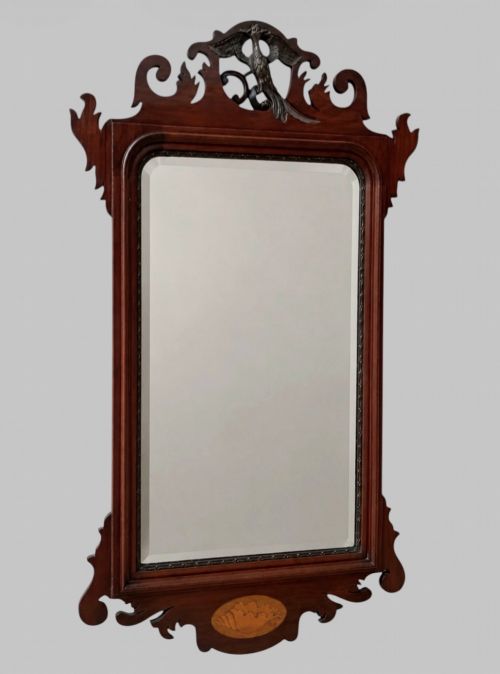


Shell Cresting Wall Mirror
A shell cresting wall mirror brings classical carved movement to a room, catching the light in walnut, giltwood, and paint.
Shell Cresting Wall Mirror
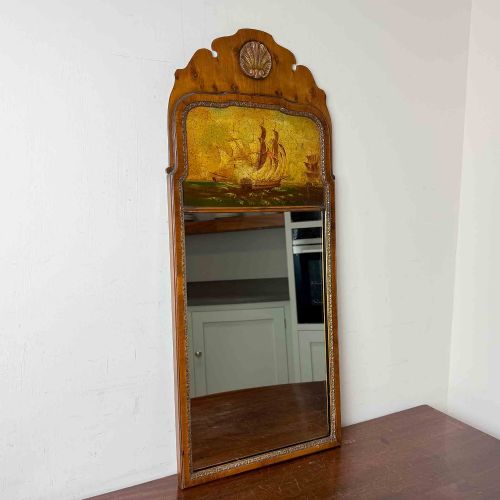
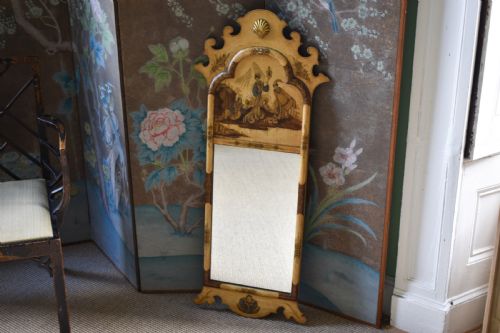
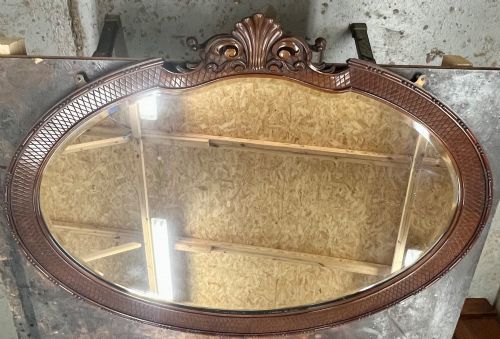
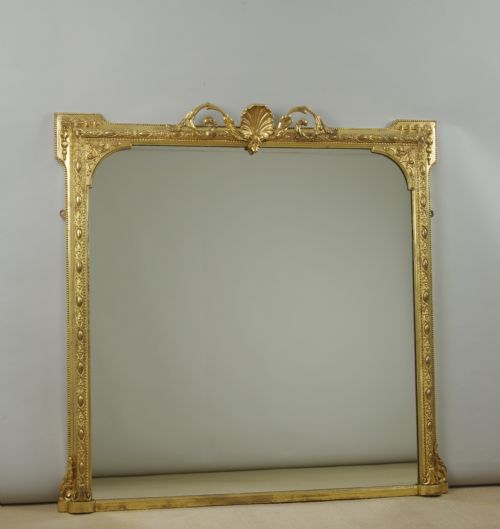
Most examples you encounter here take the form of wall mirrors, pier mirrors, and large overmantle mirrors designed for placement above fireplaces or console tables. Frames are built in woods such as walnut, mahogany, and yew, alongside gilded and painted finishes.
The selection ranges from early walnut pieces with simple arched tops to ornate Victorian and Edwardian revival interpretations of Queen Anne, Chippendale, and Rococo aesthetics. These varied forms reflect how makers reinterpreted classical shell motifs across successive generations of design.
Materials and construction methods
Makers constructed these frames using solid and veneered timbers including walnut, mahogany, and pine, often applying gesso to form intricate raised decoration beneath layers of leaf gilding or paint. Giltwood and parcel painted surfaces interact with the carved shell crests to catch light across the room.
Glass panels are set within rebated frames, sometimes accompanied by secondary mirror plates or decorative elements like tapestry panels. The combination of carved wooden frames and hand-finished surfaces defines the physical character of each piece.
A carved shell at the top of your mirror means centuries of craftsmen spent hours making wood look like it just came from the beach.
Judging quality and craftsmanship
Quality rests in the crispness of the carved shell motif and the depth of the timber grain, whether figured burr walnut or smooth mahogany. Superior examples display confident hand-carving where the curves of the shell flow naturally into the shoulders of the frame.
The integrity of the giltwood or painted finish matters greatly, with finer pieces showing subtle tool marks and organic ageing of the gilding over gesso rather than flat, uniform modern coatings. The proportion between the mirror glass and the carved cresting dictates the visual balance of the whole object.
The Shell Cresting Wall Mirror Glossary
- Cresting
- The decorative element carved or applied at the top of a mirror frame. It often incorporates shell motifs, scrolls, or architectural pediments.
- Pier Mirror
- A tall, narrow mirror designed to hang on the wall between two windows, often placed above a matching pier table.
- Gesso
- A plaster-like mixture applied to wood frames to provide a smooth base for gilding or painting. It allows carvers to achieve sharp, detailed relief work.
- Overmantle Mirror
- A wide mirror specifically proportioned to hang on the wall directly above a fireplace mantelpiece. These pieces frequently feature extensive giltwood decoration.
- Parcel Gilt
- A finishing technique where parts of an object are gilded with gold leaf while other areas show the exposed wood or painted surface underneath.
Shell Cresting Wall Mirror: Frequently Asked Questions
Where should I hang a wall mirror?
These mirrors function effectively above fireplaces, console tables, or along hallways where they can reflect natural light and open up the room.
Ensure the wall fixings are strong enough to support the weight of the timber and glass frame.
How do I care for giltwood frames?
Dust the carved details gently with a soft, dry brush to avoid disturbing the delicate gold leaf layer.
Keep the mirror away from direct sunlight and excessive moisture to protect the gesso and wood underneath.
What defines Queen Anne style mirrors?
Queen Anne mirrors typically feature shaped walnut or veneered frames with scrolling crests, often highlighting figured wood grain.
Revival versions from later centuries reproduce these distinct classical silhouettes using traditional joinery and finishing methods.