
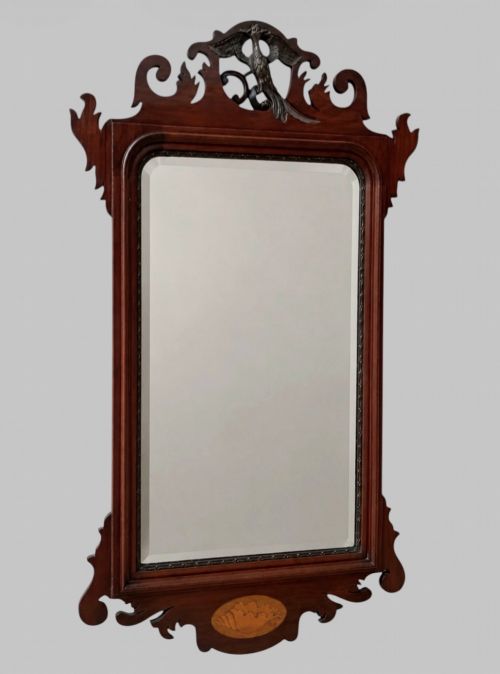


Shell Crest Wall Mirror
A shell crest wall mirror brings architectural weight and classical presence to a room, driven by carved motifs and polished timber frames.
Shell Crest Wall Mirror
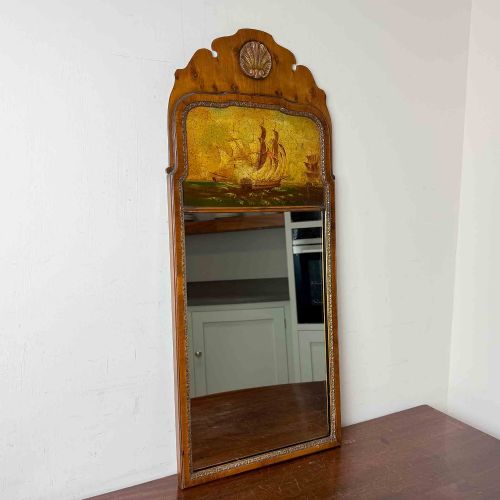
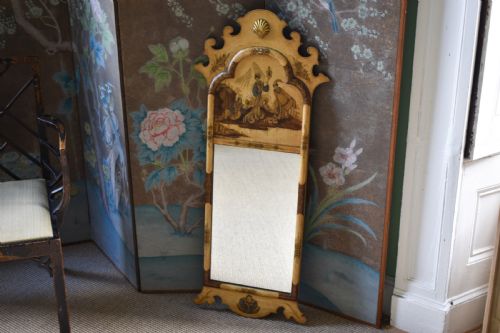
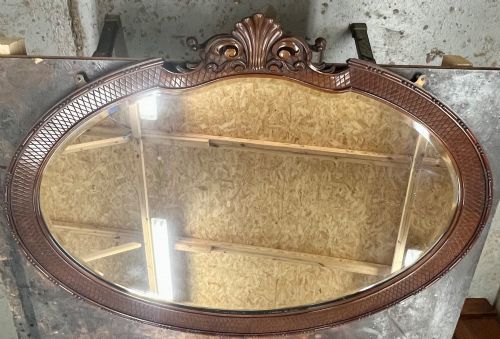
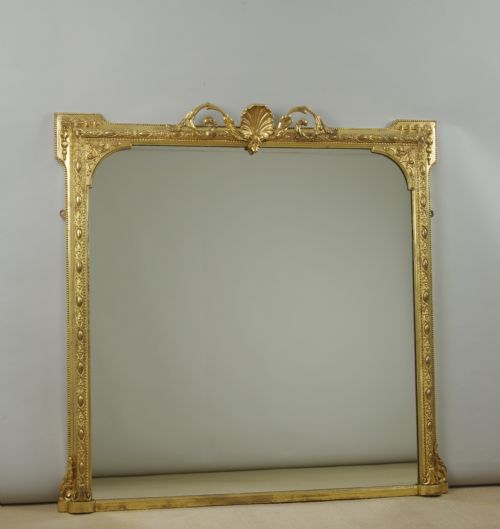
A shell crest wall mirror represents a distinct tradition of decorative hanging glass, spanning periods from the eighteenth century through to the revival decades of the early twentieth century. These pieces appear in forms ranging from compact pier mirrors to large overmantel frames, frequently carrying the characteristic shell motif at the apex.
The selections available here lean heavily towards walnut and giltwood constructions, echoing Queen Anne, Georgian, and Chippendale designs. Buyers encounter both original eighteenth-century examples and later revival pieces from the Victorian and Edwardian eras that faithfully replicate these historical forms.
Materials and construction
Craftsmen built these frames using dense hardwoods like walnut, mahogany, and yew wood, often applying burr veneers to create rich surface movement. Giltwood and gesso elements provided the foundation for intricate surface gilding and painted highlights.
Carved pine and specialist glass mirror plates completed the assembly, with traditional joinery securing the heavy timber mouldings. Trumeau formats integrated painted panels or tapestries directly above the mirror glass.
Materials documented across the collection include walnut, mahogany, gesso, giltwood, and painted pine combined with traditional mirror glass.
Judging quality and execution
The distinction between tiers rests upon the crispness of the carved shell motif and the depth of the timber grain. Superior examples display hand-carved relief work with sharp definition rather than soft, moulded composite substitutes.
Original mercury or early silvered mirror plates show subtle oxidation patterns that distinguish period glass from modern replacements. The integrity of the original parcel gilding and the stability of the primary wood structure further separate standard production from exceptional craftsmanship.
The Shell Crest Wall Mirror Glossary
- Gesso
- A plaster-like material applied to wood frames to provide a smooth base for gilding and fine carving. It allows artisans to shape intricate relief details before applying gold leaf.
- Pier mirror
- A tall, narrow wall mirror designed to hang on the wall space between windows. These pieces maximise ambient light in period interiors.
- Overmantel mirror
- A wide horizontal mirror created to hang above a fireplace mantelpiece. They dominate the wall space and often feature ornate gilt frames.
- Trumeau
- A decorative mirror incorporating a painted panel or tapestry within the upper section of the frame. Originating in French interior design, these pieces function as integrated wall art.
- Parcel gilt
- A finishing technique where only specific raised portions of a carved frame receive a gold leaf coating. This contrasts sharply against the dark stained or painted timber beneath.
Shell Crest Wall Mirror: Frequently Asked Questions
Are walnut mirrors from the 1920s genuine antiques?
Pieces produced in the 1920s belong to the Queen Anne and Georgian revival movements rather than the original eighteenth century. Workshops during this era meticulously copied earlier forms using period timber stocks.
These revival items carry their own historical value as examples of early twentieth-century craftsmanship and interior fashion.
What does parcel gilt mean on these frames?
Parcel gilt describes a decorative treatment where gold leaf is applied selectively to raised carvings, leaves, or shell motifs. The remaining areas display natural walnut, painted finishes, or dark backgrounds.
This technique highlights the sculptural depth of the woodcarving without overwhelming the primary timber surface.
How should I clean antique mirror glass?
Wipe the glass gently using a soft microfibre cloth and a mild, ammonia-free cleaning solution. Avoid spraying liquids directly onto the mirror plate to prevent moisture seeping behind the silvering.
Take care near the edges of antique glass where the original backing is fragile and susceptible to flaking.