
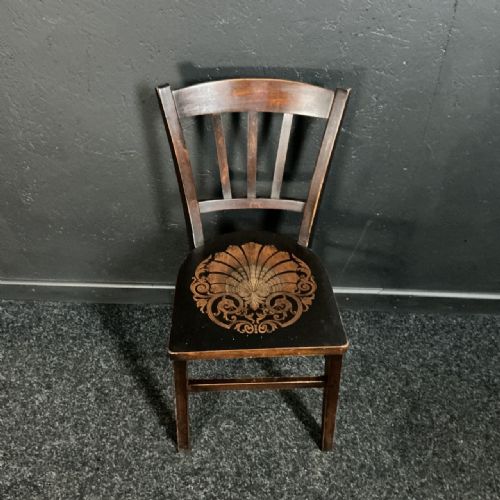


Shell Carved Dining Chairs
Shell carved dining chairs bring structural grace and carved wooden motifs to the table, offering lasting seating crafted in walnut and mahogany.
Shell Carved Dining Chairs
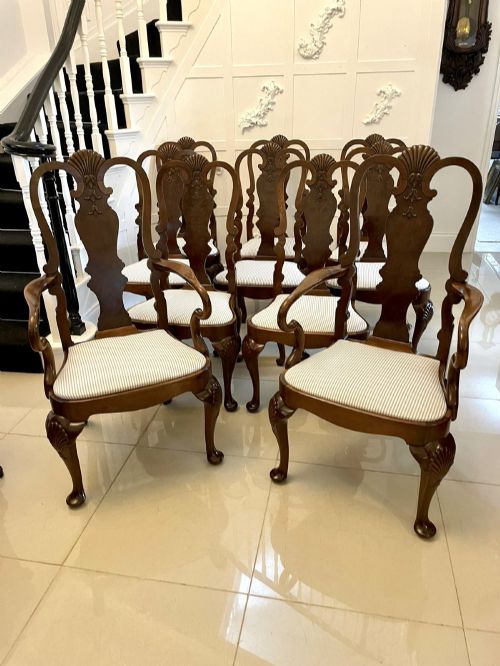
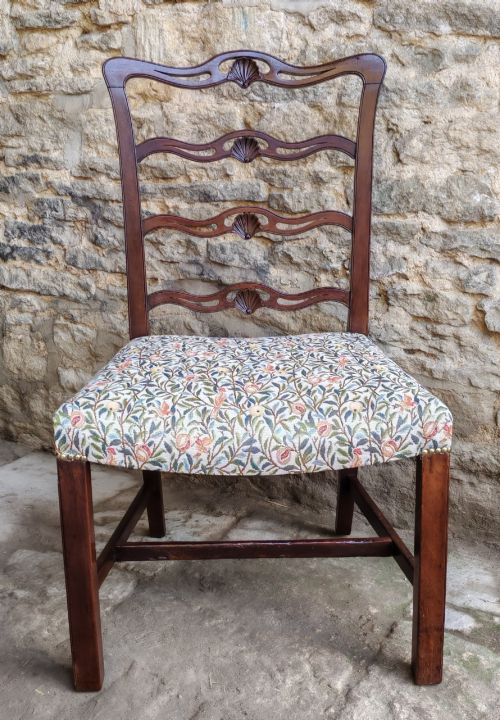
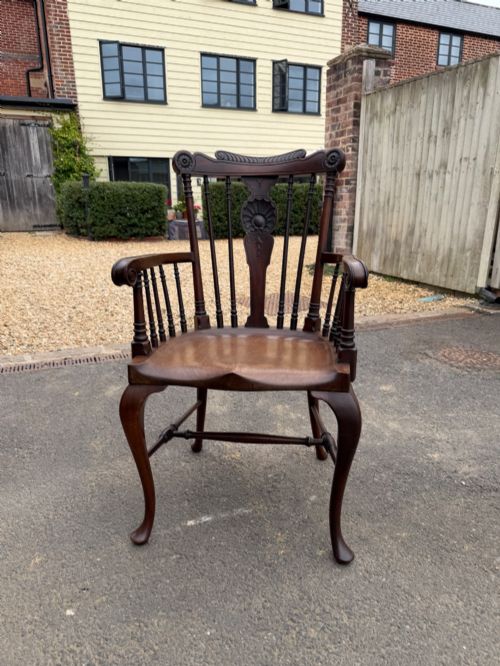
Shell carved dining chairs comprise dining chairs, side chairs, armchairs, and hall chairs featuring shell motifs upon the timber frame. These pieces emerge across the 18th Century, 19th Century, Regency, Edwardian, and 1920 periods.
The most likely version to meet on this page is the mahogany or walnut side chair or dining chair from the Georgian, Victorian, or Regency eras. Examples also appear in beech, plywood, and textile upholstered variations.
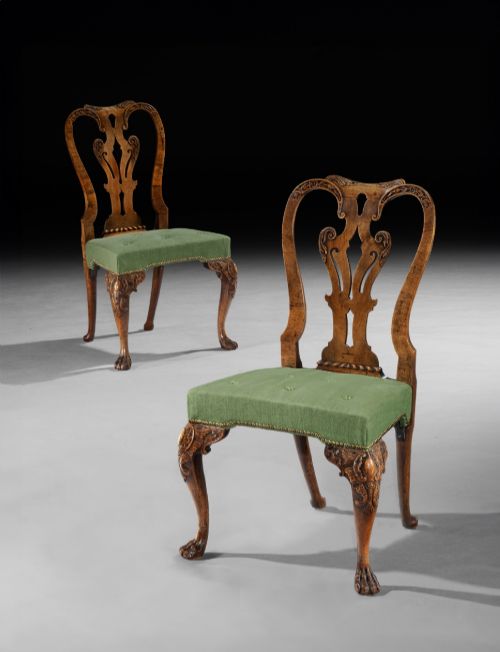
Stylistic influences range through George II, Queen Anne Revival, Victorian Chippendale Revival, and 18th Century Italian Rococo. Makers such as Gillows appear alongside uncredited regional workshops.
How they were made
Cabinetmakers constructed these frames primarily using solid mahogany and walnut timbers, shaped through hand carving and joinery techniques. Secondary timbers such as beech sometimes support internal framing.
Upholstered versions integrate traditional textiles, velvet, tapestry, and burgundy leather fixed over padding. Brass details occasionally appear as structural or decorative hardware on specific chair forms.
Listings feature mahogany, walnut, beech, and plywood, spanning 18th Century, 19th Century, Regency, and Edwardian eras.
What varies in quality
The standard of carving defines the distinction between standard production and exceptional examples, separating crisp, deep relief work from shallow detailing. Timber selection also dictates grade, with dense, figured walnut and rich mahogany sitting above plain secondary woods.
Cohesion across a set marks higher craftsmanship, particularly in matched multi-piece dining sets where proportion and timber grain align uniformly. Maker attribution, such as documented work by Gillows, elevates the standing of an individual piece.
Gillows
The Shell Carved Dining Chairs Glossary
- Side chair
- A chair without arms, designed primarily for use at a dining table. These form a large portion of seating arrangements.
- Armchair
- A chair equipped with lateral supports for the arms, often placed at the head of a dining table. They share stylistic motifs with their armless counterparts.
- Hall chair
- A stiff wooden seat positioned in a hallway rather than a dining room. These frequently display bold carved crests including shell designs.
- Bentwood
- Wood softened by steam and bent into curved structural forms. This technique appears in Edwardian seating.
- George II
- An 18th Century British design period noted for heavy walnut usage and ornate carving. Pieces from this era often feature prominent cabriole legs and shell knees.
Shell Carved Dining Chairs: Frequently Asked Questions
Are these chairs comfortable for daily dining?
Many of these pieces offer supportive wooden backs and upholstered seats suitable for meals. Dining chairs from the Victorian and Edwardian periods were built for domestic use.
Upholstered variants featuring textile or leather pads provide softer seating. Firmness depends on the condition of the internal stuffing and webbing.
How do I identify a George II chair?
George II designs typically employ walnut timber with rich grain patterns. Carved shell motifs and cabriole legs frequently characterise this mid-18th Century style.
Proportions remain robust and sturdy. Backsplats often feature solid vase shapes framed by curved stiles.
What is a hall chair used for?
Hall chairs served as functional seating in entrance halls and lobbies of large houses. Guests sat on them briefly while waiting to be announced.
Because they were meant for hallways, their designs often highlight prominent woodcarvings on the back panel rather than deep upholstery.
Can I mix different periods of dining chairs?
Mixing periods is a common approach when building a dining set over time. Pairing 19th Century chairs with 18th Century styles creates a layered interior.
Matching timber tones such as mahogany or walnut helps unify disparate chairs around a single table. Scale and back height should remain relatively balanced.