


Shaped Front Sideboard
A shaped front sideboard brings architectural grace to a room, offering curving lines and generous storage crafted in fine timbers.
Shaped Front Sideboard
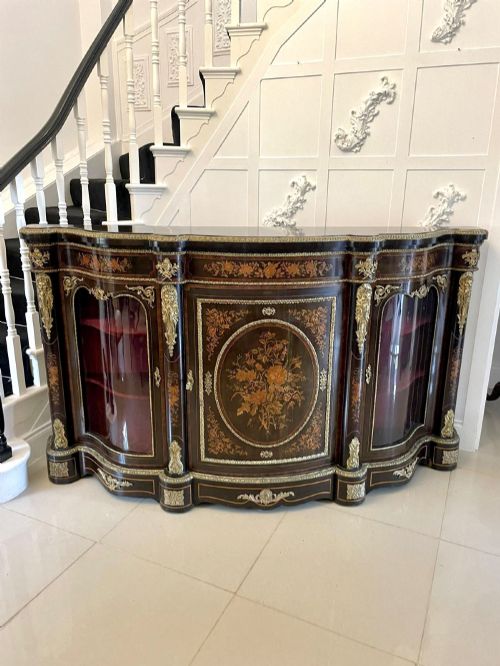
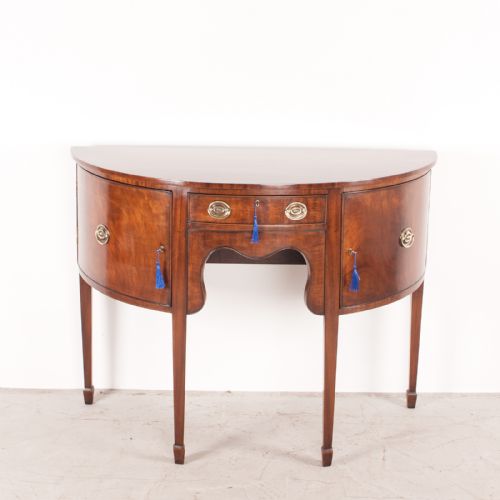
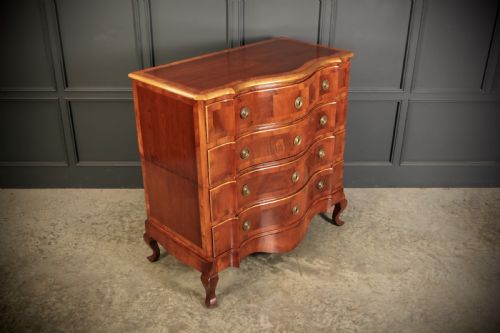
A shaped front sideboard presents a curved timber facade, incorporating serpentine, bow, demi lune, and bombe outlines that soften rigid interior spaces. These pieces appear across Georgian, Victorian, Edwardian, and later twentieth century periods, reflecting shifting tastes in formal dining and entertaining furniture.
Function matches form through fitted cupboards, drawers, and occasional specialised compartments such as cocktail cabinets. The primary forms span traditional sideboards, credenzas, and commodes sharing the characteristic curved elevation.
Materials and construction methods
Cabinetmakers built these carcases using solid timbers and decorative veneers such as mahogany, walnut, and burr walnut, laid over sturdy secondary woods. Surface enrichment frequently incorporates boxwood stringing, floral marquetry, and ormolu mounts.
Creating the complex curves required specialised joinery, bending solid timber or shaping multi layered core boards to receive fine veneer faces. Polishing highlighted the natural grain patterns of the wood while hardware like brass handles and key escutcheons completed the construction.
Some cocktail cabinets hide their spirited contents behind innocent floral marquetry.
Evaluating craftsmanship and proportion
Quality reveals itself in the harmony of the curve and the selection of timber veneers matched across the front drawers and doors. Finer pieces demonstrate precision in inlay work and tighter joints along complex serpentine or bombe angles.
The choice of secondary materials and interior fittings distinguishes the workshop standard, alongside the survival of original brass hardware and marble tops where specified. Weight, timber density, and the crispness of carved details separate standard production from superior examples.
The Shaped Front Sideboard Glossary
- Serpentine
- A front contour featuring a convex centre flanked by concave curves, creating an undulating movement across the furniture face. This profile requires advanced carpentry to execute smoothly.
- Demi lune
- A half moon shape describing sideboards and cabinets with flat backs designed to sit flush against a wall. The curved front projects outward in a semi circular arc.
- Bombe
- A swelling, outward curving form most commonly found on continental European commodes and sideboards. The profile curves outward in both vertical and horizontal directions.
- Marquetry
- The art of forming decorative patterns using thin pieces of wood veneer and other materials applied to a carcase structure. Floral and geometric motifs dominate these designs.
- Ormolu
- Gilt bronze mounts applied as decorative ornaments to furniture corners, feet, and drawer aprons. These metallic additions accent the rich tones of mahogany and walnut.
Shaped Front Sideboard: Frequently Asked Questions
Where should I place a shaped front sideboard?
These pieces suit dining rooms, hallways, and living spaces where a curving silhouette softens straight architectural lines. Ensure adequate clearance for doors and drawers to open fully against the curved facade.
Positioning the sideboard away from direct heat sources protects the timber veneers and prevents the wood from drying out over time.
How do I clean mahogany and walnut surfaces?
Dust the sideboard regularly with a soft, dry cloth to prevent grit accumulation on the polished timber. Avoid modern silicone sprays that can build up a greasy film over the antique polish.
Apply a traditional beeswax sparingly when the wood appears dry, buffing it gently to maintain a soft natural sheen.
Can I store heavy items inside?
Most interiors feature standard wooden shelving designed for dining china, linen, and glassware. Distributing weight evenly protects historical internal structures.
Avoid overloading drawers, particularly on pieces with curved fronts where internal runners follow complex geometric paths.
How do I identify a Georgian piece?
Examine the timber selection, drawer construction, and secondary woods visible on the interior frames and drawer linings. Hand cut dovetails and minimal use of modern adhesives point toward earlier manufacturing methods.
Compare the overall proportions and hardware style with documented examples from the eighteenth century to confirm the period.