
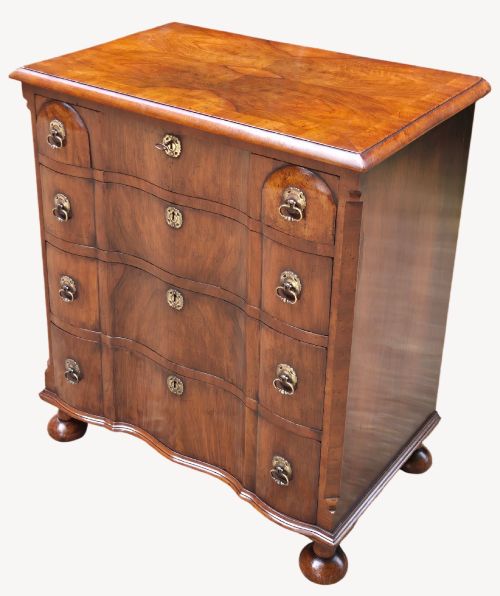


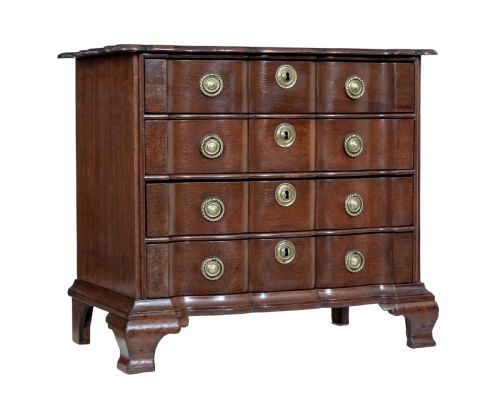
Shaped Front Bureau
A shaped front bureau is a writing cabinet with curved drawer fronts that offers hidden storage and a fine workspace.
Shaped Front Bureau
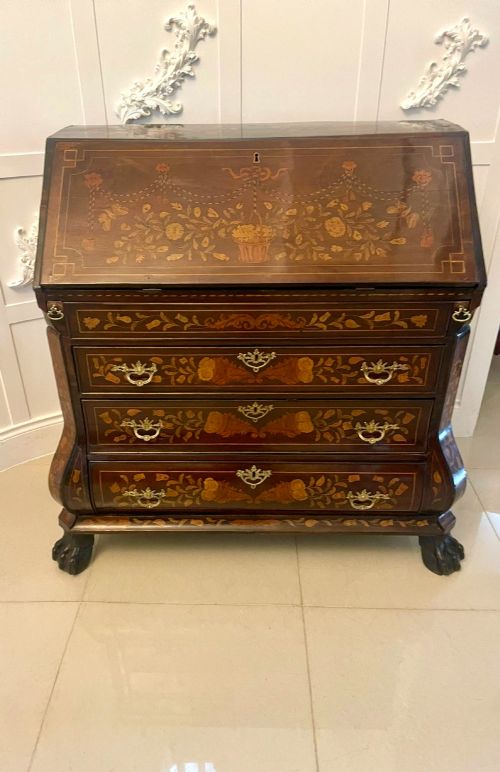
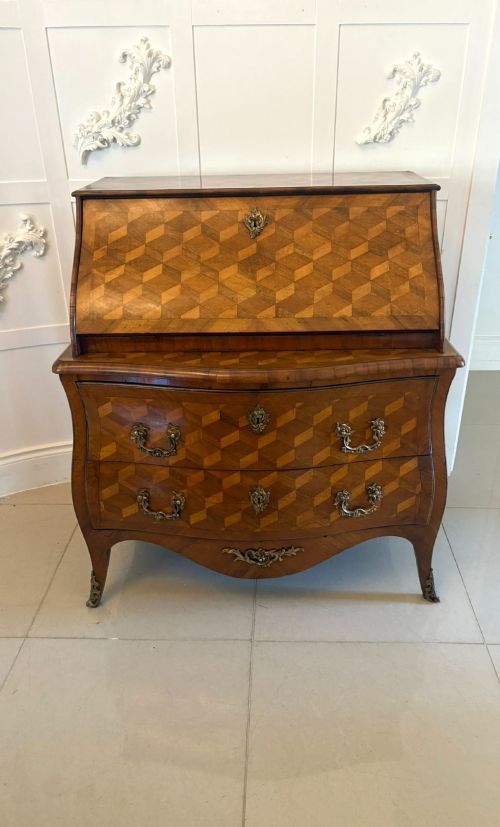
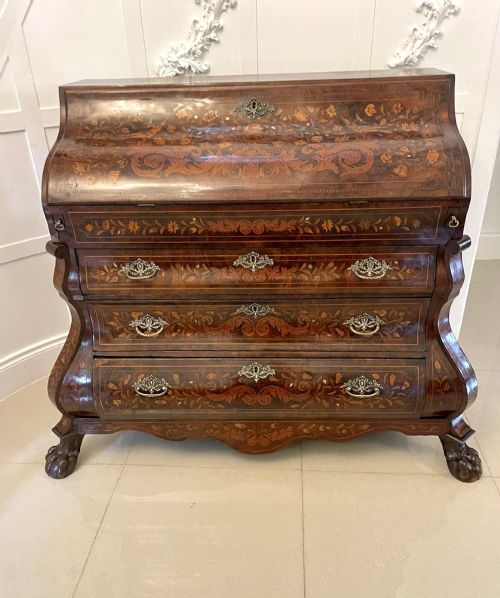
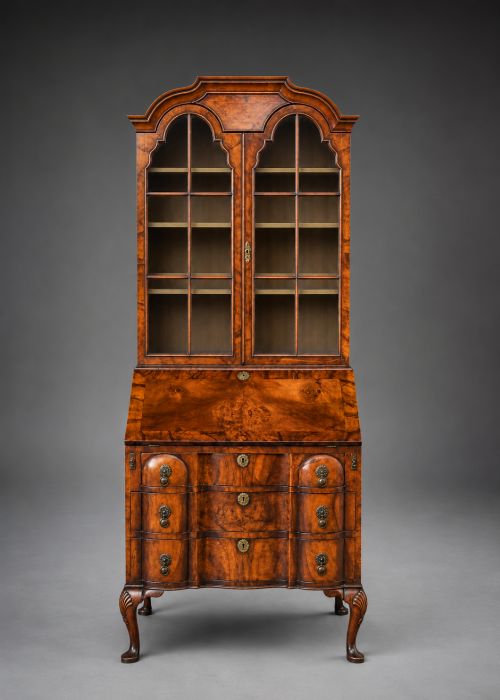
When you search for a shaped front bureau, you find writing cabinets, bureau bookcases, and desks featuring curved or bombe contours. These pieces span from the 18th century through to the 1930s, showing a variety of forms designed for practical writing and enclosed storage.
You are most likely to meet walnut and mahogany examples on this page, often featuring floral marquetry or parquetry. Styles range from Dutch Baroque and Queen Anne to Edwardian and Art Deco interpretations.
The selection includes bureau desks with fitted interiors alongside tall bureau bookcases and serpentine chests of drawers. Each piece presents distinct regional and stylistic traits tied to its period of origin.
How they were made
Cabinet makers utilised choice timbers such as burr walnut, mahogany, oak, and fruitwood, often applying detailed floral marquetry and parquetry patterns across curved surfaces. The construction of a bombe or serpentine shaped front requires precise timber shaping and joint work.
Hardware such as brass handles and escutcheons complement the woodwork, while specialised glass elements appear on bureau bookcase doors. These materials are combined to create robust writing furniture with decorative visual depth.
Listings span from the 18th century through the Victorian era to Art Deco pieces from 1930.
What varies in quality
The standard of a shaped front bureau rests on the selection of timber veneers and the precision of the marquetry or parquetry inlay. Rich burr walnut and balanced floral patterns indicate careful selection by the maker.
The fluidity of the curves on a bombe or serpentine front defines the piece's sculptural success. Clean lines in the fitted interior compartments and the execution of the dovetail joints further separate standard production from finer work.
Liberty of London
The Shaped Front Bureau Glossary
- Bombe
- A bulging or swelling convex shape found on the front and sides of furniture. This contour is typical of Dutch and continental 18th century pieces.
- Marquetry
- Decorative patterns created by fitting thin pieces of wood veneer and other materials into a wooden background. Floral motifs are common in this work.
- Serpentine
- A furniture front shaped with a concave central section flanked by two convex ends. This line creates a gentle wave effect across the drawers.
- Parquetry
- A geometric mosaic of wood pieces used for decorative floors and cabinet surfaces. It relies on regular angles and contrasting timber tones.
- Bureau bookcase
- A writing cabinet featuring a sloping fall front desk base beneath an upper shelving section enclosed by doors. These taller pieces combine storage and workspace.
Shaped Front Bureau: Frequently Asked Questions
What is a shaped front bureau?
A shaped front bureau is a desk or cabinet featuring curved drawer fronts, often with a sloping writing flap that opens to reveal internal compartments.
These pieces combine enclosed storage for correspondence with a practical writing surface, taking various forms from compact desks to tall bureau bookcases.
How do I date a walnut bureau?
Dating a walnut bureau involves looking at the timber grain, the style of the hardware, and the construction methods used inside the drawer carcasses.
Earlier pieces from the 18th century often feature distinct marquetry and candle slides, whereas Edwardian or Art Deco revivals display different veneer selections and cleaner interior lines.
Where should I place a bureau?
A bureau suits a study, living room, or hallway where its folded writing flap can remain closed when not in use.
Keeping the piece away from direct sunlight and radiators helps protect the delicate veneers and solid timber from drying out or cracking.
How do I care for marquetry surfaces?
Caring for marquetry involves dusting regularly with a soft, dry cloth and applying traditional beeswax sparingly to nourish the timber.
Avoiding synthetic polishes and keeping the room humidity stable preserves the intricate wood inlays against lifting or shrinkage.