


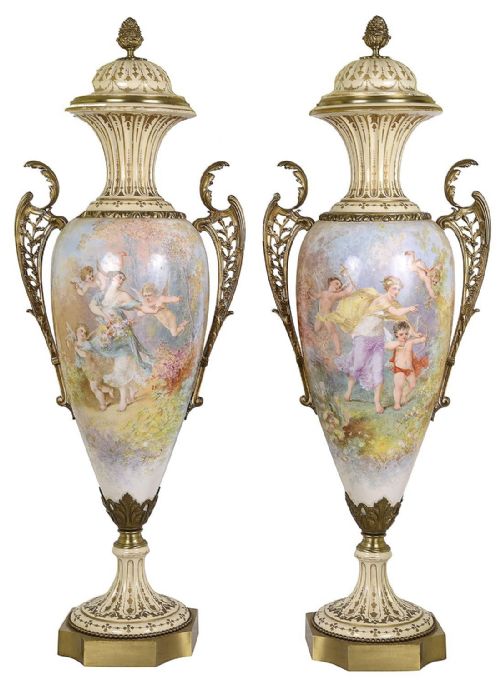


Sevres Style Vases
Sevres style vases bring French courtly elegance to a room, offering decorative porcelain and gilt metal mounts that collectors prize for their grandeur.
Sevres Style Vases
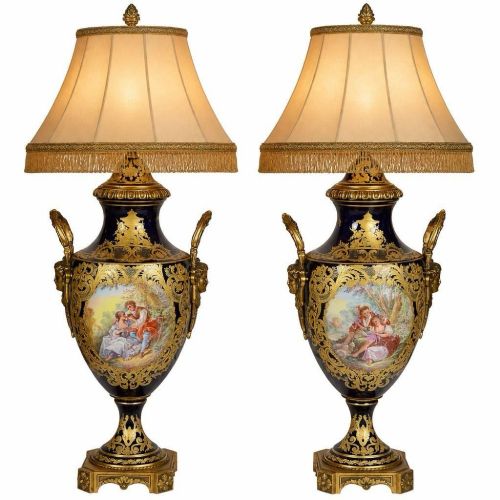
When searching for sevres style vases, a buyer examines pieces originating predominantly from the nineteenth century, reflecting French tastes such as Rococo Revival, Louis XVI style, and Neoclassical designs. These objects take forms ranging from standard decorative urns and lidded vessels to table lamps, garniture sets, and mantel clocks.
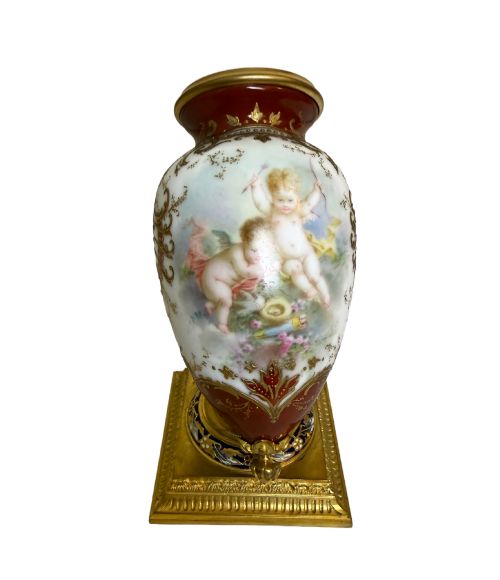
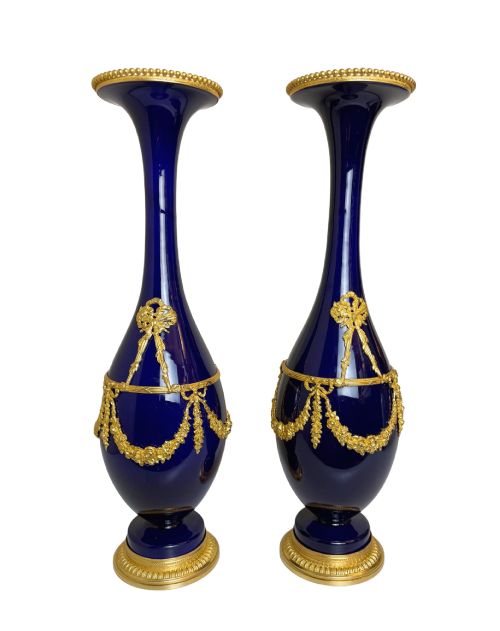
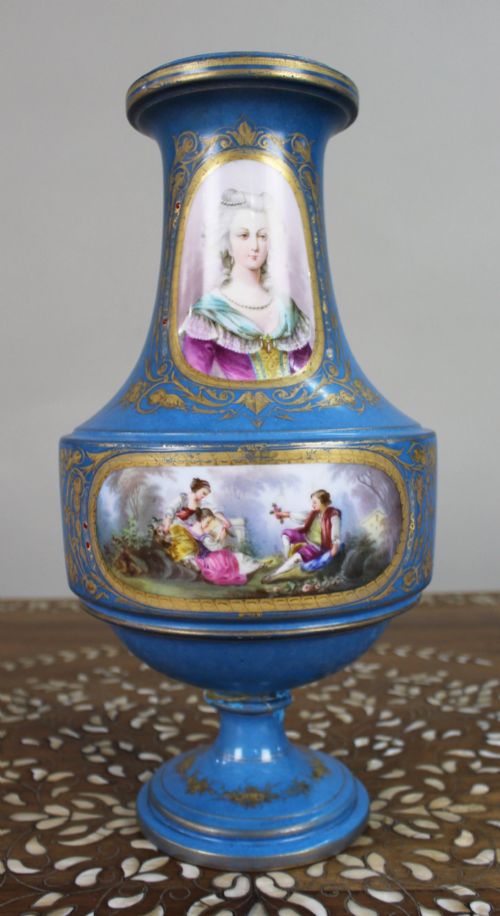
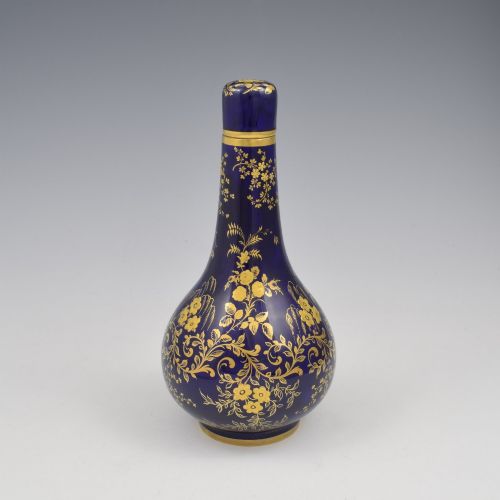
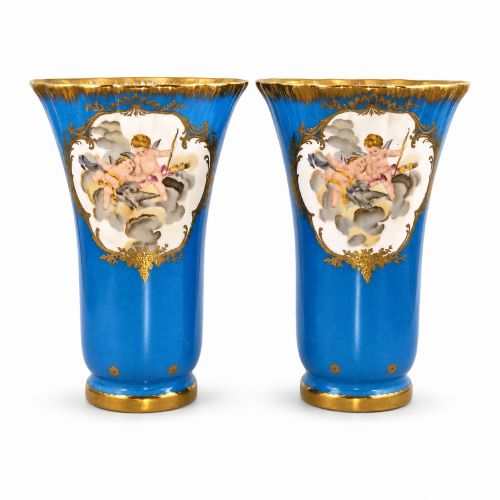
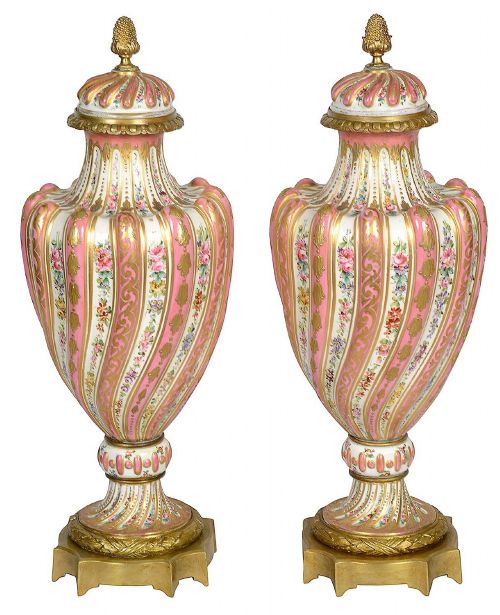
The version most commonly encountered on this page is the nineteenth-century porcelain vase, frequently paired with ormolu or gilt bronze mounts and distinguished by rich ground colours like bleu celeste or cobalt blue. Many examples display hand-painted scenes, floral motifs, or putti, capturing the aesthetic of the royal French factory through nineteenth-century interpretations.
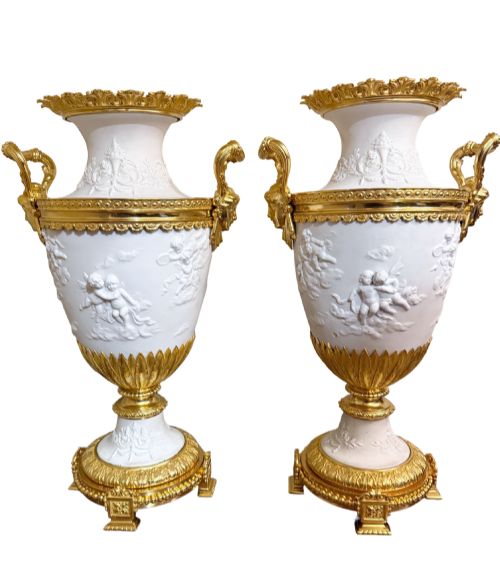
Makers and factories outside of France, including Samson Paris and Derby, also produced pieces in the Sèvres taste during this period. The inventory spans straightforward porcelain bodies to monumental urns flanked by elaborate handles and mounted on heavy metal bases.
Materials and construction
The fabrication relies on a porcelain body shaped into vases, urns, or ewers, often glazed in distinctive hues like pink, white, or sky blue. Artisans applied hand-painted decoration, enamel, and gold leaf or gilt accents directly onto the ceramic surface.
Metal mounts in ormolu, gilt bronze, gilt metal, and brass provide structural framing and decorative handles, collars, and bases. These metal elements are cast and chased before being fitted securely to the porcelain vessels, sometimes complemented by silk components in related lamps.
Listings feature nineteenth-century porcelain, ormolu, and gilt bronze, spanning styles from French Rococo Revival to Neoclassical.
Factors determining quality
Quality rests heavily on the execution of the hand-painted scenes and the crispness of the gilt work upon the porcelain. Superior examples exhibit detailed figural painting, such as gallant scenes or battle motifs, executed with precision rather than generic floral application.
The weight, casting quality, and chasing of the ormolu or gilt bronze mounts distinguish finer productions from simpler ones. Heavy, finely articulated metalwork securely integrated with high-grade porcelain defines the upper tier of the range.
Derby Porcelain·Samson Paris
The Sevres Style Vases Glossary
- Ormolu
- Gilt bronze mounts used extensively to decorate the edges, bases, and handles of nineteenth-century porcelain. This technique involves applying a fine layer of gold to a bronze base.
- Bleu Celeste
- A bright sky-blue porcelain ground colour characteristic of Sèvres and nineteenth-century revival pieces. It provides a vibrant backdrop for gilt accents and painted panels.
- Garniture
- A set of three or more matching decorative objects, typically vases or urns, designed to sit together on a mantelpiece or cabinet. These sets often feature a central larger vessel flanked by a matching pair.
- Putti
- Depictions of plump, winged infant figures often painted onto the body of decorative vases. They appear frequently in pastoral and mythological scenes.
- Ewer
- A large jug with a wide spout and handle, adapted into a decorative vase form in many nineteenth-century ceramic pairings. These pieces frequently incorporate gilt metal mounts.
Sevres Style Vases: Frequently Asked Questions
What periods do these vases come from?
The pieces listed derive mainly from the nineteenth century, capturing periods like 1860, 1880, 1890, and extending into the early twentieth century around 1920.
Revival styles from this era draw heavily upon French Rococo and Neoclassical design vocabularies of earlier centuries.
Are all these pieces made in France?
While the style originates from the French Sèvres factory, production spanned multiple regions and workshops during the nineteenth century.
English potteries like Derby and French houses such as Samson Paris produced pieces specifically in the Sèvres taste.
What metal mounts appear on these vases?
The porcelain bodies are frequently accented with mounts made of ormolu, gilt bronze, gilt metal, brass, and gold leaf.
These metal components form decorative handles, rims, bases, and structural supports for the ceramic forms.