
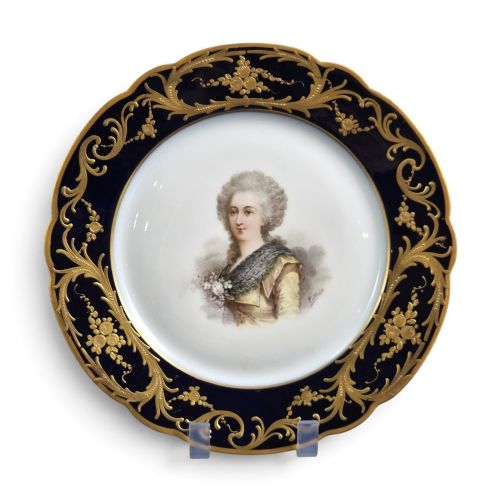


Sevres Style Porcelain Dish
A sevres style porcelain dish brings French palace elegance to a table, combining hand-painted scenes with rich gilding.
Sevres Style Porcelain Dish
When you search for a sevres style porcelain dish, you encounter decorative porcelain items inspired by the famous French royal factory. The selection here spans cabinet plates, round boxes, oval dishes, large trays, comports, and soup tureens.
You are most likely to meet 19th century examples on this page, alongside occasional pieces from the late 18th century. These objects frequently display cobalt blue or bleu céleste grounds framing painted portraits, battle scenes, or pastoral figures.
Makers such as Samson, Paris appear among these offerings, replicating the prestigious manner of the royal French works. Forms range from simple cabinet plates to elaborate comports and centrepieces.
How they were made
Potters shaped these objects from porcelain, applying enamel and gold leaf or gilding to create rich decorative surfaces. Artisans painted detailed subjects by hand, including military encampments, medieval battle scenes, and Watteau-style figures.
Mounts of ormolu sometimes complemented the porcelain body, particularly on round boxes and decorative trays. Workshops utilised cobalt grounds and bleu céleste coloration to frame the central painted motifs.
Listings feature 19th-century and 18th-century periods, utilising materials such as porcelain, enamel, gold leaf, and ormolu across various decorative forms.
What varies in quality
The precision of the hand-painted brushwork distinguishes finer examples from simpler decorative wares. Portrait plates and pastoral scenes executed with careful detail command greater attention than standard patterned items.
The application of gold leaf and the richness of the cobalt or bleu céleste background dictate the overall visual depth. Maker attribution, such as work by Samson of Paris, adds notable weight to a piece.
Samson Paris
The Sevres Style Porcelain Dish Glossary
- Bleu céleste
- A bright turquoise blue ground colour associated with the French royal porcelain works. It forms a vibrant backdrop for hand-painted reserve panels.
- Cabinet plate
- A decorative plate intended for display in a cabinet rather than for dining use. These pieces often feature elaborate painted scenes and gilt borders.
- Ormolu
- Gilded bronze used for decorative mounts and fittings on porcelain objects. It provides a bright metallic contrast to the ceramic body.
- Comport
- A raised dish or bowl used as a centrepiece on a table for serving fruit or sweets. They sit on a pedestal base and often anchor a formal table setting.
- Rococo revival
- A 19th-century design style drawing on 18th-century asymmetrical scrolls and natural motifs. It appears frequently in the shaping and framing of these porcelain dishes.
Sevres Style Porcelain Dish: Frequently Asked Questions
What is a sevres style porcelain dish?
A sevres style porcelain dish is a ceramic piece decorated in the manner of the historic French royal factory. These items often feature hand-painted scenes, cobalt grounds, and rich gilding.
They originate primarily from the 19th century, drawing on earlier French aesthetic traditions. Collectors prize them for their decorative painted panels and ornate forms.
How were these porcelain dishes used?
Many of these objects served as decorative display items rather than functional tableware. Cabinet plates and comports sat in formal rooms to demonstrate taste and wealth.
Other forms, such as soup tureens, platters, and trinket boxes, combined decorative painted surfaces with practical utility. Their elaborate design suited formal dining and domestic organisation in the 19th century.
Who made these porcelain pieces?
While inspired by the original French royal factory, many pieces on the market were produced by later European makers. Workshops such as Samson in Paris recreated these historic styles during the 19th century.
English factories also drew inspiration from the French aesthetic, as seen in earlier regional dessert plates. Maker marks, where present, help identify these subsequent manufacturing houses.
How do I distinguish between periods?
Examining the paste, gilding technique, and painting style helps differentiate 18th-century originals from 19th-century revival pieces. 19th-century items often reflect specific historical revivals such as Rococo or Neoclassical.
Stylistic cues, including the specific shade of cobalt or the subject matter of the painted reserve, point toward a period of origin. Comparing pieces against documented archival examples provides further clarity.