






Seventeenth Century Wooden Chairs
Seventeenth century wooden chairs are substantial seating pieces providing tactile historical character and structural solidity for any interior.
Seventeenth Century Wooden Chairs
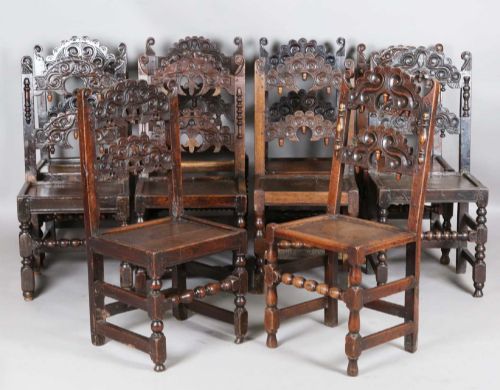
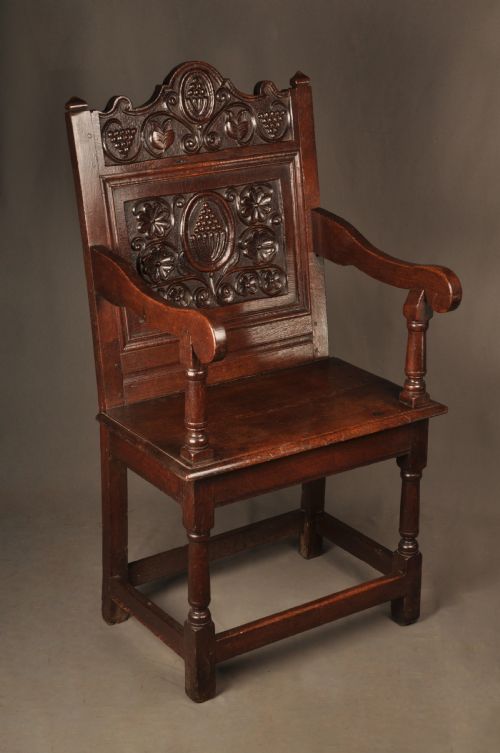
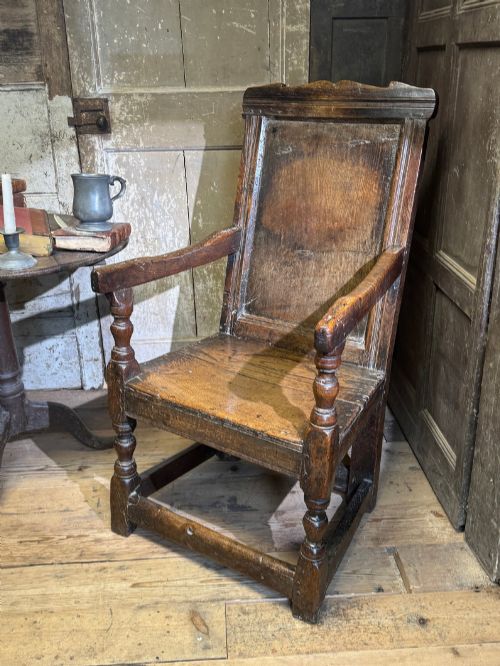
Seventeenth century wooden chairs encompass robust wainscot armchairs, joined backstools, and side chairs originating from English, Welsh, and regional workshops. The heavy timber construction defines their presence, offering solid utility rooted in early domestic life.
Most pieces encountered here belong to the seventeenth century period, alongside later revival iterations. Wainscot forms and joined oak armchairs dominate the selection, reflecting the domestic seating arrangements of the era.
Regional variations appear across Lancashire, Yorkshire, and North Country origins. These pieces range from simple side chairs to elaborate carved armchairs and even utilitarian forms like close stools.
What varies in quality
Depth of carving and sharpness of detail separate standard regional items from finer workshop productions. Crisp execution in the timber work indicates greater skill by the maker.
Condition of the original timber and the integrity of the joined construction dictate the standard of survival. Natural surface patination and minimal replacement of structural components distinguish superior examples.
Seventeenth Century Wooden Chairs Retail Price Guide 2026
Typical asking prices for seventeenth century wooden chairs among the pieces listed under this phrase on Sellingantiques today, from the lower quarter to the upper quarter. They describe what is for sale here now, not the wider market.
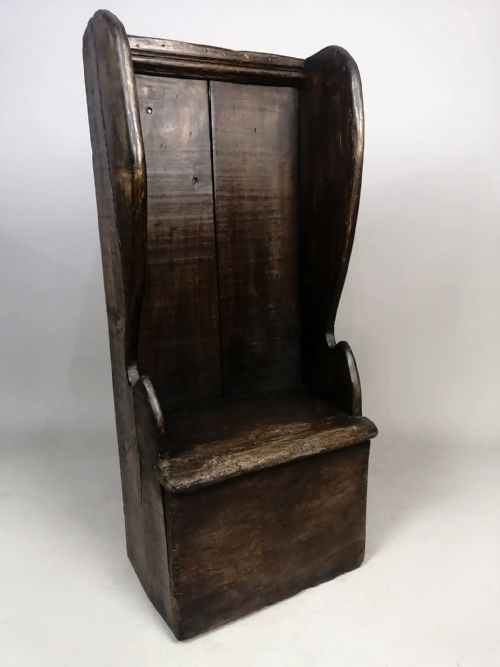
A child's lambing chair from sixteen-eighty proves that even toddlers required a proper draught-excluding timber wing.
The Seventeenth Century Wooden Chairs Glossary
- Wainscot chair
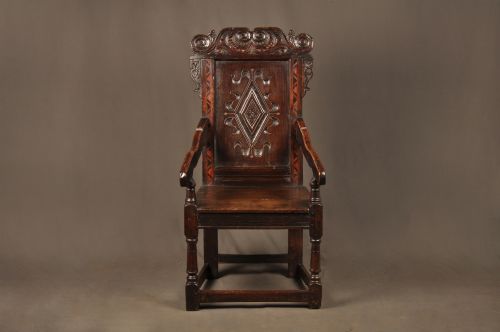
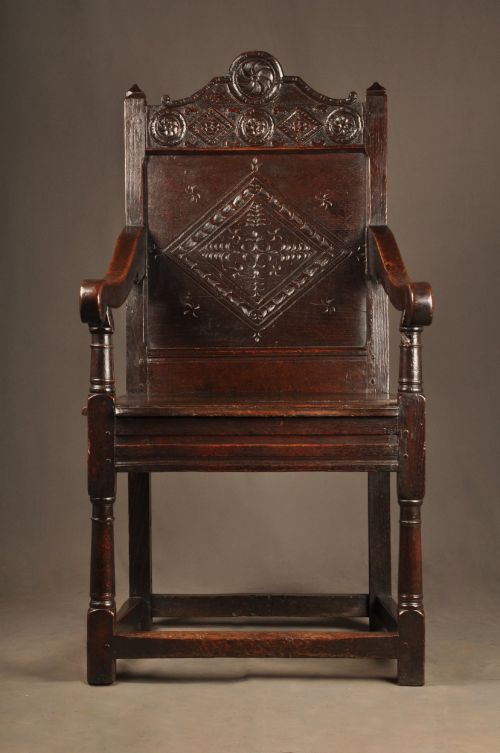
- A heavy wooden armchair constructed with panelled backs and solid wooden seats. These pieces typically date from the seventeenth century and reflect high status in early households.
- Backstool
- An early form of chair without arms, serving as a precursor to the modern side chair. They feature a vertical back and joined wooden construction.
- Joined oak
- Furniture construction utilising mortise and tenon joints secured with wooden pegs. This method provides the sturdy skeleton characteristic of seventeenth century seating.
- Fruitwood
- Dense timber derived from fruit-bearing trees, utilised by makers for smaller chairs and child variants. It offers a distinct grain and warm tone compared to standard oak.
- Close stool
- A specialised box-form seat enclosing a chamber pot, dating to the seventeenth century. These domestic items combined seating utility with concealed sanitation.
Seventeenth Century Wooden Chairs: Frequently Asked Questions
How do I identify a genuine seventeenth century chair?
Examine the construction methods for traditional joined pegging and hand-worked timber surfaces. Natural wear patterns and historical patination on the oak or fruitwood provide further confirmation of age.
Compare the regional style, such as Lancashire or Yorkshire characteristics, against known period exemplars. Differences in panel carving and turning styles help distinguish early work from later revival pieces.
What is a wainscot chair?
A wainscot chair is a heavy wooden armchair featuring a panelled back and a solid timber seat. These pieces were substantial investments for households of the period.
The design provides a rigid, upright seating position characteristic of early domestic interiors. Their enclosed lower frames often prevented drafts from stone floors.
How were these chairs used historically?
Seventeenth century chairs served as primary seating for heads of households or honoured guests in domestic settings. Their solid construction meant they remained fixed in principal rooms rather than moved about frequently.
Specialised variants like close stools or child chairs fulfilled specific domestic needs within the household. Their robust build ensured they survived centuries of daily use.
Can I use these chairs in a modern home?
These wooden chairs function well as accent seating in hallways, studies, or living spaces. Their compact side chair and armchair forms fit easily against walls or at desks.
Pairing them with neutral modern surroundings highlights their historical timber texture and carved details. Regular maintenance involves simple dusting and occasional waxing to preserve the surface.