


Seventeenth Century Side Chairs
Seventeenth century side chairs are sturdy timber seating of distinct regional character that bring genuine early period weight to a room.
Seventeenth Century Side Chairs
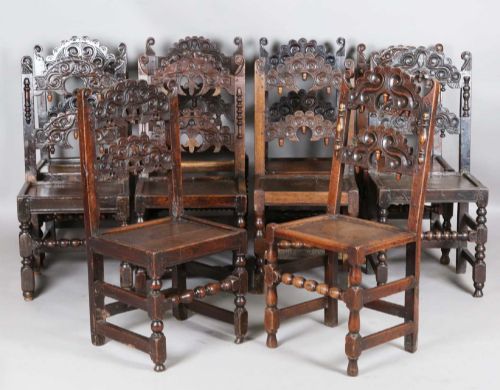
These seventeenth century side chairs encompass regional forms such as joined oak backstools, Lancashire chairs, and Yorkshire chairs alongside later revivals from the nineteenth and twentieth centuries. Buyers encounter carved oak frames, cane-weave seating, and upholstered variants originating from English, Scottish, and Welsh workshops.
The material record spans authentic seventeenth century items dated near sixteen fifty up to nineteen twenty revivals styled in the Jacobean, Tudor, and William and Mary traditions. Surviving pieces range from single vernacular chairs to matched sets suited for dining and parlour use.
Materials and construction methods
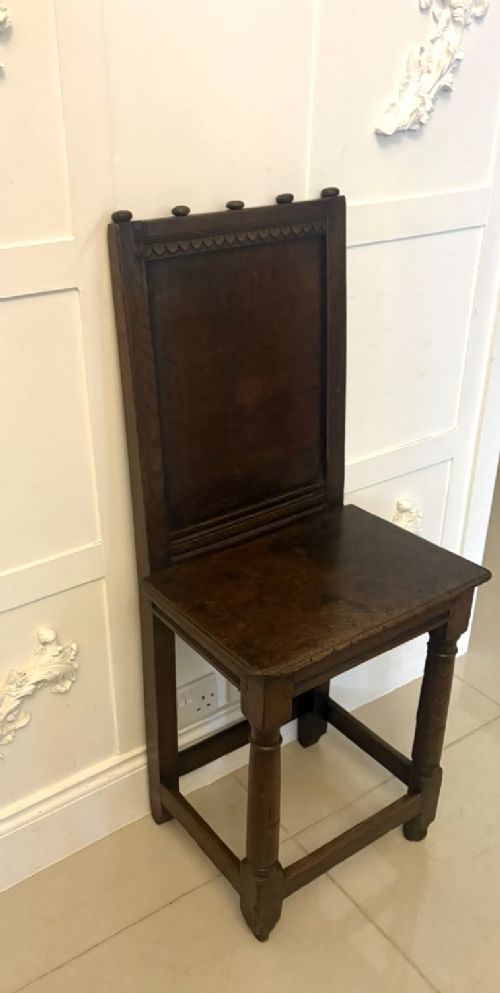
Makers utilised solid timbers such as oak, ash, and walnut, employing traditional jointing techniques to build rigid rectilinear frames without modern adhesives. Backstools and side chairs often feature turned supports, joined stretchers, and carved wooden backs.
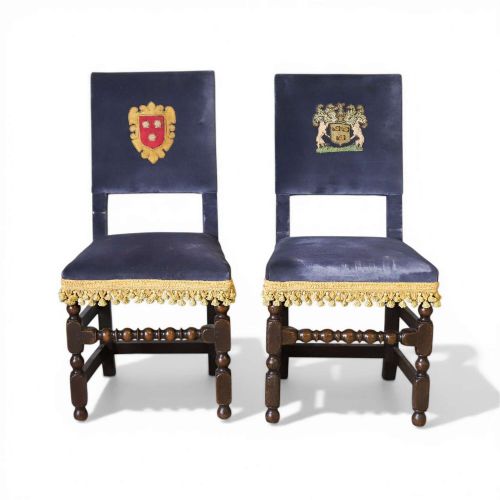
Upholstery materials include leather, velvet with metallic fringe, and tapestry panels secured to frames, whilst other examples incorporate cane weaving for seat panels.
Listings for seventeenth century side chairs frequently feature regional oak forms from Yorkshire and Lancashire alongside early twentieth century revival pieces.
Distinctions in quality
Quality rests in the crispness of the hand carving, the integrity of the original timber framing, and the survival of period upholstery materials or early cane work. Pieces showing deep regional vernacular character and intact early structures stand apart from later revival reproductions.
The balance of proportions and the degree of wear on high-touch areas like stretchers and stile tops reveal the history of daily use and structural competence of the maker.
Waring and Gillow
The Seventeenth Century Side Chairs Glossary
- Backstool
- An early form of chair without arms, featuring a high narrow back and a wooden or upholstered seat. These items form a large portion of early vernacular seating.
- Joined oak
- Furniture constructed using mortise and tenon joints secured by wooden pegs rather than metal nails. This method defines seventeenth century cabinet work.
- Farthingale chair
- A wide, armless seat designed to accommodate the wide hoop skirts worn by women in the seventeenth century. They typically feature low upholstered seats and backs.
- Stretcher
- The horizontal wooden member connecting the legs of a chair to provide structural rigidity. In seventeenth century seating, stretchers often sit low near the floor.
Seventeenth Century Side Chairs: Frequently Asked Questions
How do I spot a true seventeenth century chair?
Examine the timber joints for pegged mortise and tenon construction and look for tool marks consistent with hand working. Authentic early examples show genuine timber shrinkage and wear patterns appropriate for centuries of handling.
Compare the style of carving and regional turning details against documented examples from specific areas like Yorkshire, Lancashire, or the Conwy Valley.
Were these chairs used at dining tables?
Most seventeenth century side chairs and backstools served multi-purpose seating roles in halls and parlours rather than dedicated dining use. Dining sets became more common towards the end of the century and in later revival periods.
Their sturdy oak frames allowed them to be moved easily around the home for various domestic tasks.
How should I care for antique oak furniture?
Keep wooden chairs away from direct heat sources and drastic humidity changes to prevent the timber from splitting or warping. Apply a suitable microcrystalline wax sparingly to nourish the dry oak surface.
Avoid harsh chemical cleaners and protect upholstered or cane sections from direct sunlight.
What is the difference between an original and a revival chair?
Revival chairs, dating from the nineteenth and twentieth centuries, imitate earlier seventeenth century styles using machine assistance and later hardware indicators. Original pieces carry the distinct tool signatures and structural wear of seventeenth century joinery.
Examining the underside and interior joints often reveals the manufacturing era through wood oxidation and fastener types.