


Set of Six Glasses
When you search for a set of six glasses, you encounter matching drinking vessels spanning Georgian, Victorian and twentieth-century eras for entertaining.
Set of Six Glasses
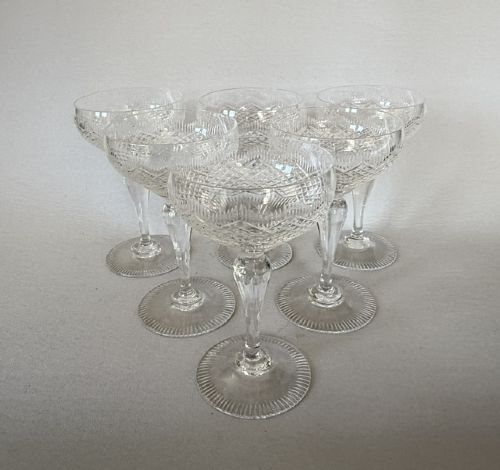
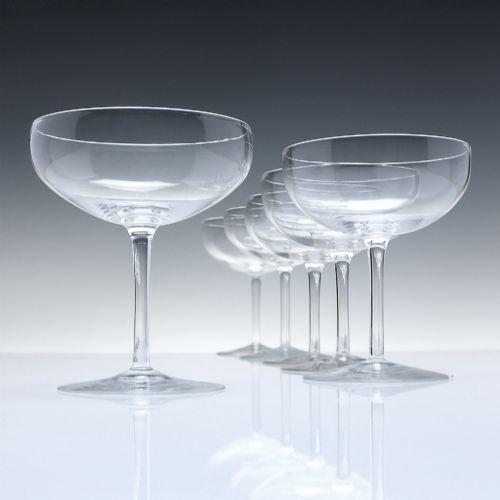
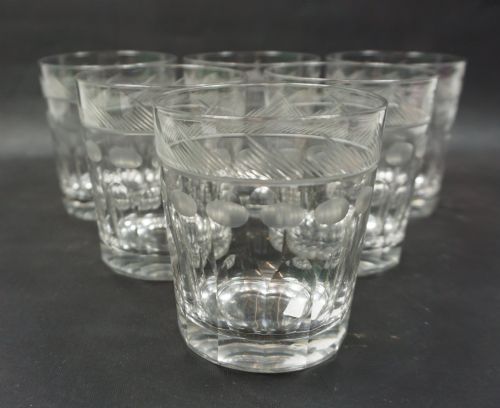
A set of six glasses brings together drinking vessels designed for coordinated table service, spanning eras from the Georgian period through the Victorian age and into twentieth-century modernism. These groupings include wine glasses, champagne coupes, cordials, tumblers and rummers intended for communal dining or social gatherings.
The assortment on this page reflects domestic entertaining habits across multiple decades, featuring vibrant coloured bowls, deep wheel cutting and delicate enamelling. Buyers find everything from early lead glass tablewares to bright hued Victorian specimens and streamline Art Deco forms.
Materials and Techniques
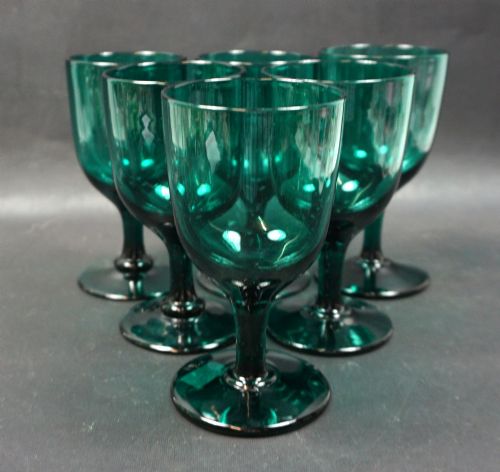
Makers shaped these vessels using lead glass and clear crystal, often introducing metallic oxides to produce rich shades of green, cranberry, amethyst and turquoise. Artisan workshops employed free-blowing, mould-blowing and intricate wheel-cutting to achieve faceted bowls and patterned stems.
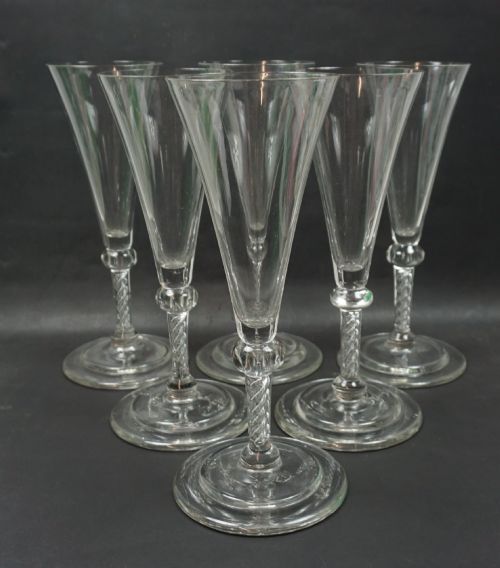
Surface decoration frequently involved hand-painting, gilding and enamelling, seen in continental output from houses like Moser and Theresienthal. Twist stems incorporated air or opaque white threads within the molten metal during shaping.
Evaluating the Range
Quality rests in the precision of the glassmaker's hand, from the uniform thickness of blown bowls to the crispness of wheel-cut facets and polished stems. Superior examples display clarity in the metal and careful matching across all six pieces in the group.
Makers known for exceptional design, such as René Lalique or Thomas Webb, command attention through distinctive moulding, refined proportions and intricate surface engraving that elevates utility into art.
Elkington·Theresienthal·Moser·René Lalique·Thomas Webb·Salviati·Baccarat·Friedrich Heckert·William Comyns
The Set of Six Glasses Glossary
- Lead glass
- Glass containing lead oxide, which increases brilliance, weight and softness for easier cutting. This material characterises much of the fine tableware produced in Britain during the eighteenth and nineteenth centuries.
- Rummer
- A large, sturdy drinking glass popular in the eighteenth and nineteenth centuries for ale or wine. These pieces typically feature short stems and capacious bowls.
- Air twist
- A decorative stem enclosing a spiral column of elongated air bubbles trapped inside the glass during manufacture. This technique requires considerable skill from the glassblower.
- Cranberry glass
- A transparent red glass made by adding gold chloride to the molten batch. It gained popularity during the Victorian era for decorative tableware.
- Cut glass
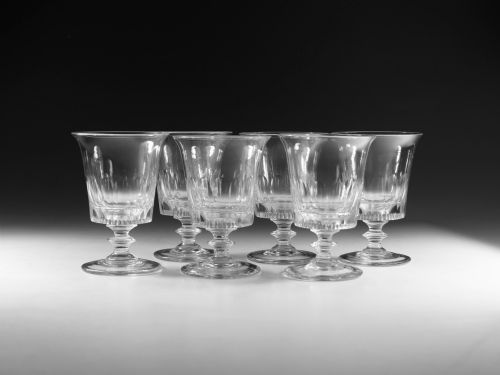
- Glassware decorated by holding the vessel against a rotating abrasive wheel to carve geometric patterns. Deep cutting creates sharp facets that catch ambient light.
Set of Six Glasses: Frequently Asked Questions
Are these glasses safe for daily use?
Antique and vintage drinking vessels handle gentle hand washing well, though fragile lead crystal and enamelled surfaces require careful handling to prevent damage.
Owners often reserve these matched groupings for special occasions or display to preserve their historical condition.
How do I spot Georgian glass?
Georgian pieces display heavier metal with characteristic pontil marks on the underside and darker tones in the material. Their forms reflect the drinking habits of the eighteenth and early nineteenth centuries.
Look for handmade traits such as slight bubbles in the handle or variations in bowl thickness that reveal individual craftsmanship.
Why do some sets feature mixed colours?
Harlequin sets combine different coloured bowls within a single matching form, allowing guests to identify their own glass easily during large dinner parties.
This tradition spans various Victorian and continental production centres where vibrant hues were displayed together on the dining table.
What defines a rummer?
Rummers are substantially heavier than standard wine glasses, possessing wide bowls and sturdy, short stems built for robust toasts. They emerged in British taverns and homes for serving ale, punch or heavy wines.
Their generous capacity makes them distinct from delicate cordial or port glasses of the same era.