



Set of Silver Forks
A set of silver forks brings domestic dining history to the table, ranging from simple cased pastry sets to elaborate Victorian serving implements.
Set of Silver Forks
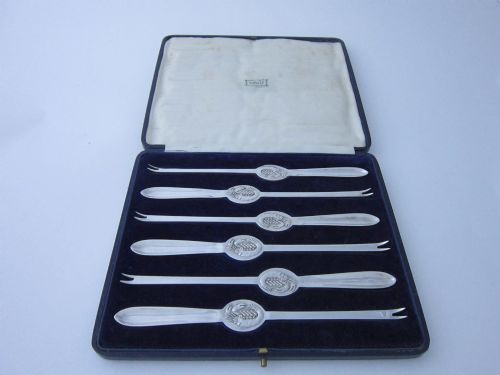
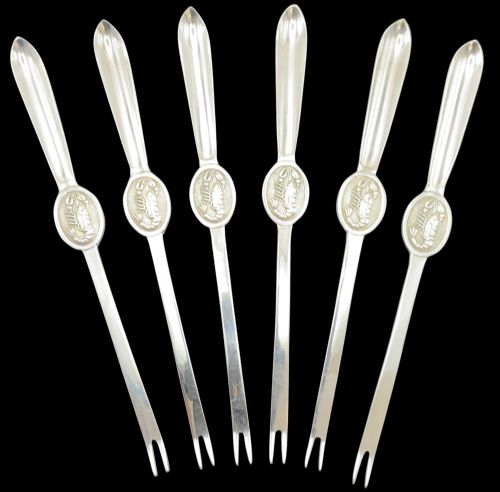
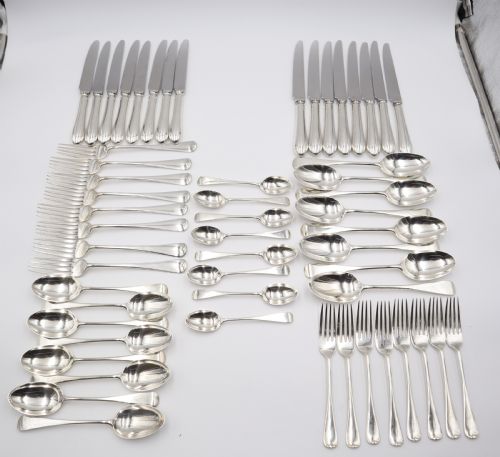
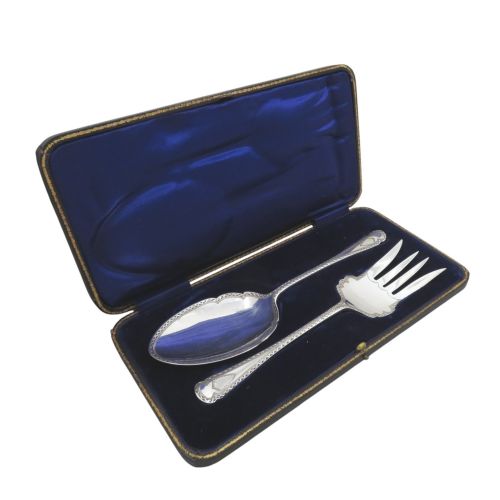
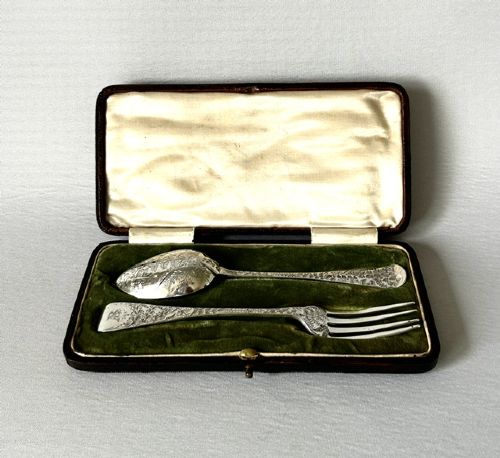
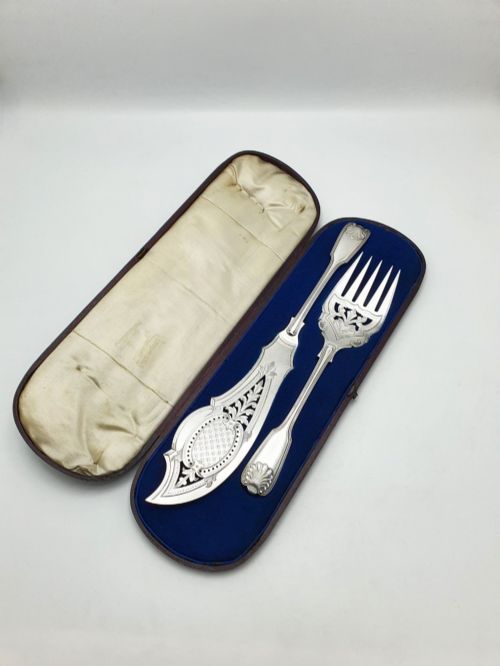
A set of silver forks spans various domestic uses, appearing as cased collections of tea, dessert or pastry pieces alongside specialised seafood picks, lobster forks and substantial dinner services. Buyers investigating this category encounter matching groups designed for specific dining rituals from the Georgian, Victorian, Edwardian and Art Deco eras.
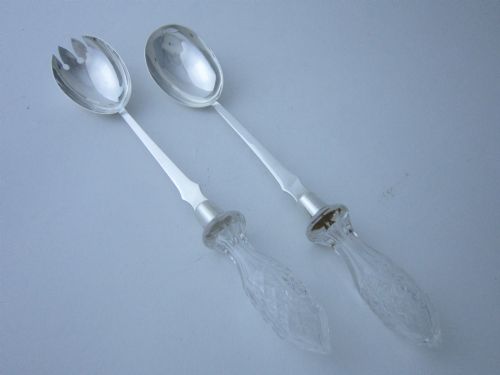
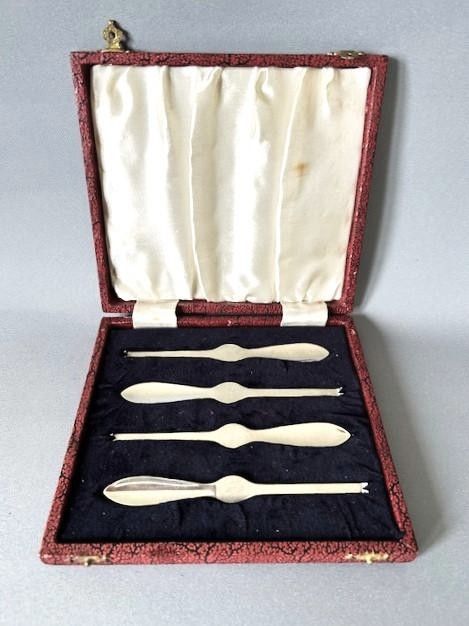
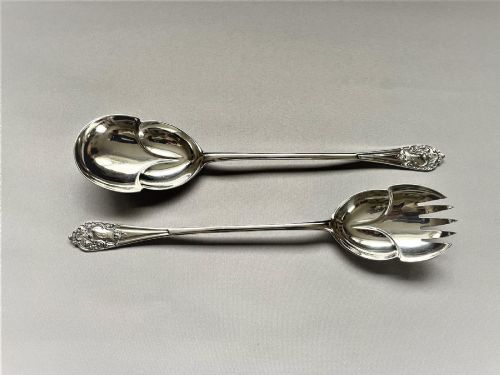
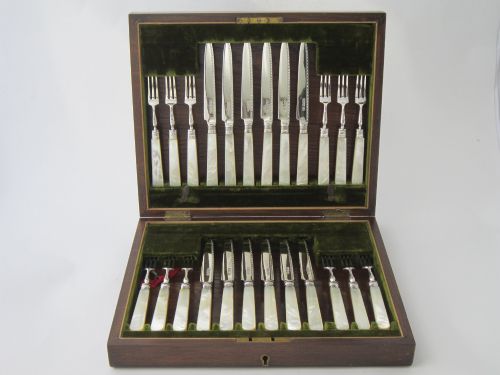
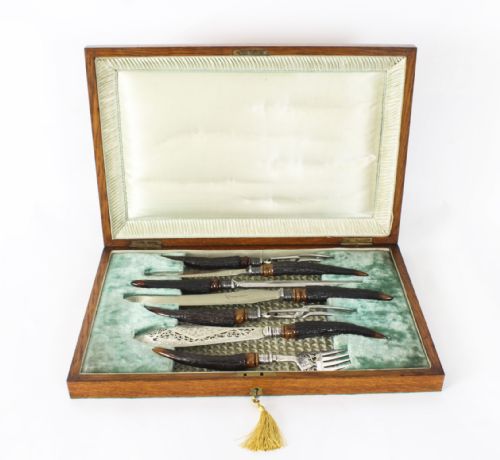
The configurations vary widely from pairs of salad servers with antler or glass handles to cased sets of six or twelve forks intended for formal entertaining. Many survivals include fitted presentation boxes lined with velvet or silk, often accompanied by matching knives, spoons or dedicated serving forks.
What varies in quality
Quality rests on the integrity of the metalwork, the crispness of chased or engraved decorative details, and the preservation of original fitted cases. Substantial gauge silver provides a heavier, more balanced feel in the hand compared to lighter plated alternatives whose base metals may show wear.
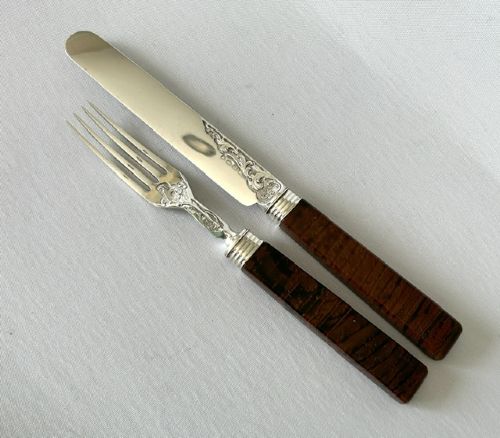
The choice of handle material and the precision of its attachment significantly influence the desirability of a service. Intact matching sets with clear hallmarks and minimal wear to tines and bowls command greater appreciation among collectors.
Set of Silver Forks Retail Price Guide 2026
Typical asking prices for set of silver forks among the pieces listed under this phrase on Sellingantiques today, from the lower quarter to the upper quarter. They describe what is for sale here now, not the wider market.
Listings feature sterling silver, silver plate, mother-of-pearl, and stag antler across Victorian, Edwardian, and Art Deco periods.
Suckling Ltd·Harrods·Waring and Gillows·Deakin and Francis·Viners Ltd
The Set of Silver Forks Glossary
- Sterling silver
- A standard alloy consisting of 92.5 percent silver by mass, with the remainder usually copper. This composition provides the necessary durability for functional cutlery whilst maintaining a bright metallic lustre.
- Silver plate
- A manufacturing method where a thin layer of silver is bonded to a base metal, commonly nickel silver or copper. This technique offered an accessible alternative to solid silver for large dining services.
- Hallmark
- An official stamp or series of marks applied to precious metals in Britain and other countries. It indicates the maker, the purity of the metal, the assay office, and the year of manufacture.
- Fiddle pattern
- A traditional 19th-century cutlery handle design characterised by a narrow stem that expands into a distinct shoulder and a squared, fiddle-like termination at the end.
- Rat tail
- A traditional strengthening spine extending from the underside of the fork stem onto the reverse of the tines or bowl. This feature originated on early cutlery to reinforce the joint.
Set of Silver Forks: Frequently Asked Questions
How do I clean antique silver forks?
Clean silver forks using a soft cloth and a specialised silver polish formulated to remove tarnish without scratching the metal surface. Avoid harsh chemical dips, especially on pieces with mother-of-pearl or horn handles.
Rinse the items thoroughly in warm water and dry them completely with a lint-free cloth before returning them to their fitted case or storage roll.
Can I use silver forks for daily dining?
Solid silver and silver-plated forks are durable enough for regular daily use provided they are washed by hand rather than placed in an automatic dishwasher. Modern dishwasher detergents and high heat can pit the metal and damage organic handle materials.
Hand washing preserves the finish, prevents the loosening of handles, and maintains the historic character of the pieces over years of service.
What is the difference between dessert and dinner forks?
Dessert forks are generally smaller in overall length and are designed for lighter courses, fruit, cheese, or pastry consumption. Dinner forks are larger and heavier, intended for the main course of a formal meal.
Many antique sets include specific tines configurations, with dessert variations sometimes featuring wider left tines intended to function like a knife edge.
Why are some silver forks sold in fitted boxes?
Fitted boxes were produced to protect delicate dining implements, particularly those featuring organic handle materials like mother-of-pearl, ivory, or antler. These presentation cases kept matching sets complete and made them suitable for gifting.
Lined with materials like velvet or silk, the interior slots prevented the cutlery from scratching against one another during storage and transport.