
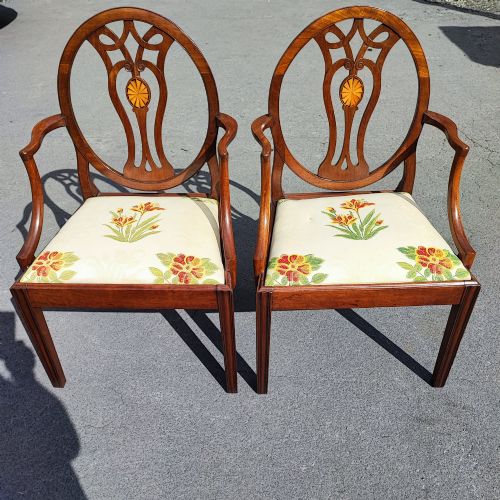
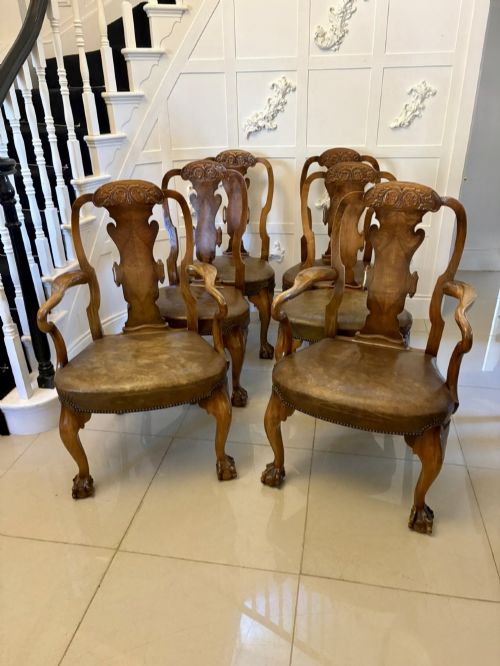
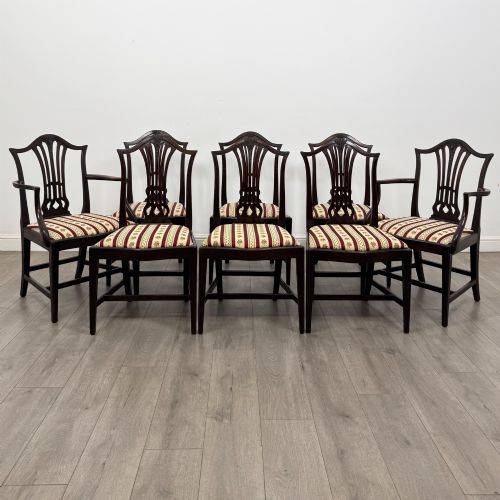
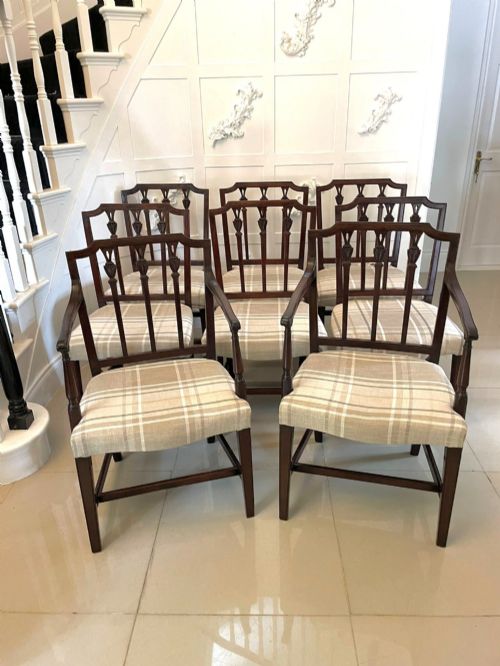

Set of Dining Armchairs
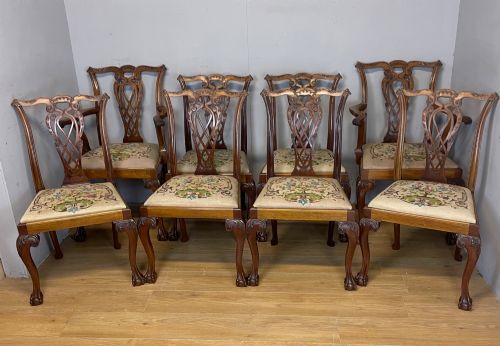
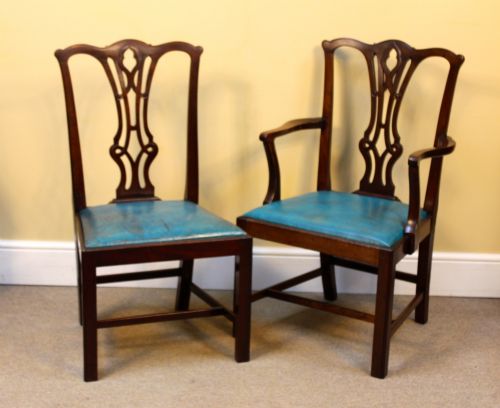
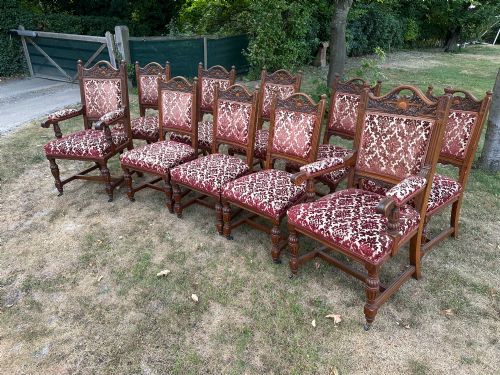
A set of dining armchairs brings symmetry and comfort to a long table, uniting dining chairs with matching carvers for the heads of the board.
Set of Dining Armchairs
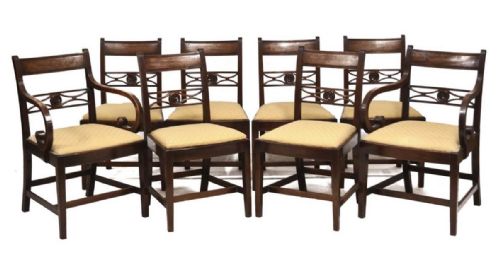
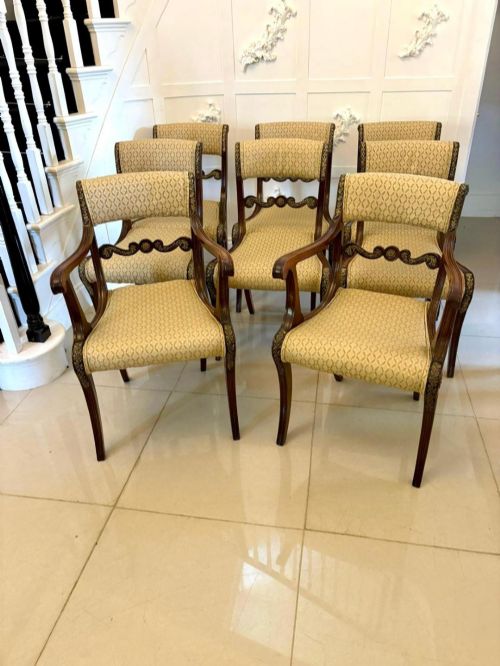
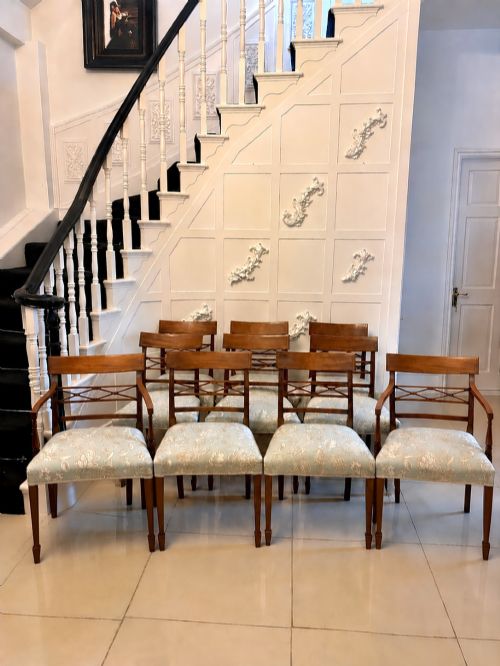
When searching for a set of dining armchairs, a buyer examines matched suites of seating that typically pair several single side chairs with a pair of matching armchairs. These groups span periods from the Georgian era through the Victorian period and into the Edwardian decades, reflecting shifting domestic habits.
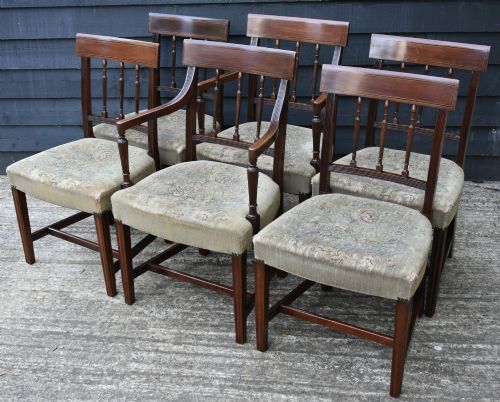
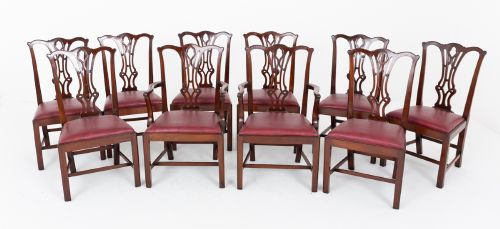
The most common version met on this page is a mahogany suite from the nineteenth century, often executed in revival styles such as Chippendale, Hepplewhite or Sheraton. These larger groupings frequently incorporate eight or ten pieces, providing adequate seating for formal dining spaces.
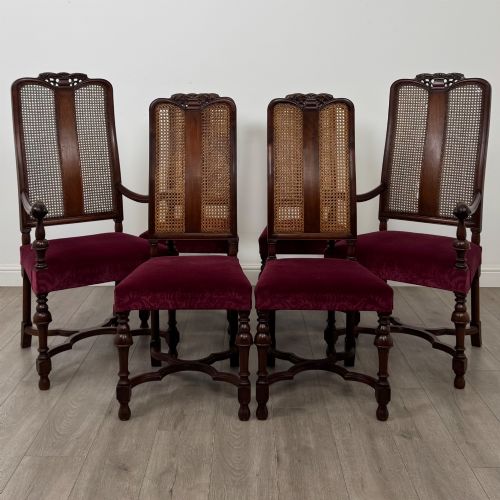
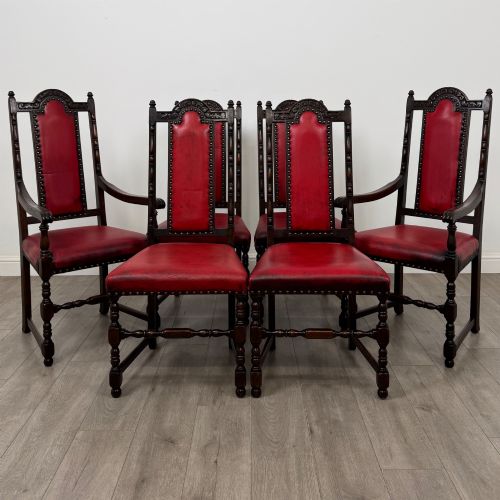
Alternative iterations emerge in oak, walnut or ash, ranging from Windsor kitchen armchairs to high-back cane designs and sturdy barley twist suites. Each configuration serves the functional requirement of seating guests around a shared table with designated armchairs for hosts.
Materials and construction
Cabinetmakers relied heavily on solid and veneered mahogany, alongside oak and walnut, shaping frames with mortise and tenon joinery to endure regular use. Wood selection dictated both the visual weight and the structural integrity of each chair frame.
Carved details, shield backs and reeded legs required skilled hand-tooling, particularly in revival styles where elaborate pierced splats or scroll arms were shaped from single blocks of timber. Turned components, such as spindles and barley twist legs, were produced on lathes.
Upholstered elements involved webbing, stuffing and coverings of leather, fabric, velvet or tapestry, secured with tacks to create padded seats and armrests. Brass accents and cane panels occasionally added texture and decorative contrast to the timber frames.
Six mid-nineteenth century smokers bow Windsor chairs stand ready for long dinners and lively debates.
Distinctions in craftsmanship
Quality rests in the crispness of the carved ornament and the depth of the timber selection, where dense grain and rich colour elevate a suite above standard production. Superior sets display uniform hand-carving across every chair in the group rather than repetitive machine moulding.
The integrity of the frame construction and the survival of original surfaces determine the standing of a set. Matching timber figures and cohesive patination across all pieces indicate a unified suite rather than a later assembled harlequin group.
Warings·Alfred Allen of Birmingham·Maple and Co
The Set of Dining Armchairs Glossary
- Carver
- An armchair designed with elbow rests, traditionally placed at the ends of a dining table to match the surrounding single chairs.
- Shield back
- A chair back shaped in the outline of a shield, popular in Hepplewhite and Sheraton designs.
- Splat
- The vertical wooden strip down the centre of a chair back, often pierced and carved in revival styles.
- Barley twist
- A carved wooden furniture leg or stretcher resembling a spiral rope.
- Harlequin set
- A collection of chairs that are closely related in style and period but assembled from different origins rather than originally made as one group.
Set of Dining Armchairs: Frequently Asked Questions
What is a carver chair?
A carver is an armchair designed to match a set of single dining chairs. These seats traditionally sit at the head and foot of the dining table for the hosts.
They provide arm supports while maintaining the decorative style of the surrounding chairs.
How many chairs come in a set?
Sets vary in size, commonly ranging from six to twelve pieces total. These groupings usually include a specific ratio of single chairs paired with two armchairs.
Larger dining sets often feature eight or ten chairs to accommodate extended tables.
What woods were used for these chairs?
Mahogany is the predominant timber found across these dining suites, especially in Georgian and Regency examples. Oak and walnut also appear frequently, alongside regional timbers like ash and elm in vernacular seating.
Woods were chosen for strength and finished to highlight the natural grain.
How do I identify revival styles?
Revival styles draw on the aesthetic vocabulary of earlier centuries, such as Chippendale, Hepplewhite or Jacobean designs. Makers in the nineteenth and early twentieth centuries reinterpreted these historical forms using contemporary workshop methods.
Details like shield backs and carved splats point to these retrospective influences.