

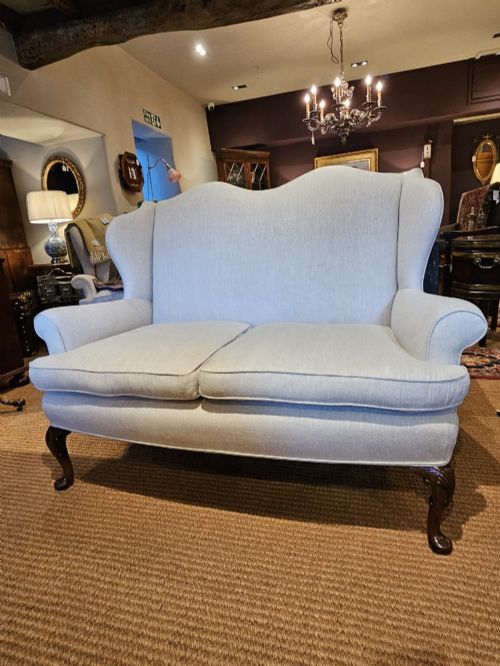
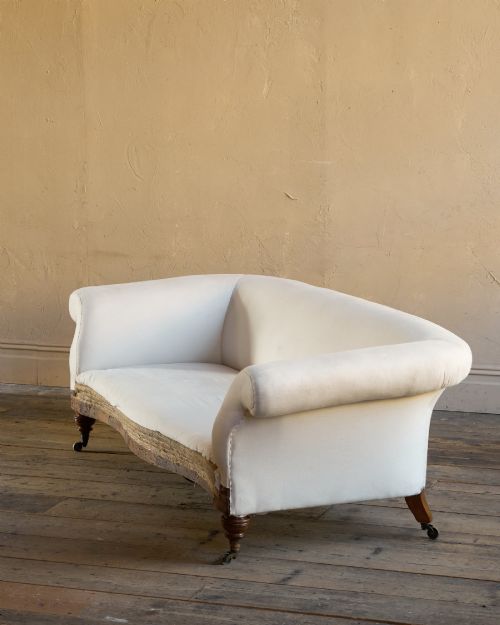
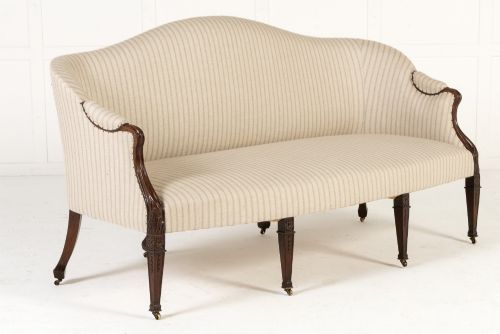
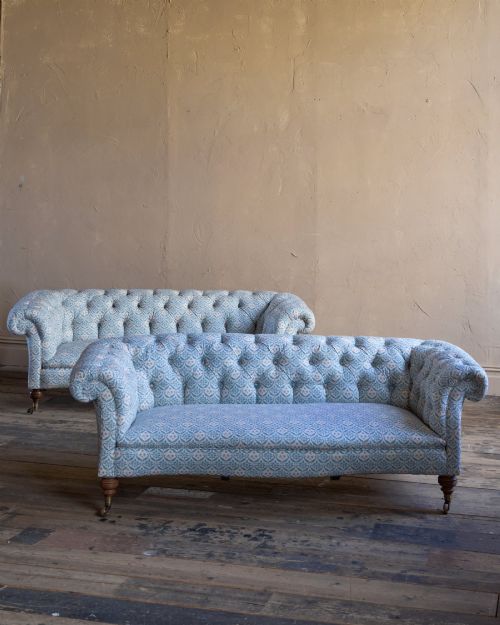

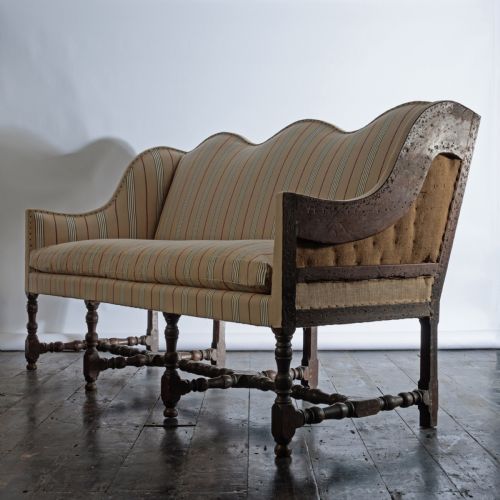
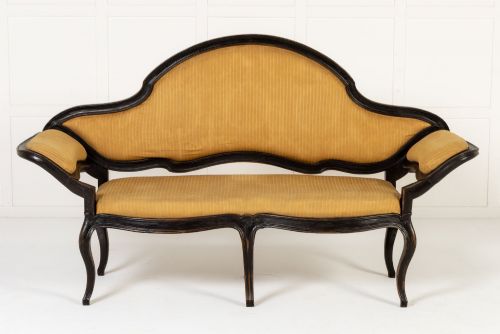


Serpentine Upholstered Sofa
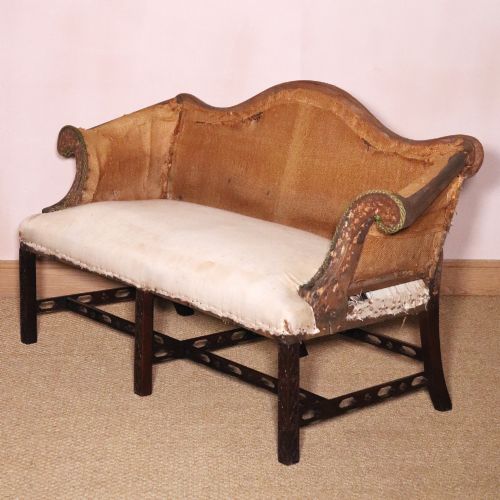
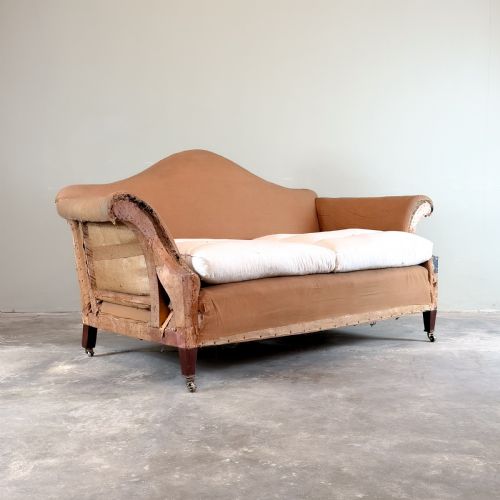
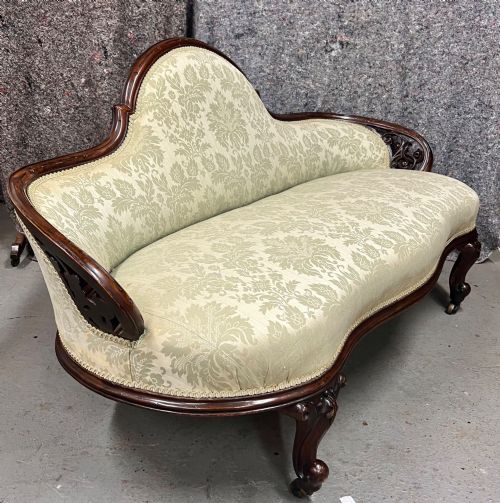
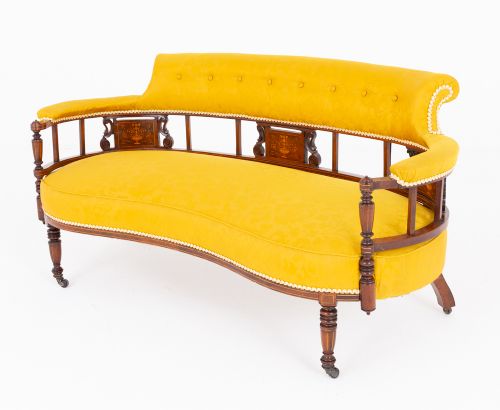
These serpentine upholstered sofa examples offer deep curves and traditional frames, bringing period character and comfort to a room.
Serpentine Upholstered Sofa
Makers often drew inspiration from earlier periods, producing Chippendale style, Hepplewhite manner, and 17th Century Baroque interpretations. The selection on this page includes country house pieces, conversation seats, and continental canape sofas spanning multiple centuries.
How they were made
Frames rely on sturdy timbers such as mahogany, walnut, and rosewood, often shaped with exposed showwood and intricate carved details. Upholstery utilises traditional internal stuffing covered in fabrics like cotton, calico, and various textiles.
Structural elements incorporate brass accents and turned supports, including barley twist frames on select Victorian models. Craftspeople shaped the characteristic serpentine curves into the wooden foundations before applying the final upholstered layers.
Serpentine Upholstered Sofa Retail Price Guide 2026
Typical asking prices for serpentine upholstered sofa among the pieces listed under this phrase on Sellingantiques today, from the lower quarter to the upper quarter. They describe what is for sale here now, not the wider market.
Listings feature wooden frames in mahogany, walnut, and rosewood, alongside upholstered finishes in cotton, calico, and fabric.
What varies in quality
The sophistication of the timber carving and the precision of the serpentine frame outline set individual examples apart. Finer pieces demonstrate careful proportioning in the camel back and arm scrolls, reflecting the standards of their original period.
The integrity of the underlying frame construction and the choice of showwood determine the durability and visual impact of the seating. Original timber patination and retained period upholstery methods also contribute to the standing of each piece.
Howard and Sons
The Serpentine Upholstered Sofa Glossary
- Serpentine
- A curved line that waves inward and outward, commonly seen on the front rail or back of these settees.
- Camel back
- A traditional sofa back shape that rises in a smooth, continuous curve resembling a camel's hump.
- Showwood
- Exposed wooden framing around the upholstered sections of a sofa, highlighting the grain and carving.
- Calico
- A plain-woven cotton fabric frequently used as an underlying tight cover before top upholstery is applied.
Serpentine Upholstered Sofa: Frequently Asked Questions
How do I place a serpentine sofa in a room?
These pieces work well as focal points in large reception rooms or drawing rooms, where their curved fronts can be appreciated from multiple angles. Their traditional proportions pair effectively with both period interiors and eclectic modern spaces.
Positioning the sofa away from walls allows the silhouette of the camel back and the carved wooden frame to remain fully visible. Pairing the seating with complementary armchairs creates a cohesive conversation area.
What periods do these sofas represent?
The selection spans from the seventeenth century through the Georgian and Victorian eras into the Edwardian period. Each era brings distinct characteristics, such as elaborate baroque styling or refined Hepplewhite proportions.
Later pieces often adapt earlier stylistic elements, providing historical appearance combined with the comfort requirements of subsequent generations.
What materials make up the frames?
Frames are constructed from dense hardwoods such as mahogany, walnut, and rosewood, selected for their strength and ability to hold carved details. Brass fittings and secondary woods often support the internal structure.
Exposed showwood elements display the natural grain and colour of the timber, contrasting with the upholstered surfaces.