



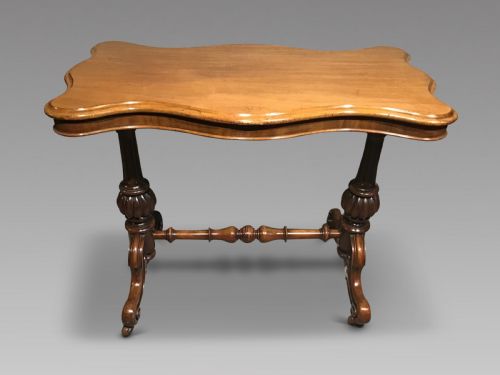
Serpentine Top Card Table
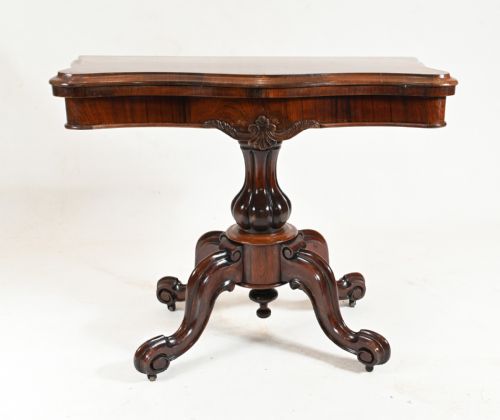
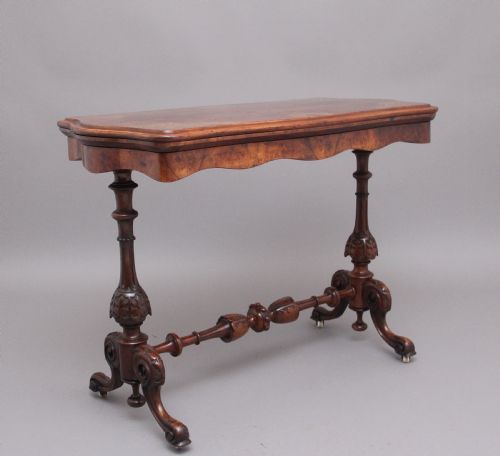
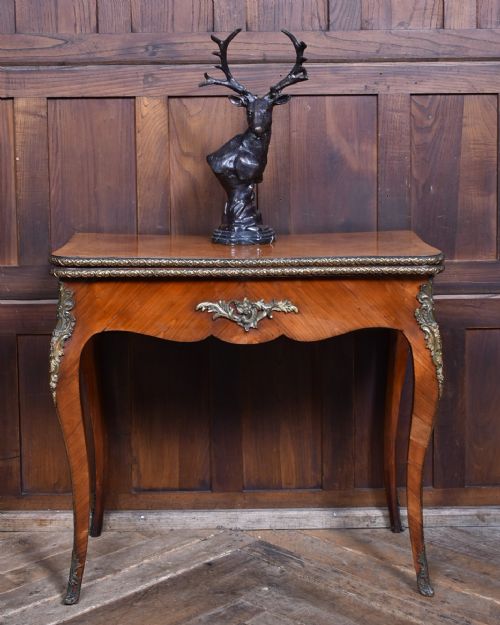
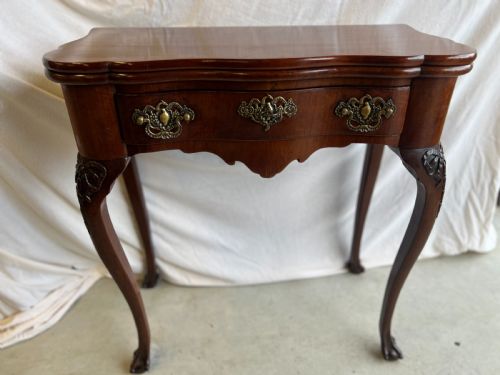
A serpentine top card table brings fluid cabinetwork into a room, offering a shaped folding surface rooted in Georgian and Victorian craftsmanship.
Serpentine Top Card Table
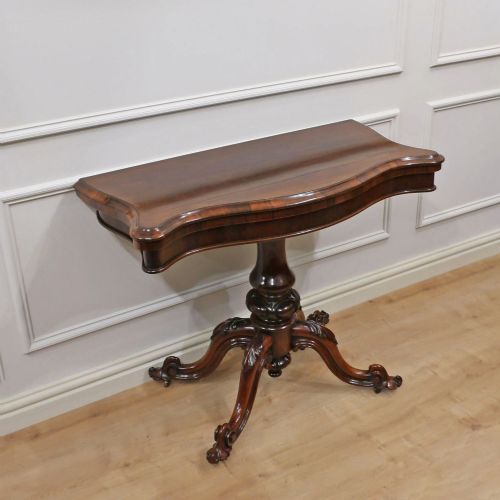
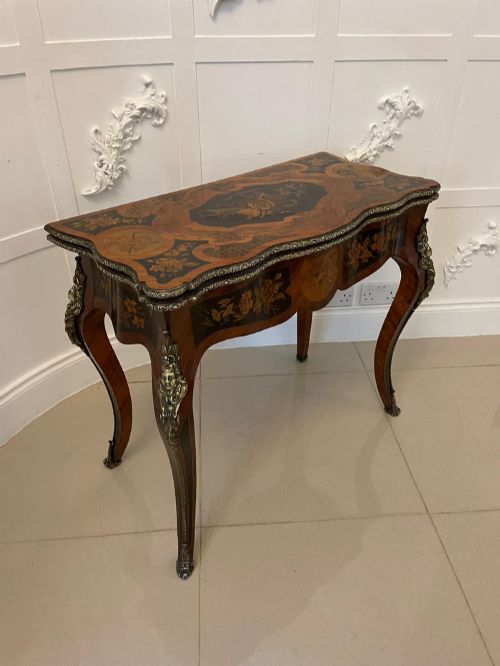
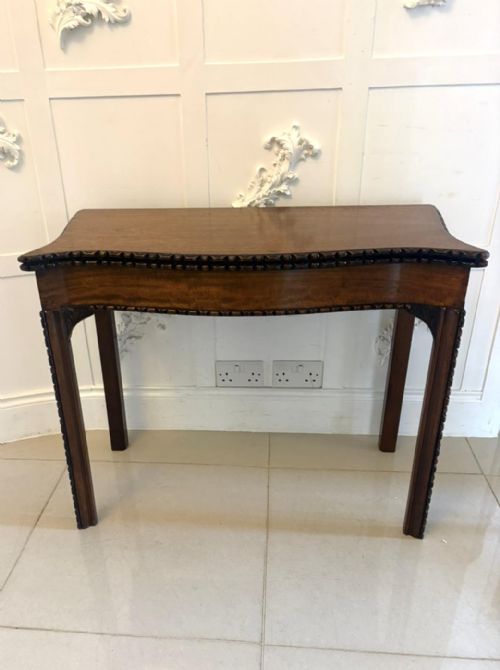
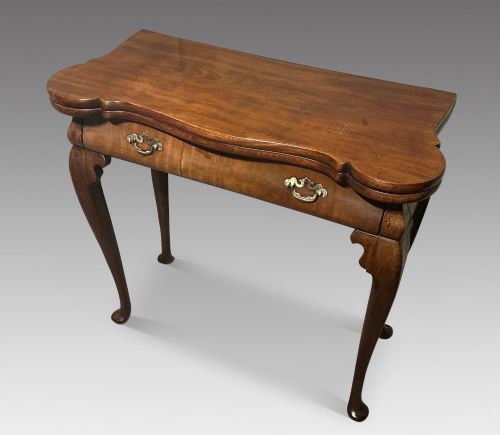
The serpentine top card table represents an elegant form designed for gaming and entertaining, featuring a distinct undulating front edge that distinguishes it from standard rectangular tables. You will encounter these pieces largely across Georgian and Victorian periods, with styles drawing from Chippendale and French revival traditions.
Most examples function as fold-over tables, opening to reveal a baize-lined playing surface supported by a swinging leg or a pivoting top mechanism. The form spans multiple decades, appearing in sturdy mahogany during the eighteenth century and returning in figured burr walnut and rosewood during the nineteenth century.
Materials and Construction
Cabinetmakers constructed these tables using solid timbers and decorative veneers, relying heavily on mahogany, walnut, burr walnut, and rosewood. Delicate contrasting wood inlay and marquetry appear on revival pieces, while brass hinges and mounts secure the folding leaves and frames.
Shaping the serpentine edge required precise timber selection and sawing, ensuring the grain followed the undulating contour of the front. Interior pivoting mechanisms and clever weight distribution allowed the heavy folding tops to open smoothly without straining the frame joints.
Listings feature mahogany, walnut, burr walnut, rosewood, kingwood, and ormolu across Georgian and Victorian periods.
Judging Quality and Execution
The standard of a serpentine top card table depends largely on the crispness of the carved or shaped edge and the choice of timber figure. Superior examples display carefully matched veneers or rich, solid mahogany grains that flow naturally around the complex curves.
Construction integrity separates finer pieces, particularly in the precision of the hinge placement and the stability of the pivoting or swinging support leg. Master cabinetmakers ensured the folding leaves met flush when closed and sat level when open for play.
The Serpentine Top Card Table Glossary
- Serpentine top
- A tabletop featuring an undulating front edge that curves outward in the centre and inward at the corners. This profile demands high skill from the cabinetmaker to shape correctly.
- Fold-over
- A hinged tabletop design that doubles the surface area when opened. It conceals a hidden well or playing surface beneath the upper leaf.
- Marquetry
- Decorative patterns created by fitting different wood veneers into a prepared background. It appears frequently on French revival tables from the Victorian era.
- Ormolu
- Gilt-bronze mounts applied to furniture for decorative effect. They accent the corners and aprons of refined nineteenth-century pieces.
- Baize
- A woven woollen fabric used to line the interior playing surfaces of card and games tables. It provides a soft, durable area for card games.
Serpentine Top Card Table: Frequently Asked Questions
How do I use a card table today?
These tables function well as console or side tables against a wall when folded shut, displaying decorative objects or lighting.
Opening the top transforms the piece into a compact writing desk or a small display surface for entertaining guests.
How do I tell Georgian from Victorian tables?
Georgian tables typically utilise solid mahogany with clean lines, plain friezes, and subtle carved details associated with Chippendale or Hepplewhite designs.
Victorian versions frequently employ burr walnut, rosewood, or exotic marquetry veneers, often featuring richer figuring and revival styling.
What is the swivel top mechanism?
A swivel top allows the upper leaf to rotate ninety degrees before folding open, revealing a concealed compartment underneath for cards and counters.
This clever engineering supports the weight of the hinged leaf securely without putting excessive stress on the frame.
Are all serpentine tables meant for cards?
While many feature baize interiors designed for gaming, similar frames served as tea tables or general side tables without the lined playing surface.
Examining the interior reveals whether the piece was built to hold cards and counters or simply to provide an elegant shaped surface.