
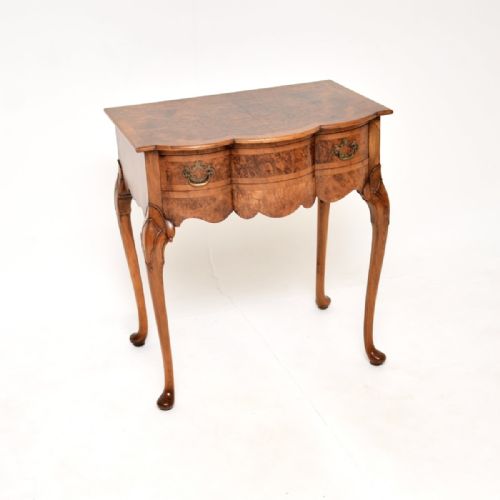
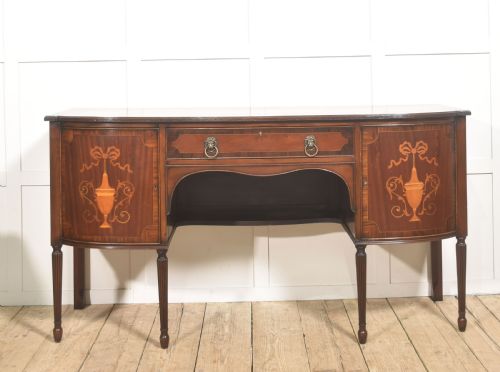
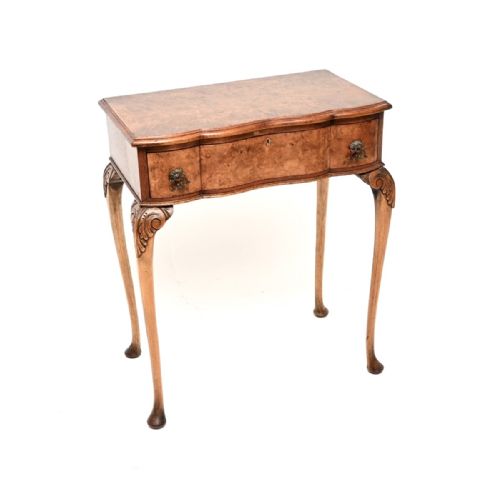


Serpentine Server Table
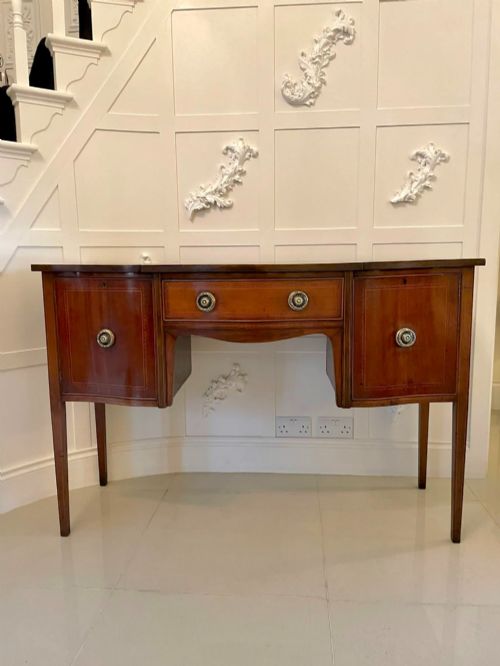
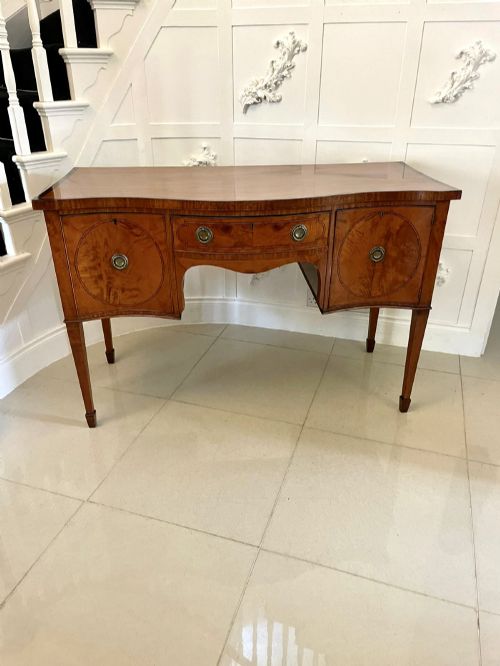
A serpentine server table brings fluid curves and formal dining presence to a room, offering generous surface space for serving.
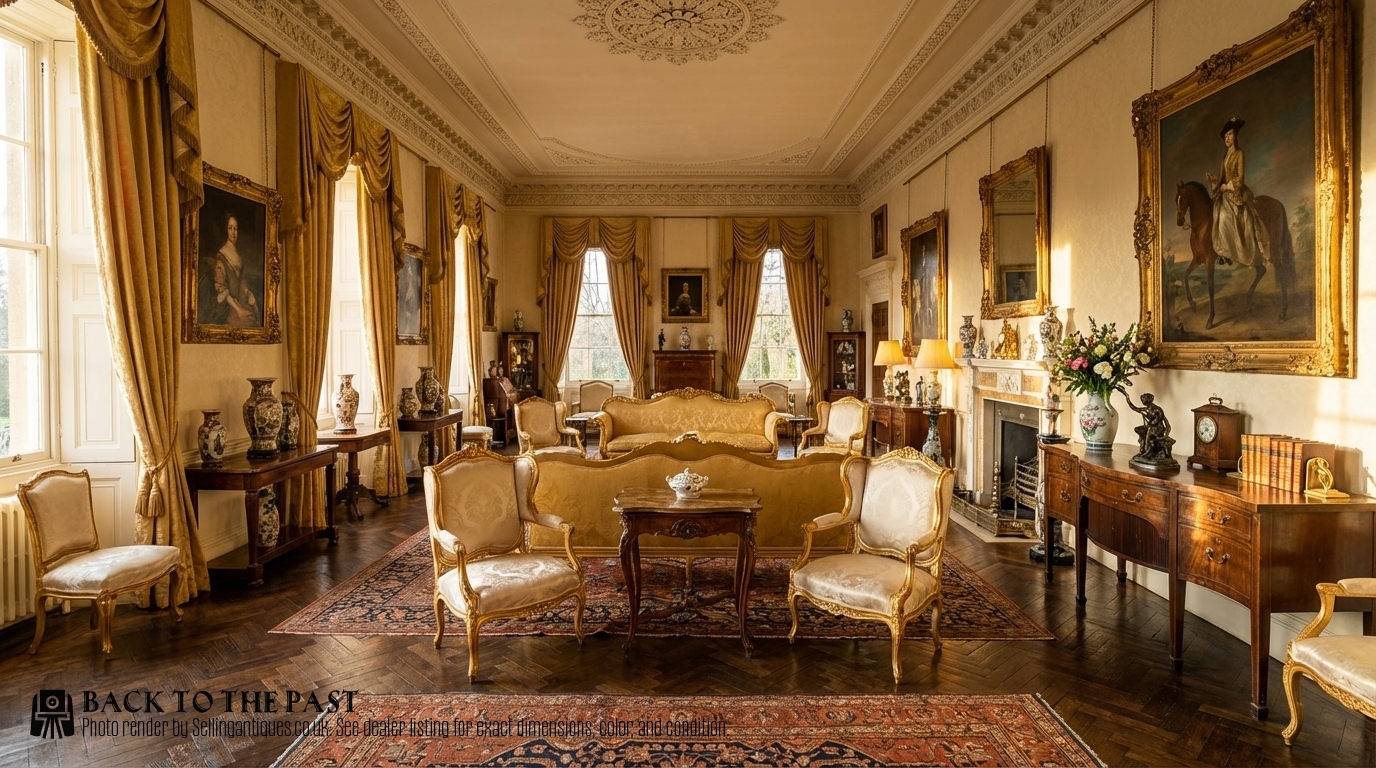
Serpentine Server Table
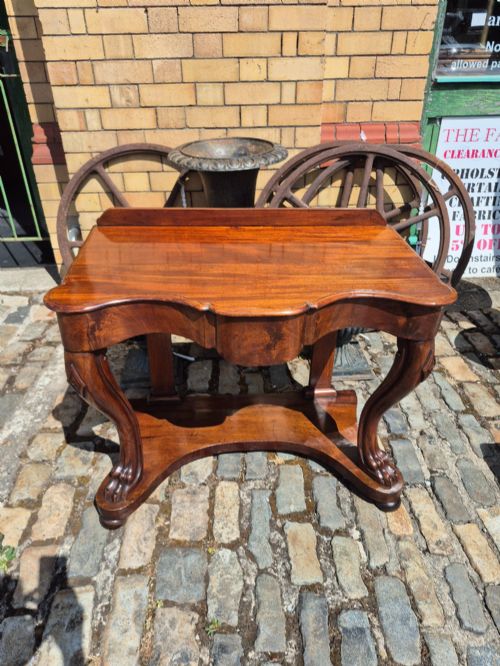
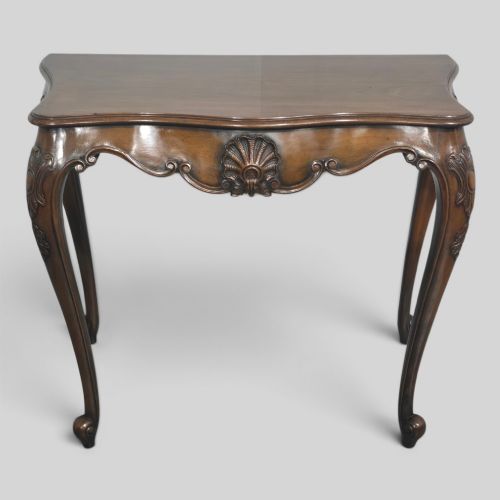
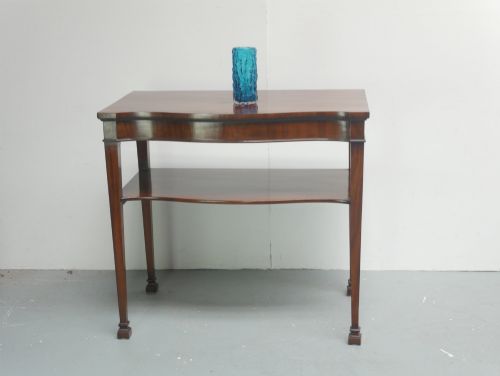
A serpentine server table is a substantial dining room piece characterised by an undulating front line that curves inward and outward. When searching for a serpentine server table, buyers encounter forms spanning Georgian, Victorian, and Edwardian periods.
Most items on this page double as functional storage surfaces and decorative focal points. The undulating profile distinguishes these pieces from standard straight-fronted console and side tables.
How they were made
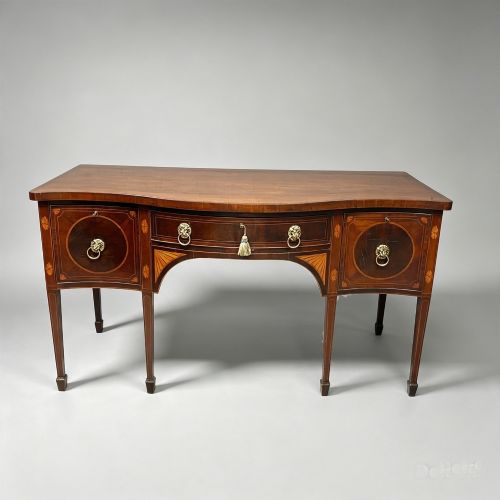
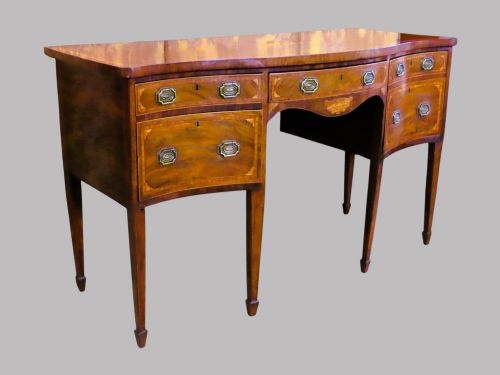
Cabinet makers constructed these tables predominantly using solid mahogany and walnut timbers, frequently applying flame mahogany veneer to the main surfaces. Satinwood and boxwood inlays provided decorative contrast along the drawer fronts and borders.
Shaping the serpentine front required precise woodworking techniques to curve thick timber or bend layered veneers along a complex convex and concave path. Brass hardware, including handles and drawer pulls, completed the construction.
Listings feature mahogany, burr walnut, and satinwood, spanning the Georgian, Victorian, and Edwardian eras.
What varies in quality
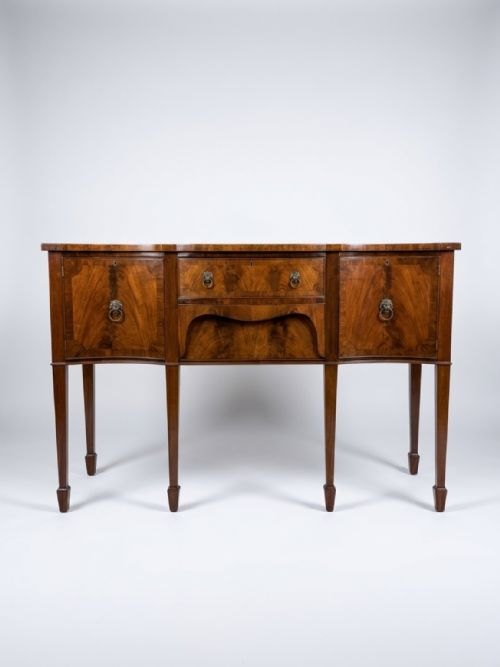
The distinction between ordinary and exceptional pieces lies in the crispness of the curved front and the choice of timber figure. Superior examples display carefully matched flame mahogany veneers and intricate satinwood inlay work that follow the undulating contours precisely.
Proportion and colour further divide the range, with better pieces exhibiting rich natural timber tones and slender, well-balanced legs. Lesser items may feature heavier proportions or simpler secondary woods without decorative stringing.
Gillow·Epstein
The Serpentine Server Table Glossary
- Serpentine front
- A furniture front characterised by three curves, typically convex in the centre and concave at the sides. This shape demands precise woodworking skills.
- Flame mahogany
- A veneer cut from the fork of a mahogany tree where the grain pattern resembles flickering flames. It appears on finer Georgian and revival case pieces.
- Stringing
- Thin lines of contrasting wood inlay used to outline drawers and tabletops. Boxwood and satinwood are common choices for this decorative detail.
- Console table
- A table designed to stand against a wall, frequently supported by brackets or legs. Many examples function as serving tables in dining rooms.
- Gallery
- A raised raised border or rail running along the edge of a tabletop. It prevents items from sliding off the surface.
Serpentine Server Table: Frequently Asked Questions
How do I use a serpentine server table?
These tables function traditionally as serving surfaces in dining rooms, holding dishes, glassware, and silver during meals. Their narrow profile also suits entrance halls and living rooms as console surfaces.
Place them against a wall where the undulating front can catch the light and display decorative objects or lamps.
Are these tables from the Georgian period?
Many examples date from the Georgian period, specifically the George III era of the eighteenth century. Other pieces originate from later revival movements in the Victorian and Edwardian periods.
Examining the construction methods, timber choice, and secondary woods helps determine the exact period of manufacture.
What is the difference between a sideboard and a serving table?
Sideboards generally incorporate enclosed cupboard storage and banks of drawers beneath the surface top. Serving tables are typically more open underneath, functioning primarily as display and serving ledges.
Both forms utilise the characteristic undulating front profile found in this category.