
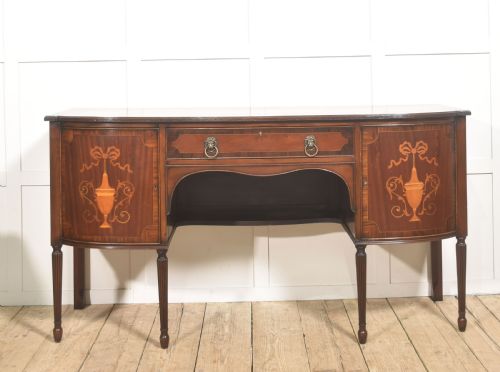


Serpentine Server Cabinet
A serpentine server cabinet brings dynamic curves and exceptional timber to a dining room, offering both generous storage and striking period presence.
Serpentine Server Cabinet
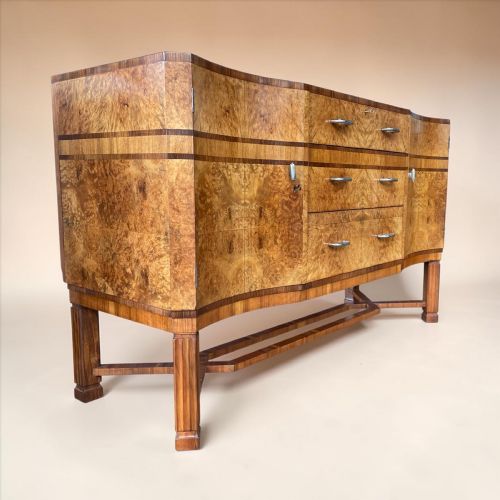
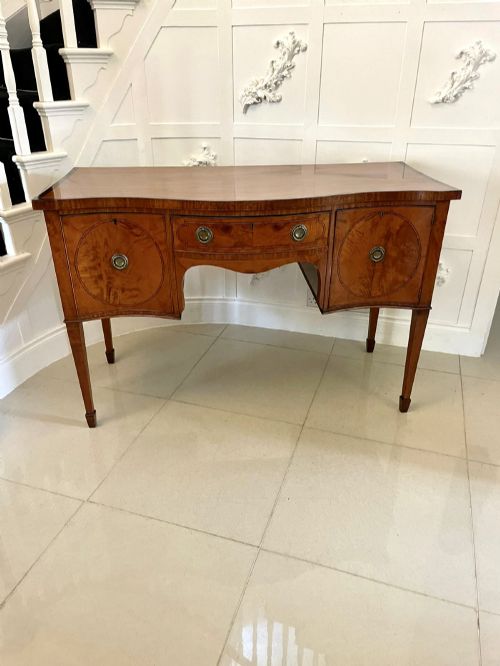
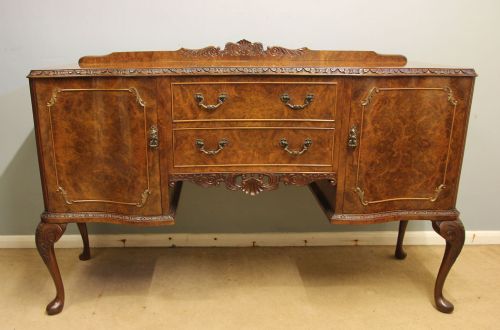
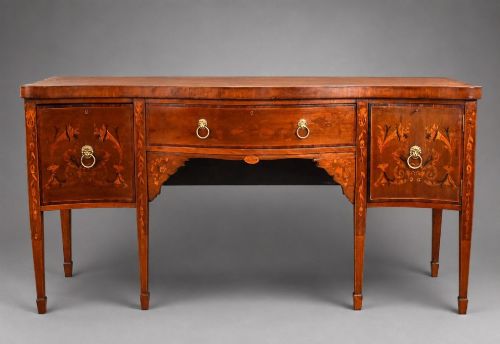
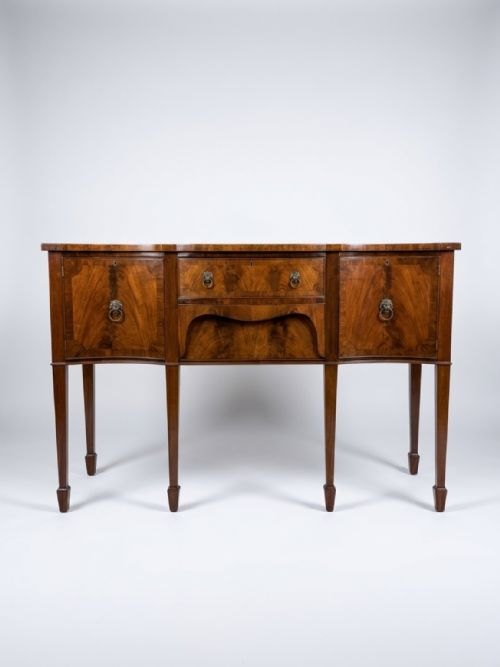
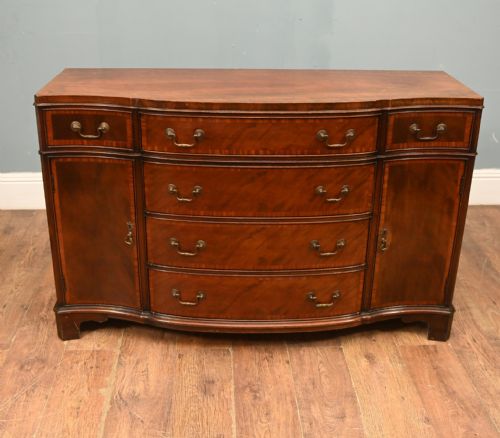
A serpentine server cabinet is defined by its gently undulating, wave-like front contour that immediately distinguishes it from flat-fronted sideboards and buffets. These pieces appear across multiple eras, ranging from authentic eighteenth-century examples to later revival interpretations and nineteen-thirties pieces.
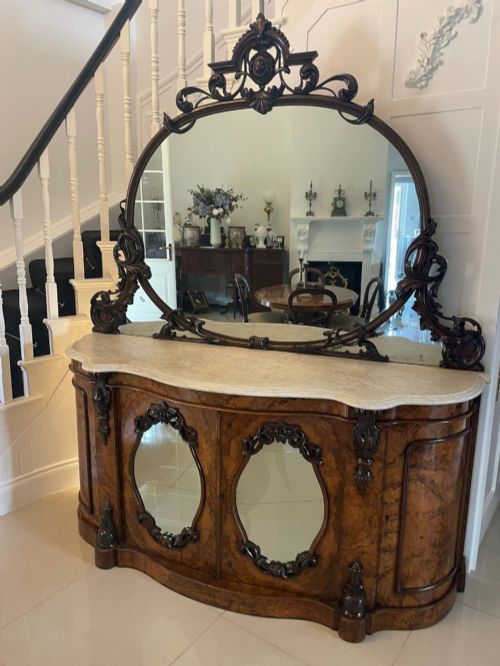
The layout typically incorporates central drawers flanked by cupboards, occasionally complemented by a raised mirror back on mid-nineteenth-century iterations. Proportions vary from compact side cabinets to large dining room servers designed for grand interiors.
Materials and construction methods
Cabinet makers relied heavily on rich timbers such as mahogany, burr walnut, and satinwood, often accentuating the curved facades with delicate boxwood stringing and intricate wood inlay. Brass hardware, including handles and key escutcheons, provides functional contrast to the polished wooden surfaces.
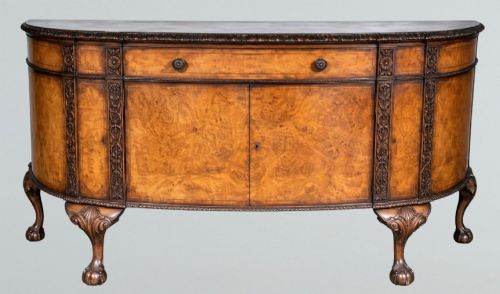
Achieving the characteristic curved profile required advanced competency in shaping solid timber and bending veneers over curved carcases. Carved details frequently adorn the edges and legs, particularly on Georgian and Chippendale style pieces.
Listings span from the eighteenth century through the nineteenth and twentieth centuries, featuring mahogany, burr walnut, and satinwood alongside marble and brass.
Distinguishing quality across periods
Quality reveals itself in the choice and matching of veneers, particularly on burr walnut and flame mahogany examples where symmetrical grain patterns wrap smoothly around the serpentine curves. Superior pieces demonstrate meticulous hand-cut joinery and crisp inlay work that remains flush with the surrounding wood.
Heavier ornamentation and substantial proportions set apart grander Victorian and Edwardian iterations from simpler utility-focused servers. The integrity of the secondary timbers inside the drawers and the original state of the brass mounts also indicate superior manufacture.
The Serpentine Server Cabinet Glossary
- Serpentine
- A front contour characterised by a convex centre flanked by concave curves, creating a fluid wave shape. This profile demands advanced woodworking skill to execute cleanly.
- Inlay
- A decorative technique where contrasting woods or materials like boxwood are fitted into recessed spaces on the cabinet surface. It creates geometric patterns or floral motifs.
- Credenza
- A low-profile storage unit often featuring doors and drawers, frequently used interchangeably with sideboard or server in nineteenth-century contexts. Some versions include an attached mirror back.
- Flame mahogany
- A highly figured veneer cut from where a branch joins the main trunk, showing a distinctive flickering flame pattern. It is prized for its dramatic visual movement.
- Revival
- A nineteenth or twentieth-century style that consciously imitates the aesthetic of earlier periods such as the Georgian era. These pieces adopt historical proportions and decorative details.
Serpentine Server Cabinet: Frequently Asked Questions
Where should a serpentine server cabinet go?
These cabinets work best positioned against a primary dining room wall where their undulating curves can be fully appreciated without obstruction. They provide practical surface space for serving food and drinks during gatherings.
Sufficient clearance around the piece ensures that cabinet doors and drawers can open fully. Pairing the server with a complementary mirror or painting above creates a balanced focal point in the room.
How do I identify a Georgian piece?
Authentic eighteenth-century examples typically feature solid mahogany construction with hand-cut dovetails inside the drawer boxes. The proportions tend to be more restrained compared to later revival pieces.
Examining the backboards and interior linings reveals older hand-tool marks and traditional construction methods. Natural patina built up over centuries further separates eighteenth-century originals from later interpretations.
What is the difference between a server and a sideboard?
A server generally tends to be slightly smaller and lower in height, specifically built for presenting dishes during meals. Sideboards often incorporate more extensive storage capacity for cutlery, linens, and dining accessories.
In historical listings, the terms frequently overlap, as makers adapted similar serpentine front designs for multiple dining room functions. The specific internal layout and overall dimensions determine the exact classification.