



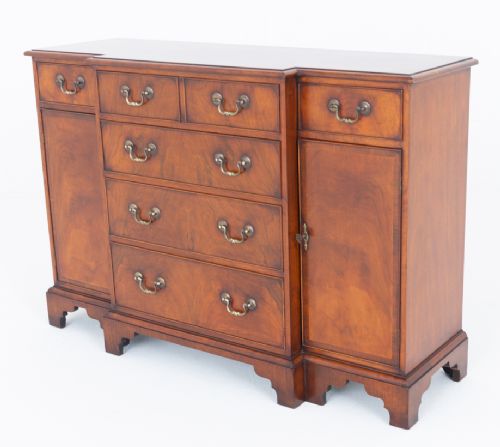
Vintage Walnut Dining Server
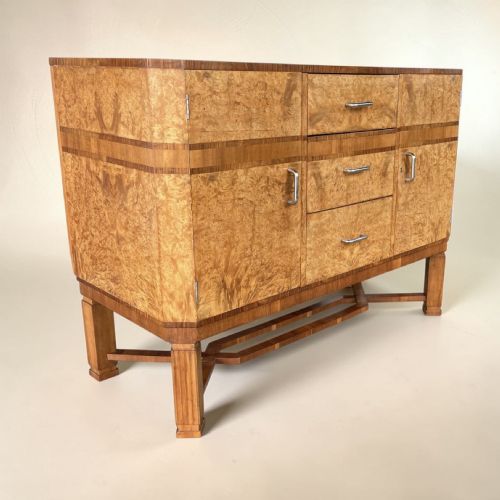
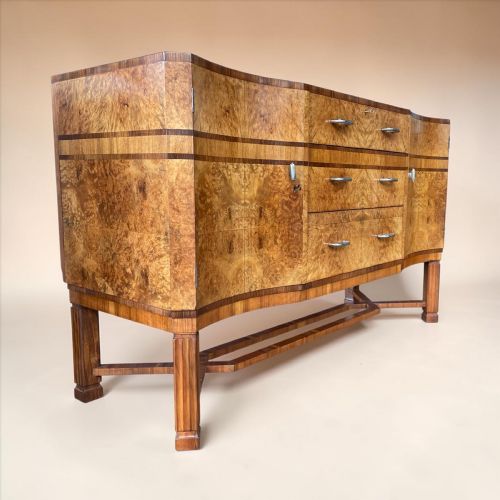
A vintage walnut dining server brings rich grain and practical dining room storage to a room, rooted largely in the interwar Art Deco era.
Vintage Walnut Dining Server
A vintage walnut dining server provides generous surface area and internal capacity for silver, linen, and glassware during meals. These pieces function as sideboards, serving tables, and cocktail cabinets depending on the specific domestic needs of the dining room.
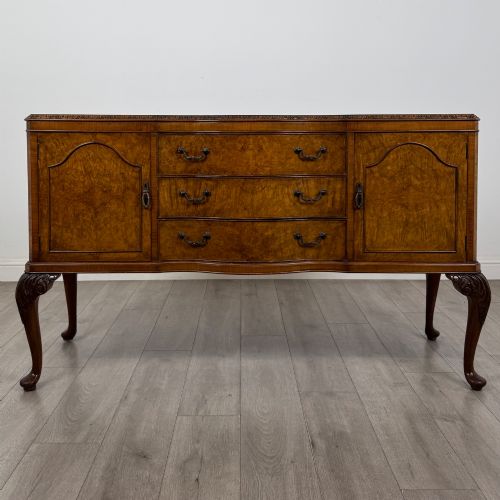
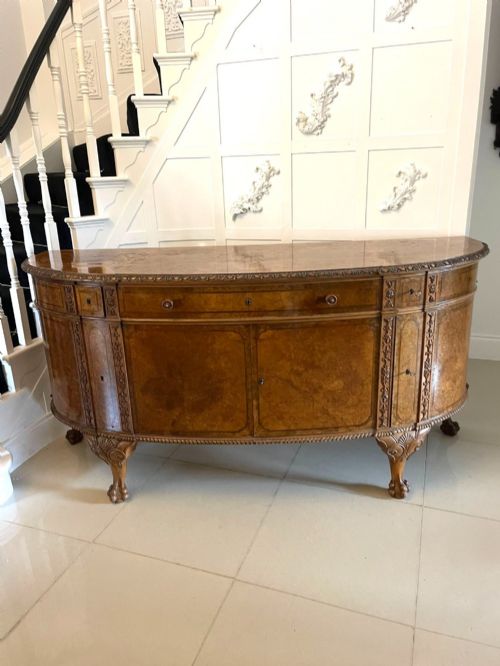
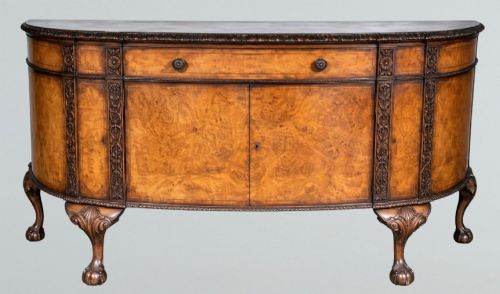
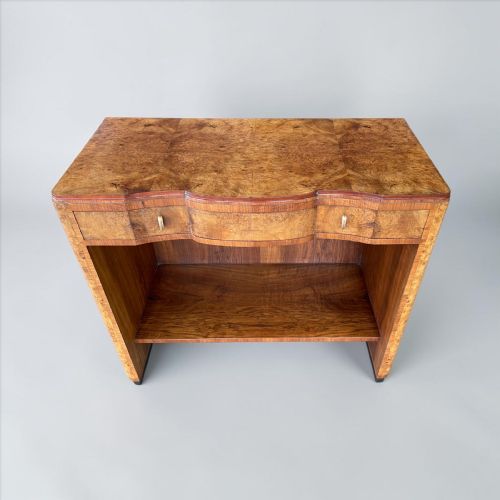
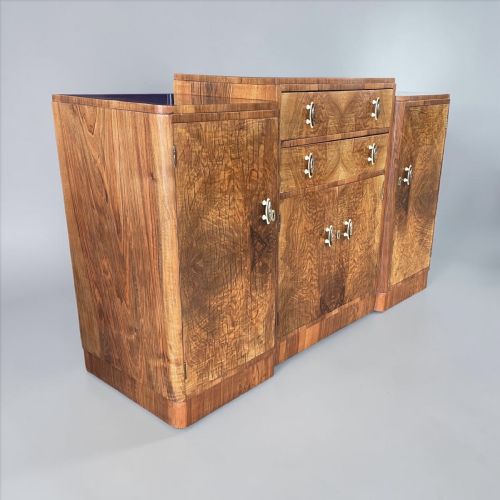
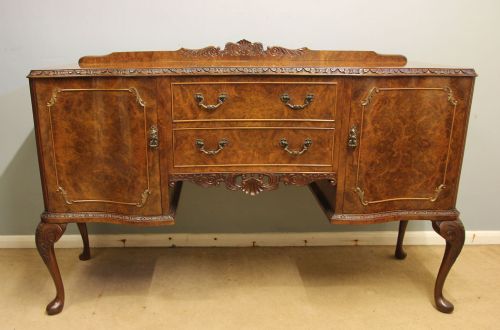
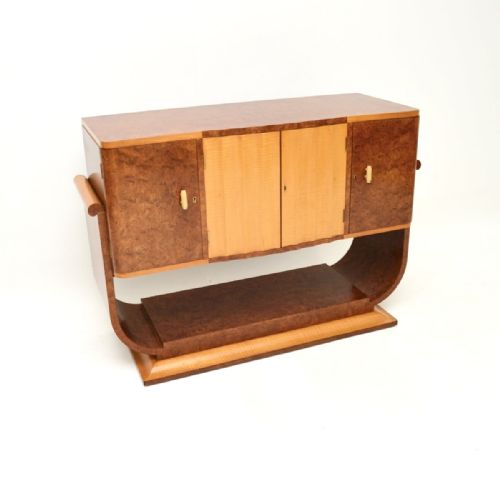
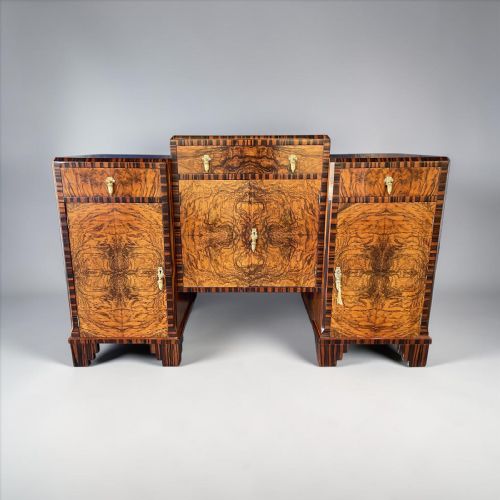
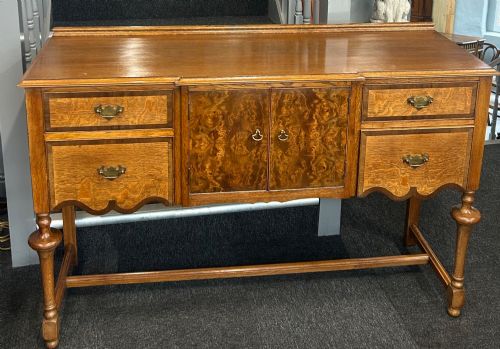
The pieces on this page lean heavily towards the Art Deco period of the nineteen thirties alongside earlier Edwardian and Victorian designs. Buyers encounter serpentine fronts, bow fronts, and breakfront layouts alongside fitted cutlery drawers and dedicated cabinet spaces.
Origins stretch from British makers and London stores to French and Italian workshops. The forms range from streamlined geometric shapes to revival styles drawing on Queen Anne and Georgian aesthetics.
How they were made
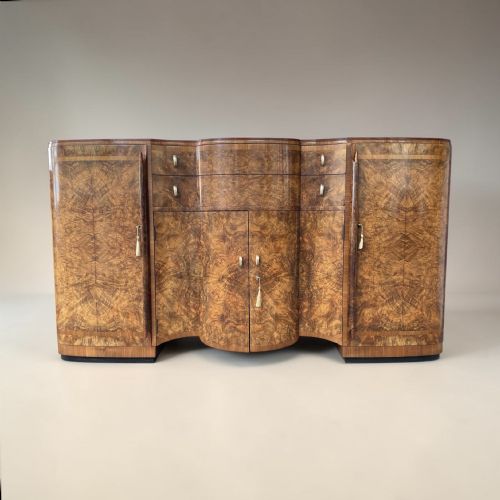
Cabinet makers utilised solid walnut alongside burr walnut veneer and figured walnut to create striking, symmetrical grain patterns across large cabinet doors and drawer fronts. Secondary timbers such as oak and hardwood provide robust interior carcases and structural frames.
Decorative elements often include marquetry inlay, crossbanding, and carved details, paired with brass handles and glass components for display sections. Surfaces are polished to highlight the natural warmth and variegation of the walnut timber.
Materials recorded on this page include solid walnut, burr walnut veneer, brass, glass, oak, and secondary hardwoods.
What varies in quality
Quality rests upon the selection and matching of the walnut veneer, where skilled makers aligned burr figures symmetrically across multiple doors and drawers. The weight and stability of the underlying carcase wood dictate the longevity and structural integrity of the server.
The distinction between standard commercial production and high workshop output shows in the precision of the joinery, the integration of specialised internal fittings like velvet-lined cutlery trays, and the execution of carved or cast brass hardware.
Maurice Adams·Hille of London·Harry and Lou Epstein·Hamptons of Pall Mall London
The Vintage Walnut Dining Server Glossary
- Burr Walnut
- A timber harvested from walnut tree growths that produces intricate, swirling grain patterns highly prized for decorative veneer work. This material forms the primary visual focus on many interwar server designs.
- Serpentine Front
- A furniture front characterised by a curving contour that bends outward in the centre and inward at the sides. This shape demands advanced woodworking skill to match the walnut grain across compound curves.
- Crossbanding
- A narrow strip of veneer laid around the border of a panel with the grain running perpendicular to the centre piece. It creates a neat visual frame on drawer fronts and table tops.
- Breakfront
- A large cabinet design where the central section projects forward from the flanking outer sections. This architectural arrangement adds depth and shadow play to dining room storage.
- Marquetry
- The art of applying pieces of veneer to a structure to form decorative patterns and pictures. Historic examples utilise contrasting woods to build complex floral or geometric motifs.
Vintage Walnut Dining Server: Frequently Asked Questions
How do I use a dining server?
A dining server acts as a surface for food and drink during meals while concealing tableware within its cupboards and drawers. It keeps dining rooms organised by housing linens, cutlery, and serving dishes close to the table.
In modern homes, these pieces also function as standalone cocktail cabinets or media consoles. Their deep surfaces accommodate lamps and decorative objects when not in active dining use.
What is Art Deco style?
Art Deco emerged during the nineteen twenties and thirties, favouring sleek geometric forms, streamlined silhouettes, and modern industrial materials. In cabinet making, this style relies heavily on unadorned expanses of figured burr walnut.
Pieces from this movement often feature rounded corners, waterfall edges, and contrasting light woods like sycamore. The aesthetic prioritizes bold symmetry over historic revival ornamentation.
How do I date a walnut server?
Dating relies on stylistic clues, hardware types, and construction methods visible within the piece. Edwardian and Victorian examples tend to feature heavier carved ornamentation and darker finishes, whereas nineteen thirties pieces display geometric veneers and streamlined shapes.
Makers' stamps, interior labels, and regional design traits also help narrow down the decade of production. Examining the secondary timbers inside drawers provides further context for the manufacturing period.
Where should I place my server?
Position the server against a primary wall in the dining room where it remains easily accessible from the dining table. Ensure there is enough clearance around the piece for cabinet doors and drawers to open fully.
Keep the timber away from direct heat sources and strong sunlight to prevent the walnut veneer from drying or fading. Adequate clearance protects the polished finish from heavy daily traffic.