


Serpentine Marble Top Commode
A serpentine marble top commode combines sculptural stone with fluid cabinetmaking, offering storage shaped by the graceful curves of the eighteenth and nineteenth centuries.
Serpentine Marble Top Commode
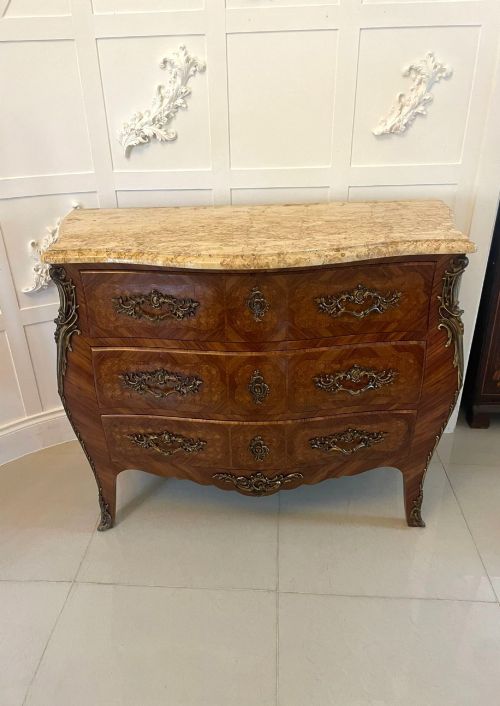
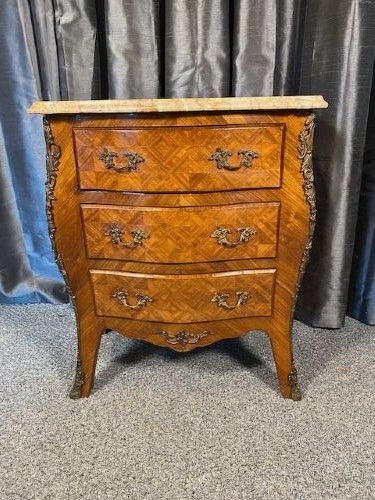
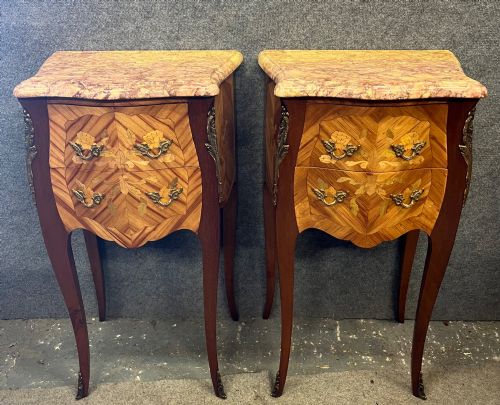
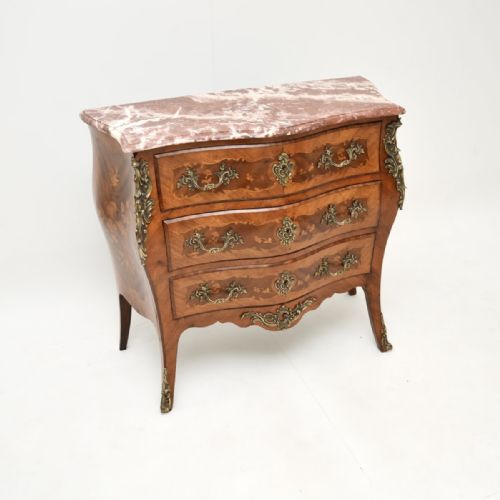
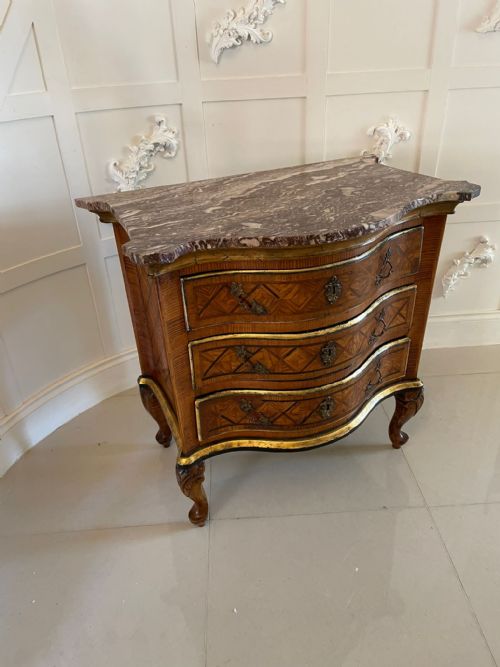
A serpentine marble top commode is a low storage chest featuring a curved, wave-like front and a fitted stone top. These pieces trace their origins chiefly to French and Italian workshops across the eighteenth and nineteenth centuries, appearing alongside related bedside chests and side cabinets.
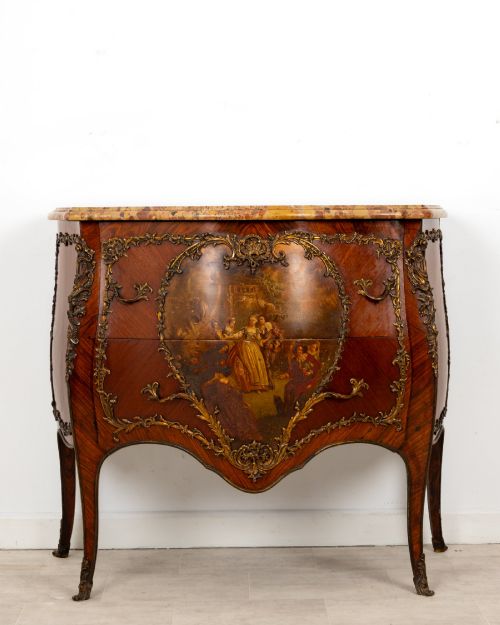
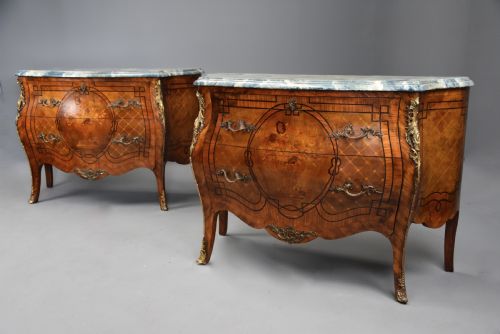
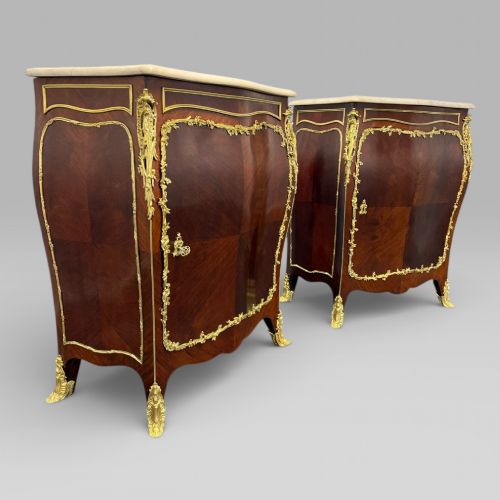
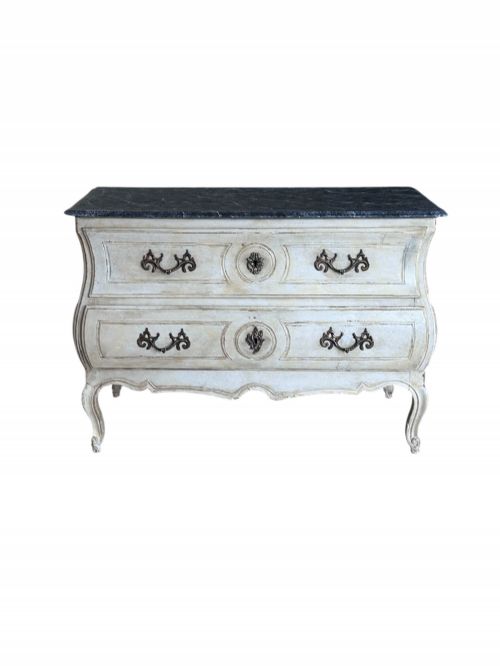
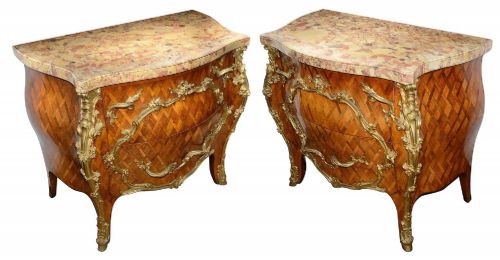
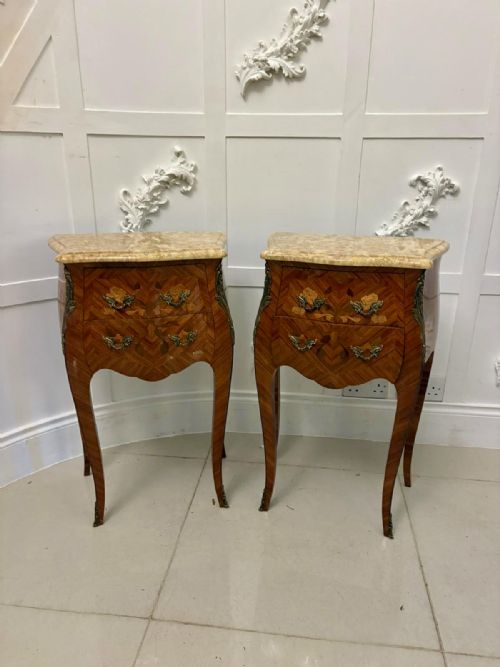
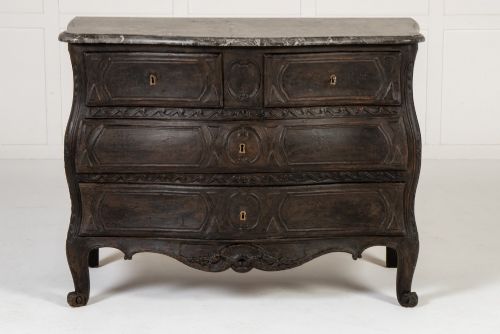
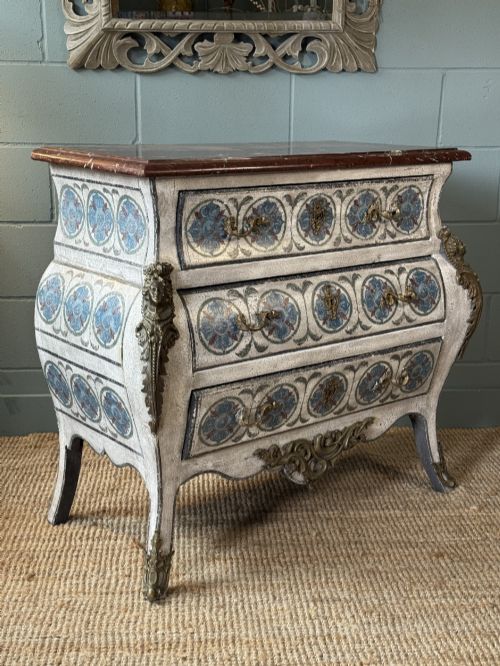
The selection here draws heavily on Louis XV and Louis XVI styles, incorporating bombé silhouettes and parquetry surfaces. Buyers frequently encounter nineteenth-century revival examples alongside authentic eighteenth-century editions featuring painted, ebonised, or polished wood finishes.
What varies in quality
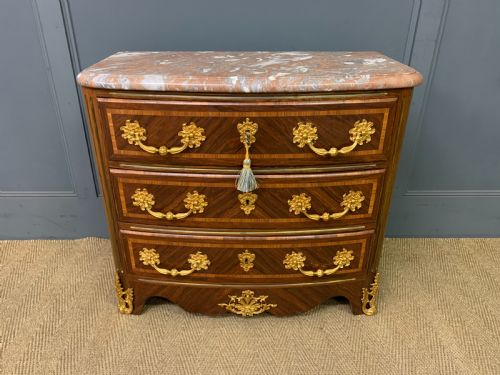
The success of a serpentine marble top commode depends largely on the harmony between the stone top and the wooden carcass, where precise matching of the curved edges reveals the maker's skill. Finer examples display crisply cast metal mounts that integrate seamlessly with the timber rather than appearing as afterthoughts.
The complexity of the underlying veneering also dictates standing, with multi-timber parquetry and floral marquetry demanding significantly greater joinery expertise than plain painted or ebonised surfaces.
Some chests hide their curves so deeply they require custom-cut marble that weighs more than the cabinet framing it.
E. Kahn·Charles Cressant
The Serpentine Marble Top Commode Glossary
- Serpentine
- A curved shape featuring a convex centre flanked by concave ends, mimicking the undulating movement of a snake. This profile requires specialised carpentry to fit drawers and tabletops accurately.
- Bombé
- A swelling, outward-curving cabinet shape associated with continental furniture. The bulging sides demand expert shaping of both wood and marble.
- Ormolu
- Gilded bronze mounts applied to furniture for decoration and edge protection. The quality of the chasing defines the refinement of the piece.
- Parquetry
- Geometric wood veneers arranged in repeating patterns such as cubes or chequers. It creates texture across flat and curved surfaces alike.
- Scagliola
- A composite material made from pigmented selenite, glue, and plaster, applied to imitate marble. It offers vibrant colour variations found less commonly in quarried stone.
Serpentine Marble Top Commode: Frequently Asked Questions
What rooms suit a serpentine marble top commode?
These cabinets work well in bedrooms, living rooms, and hallways where their sculptural stone tops and curved wooden fronts act as focal points. Their substantial surfaces accommodate lamps and decorative objects comfortably.
Because they provide deep drawer storage while maintaining a decorative profile, they function effectively alongside contemporary or traditional furnishings alike.
How do I care for the marble top?
Marble requires gentle cleaning with warm water and a soft cloth, avoiding acidic substances that can etch the polished surface. Regular dusting preserves the natural lustre of the stone.
Using coasters and protective pads prevents staining or scratching from everyday items placed on top of the cabinet.
Are these commodes suitable for daily use?
The drawers offer practical storage capacity for clothing, linens, or household items. Their robust timber construction is built for continuous everyday handling.
Care should be taken when sliding heavy objects across the stone surface to avoid chipping the vulnerable carved edges.
How can I tell an eighteenth-century piece from a later revival?
Examining the secondary timbers inside the drawers and the construction joints reveals the age of the woodwork. Eighteenth-century pieces typically display hand-cut joinery and signs of traditional tool use.
Revival pieces from the nineteenth and twentieth centuries often feature standardised machine-made elements and cleaner interior surfaces despite mimicking earlier styles.