
French Parquetry Drawers
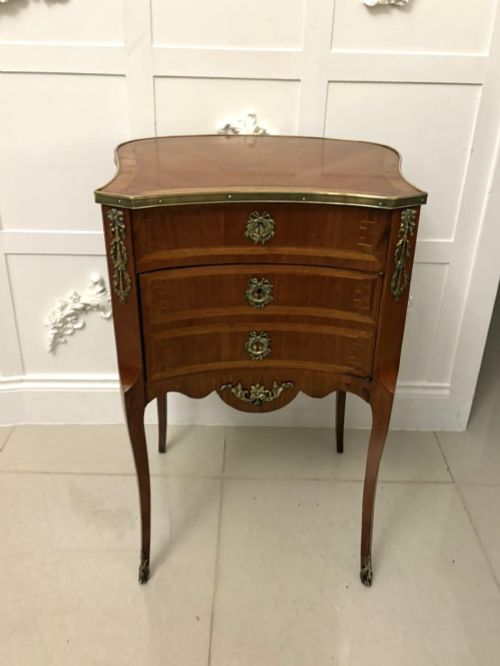
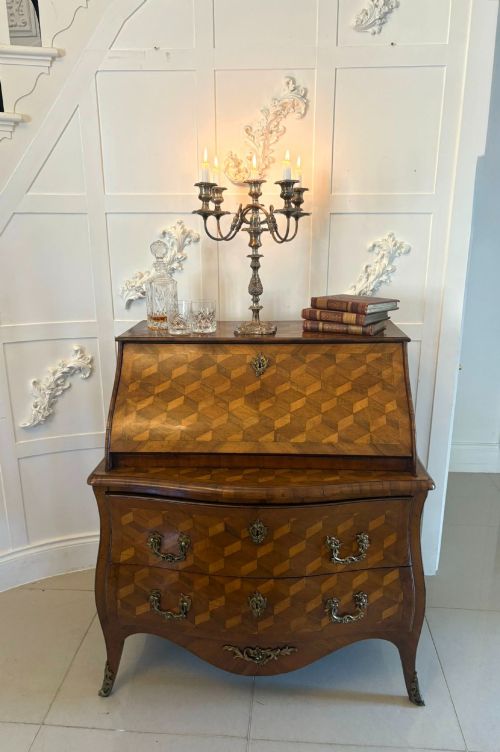
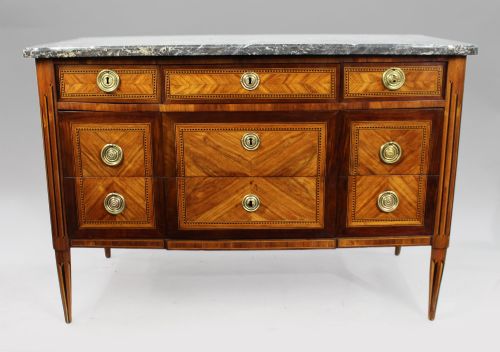
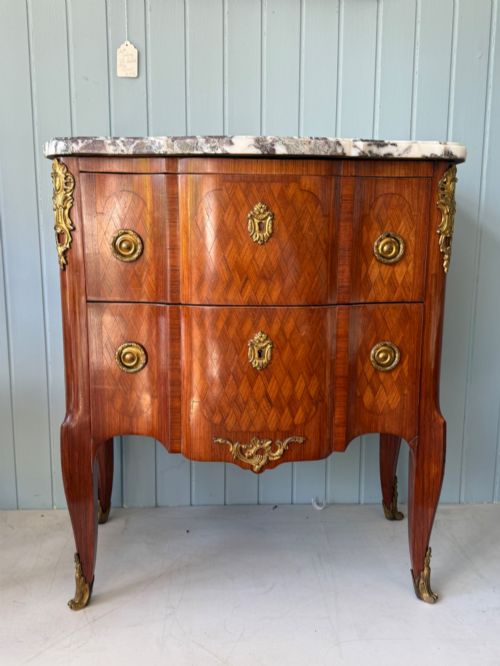
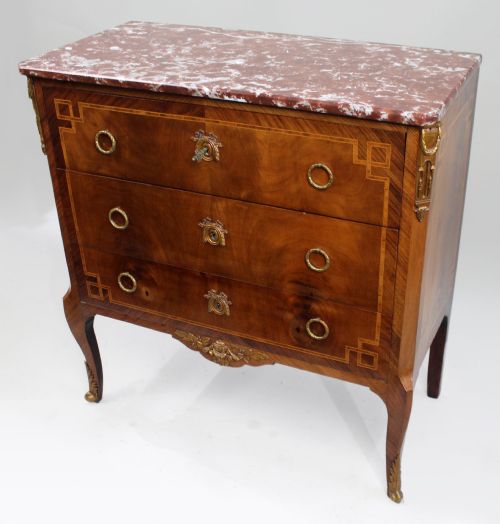
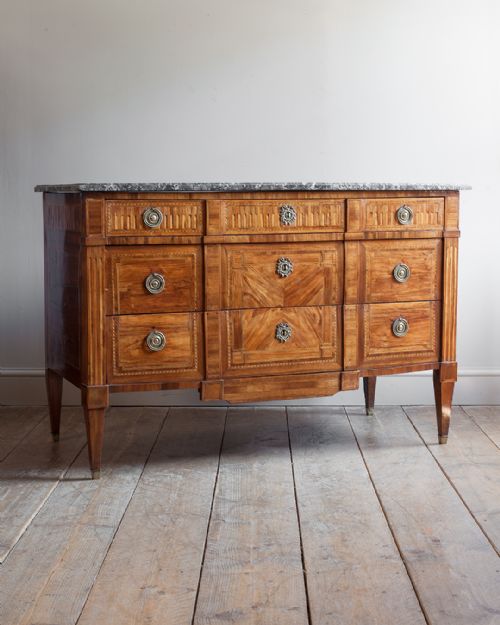
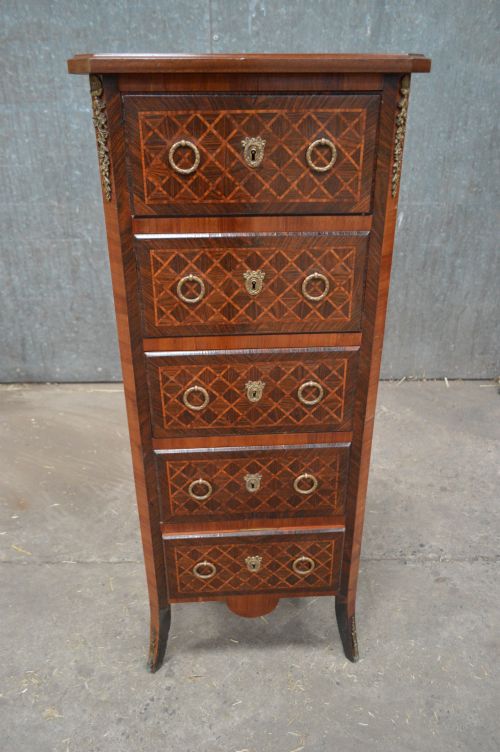
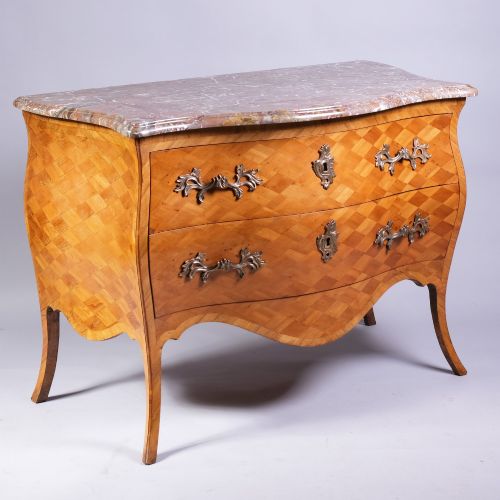
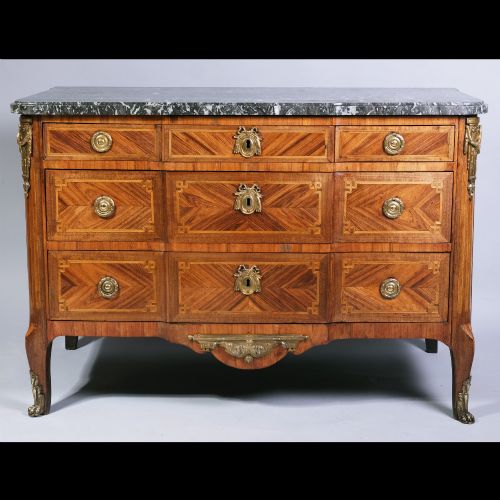
These french parquetry drawers offer geometric wood veneers and marble tops, bringing continental elegance to a room.
French Parquetry Drawers
French parquetry drawers typically appear as commodes, bedside cabinets, and chests of drawers originating from various centuries. The 18th and 19th centuries provide many surviving examples, alongside revival pieces from later decades. Buyers seek these items for their decorative wood surfaces and practical storage capacity.
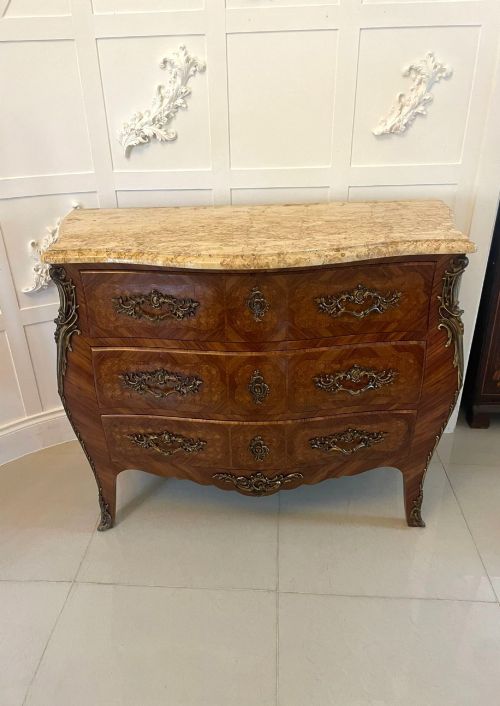
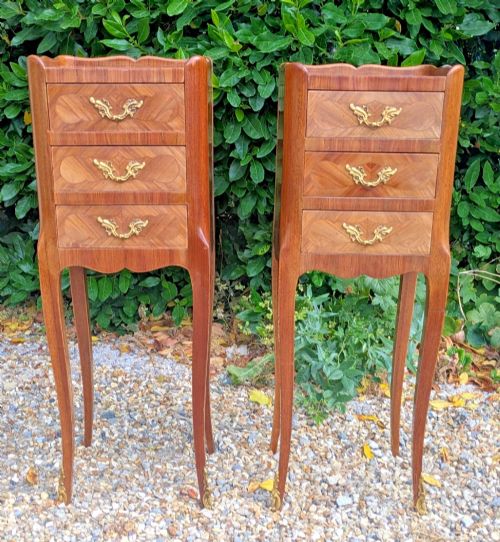
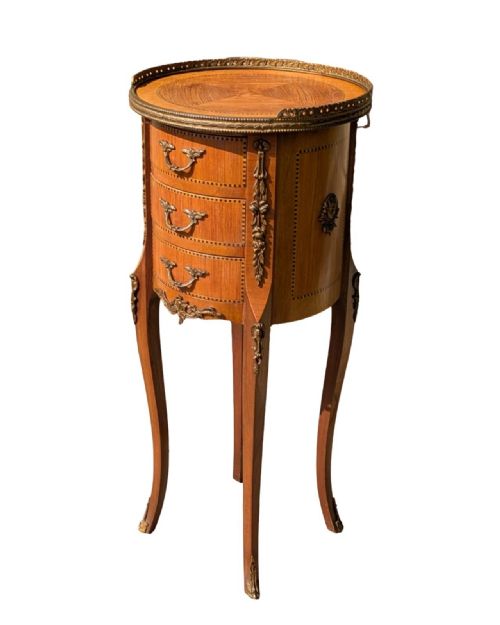
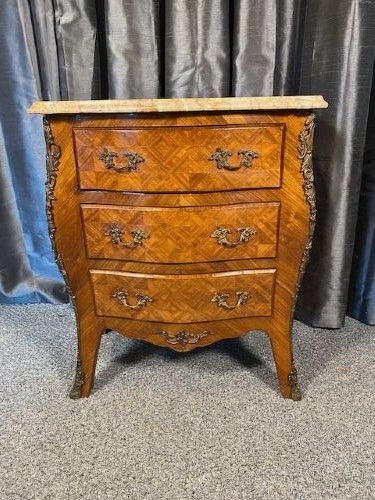
The most common formats on this page are commodes and bedside tables finished with geometric veneer patterns. Pieces frequently incorporate marble tops and shaped fronts, reflecting classic continental cabinet-making traditions. These items suit both traditional interiors and modern spaces requiring a decorative focal point.
Materials and Technique
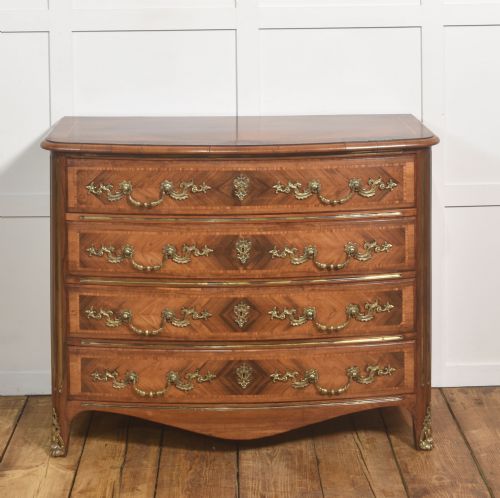
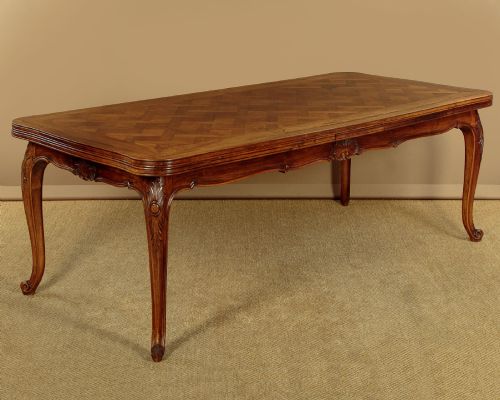
Cabinet-makers constructed these pieces using carcases of walnut, kingwood, or mahogany, applied with contrasting veneer tiles. Artisans arranged these geometric wood pieces to create visual depth and pattern across the drawer fronts and sides. Ormolu and brass mounts often accent the corners, handles, and feet.
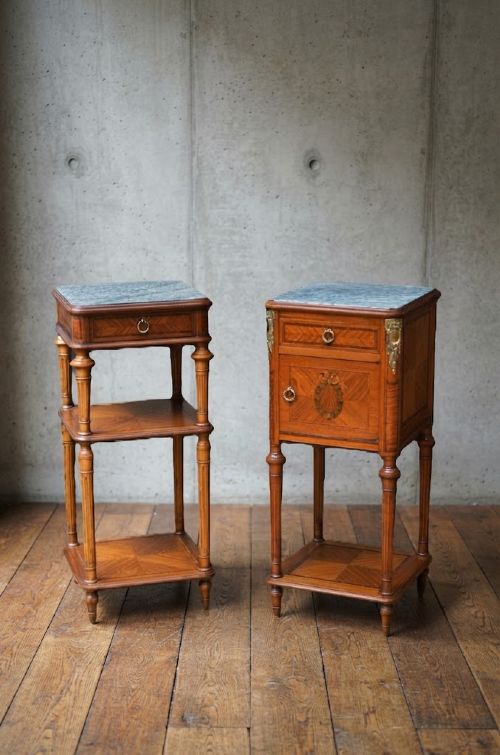
Many items feature fitted marble tops in shades of white, grey, or rouge, resting above the main drawer structure. The combination of dense hardwood timber, precise veneer work, and cast bronze detailing defines the standard construction methods found in these listings.
Several bedside cabinets arrived in matching pairs, ready to guard twin sleeping quarters with geometric flair.
Assessing Quality
Quality in these pieces depends on the precision of the veneer work and the integration of the mounts. Finer examples display tight, symmetrical geometric patterns that align neatly across drawer divides and curved contours. Lesser pieces show simpler timber selection and less refined bronze or ormolu casting.
The choice of secondary woods and the weight of the marble top also indicate the standard of production. Superior items maintain crisp lines on serpentine or bombe shapes, whereas standard examples may have softer junctions between the parquetry panels.
Donald Ross
The French Parquetry Drawers Glossary
- Parquetry
- Geometric mosaic woodwork formed by small veneer pieces applied to a carcase. This technique creates repeating patterns like cubes or triangles.
- Commode
- A decorative chest of drawers originating in France. These units typically feature low profiles and ornate mounts.
- Ormolu
- Gilded bronze used for decorative mounts and handles on furniture. Artisans cast and chased these metal elements to accent the corners and apron.
- Bombe
- A swelling, outward-curved furniture shape popular in continental designs. This profile requires skilled veneer work to follow the complex contours.
French Parquetry Drawers: Frequently Asked Questions
What is the difference between marquetry and parquetry?
Parquetry uses geometric shapes like squares, cubes, and triangles to form repeating patterns across a wooden surface. Marquetry employs varied timber veneers to create pictorial scenes, floral motifs, or scrolls.
Both techniques appear on antique French storage furniture, though parquetry relies strictly on symmetry and angle rather than pictorial design.
Are marble tops original to these chests?
Many commodes and bedside cabinets retain their original marble slabs, which were cut specifically to fit the shaped wooden carcase. These stone tops came in various colours, including white, grey, and rouge.
Replacements do occur during restorations, so inspecting the underside and the fit against the wood helps determine originality.
How do I care for antique parquetry surfaces?
These veneered surfaces require gentle cleaning with a soft, dry cloth to remove dust without disturbing the timber. Avoid excessive moisture and modern chemical sprays that can lift old glues beneath the veneer.
Applying traditional wax occasionally helps nourish the wood and maintain a soft sheen on the kingwood or walnut.
Where were these cabinets placed in a home?
Commodes served primarily in formal bedchambers and reception rooms for storing garments and personal items. Bedside cabinets stood beside sleeping quarters to hold small lamps and nighttime necessities.
Their decorative fronts and finished backs often allowed them to sit freestanding within a room layout.