



Serpentine Mahogany Tea Table
A serpentine mahogany tea table combines a curved front outline with hinged folds, designed for hospitality in eighteenth and nineteenth-century parlours.
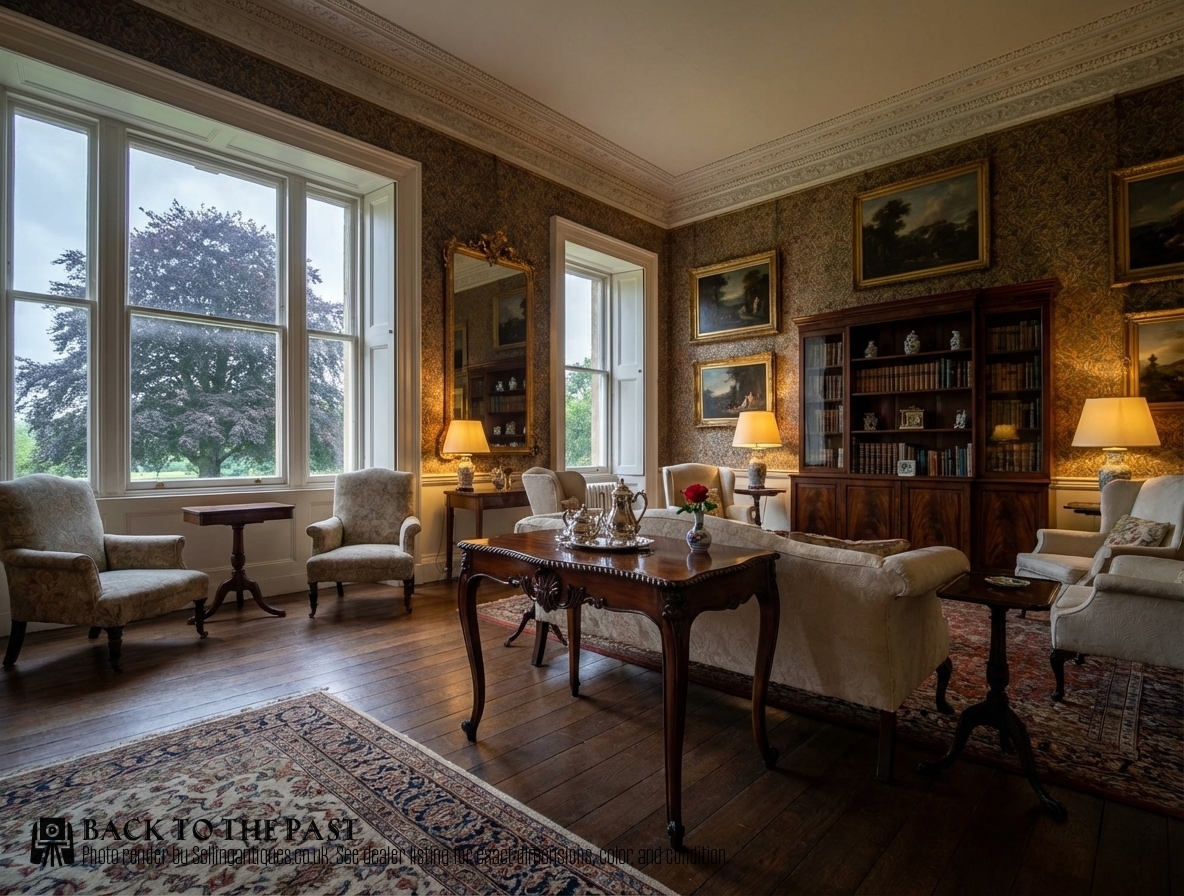
Serpentine Mahogany Tea Table
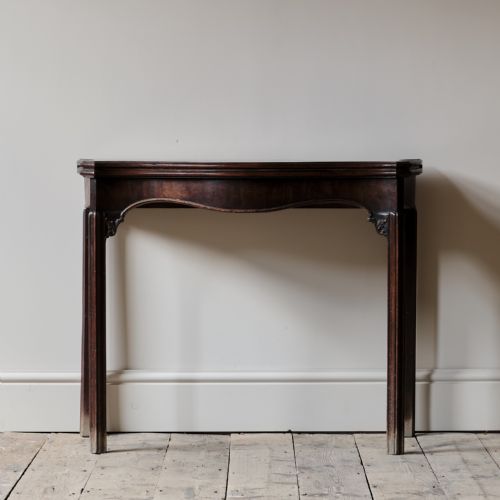
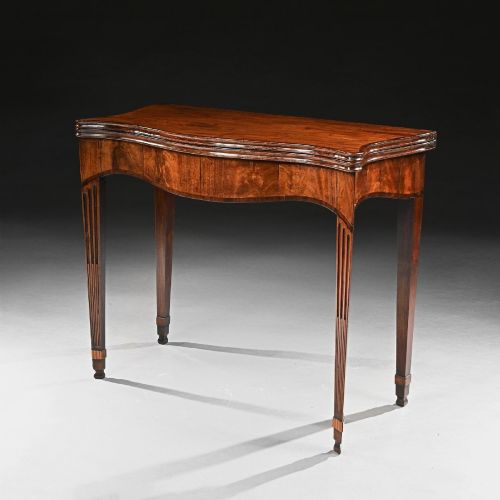
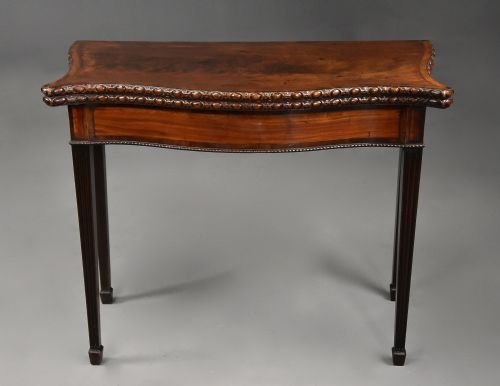
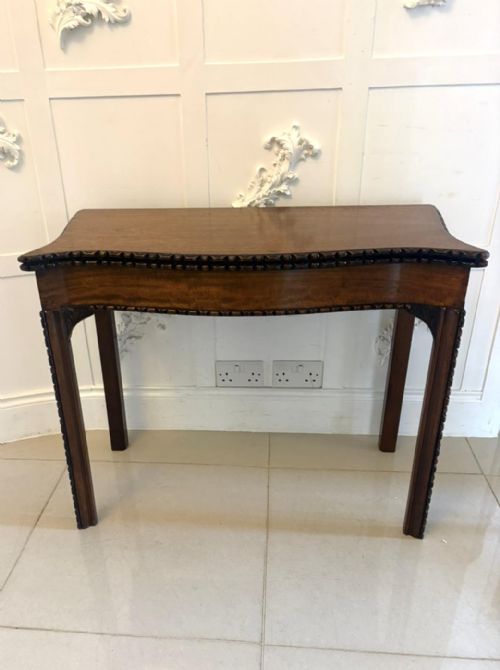
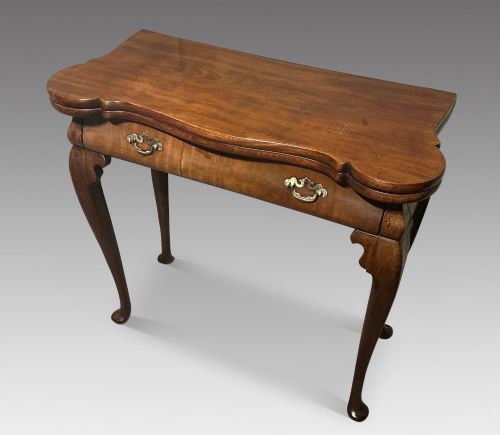
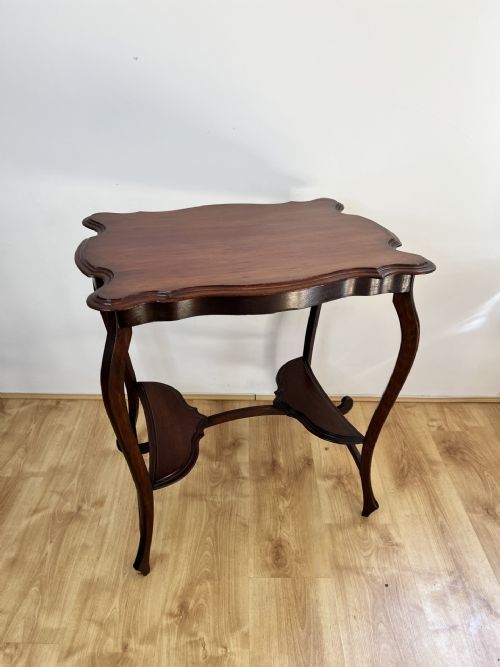
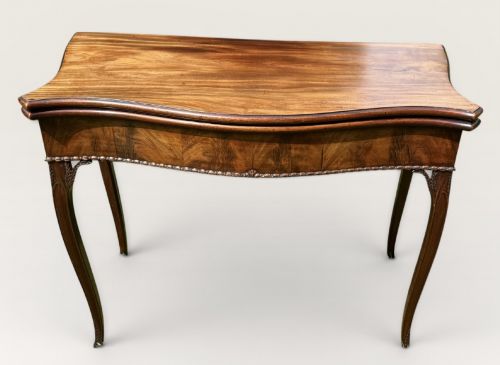
When a buyer searches for a serpentine mahogany tea table, they are looking at folding or swivel-top tables made primarily during the Georgian and Victorian periods, often influenced by Chippendale, Hepplewhite and Sheraton designs. The curving front outline defines the shape, sweeping inward and outward in a continuous wave that demands precise cabinet-making.
The versions most frequently met on this page date from the eighteenth century, particularly the George III era, alongside later nineteenth-century interpretations from the Victorian and Edwardian periods. These pieces frequently function as card, games or console tables with hinged tops that open to reveal a baize-lined surface.
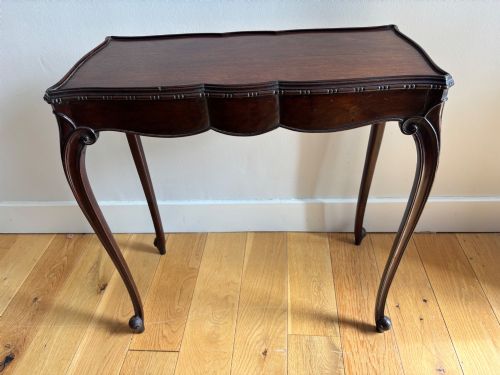
The core form originates in a period when tea drinking and parlour gaming required adaptable furniture that could stand flat against a wall when closed. Surviving examples demonstrate various leg configurations, from straight square supports to cabriole legs and tripod bases.
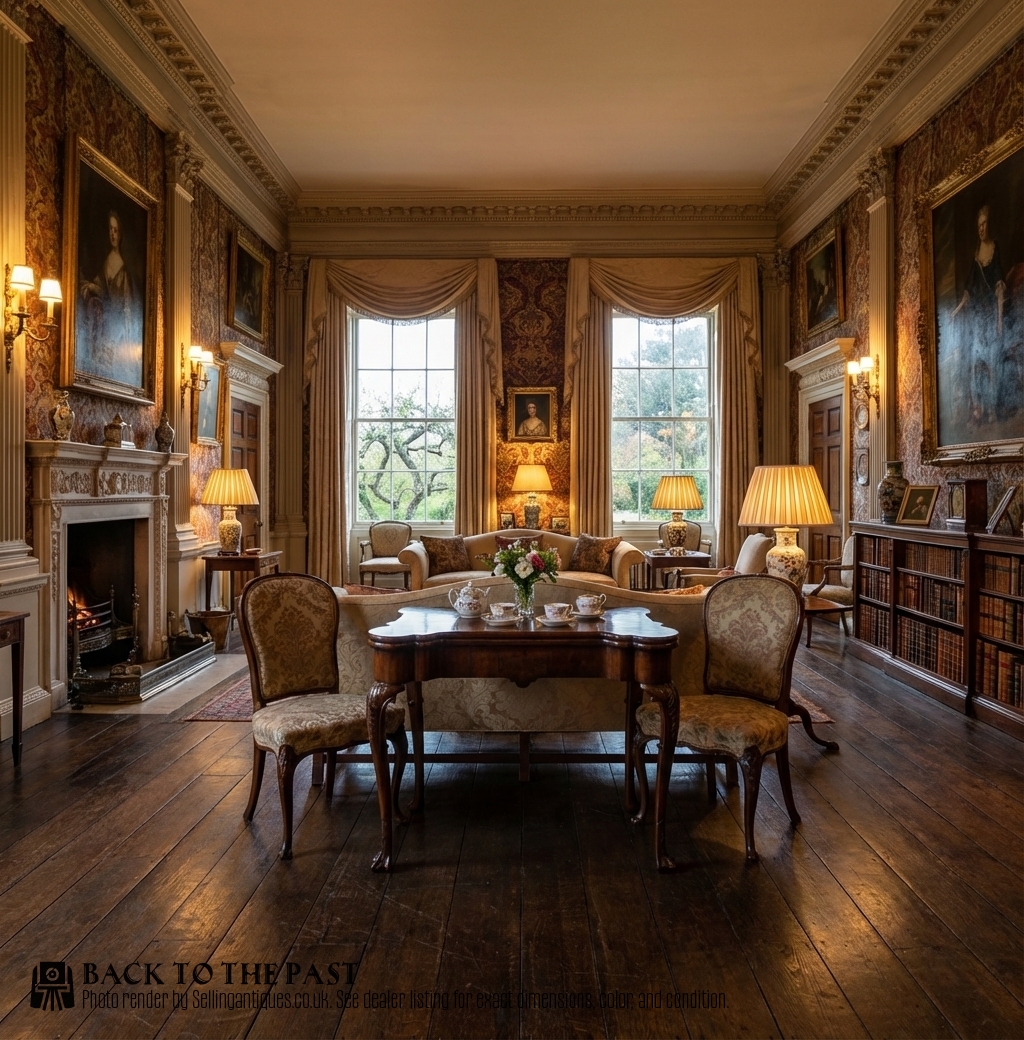
Materials and construction methods
Makers utilised solid mahogany and wood veneer over secondary timbers, selecting pieces with strong figuring and rich patination. Satinwood, boxwood and walnut appear as contrasting inlay materials, adding geometric or floral details to the primary timber.
Cabinet-makers achieved the characteristic serpentine shape by cutting curved rails from thick timber blocks or laminating layers to hold the profile without warping. Hinges, brackets and rotating mechanisms in brass enabled the fold-over and swivel actions common to these tables.
Inlay materials appearing across the inventory include satinwood, boxwood and various wood veneers.
Judging quality and proportion
The success of a serpentine mahogany tea table rests upon the crispness of the curved moulded edge and the depth of the timber's grain. Superior pieces display harmonious proportions where the sweep of the front matches the taper of the legs.
Original surface patination and minimal timber replacement distinguish better examples from heavily restored or later constructed items. The integration of the folding mechanism without sagging or misalignment indicates superior initial workshop assembly.
The Serpentine Mahogany Tea Table Glossary
- Serpentine
- A furniture front shaped with a central convex curve flanked by two concave curves. This contour requires skilled sawing and shaping of the solid wood rail.
- Fold-over
- A table top hinged along the back edge that opens out to double the surface area. It often conceals a shallow well for storing cards or counters.
- Patina
- The surface sheen and colour developed by aged mahogany through handling, polishing and exposure to light over decades. Original patina is valued by collectors.
- Inlay
- Pieces of contrasting wood, such as satinwood or boxwood, set into recesses flush with the mahogany surface. This technique creates decorative borders and motifs.
Serpentine Mahogany Tea Table: Frequently Asked Questions
How do I use a serpentine mahogany tea table today?
These tables function well as console or side tables against a hallway or living room wall. Opening the hinged top provides a temporary surface for display or writing.
Keep the timber away from direct heat sources and strong sunlight to protect the polish and prevent the mahogany from splitting. Regular dusting with a dry cloth maintains the surface sheen without building up wax.
How can I tell an 18th-century table from a later copy?
Examine the construction methods visible underneath and inside the frame, including hand-cut dovetails and timber shrinkage. Eighteenth-century pieces show tool marks and wear patterns consistent with age rather than machine production.
Check the hinges and screw fixings for period characteristics. Hand-turned screws and forged brass hinges indicate older manufacture, whereas modern slotted screws point to later repair or reproduction.
What is the difference between a tea table and a card table?
Tea tables generally feature plain or dished tops designed to hold porcelain services, sometimes with gallery edges. Card tables include a fold-over leaf supported by a swinging leg or concertina action, revealing a baize or leather playing surface.
Many surviving tables served both purposes interchangeably depending on the household requirements. The presence of internal rule joints and corner brackets usually points toward the card table classification.
Why is mahogany the dominant wood for these tables?
Mahogany offers stability, strength and a dense grain that accepts fine carving without splintering. This allowed cabinet-makers to execute complex curved serpentine fronts and slender legs.
The rich reddish-brown colour deepened naturally over time, providing a sophisticated appearance that suited formal Georgian and Victorian interiors.