
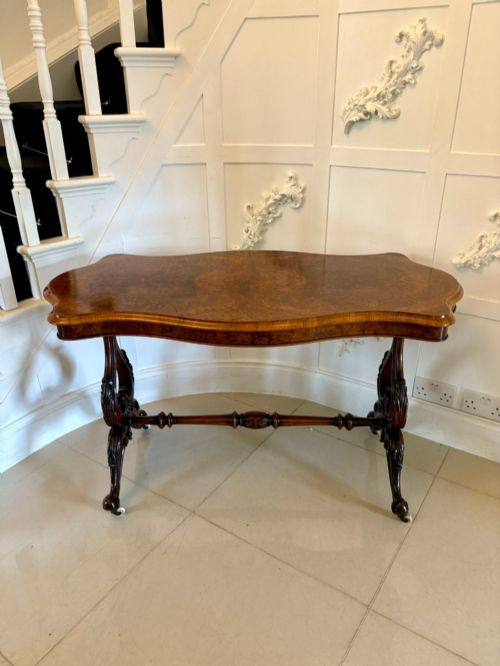
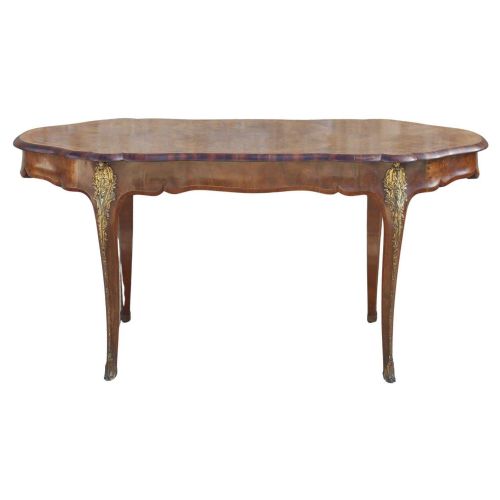


Serpentine Library Table
A serpentine library table offers a distinct curved silhouette that brings refined workspace utility and statement presence to any room.
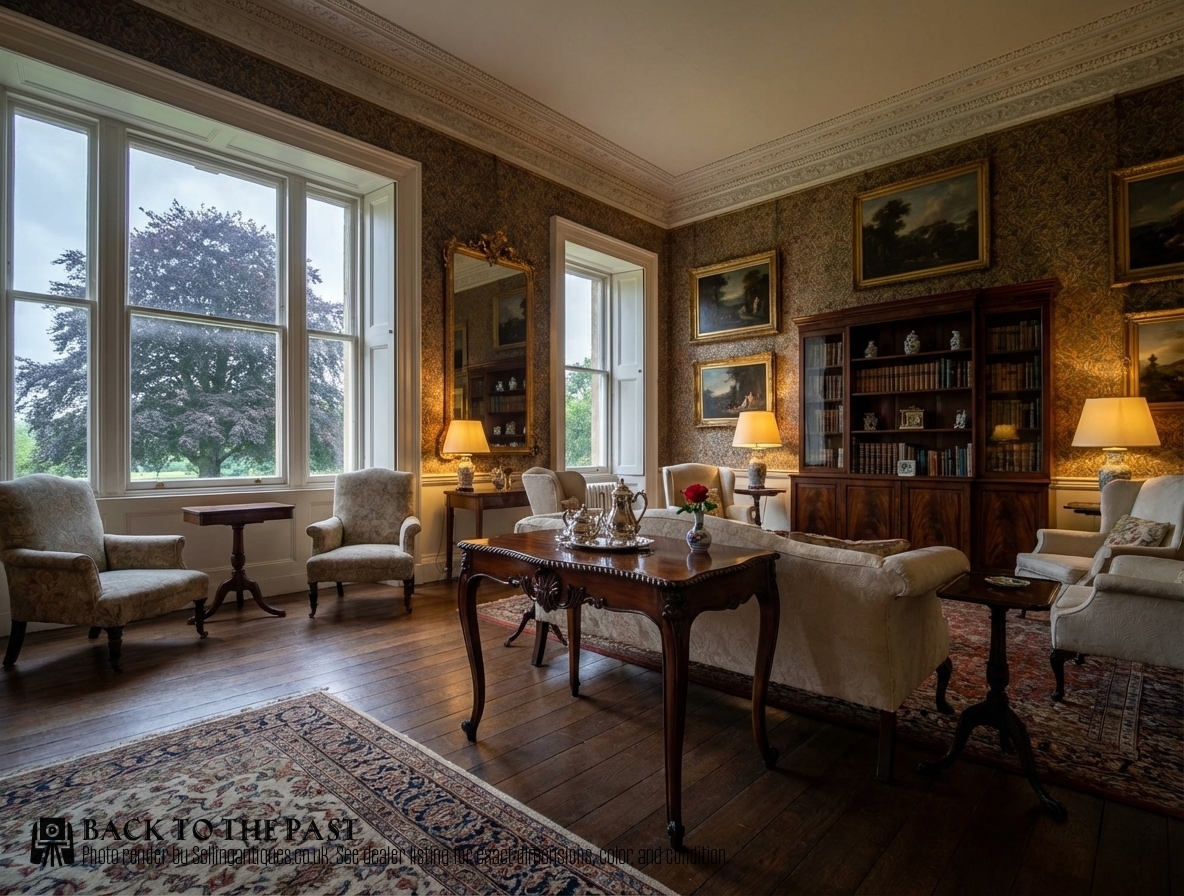
Serpentine Library Table
A serpentine library table combines a graceful undulating front edge with a functional surface designed for study and writing. These pieces function equally well as freestanding centre tables or substantial writing desks within a period interior.
The selections encountered on this page date primarily from the nineteenth century, including Victorian and Edwardian examples, alongside continental Louis styles. Woods such as burr walnut, mahogany, and rosewood dominate the construction.
Makers and workshops of the nineteenth century favoured this curved outline to soften the rigid geometry of traditional library furniture. Buyers will find variations ranging from elaborate French bureau plat designs to English freestanding centre tables.
Construction and materials
Cabinetmakers utilised dense timbers like mahogany, rosewood, and burr walnut, frequently applying figured veneers to curved surfaces to accentuate the grain. Ormolu mounts, brass details, and inlaid satinwood or amboyna often decorate the framework.
The complex curved edge required skilled hand-carving and careful shaping of solid wood frames to support the sweeping contours of the top. Cabriole legs, turned supports, and pedestals provide the structural foundation for these heavy tables.
Assessing quality and execution
Superior examples demonstrate meticulous matching of burr walnut or rosewood veneers across the challenging undulating curves of the top and drawers. The crispness of hand-carved mahogany details and the weight of the ormolu mounts indicate the standard of craftsmanship.
Interior construction reveals the maker's hand through secondary timbers, dovetailed drawer construction, and the precise fitting of leather writing surfaces. Pieces attributed to notable makers exhibit a higher level of refinement in both structural joinery and decorative embellishment.
Maison Millet·Gillows·Zweiner
The Serpentine Library Table Glossary
- Serpentine
- A curved line of furniture fronting that sweeps inward then outward, creating a gentle undulating shape. This contour requires precise woodworking skills to execute properly.
- Burr walnut
- A highly figured timber taken from the growth burls of the walnut tree, prized for its swirling grain patterns. Cabinetmakers used these decorative veneers on prominent surfaces.
- Ormolu
- Gilded bronze ornamentation applied to furniture, popular in French and English revival designs. It provides metallic contrast against dark hardwoods like mahogany and rosewood.
- Bureau plat
- A flat-topped French writing desk, often freestanding and fitted with drawers. These tables frequently feature cabriole legs and elaborate mounts.
- Centre table
- A freestanding piece designed to be viewed from all sides rather than pushed against a wall. These tables often occupy the middle of a principal room.
Serpentine Library Table: Frequently Asked Questions
What is a serpentine library table?
A serpentine library table is a freestanding desk or centre table featuring a distinctive curved edge along the front. These pieces were designed for study and correspondence in nineteenth-century interiors.
They combine decorative presence with practical workspace surfaces, often finished with leather inserts and polished timber veneers.
Where should I place a centre table?
Centre tables are built to be freestanding and finished on all sides, making them suitable for the middle of a room. They function effectively as writing desks or central display surfaces in libraries and studies.
Ensure there is adequate clearance around the piece to appreciate the curved silhouette and detailed craftsmanship from every angle.
How do I identify Victorian styles?
Victorian furniture often incorporates rich timbers such as burr walnut, mahogany, and rosewood, alongside revival influences like Louis XV or Chippendale styles. Look for decorative elements like cabriole legs, ormolu mounts, and hand-carved mouldings.
The use of figured veneers and shaped serpentine outlines points directly to mid-nineteenth-century manufacturing practices.
How do I care for antique wood?
Maintain antique timber surfaces by keeping them away from direct sunlight and sudden temperature changes that can dry out the wood. Regular dusting with a soft cloth preserves the polish without damaging the vintage finish.
Avoid placing damp items directly onto the timber or leather writing surfaces to prevent staining and warping.