
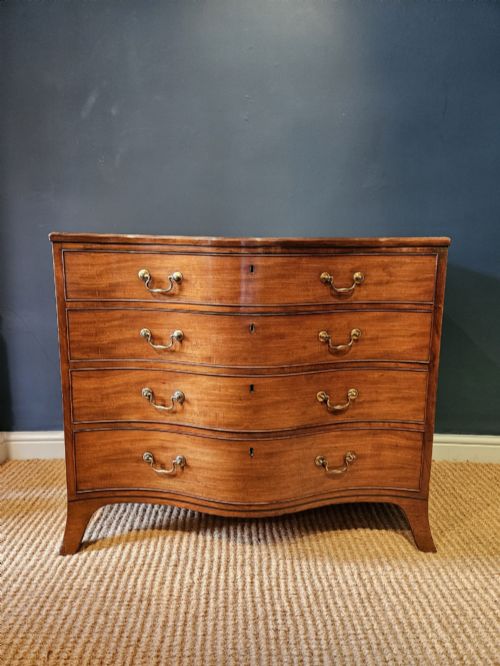
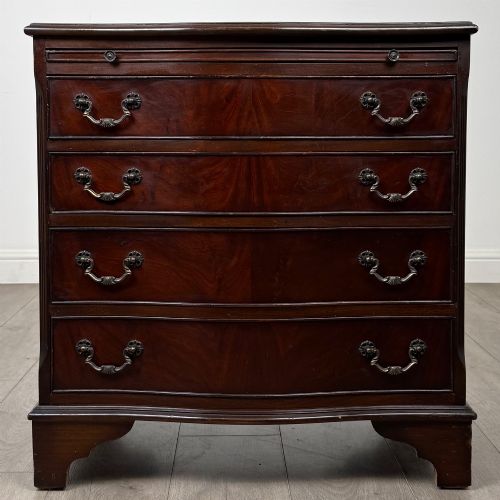
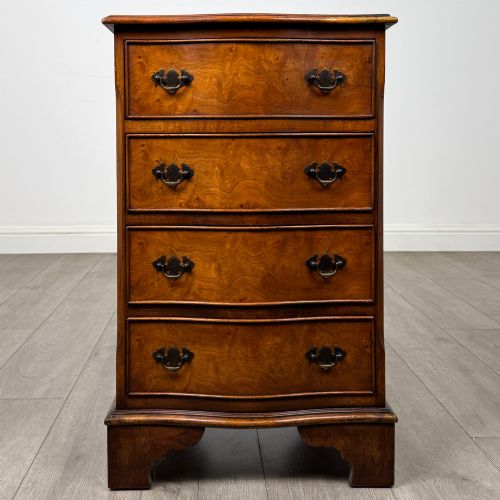
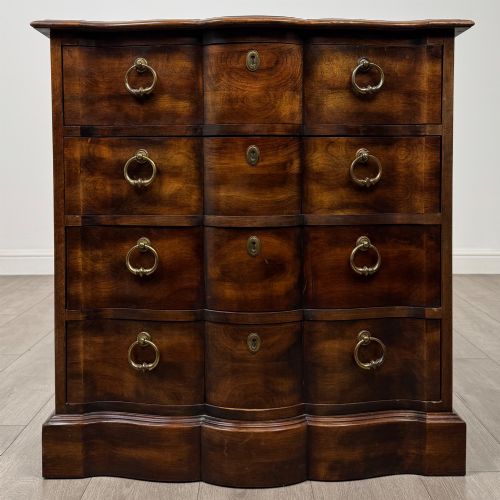
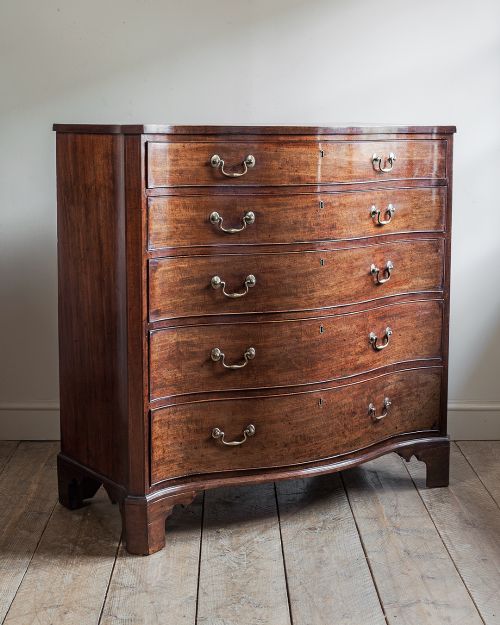
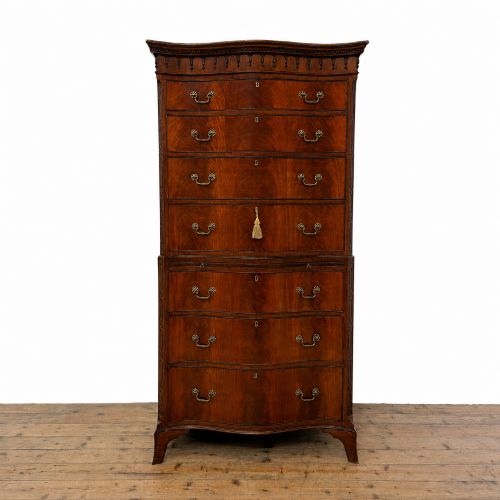
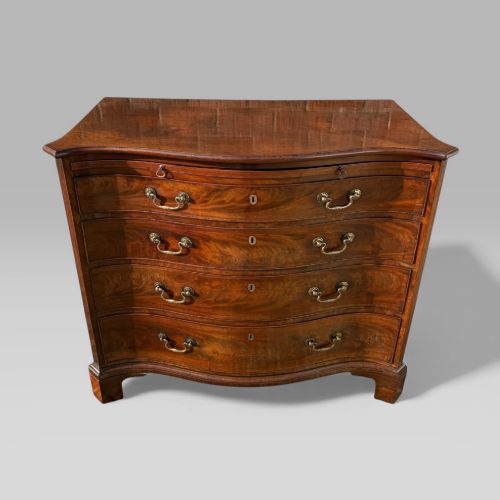
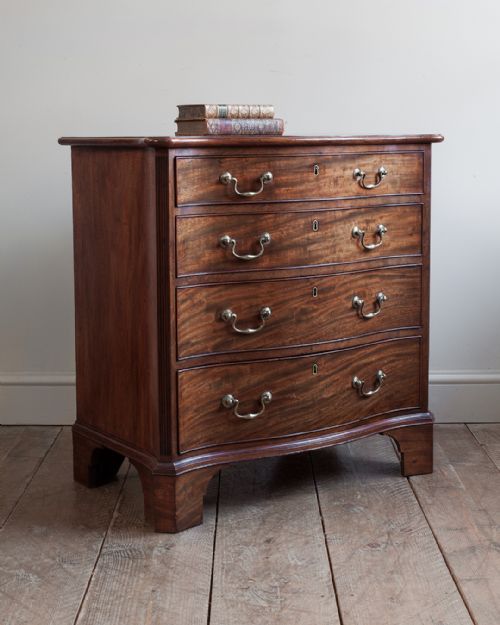





Serpentine Mahogany Tallboy
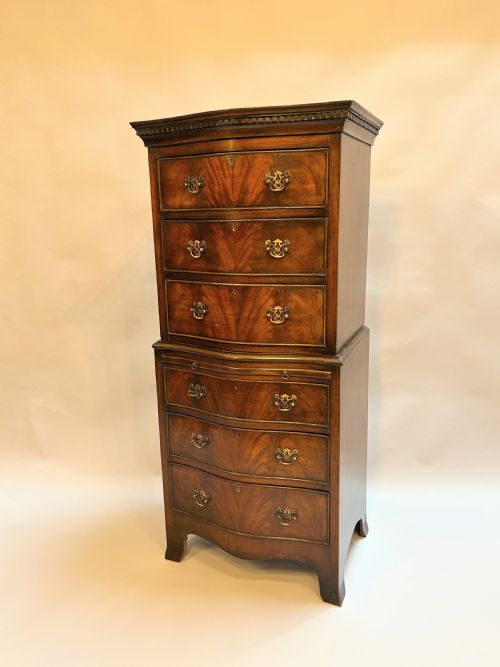
A serpentine mahogany tallboy brings sweeping curves and vertical storage together, offering an elegant focal point for a traditional bedroom.
Serpentine Mahogany Tallboy
A serpentine mahogany tallboy combines a graceful, undulating front with a tall chest-on-chest configuration, providing substantial drawer space without a large floor footprint. Buyers seeking this phrase encounter both authentic 18th-century Georgian examples and later Edwardian or 20th-century revivals.
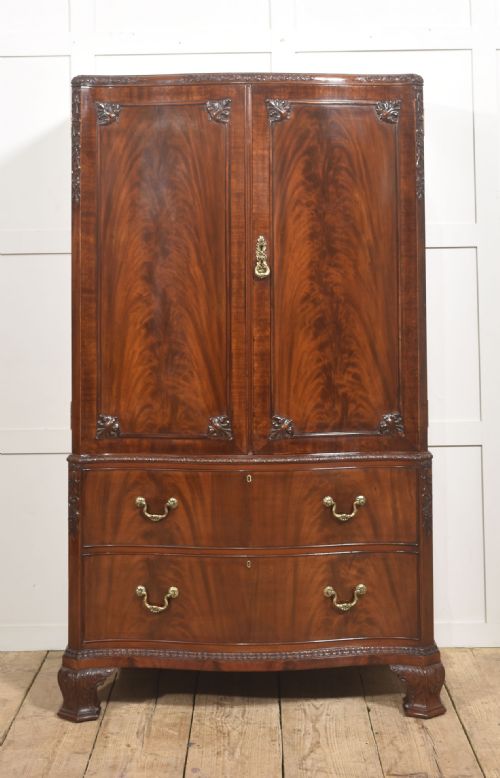
The form encompasses dedicated tallboys, chest-on-chest designs, and linen presses featuring the characteristic undulating curve across the drawer fronts. Pieces span periods from the mid-18th century through to the Edwardian era and the 1920s.
Origins represented in the evidence include English and Scottish workshops, alongside revival pieces produced in the early 20th century. Buyers will find variations ranging from compact proportions to large, multi-drawer wardrobe combinations.
How they were made
Cabinet makers utilised solid mahogany and applied flame mahogany or fiddleback veneers to the curved drawer fronts, often framing the grain with subtle boxwood inlay. Oak and other secondary hardwoods served for drawer linings and internal carcase construction.
The complex serpentine shape required precise woodworking to carve or bend the solid timber and veneer without splitting along the wave. Brass handles and escutcheons were fitted to complete the exterior hardware.
Some Georgian examples cleverly conceal a pull-out writing slide right beneath the top drawer for standing correspondence.
What varies in quality
The refinement of the curved drawer fronts distinguishes finer examples, where the sweep flows smoothly rather than abruptly across the carcase. Selection of timber figure, such as well-matched flame mahogany veneers, marks the distinction between standard production and top-tier cabinet work.
Original brass hardware, crisp inlay work, and secondary timber choice such as oak interiors indicate superior construction. The integrity of the tallboy's proportions and the crispness of any carved detail further separate exceptional pieces from simpler utilitarian chests.
Waring s Gillows
The Serpentine Mahogany Tallboy Glossary
- Serpentine
- A front profile shaped in a double curve, convex at the centre and concave at the sides. This technique demands high skill from the cabinet maker to execute cleanly.
- Tallboy
- A tall chest of drawers, frequently built as a chest on chest or a chest upon a stand. It maximises vertical storage in the bedroom.
- Flame mahogany
- A veneer cut from timber where the branch meets the trunk, creating a fiery, flickering pattern. It appears frequently on high-status 18th-century and Edwardian furniture.
- Chest on chest
- A tall storage unit formed by stacking a smaller chest of drawers directly on top of a wider base chest. This format is also commonly termed a tallboy.
- Inlay
- A decorative technique where contrasting woods like boxwood are inserted into the primary mahogany surface. It defines borders and highlights drawer outlines.
Serpentine Mahogany Tallboy: Frequently Asked Questions
How do I clean a mahogany tallboy?
Dust the surface regularly with a soft, dry cloth to prevent the accumulation of grit on the timber and veneer.
Apply a traditional beeswax polish occasionally to nourish the mahogany and maintain its natural lustre without building up heavy residue.
What is the difference between a tallboy and a chest on chest?
In historical and regional terminology, the two terms often describe the same stacked double-chest configuration.
Some tallboys additionally incorporate a wardrobe section, a linen press cupboard, or a dressing slide within the vertical stack.
Where should I place a tallboy in my room?
Position the piece against a sturdy interior wall away from direct sunlight and heat sources to protect the mahogany and veneers.
Ensure there is adequate clearance in front of the tallboy for the drawers to open fully without obstruction.
How can I tell an 18th-century piece from a revival piece?
Examine the secondary timbers used for drawer linings and backboards, as Georgian workshops relied primarily on oak or pine with distinct hand-tool marks.
Review the construction methods and hardware fittings, keeping in mind that Edwardian and 1920s revivals often utilised machine-cut joints and standardised fixings.