
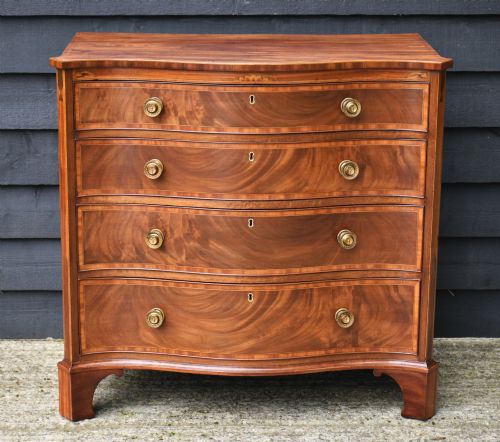
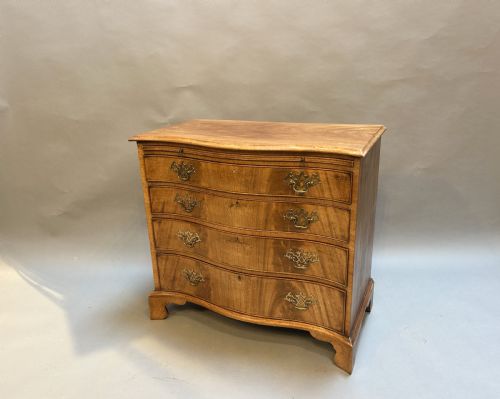
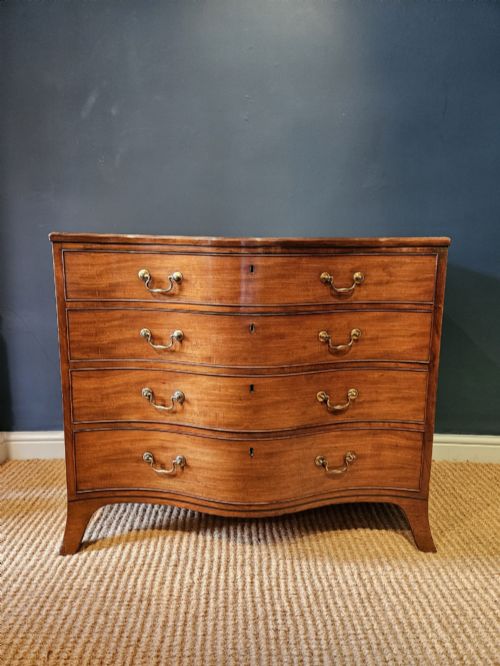
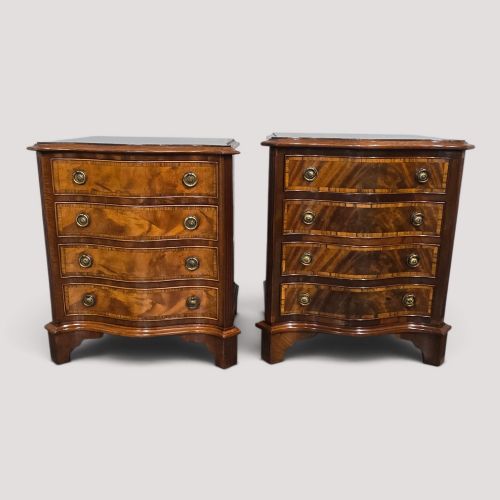

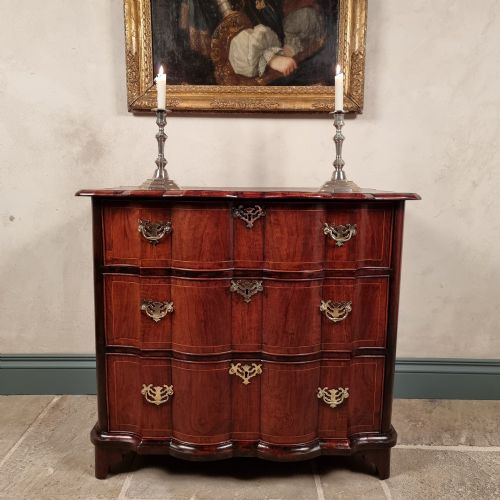
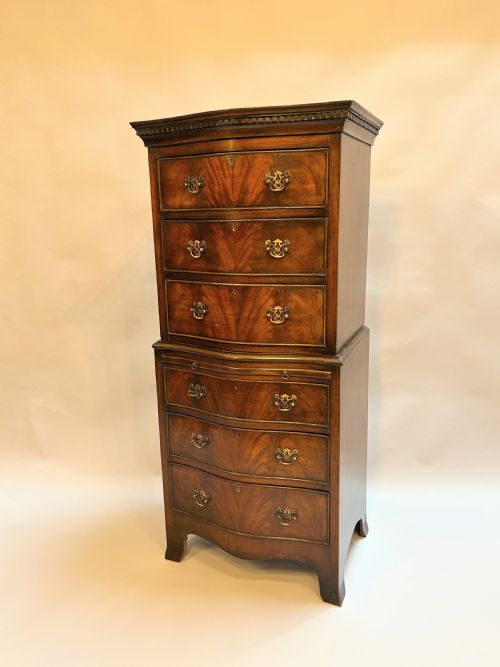
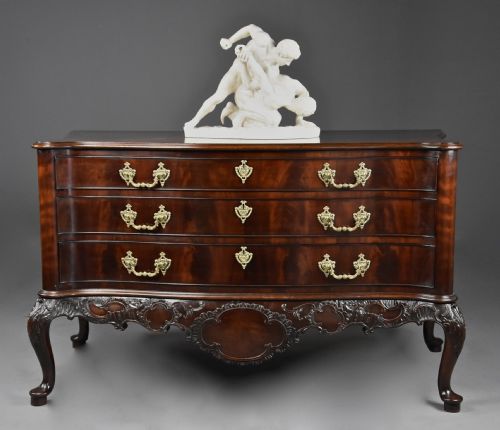
Georgian Mahogany Serpentine Chest
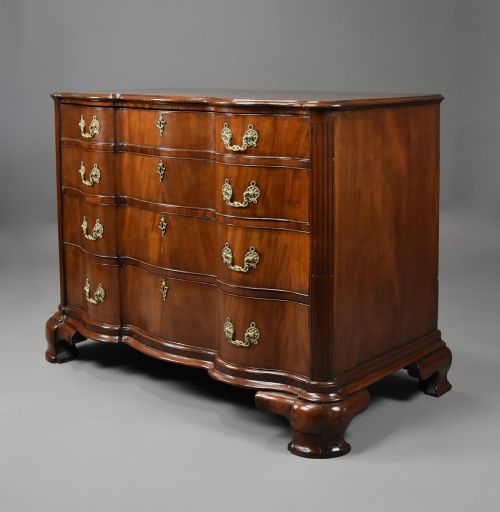
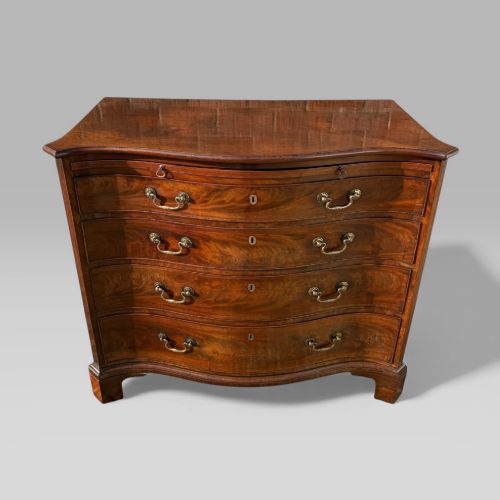
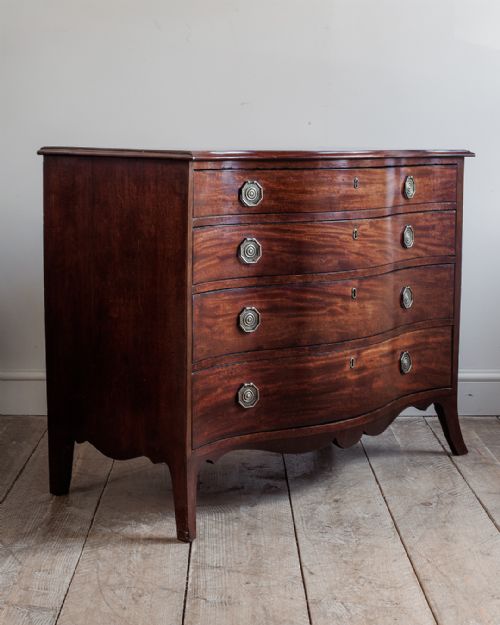
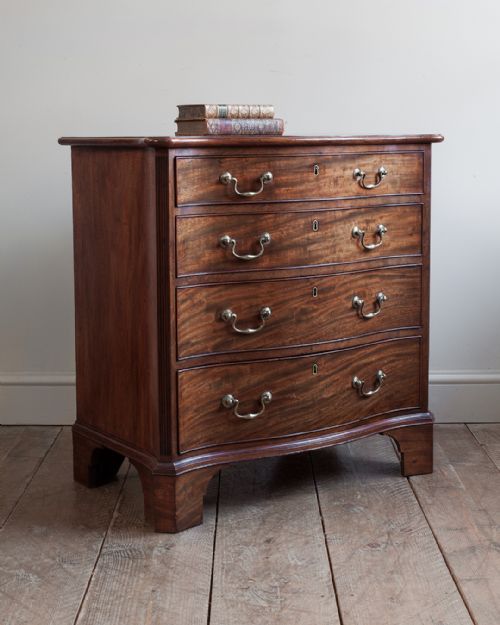
A georgian mahogany serpentine chest brings together curved drawer fronts and rich timber in a form that defines eighteenth-century cabinet-making.
Georgian Mahogany Serpentine Chest
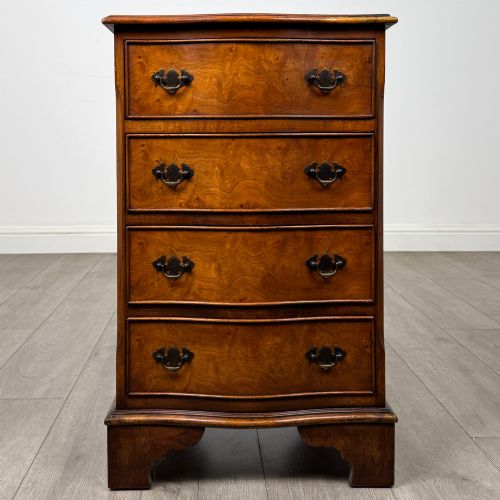
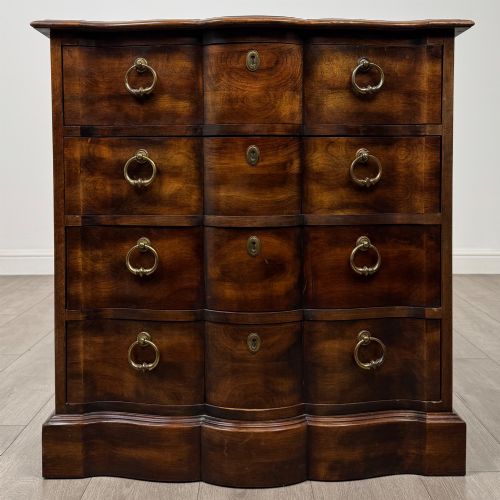
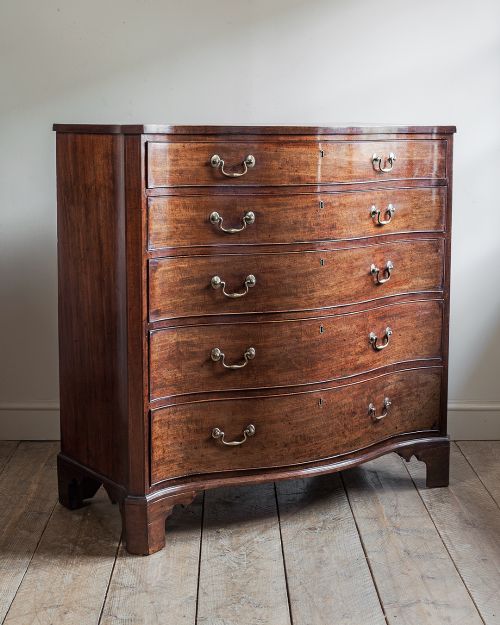
A georgian mahogany serpentine chest is a case piece designed with a prominent, undulating front curve that sweeps outward at the centre and inward at the corners. The pieces found here span the eighteenth century and the later revival periods of the nineteenth and twentieth centuries.
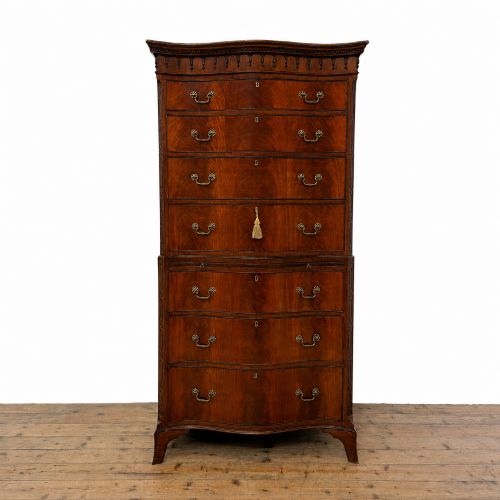
Most examples appear as chests of drawers with three to five graduated drawers, though variations include tallboys, bedside lamp chests, and secretaire bookcases.
The primary forms adhere to George III and Chippendale styles, alongside continental commodes and Edwardian interpretations built in hardwood.
How They Were Made
Cabinet-makers built these carcasses using dense mahogany timbers, frequently selecting figured, flame, or plum pudding varieties for the principal drawer fronts. Secondary woods such as oak provide internal structural support for the drawer linings and frames.
Decorative elements involve intricate boxwood and satinwood inlay, marquetry details, and carved bracket feet or shaped aprons. Brass handles and escutcheons punctuate the drawer faces, completing the construction with fitted hardware.
Pieces range from compact bedside lamp chests to large tallboys and secretaire bookcases.
What Varies in Quality
Quality rests upon the choice of timber figure and the precision of the serpentine curve sculpted into the solid wood or thick veneer. Grain continuity across the drawer fronts and the sharpness of the hand-carved mouldings separate accomplished workshop production from standard output.
The integrity of the internal oak secondary framing and the retention of original brass handles influence the standing of an individual piece. Eighteenth-century originals demonstrate greater fluidity in the serpentine sweep than later revival interpretations.
The Georgian Mahogany Serpentine Chest Glossary
- Serpentine
- A front profile characterised by a convex centre flanked by concave curves. This contour requires precise woodworking to maintain symmetry across the chest.
- Flame mahogany
- A veneer pattern featuring fiery, tongue-like grain formations sliced from timber forks. Cabinet-makers reserved this decorative wood for principal surfaces.
- Tallboy
- A tall chest of drawers built in two stacked sections, often combining a chest base with a wardrobe or linen press upper compartment.
- Commode
- A low chest of drawers or cabinet, frequently associated with eighteenth-century continental European design. The term often describes serpentine forms with generous proportions.
- Bracket foot
- A furniture foot formed by two mitred pieces meeting at a corner, shaped into a simple or ogee bracket. This support style underpins many Georgian case pieces.
Georgian Mahogany Serpentine Chest: Frequently Asked Questions
What is a serpentine chest?
A serpentine chest is a set of drawers featuring a front that curves outward in the middle and inward at the edges. This distinctive silhouette creates a fluid, undulating facade.
Craftsmen adopted this shape during the eighteenth century to add movement and architectural interest to standard bedroom and parlour furniture.
How do I spot a Georgian original?
Look for hand-cut dovetails on the drawer sides and the use of native oak for internal linings rather than modern plywood or deal. Eighteenth-century pieces display subtle irregularities from hand-tooling.
Examination of the timber grain reveals how the maker selected veneers to follow the undulating contours of the drawer fronts.
Where should I place this chest?
These chests function well in a hallway, bedroom, or living space where the curved front profile can be viewed from multiple angles. Their compact depth allows them to sit comfortably against walls without dominating a room.
Pairing the surface with a simple mirror or lamp lets the timber grain and brass hardware catch the light.
What is the difference between Georgian and revival pieces?
Georgian pieces date from the eighteenth and early nineteenth centuries, carrying the wear and construction methods of the period. Revival pieces originate from later eras like the Edwardian period or nineteen-hundreds.
Revival furniture often replicates earlier Chippendale or George III styles using machine assistance alongside traditional hand assembly.