
Serpentine Mahogany Drawers
Serpentine mahogany drawers bring flowing curves and rich timber grain to period interiors.
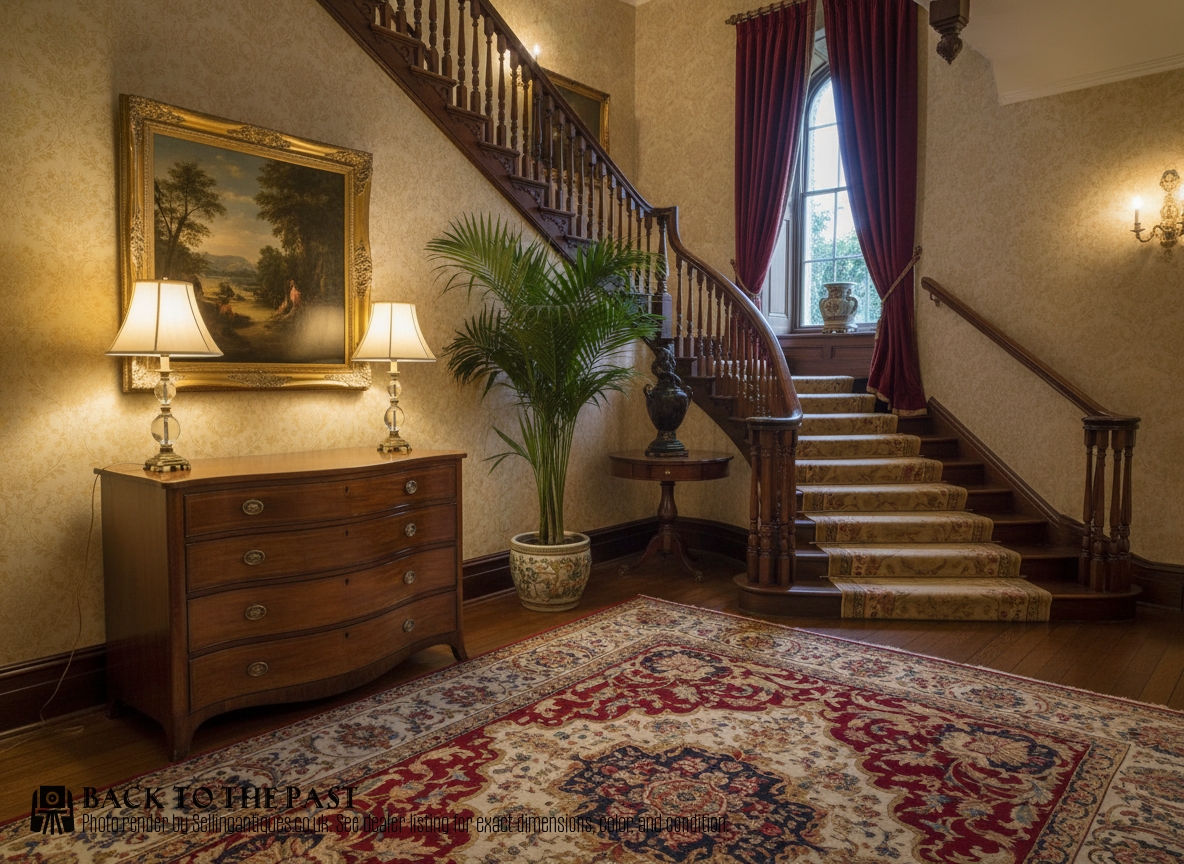
Serpentine Mahogany Drawers
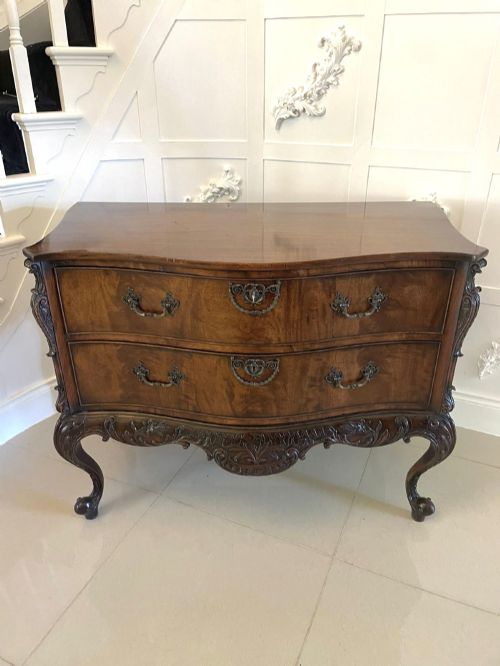
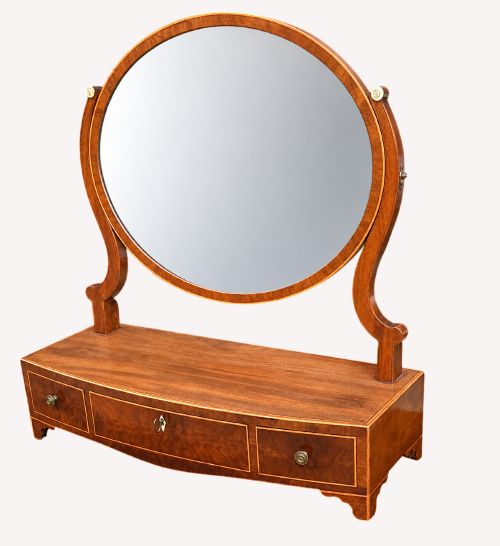
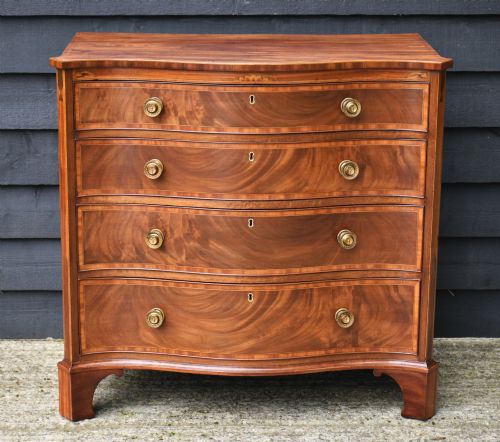
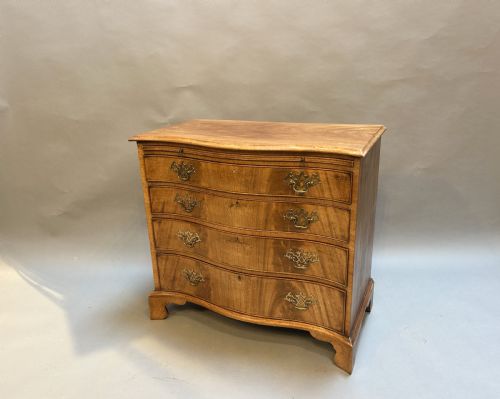
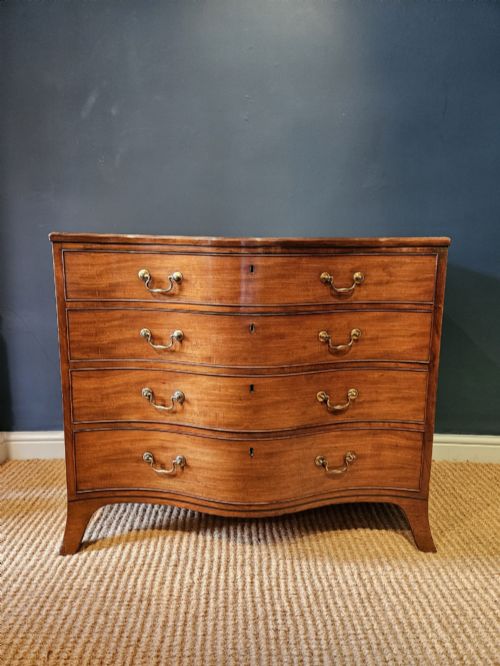
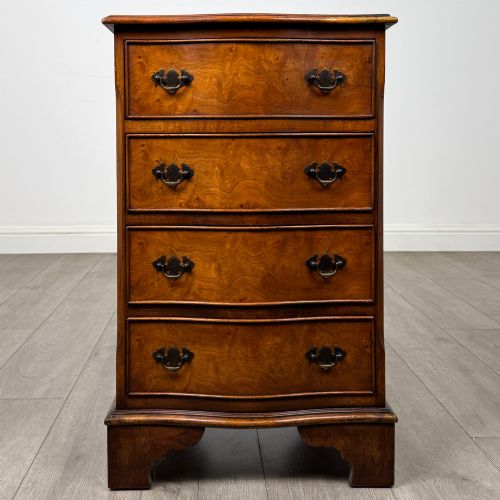
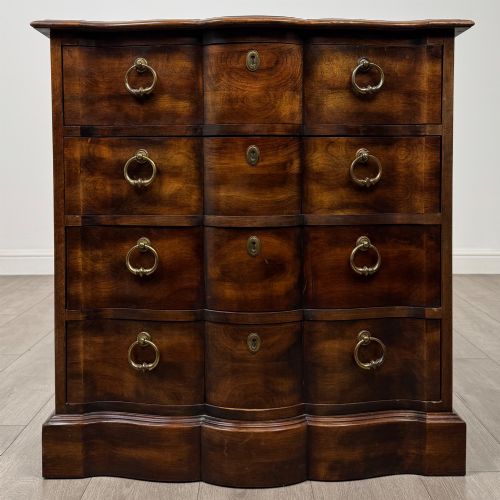
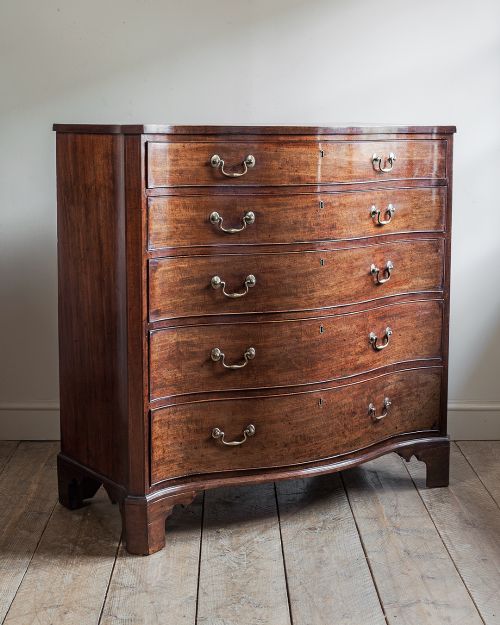
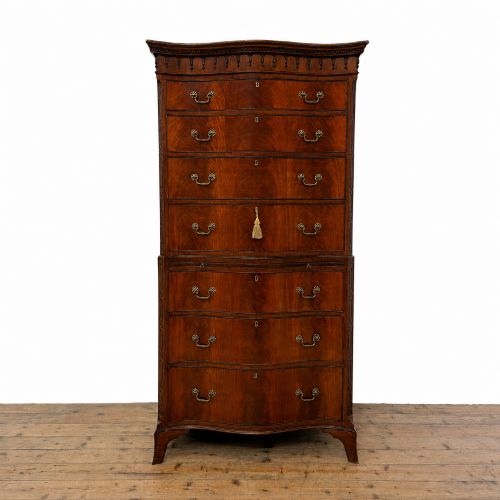
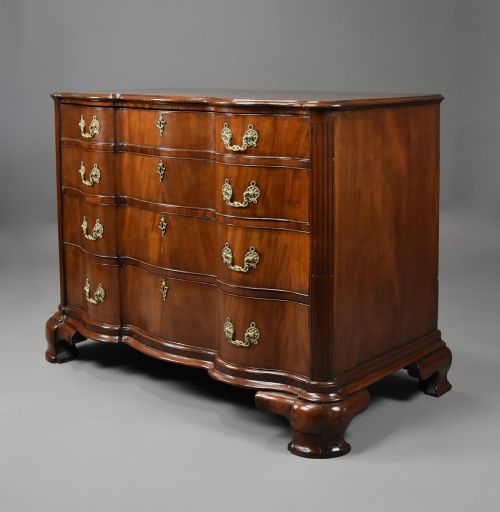
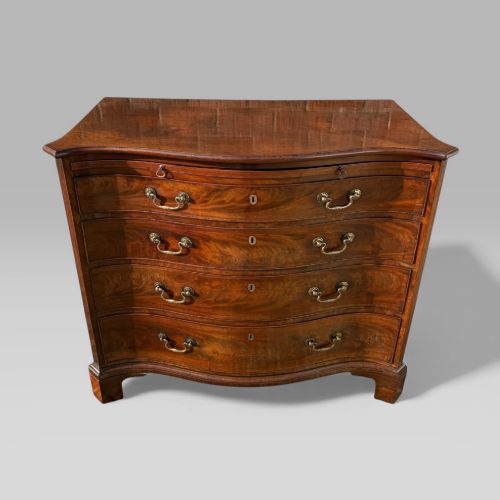
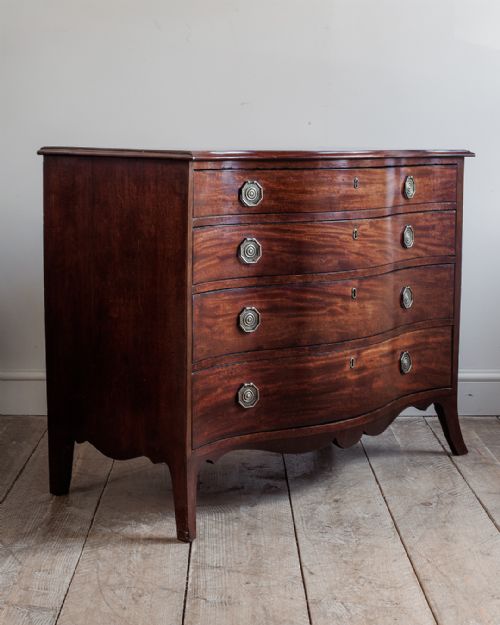
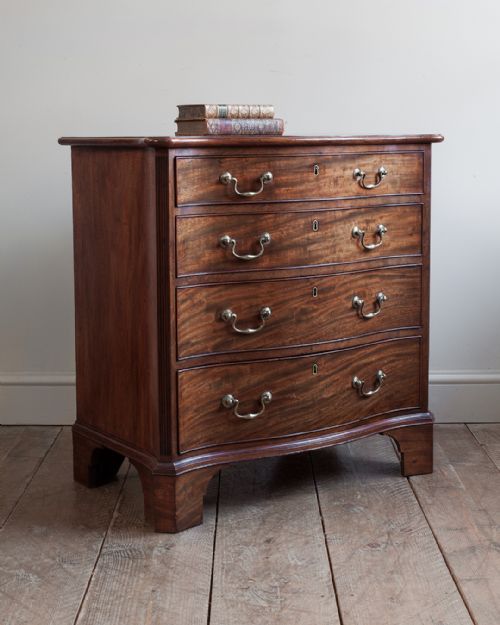
Serpentine mahogany drawers comprise case pieces shaped with a convex centre flanked by concave ends, creating a rhythmic wave across the front. When buyers search for serpentine mahogany drawers, they encounter case furniture primarily designed as chests of drawers, alongside dressing mirrors and tallboys.
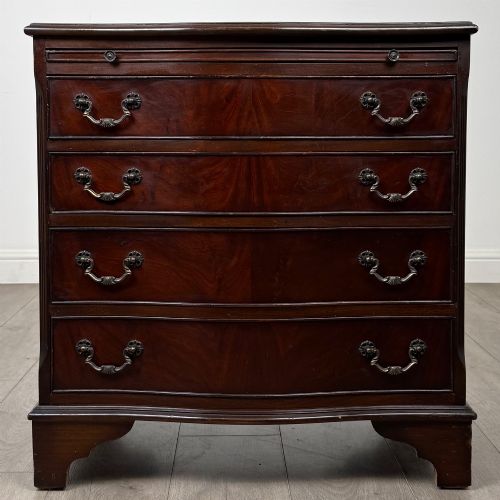
The pieces span the eighteenth century through to the Edwardian period and later revivals, reflecting shifts in cabinetmaking taste across Georgian, Victorian, and Edwardian eras. Chests of drawers dominate the selection, appearing with three or four graduating drawers, sometimes incorporating pull-out writing slides or fitted brush trays.
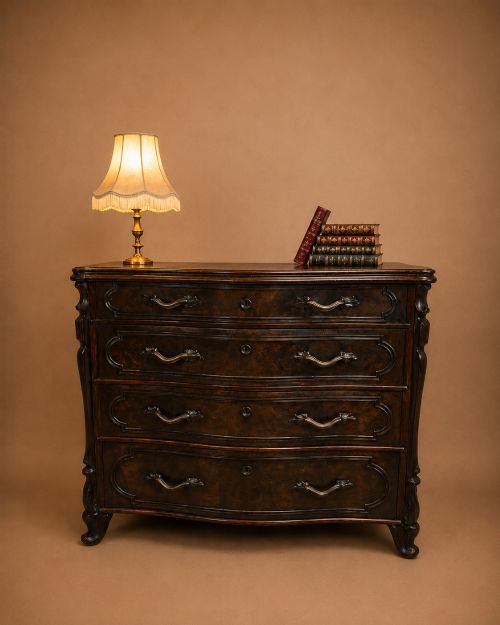
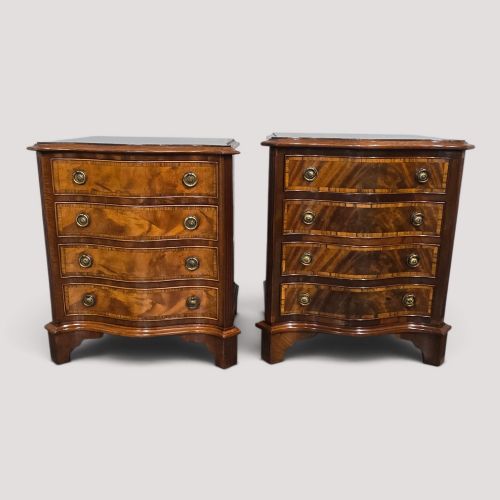
Origin examples range from English Georgian workshops to continental European commodes and later Edwardian reproductions. Buyers find both full-size tall chests and smaller bedside or compact formats.
How they were made
Cabinetmakers constructed these undulating fronts from solid timber or pine carcases faced with carefully selected mahogany veneers. Figured timber, flame mahogany, and fiddleback varieties provided striking grain patterns that catch light across the curved surfaces.
Secondary timbers such as oak and pine appear inside drawer linings and internal framing. Brass handles, escutcheons, and occasional boxwood or satinwood stringing complete the construction details.
Several pieces include hidden pull-out writing slides, originally designed for unexpected correspondence.
What varies in quality
The dexterity of the curve defines the cabinetmaker's skill, requiring precise hand-shaping of both the drawer fronts and the solid framing behind them. Superior examples display seamless alignment where drawer edges meet the undulating carcase without gaps.
The choice of timber veneer significantly alters the visual depth, with highly figured flame mahogany or matched grain patterns commanding greater visual presence than plain stock. Original brass hardware and intact internal dust boards further separate standard production from master craftsmanship.
The Serpentine Mahogany Drawers Glossary
- Serpentine
- A furniture front shaped with a convex central section curving into two concave outer ends. This undulating contour requires advanced woodworking skill to execute properly.
- Commode
- A low chest of drawers or cabinet, often originating from continental European traditions. The term frequently applies to grander eighteenth-century serpentine pieces.
- Tallboy
- A tall chest of drawers consisting of one chest stacked upon a larger base chest. These pieces maximise vertical storage while maintaining a footprint similar to standard chests.
- Stringing
- Thin inlay lines of contrasting wood, such as boxwood, set into the surface of mahogany furniture. It provides delicate linear decoration around drawer edges and borders.
- Brush Slide
- A pull-out wooden shelf positioned above the top drawer of a chest. It served as a clean surface for brushing garments or writing notes.
Serpentine Mahogany Drawers: Frequently Asked Questions
How do I date a serpentine chest?
Dating relies on examining construction methods, timber choice, and hardware styles across different eras. Eighteenth-century pieces often feature hand-cut dovetails and oak linings, while later Edwardian revivals utilise machine-cut elements.
Secondary woods and drawer configurations also provide clues, as Georgian pieces frequently include dust boards between drawers and internal oak framing.
Are these drawers suitable for daily use?
These pieces function well for everyday storage when handled with reasonable care for antique timber. The spacious drawers accommodate modern clothing while adding historic character to bedrooms or living spaces.
Placing them away from direct heat sources and sunlight protects the polished mahogany finish and prevents veneer movement over time.
What is the difference between Georgian and revival pieces?
Georgian pieces were built during the eighteenth and early nineteenth centuries for contemporary domestic use. They exhibit period-specific construction traits and authentic age-related patina in the timber.
Revival pieces date from the late nineteenth and early twentieth centuries, copying earlier eighteenth-century designs using contemporary workshop methods of their own time.
How do I care for antique mahogany?
Maintaining antique mahogany involves dusting with a soft, dry cloth and avoiding modern silicone-based polishes. Occasional application of traditional beeswax helps nourish the timber and preserve the polished surface.
Keeping the furniture in stable room conditions prevents humidity fluctuations from affecting the mahogany veneers and solid drawer construction.