
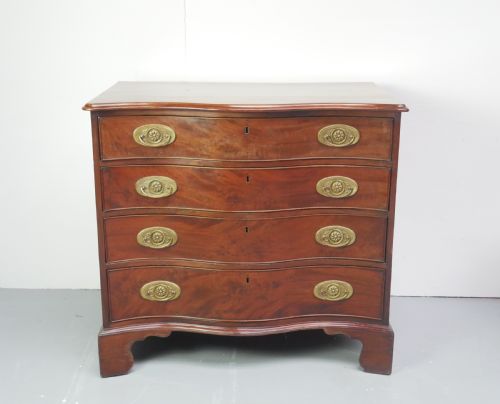


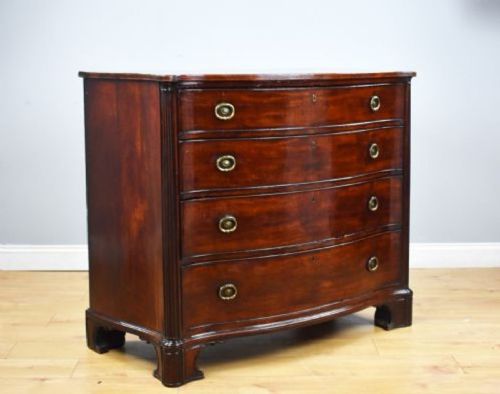


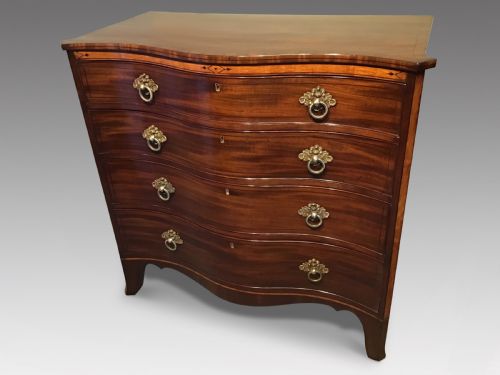

Hepplewhite Commode Chest
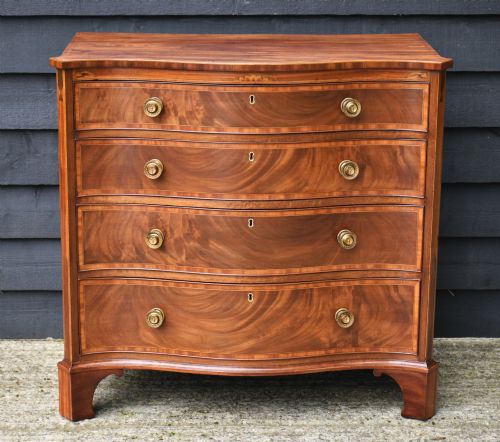
A hepplewhite commode chest brings serpentine curves and mahogany figure into a room with the restrained grace of the late eighteenth century.
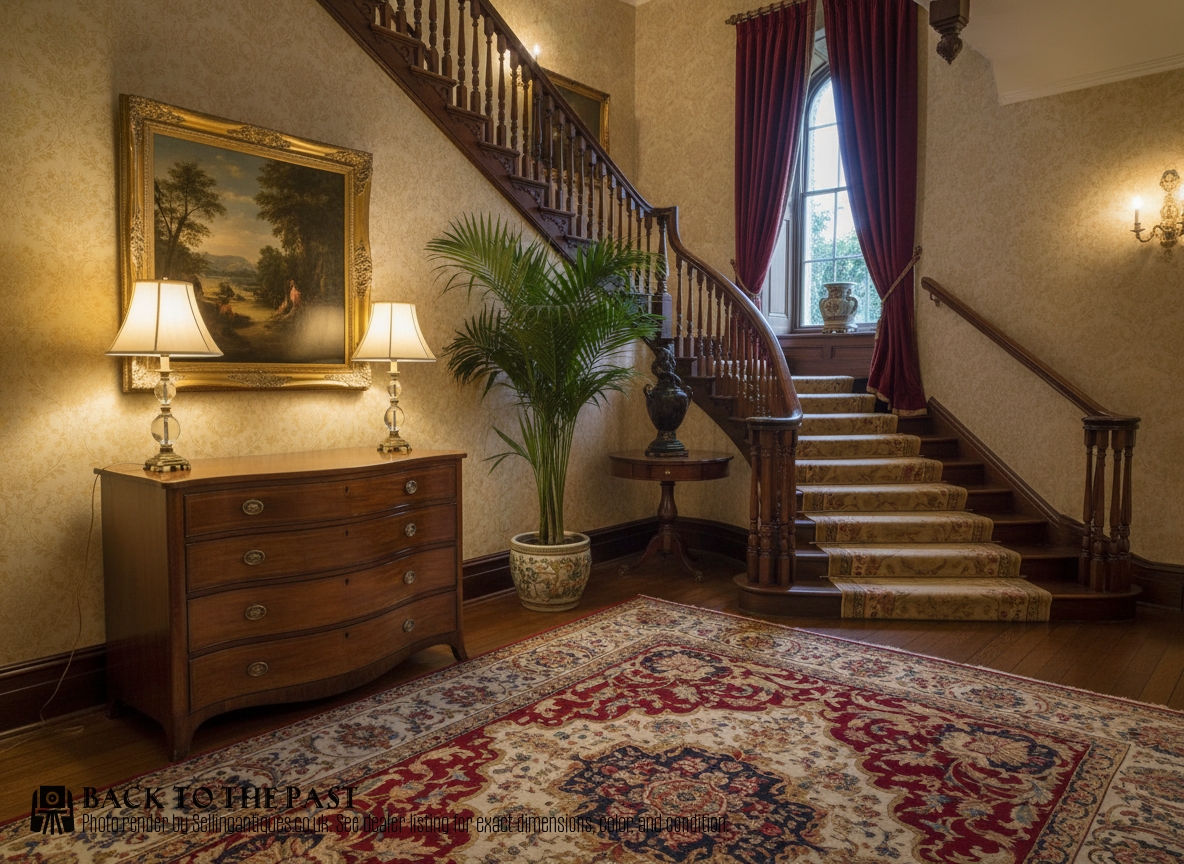
Hepplewhite Commode Chest
A hepplewhite commode chest stands as a notable form within Georgian and George III cabinet-making, frequently appearing as a serpentine or bow-fronted chest of drawers. These pieces combine utilitarian storage with sweeping front profiles that define the style.
The material record shows a strong presence of 18th Century and Georgian examples, alongside later 19th Century revivals bearing Hepplewhite-style characteristics. Buyers encounter both robust mahogany carcases and finely figured satinwood variations.
Object types span from traditional chests of drawers to specialised sideboards and gentleman's dressing chests. The serpentine commode remains the dominant configuration among these listings.
What varies in quality
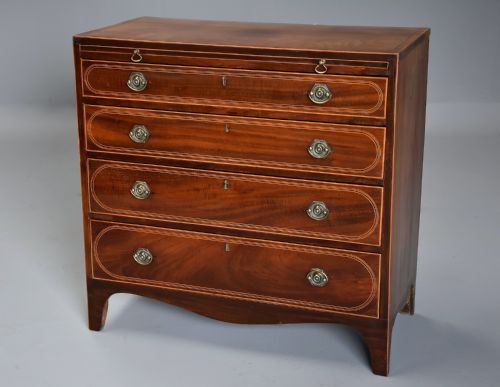
The refinement of the serpentine sweep and the choice of timber figure separate standard production from exceptional examples. Dense flame mahogany veneer and intricate boxwood or satinwood inlay denote superior cabinet-making ambition.
Proportion and the execution of the drawer fronts dictate the standing of a piece. Finer items display continuous grain matching across drawers and crisp, hand-cut joinery along the curved carcase corners.
Listings feature eighteenth-century Georgian origins alongside nineteenth-century Hepplewhite revival pieces, constructed in mahogany, satinwood, and harewood.
Druce & Co
The Hepplewhite Commode Chest Glossary
- Serpentine
- A front profile curving outward in the centre and inward at the sides. This contour requires skilled timber shaping and defines the classic commode form.
- Bow front
- A convex curved front projecting outward in a continuous arc. It offers a softer alternative to the sharp angles of a rectangular chest.
- Satinwood
- A pale, hard wood with a natural golden sheen used extensively for veneers and banded inlay. It brings a bright contrast to darker mahogany carcases.
- Flame mahogany
- Mahogany timber cut to reveal a distinctive flickering grain pattern resembling flames. Cabinet-makers reserved this veneer for primary drawer fronts to catch the light.
- Caddy top
- A tabletop with a moulded edge reminiscent of the lid of a tea caddy. This detail appears on select Georgian case pieces.
Hepplewhite Commode Chest: Frequently Asked Questions
What is a hepplewhite commode chest?
A hepplewhite commode chest is a Georgian storage piece characterised by curved serpentine or bow fronts, often enhanced with fine wood inlay.
These items function as decorative chests of drawers or side cabinets originating primarily in the eighteenth century and later revival periods.
How do I date a mahogany chest?
Dating relies on examining the timber species, construction methods, and secondary woods used inside the drawers. Georgian pieces from the seventeen-nineties typically show hand-cut dovetails and native mahogany framing.
Later Victorian revivals incorporate machine-sawn components and distinct hardware styles that distinguish them from original eighteenth-century work.
Where were these chests placed?
Original owners placed these commodes in formal reception rooms, parlours, or principal bedrooms as both storage and display surfaces. Gentlemen's dressing chests served specialised grooming needs in private chambers.
Today, they suit living spaces and hallways where a curved profile softens rectilinear room layouts.
How do I care for satinwood inlay?
Satinwood and boxwood inlay require stable indoor humidity and protection from direct sunlight to prevent timber shrinkage and fading. Regular dusting with a dry, soft cloth preserves the polished surface.
Avoid commercial silicone polishes, utilising traditional wax sparingly to nourish the mahogany and lighter veneer bands.