
Serpentine Mahogany Cabinet
When you search for a serpentine mahogany cabinet, you discover a distinguished piece defined by its graceful, undulating front and rich timber.
Serpentine Mahogany Cabinet
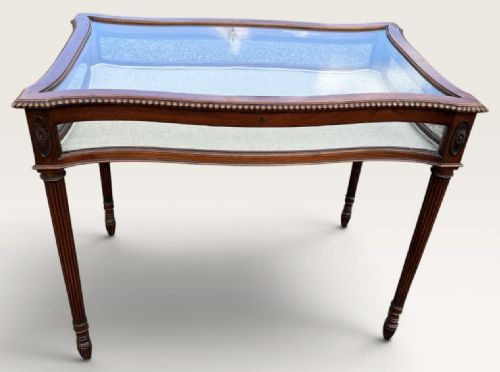
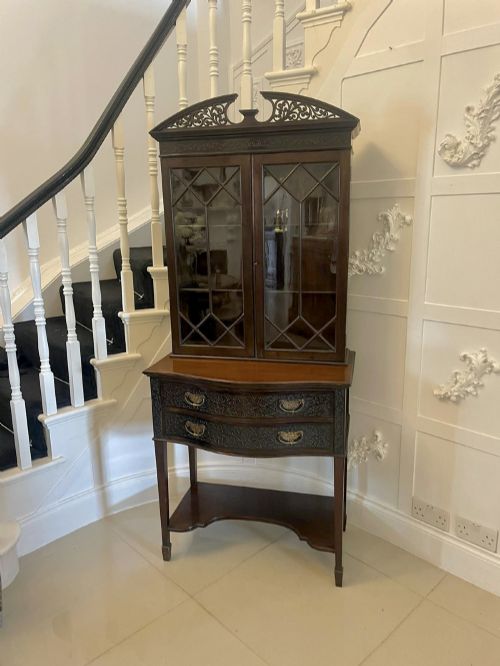
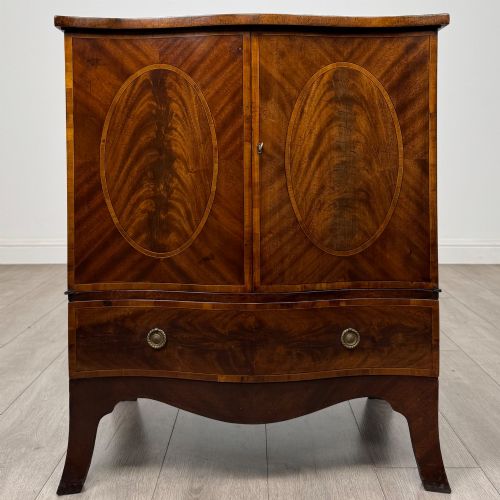
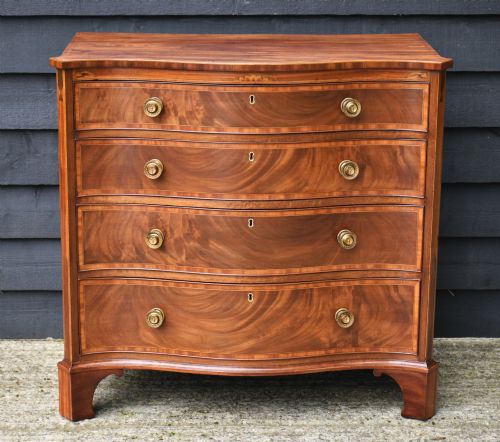
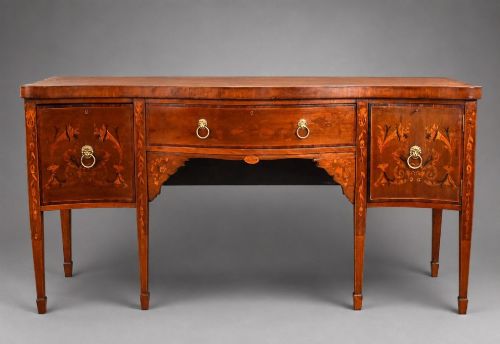
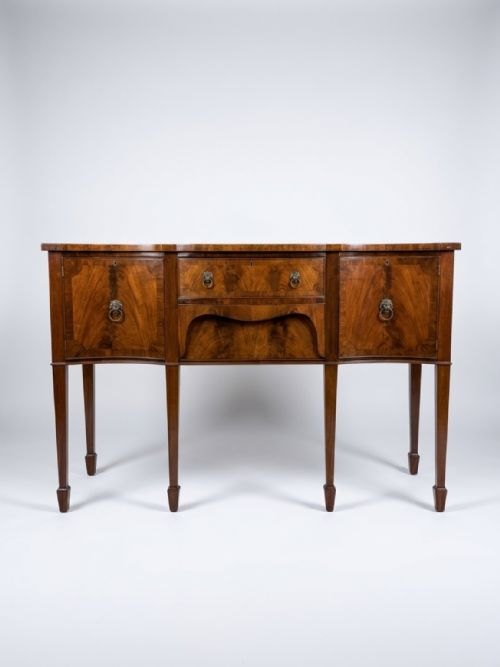
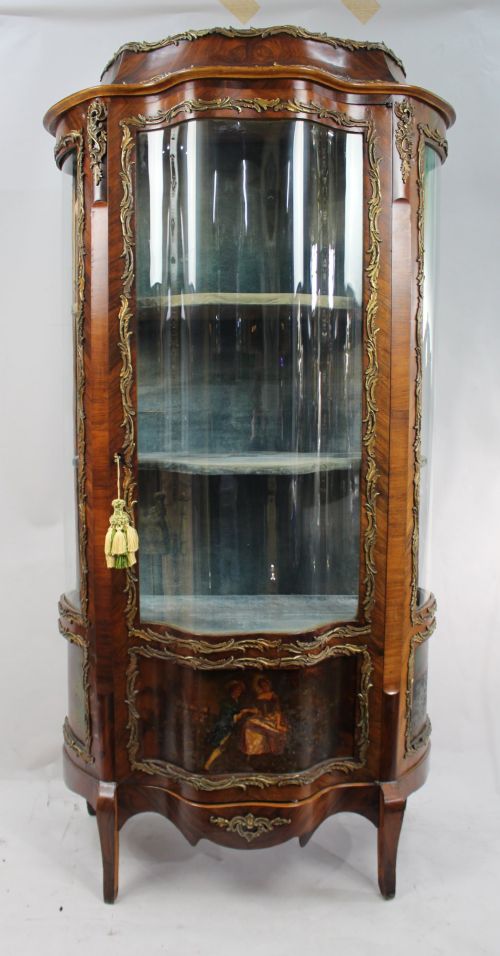
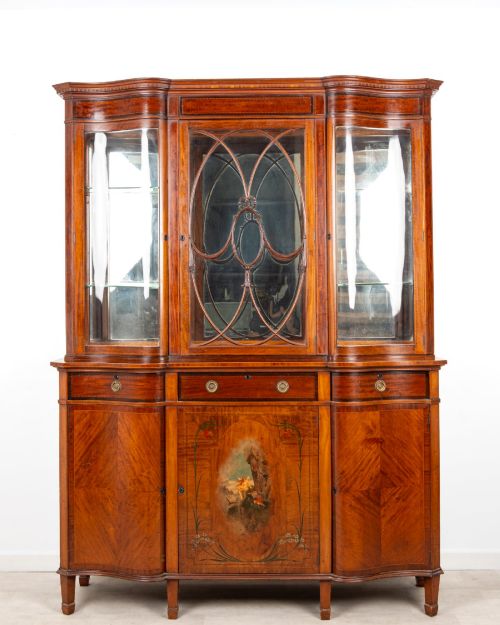
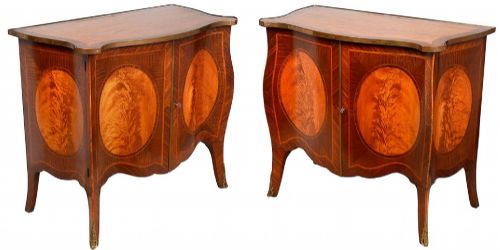
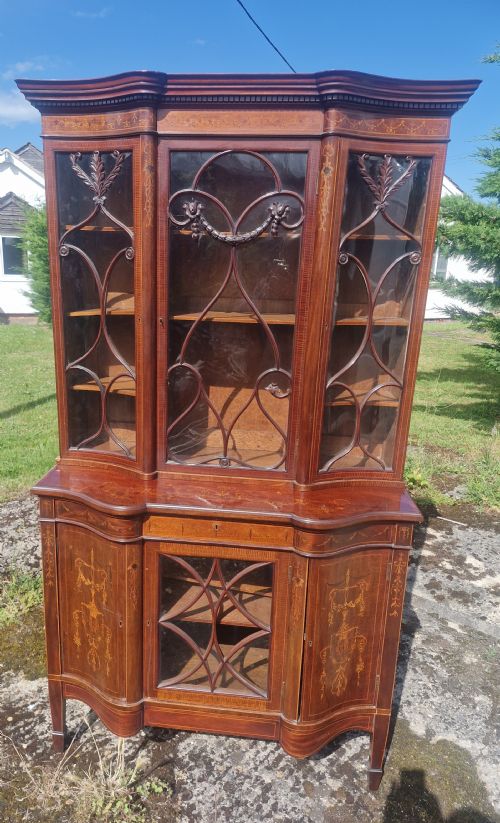
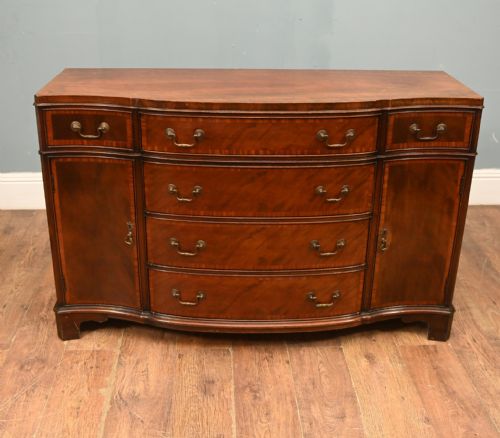
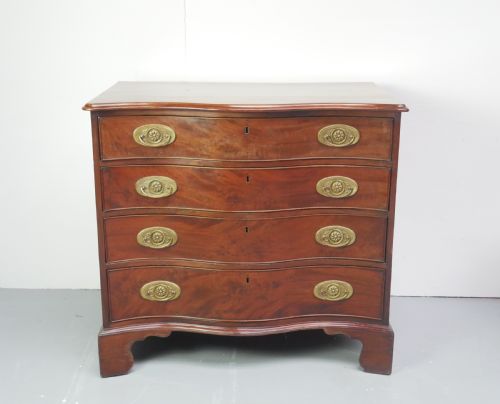
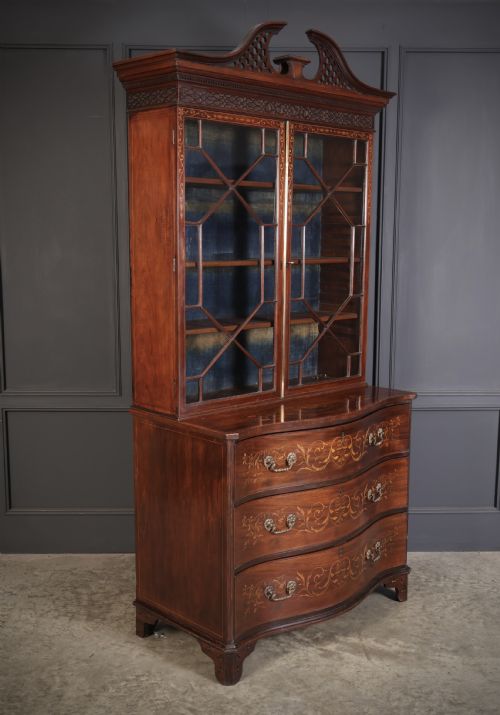
A serpentine mahogany cabinet brings together a distinctively curved, wave-like front profile and dense tropical timber, appearing across Georgian, Victorian, and Edwardian eras. Buyers encounter these silhouettes in various domestic forms, from tall display cabinets and bookcases to bedside cupboards and spacious sideboards.
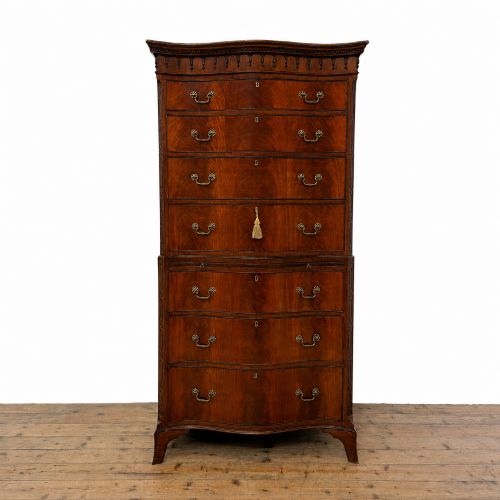
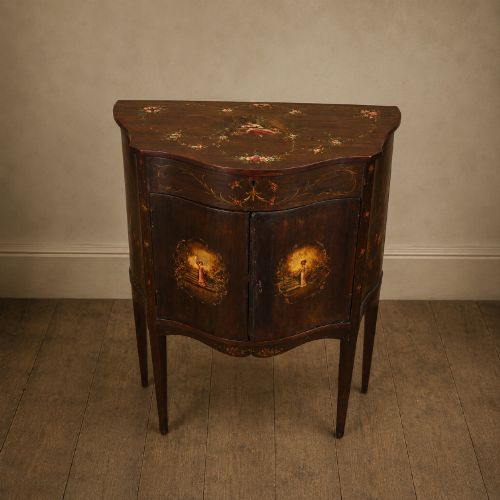
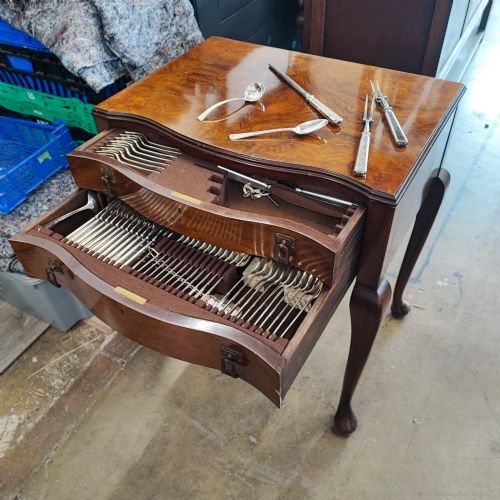
The earlier Georgian examples often present precise cabinet-making with understated lines, whilst later Victorian, Edwardian, and revival pieces frequently incorporate decorative glass doors or delicate painted details. Alongside freestanding side cabinets, makers utilised the serpentine shape for specialised storage items like commodes, tallboys, and bijouterie tables.
Originating predominantly from British workshops, these items span the eighteenth, nineteenth, and twentieth centuries, reflecting changing domestic fashions in storage and display. The enduring appeal lies in the way the convex and concave curves interact with light across the figured timber grain.
Materials and Construction
Cabinet-makers relied heavily on solid mahogany and flame mahogany veneer, often enhanced by contrasting stringing and banding in boxwood and satinwood. The challenging curved front required skilled timber selection to ensure the grain followed the undulating contours without splitting.
Many examples feature intricate marquetry inlay or hand-painted motifs, particularly those produced during the Edwardian period and later revivals. Brass fittings, glass panels for display doors, and occasional marble tops complete the construction of these refined storage pieces.
Some serpentine bedside cabinets double neatly as lamp stands, proving that eighteenth-century curves adapt happily to twentieth-century lighting.
Design and Execution
Quality in a serpentine mahogany cabinet is visible in the fluidity of the carved or shaped front and the selection of figured timber veneers. Superior pieces exhibit seamless matching of the grain across drawers and doors, demonstrating the maker's precision in handling complex curves.
The integration of fine details, such as marquetry inlay, boxwood stringing, and well-cast brass hardware, elevates certain examples above standard utility furniture. Original glazing, intact internal shelving, and robust structural joinery further distinguish the finer pieces from later, simpler iterations.
Edwards and Roberts·Maple and Co·Waring and Gillows
The Serpentine Mahogany Cabinet Glossary
- Serpentine
- A shape characterised by a undulating front, featuring a convex centre flanked by two concave curves, or vice versa. This form requires advanced woodworking skill to execute properly.
- Marquetry
- Decorative patterns created by fitting together small pieces of various woods, veneers, and other materials onto a structural surface. It appears frequently on Edwardian and revival cabinetry.
- Flame Mahogany
- Timber cut from the branch junction of the tree, producing a distinctive, fiery grain pattern with high visual depth. Cabinet-makers reserved this veneer for prominent surfaces like drawer fronts.
- Tallboy
- A tall chest of drawers consisting of one chest stacked upon another, providing ample vertical storage. Examples in this form often incorporate the characteristic curved front.
- Comcommode
- A low, ornamental chest of drawers or cabinet with doors, originating in eighteenth-century France and adopted by British makers. They often featured shaped fronts and fine decorative veneers.
Serpentine Mahogany Cabinet: Frequently Asked Questions
What is a serpentine mahogany cabinet?
A serpentine mahogany cabinet is a storage piece featuring a distinctive undulating front profile made from mahogany timber.
These items range from display cabinets and bookcases to sideboards and bedside cupboards, produced across multiple periods from the eighteenth century onwards.
How do I date a serpentine cabinet?
Dating relies on examining the construction methods, timber choice, and decorative styles visible on the piece. Georgian examples often display restrained lines and solid timber, whereas Edwardian and Victorian versions frequently feature elaborate marquetry inlay and glass display doors.
Secondary woods inside drawers and the style of the brass hardware also provide reliable clues to the manufacturing era.
Where should I place a serpentine cabinet?
These cabinets suit dining rooms, living spaces, or hallways where their curved fronts can be appreciated without obstruction. Display variations with glass doors work well for showcasing collections, while sideboards and cupboards offer functional storage.
Placement away from direct heat sources helps protect the mahogany timber and delicate veneer work over time.
Are these cabinets difficult to maintain?
Maintaining a mahogany cabinet involves keeping it away from rapid temperature changes and direct sunlight to preserve the finish. Regular dusting with a soft cloth keeps the surface clean without requiring heavy polishing.
Treating the wood occasionally with appropriate wax helps maintain the lustre of the antique timber.