
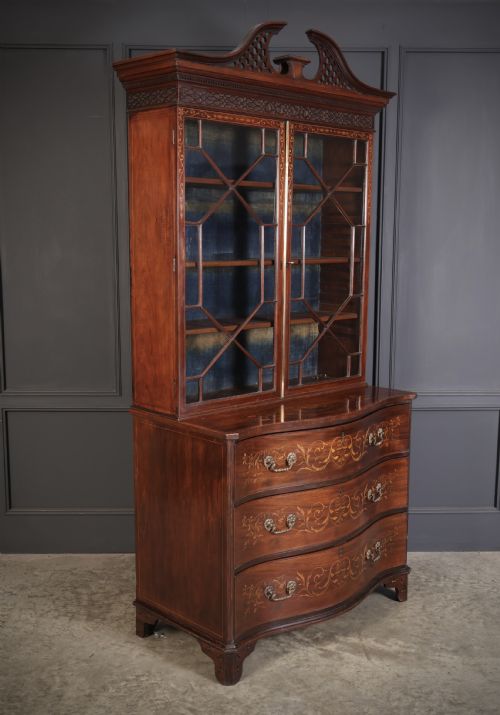


Serpentine Front Display Cabinet
A serpentine front display cabinet brings sinuous lines and glazed panels to a room, holding precious objects with distinct elegance.
Serpentine Front Display Cabinet
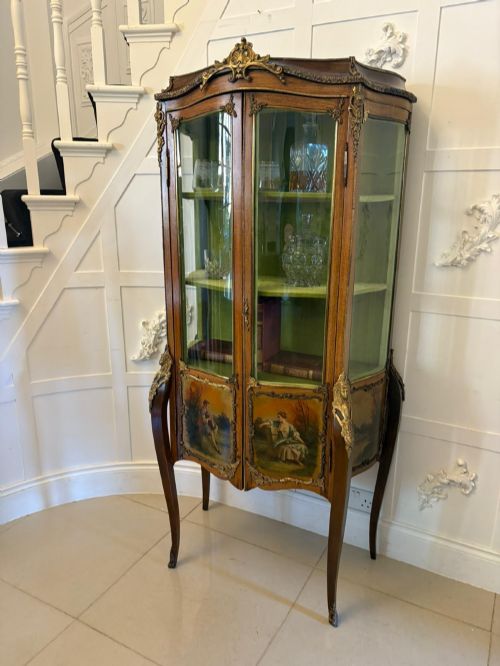
A serpentine front display cabinet takes many forms across the nineteenth and early twentieth centuries, appearing as vitrines, credenzas, corner cupboards, and side cabinets. These pieces emerge predominantly during the Victorian and Edwardian periods, drawing on French Rococo and Louis XV revivals as well as Sheraton designs.
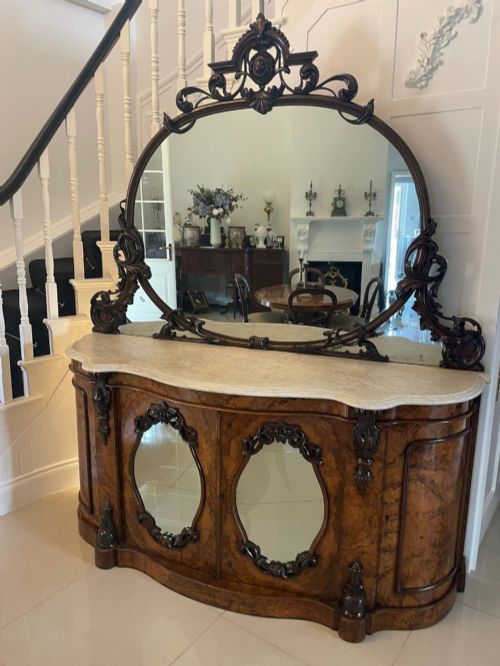
The defining characteristic is the undulating curved front, which softens the geometry of a room while providing a specialised vessel for china and decorative objects. Buyers encounter examples ranging from compact Edwardian mahogany pieces to substantial Victorian burr walnut credenzas with glass doors.
Materials and Construction
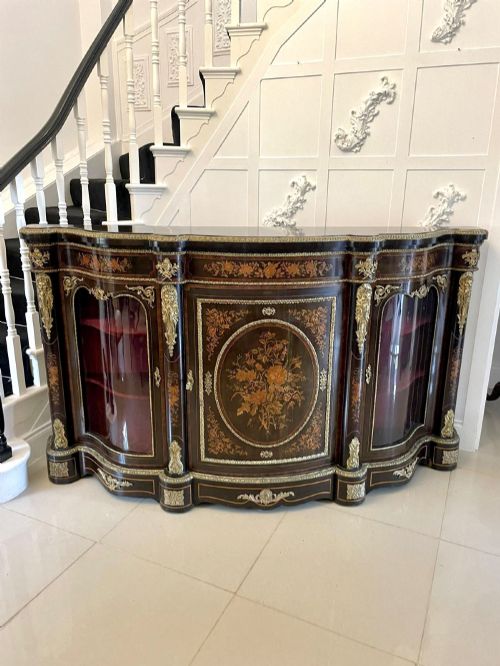
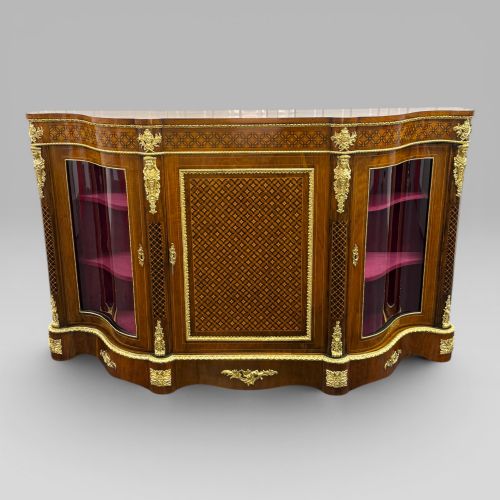
Cabinetmakers build these pieces using foundational timbers such as mahogany and walnut, frequently applying veneers of kingwood, burr walnut, satinwood, and rosewood to the curved surfaces. Marquetry and fruitwood inlay decorate the panels, requiring precise skill to follow the convex and concave sweeps of the serpentine shape.
Gilded ormolu mounts punctuate corners and borders, while glass panels fit into glazed doors for viewing contents. Brass hardware and fabric linings complete the interior construction of these display vessels.
Some glazed cabinets hide tiny velvet-lined shelves originally intended for miniature porcelain teacups.
Factors of Distinction
The refinement of the carving and the intricacy of the marquetry determine the distinction between standard and superior pieces. Finer cabinets display complex floral or geometric inlays that adapt smoothly to the challenging curved contours of the wood.
The choice of secondary timbers, the quality of the cast ormolu mounts, and the balance of the serpentine proportions separate workshop output from exhibition grade pieces.
Edwards And Roberts·Maison Gagneau
The Serpentine Front Display Cabinet Glossary
- Serpentine front
- A shaped furniture front featuring a convex central section flanked by two concave curves. This design creates fluid movement across the face of a cabinet.
- Marquetry
- Decorative patterns formed by fitting together small pieces of wood veneer, shell, or ivory onto a structural surface. Craftsmen utilise contrasting timbers to build pictorial floral or geometric motifs.
- Ormolu
- Gilt bronze mounts applied to furniture for decorative accent. The technique involves coating cast bronze with a mercury and gold amalgam.
- Vitrine
- A glass-fronted cabinet designed specifically for displaying porcelain, curiosities, or art objects. These pieces rely heavily on glazed sides and doors to admit maximum light.
- Vernis Martin
- A simulated Japanese lacquer technique developed in France, utilising multiple layers of resin varnish. This finish often depicts pastoral scenes in translucent green or gilt tones.
Serpentine Front Display Cabinet: Frequently Asked Questions
What is a serpentine front display cabinet?
A serpentine front display cabinet is a glazed storage piece featuring an undulating curved front profile. These cabinets combine glass panels with timber frames to showcase decorative items.
Originating largely in the nineteenth and early twentieth centuries, they utilise forms derived from French and English revival styles.
How do I date a serpentine cabinet?
Dating relies on examining the secondary timbers, construction methods, and prevailing decorative styles. Victorian pieces often feature burr walnut and heavy ormolu, while Edwardian examples frequently use lighter mahogany and delicate inlay.
Makers' marks or stamps can occasionally confirm a precise workshop origin.
Where should I place a cabinet?
These cabinets suit drawing rooms, dining spaces, or hallways where natural light enhances the glazed display areas. Their curved profiles allow them to soften corners or anchor flat walls effectively.
Ensure placement avoids direct sunlight to protect delicate wood veneers and interior fabrics.
How are these cabinets cleaned?
Dusting requires a soft, dry cloth to protect fragile marquetry and polished wood surfaces. Glass panels need standard non-abrasive window cleaners applied to a cloth rather than sprayed directly onto the cabinet.
Avoid silicone-based polishes that can damage antique finishes over time.