





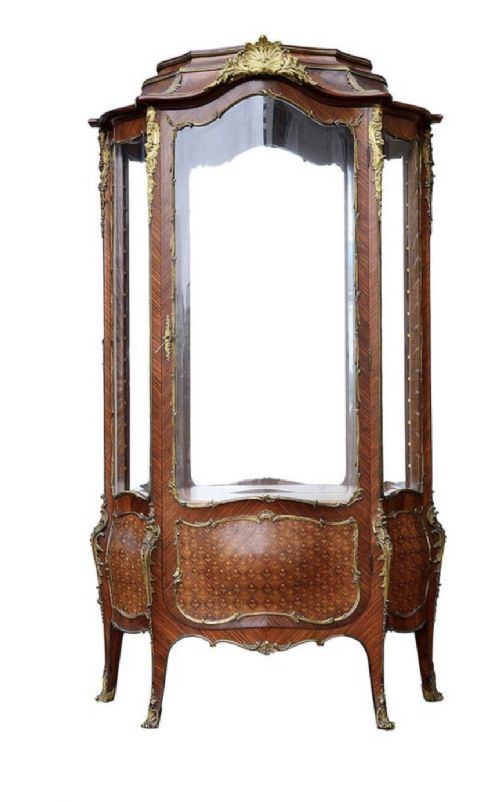
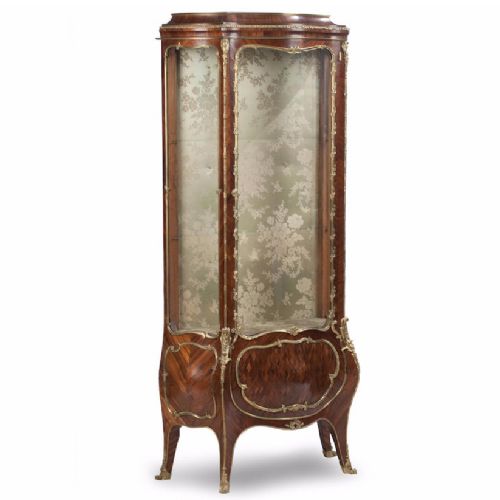


Nineteenth Century French Vitrine
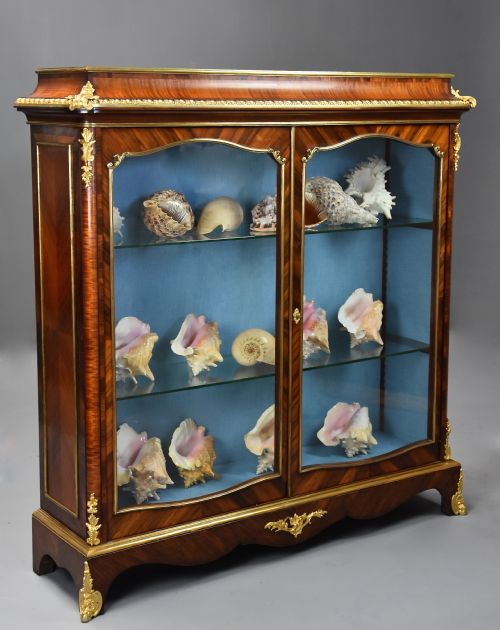
A nineteenth century french vitrine brings opulent display to a room, using glazed panels and gilt metal mounts to showcase precious objects.
Nineteenth Century French Vitrine
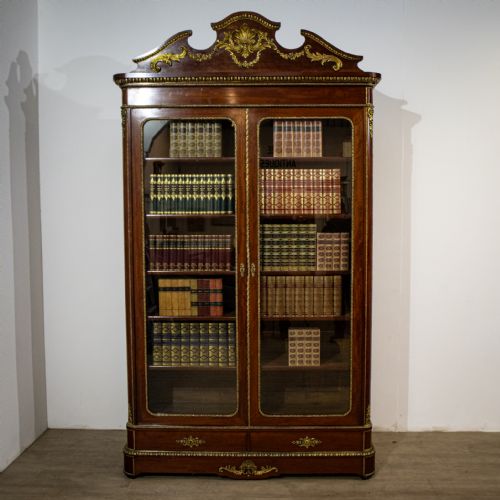
A nineteenth century french vitrine is a glazed display cabinet designed to show off porcelain, silver, and small collections behind glass doors and side panels. These pieces emerge in styles like Louis XV Revival, Louis XVI Revival, and Napoleon III, reflecting historic French design revived during the eighteen-hundreds.
Originating across the nineteenth century, particularly from the eighteen-sixties to nineteen-hundred, these cabinets combine architectural timber framing with extensive glass. They stand as enduring examples of Parisian cabinet-making designed for formal reception rooms.
How they were made
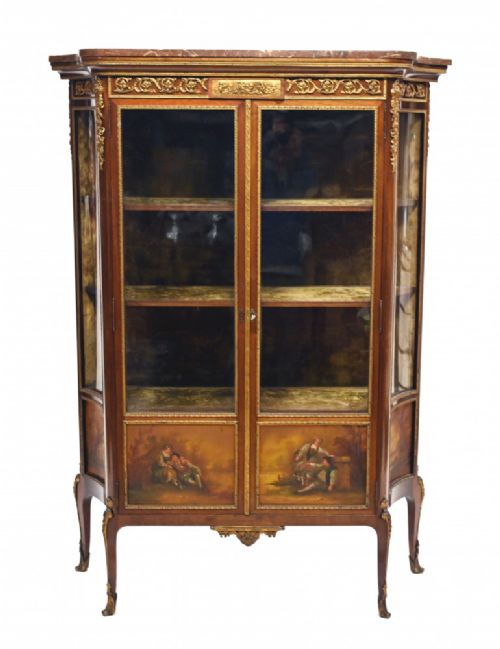
Carpenters constructed the carcasses of these cabinets using dense hardwoods such as kingwood, rosewood, and mahogany, often applying intricate marquetry or floral inlay across the surfaces. Vernis Martin techniques provided translucent painted finishes that emulated traditional French lacquer work on lower panels or doors.
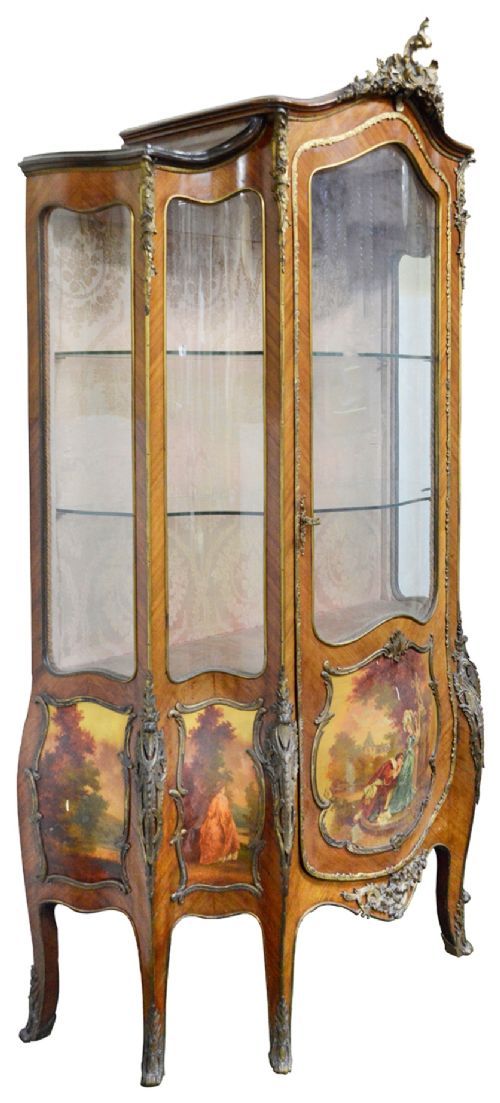
Gilded bronze ormolu mounts were cast and chased by hand to edge the glass panels, frame doors, and accentuate the corners of the timber structure. Curved glass bending required specialised glass-making skills to fit the serpentine and bombe shapes characteristic of Revival styles.
Curved glass panels had to be blown and shaped by hand before air-conditioning existed, meaning every gentle bulge in a cabinet front carries the breath of a nineteenth-century artisan.
What varies in quality
The refinement of the cast ormolu mounts dictates much of the visual distinction, with sharp, deeply chased bronze work marking the upper tier of production over softer, shallower casting. Hand-painted Vernis Martin panels show clear variation in artistic skill, ranging from finely rendered figural scenes to simpler decorative motifs.
Timber selection and the precision of the marquetry inlay also divide standard production from exceptional pieces signed by prominent makers like François Linke or G. Durand. Heavier timber framing and superior hinge and lock hardware indicate workshops that prioritised structural longevity alongside decorative impact.
G. Durand·François Linke
The Nineteenth Century French Vitrine Glossary
- Vitrine
- A glass-fronted cabinet designed specifically for the display of fine objects and curiosities. The term derives from the French word for glass.
- Ormolu
- Gilded bronze used for decorative mounts and hardware on furniture. The technique involves applying a gold amalgam to cast bronze before heating.
- Vernis Martin
- A simulated Japanese lacquer finish developed in eighteenth-century France and revived in the nineteenth century. It uses multiple layers of varnish to achieve a translucent pictorial surface.
- Kingwood
- A dense, richly figured Brazilian timber prized for its contrasting dark and golden brown stripes. Cabinet-makers used it extensively as a veneer on high-status furniture.
- Bombe
- A swelling, convex furniture shape characterised by outward-curving sides and fronts. This contour requires precise woodworking and custom-bent glass panels.
Nineteenth Century French Vitrine: Frequently Asked Questions
What were nineteenth century french vitrines used for?
These cabinets served to display precious porcelain, small sculptures, and family collections in formal drawing rooms. The glass protection kept dust away while allowing guests to admire the owner's taste.
They also functioned as status symbols in wealthy households, demonstrating both wealth and an appreciation for historic French design styles.
How do I tell Louis XV and Louis XVI styles apart?
Louis XV style pieces feature flowing, asymmetrical curves, serpentine shapes, and naturalistic rococo motifs. The lines are soft and undulating without straight edges.
Louis XVI style furniture moves towards symmetry, straight tapered legs, and classical architectural details like columns and urns. The overall geometry is much crisper and more restrained.
What is Vernis Martin decoration?
Vernis Martin is a decorative varnishing technique that mimics Asian lacquerwork using layered resin and paint. Artists painted pastoral scenes or floral motifs beneath clear coats to create depth.
This finish appears on lower door panels of display cabinets, often paired with gilded bronze mounts.
How should I care for kingwood and ormolu?
Keep wooden surfaces away from direct sunlight and steady temperature fluctuations to prevent the veneer from drying out or cracking. Dust gently with a dry, soft cloth without using harsh chemical polishes.
Ormolu mounts require minimal intervention; avoid abrasive cleaners that can strip away the original gilding.