

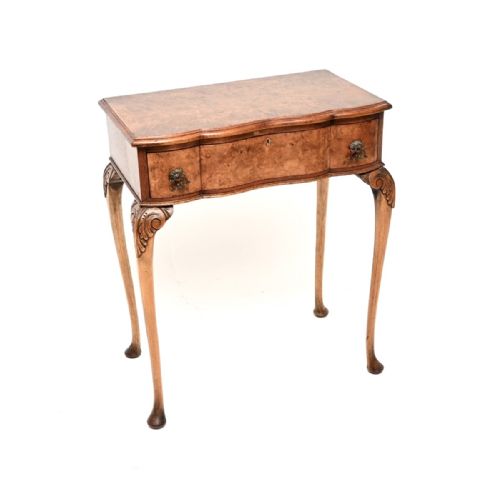

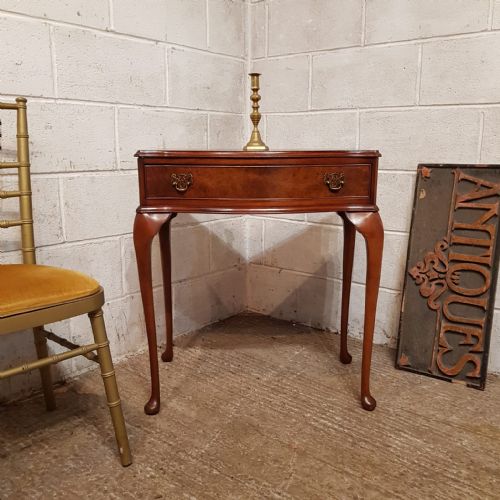
Serpentine Front Console Table
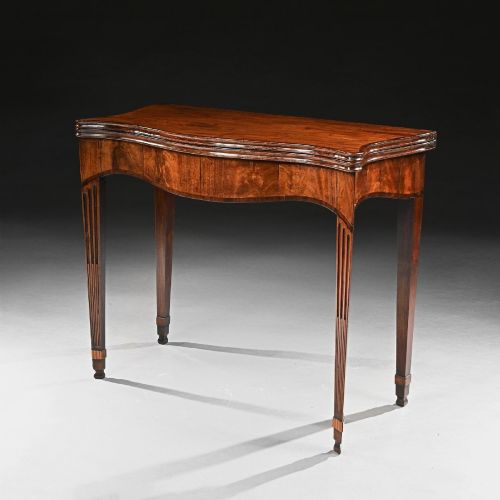
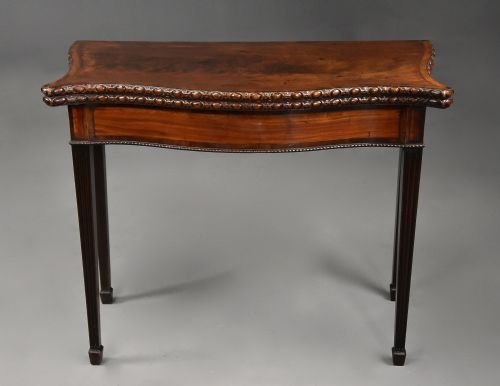
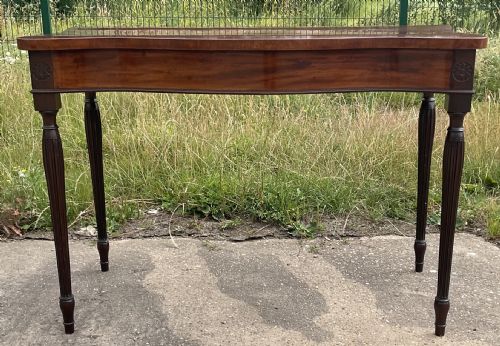
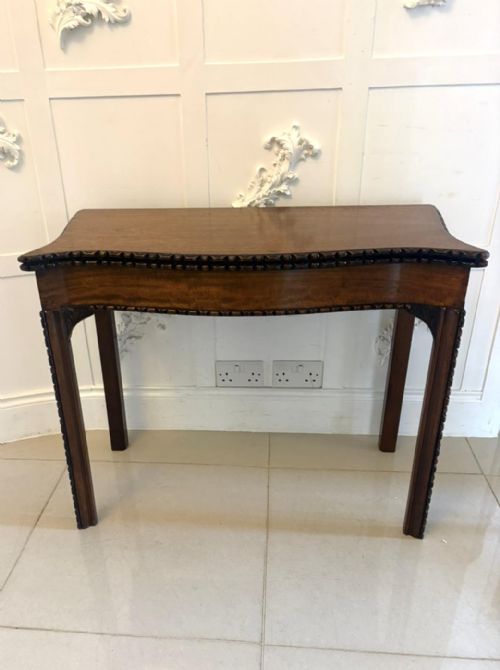
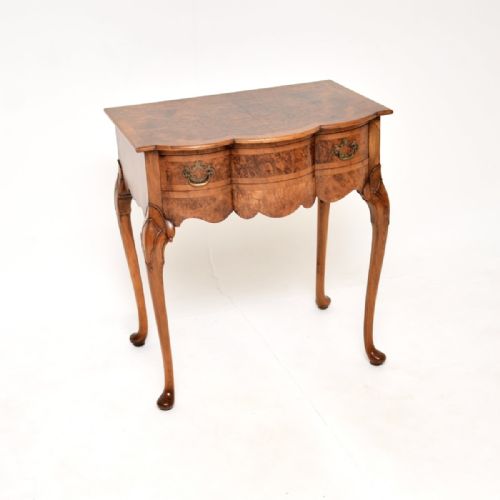
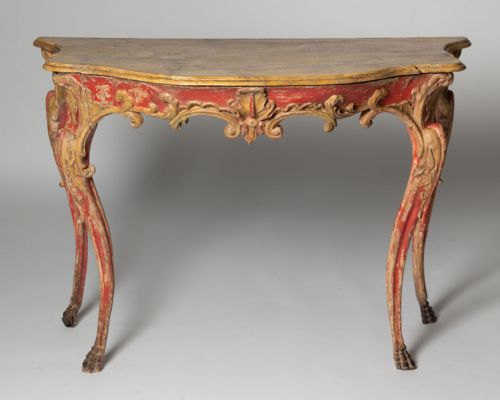
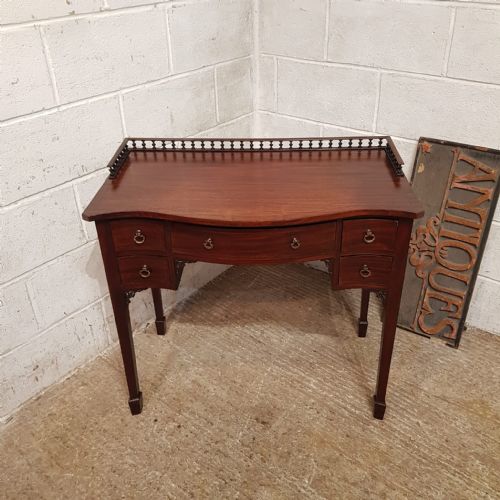
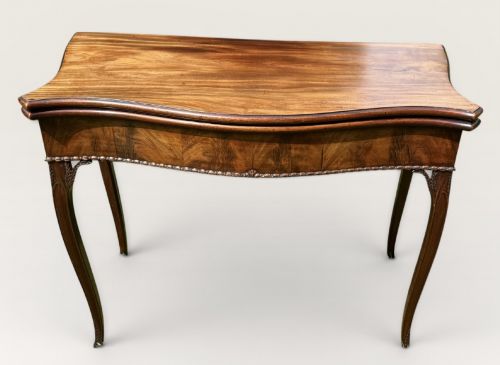
A serpentine front console table brings an undulating, fluid shape to a room, offering elegant surface space through its characteristic curved silhouette.
Serpentine Front Console Table
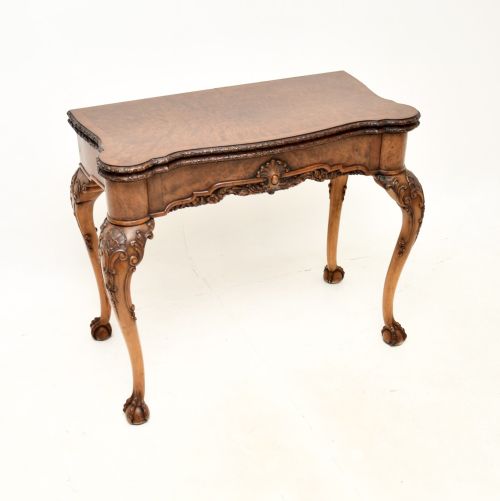
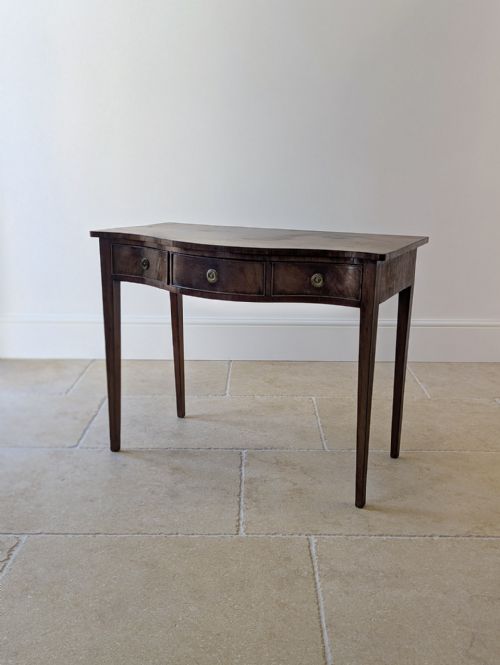
A serpentine front console table is a curved surface designed to sit against a wall, encompassing forms such as card tables, serving tables, side tables, and writing desks. These pieces originate primarily from the eighteenth century, the Georgian period, the nineteenth century, and later revivals spanning into the early twentieth century.
How they were made
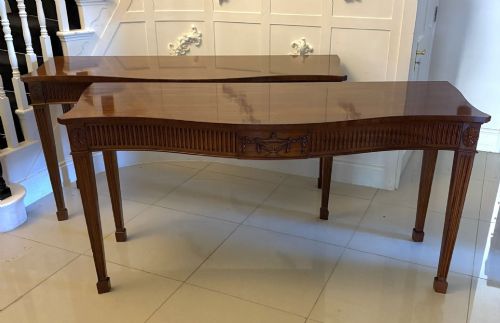
Craftsmen built these tables using solid mahogany, walnut, and oak, frequently applying flame mahogany veneer or intricate marquetry inlay to enhance the primary surfaces. Carved wood details, neoclassical motifs, and brass hardware appear across many examples from both the eighteenth and nineteenth centuries.
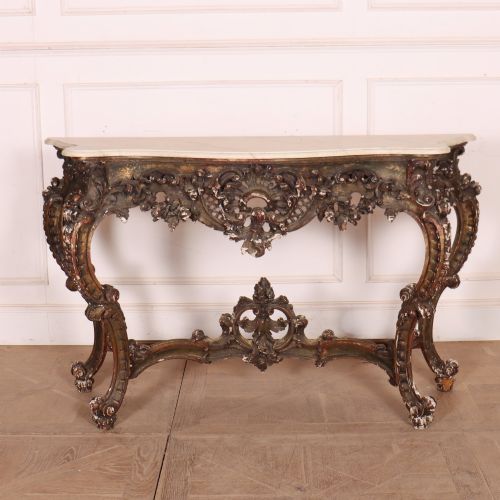
Makers constructed the undulating serpentine shape by carefully cutting and joining timber, sometimes incorporating a carrara marble top or a three-quarter gallery surround. Cabriole legs and straight carved legs support the weight, showing joinery typical of Georgian and French regional workshops.
Listings feature mahogany, burr walnut, and oak structures, occasionally paired with carrara marble tops and brass mounts.
What varies in quality
The standard of a serpentine front console table depends heavily on the crispness of the timber carving and the natural figuration of the mahogany or burr walnut veneer. Tables displaying superior original patination and finely detailed neoclassical carving or marquetry inlay stand apart from simpler utility pieces.
Proportion and structural integrity define the upper tier of these tables, where the compound curves of the front rail align harmoniously with the legs and top. Examples retaining their original surface finishes and authentic brass fittings demonstrate higher craftsmanship than those altered by later restorations.
Hepplewhite·Chippendale·Epstein
The Serpentine Front Console Table Glossary
- Serpentine front
- A furniture front characterised by a central convex curve flanked by two concave curves, creating an undulating silhouette. This shape demands high woodworking skill to execute cleanly.
- Patination
- The surface sheen and colour acquired by wood and metal through age, use, and exposure to light. Collectors value untouched surfaces showing natural wear.
- Card table
- A folding table designed for playing games, featuring a hinged top that opens to reveal a baize-lined surface. Many examples incorporate a serpentine edge to the top and rails.
- Marquetry
- Decorative patterns formed by fitting contrasting pieces of veneer into a wooden background. This technique appears on French and walnut tables from the eighteenth and nineteenth centuries.
- Console table
- A table designed to be fixed against a wall, often supported by brackets or front legs. These pieces functioned traditionally as decorative serving or display surfaces.
Serpentine Front Console Table: Frequently Asked Questions
What is a serpentine front console table?
A serpentine front console table is a wall-mounted or freestanding table featuring a distinctive curved front edge that bends inward and outward.
These pieces served various domestic functions, including games tables, serving surfaces, and writing desks across the Georgian and Victorian periods.
How were these console tables used?
Original owners utilised these tables in reception rooms and hallways for display, serving food during meals, or playing cards.
Folding card tables provided a dual purpose, functioning as side tables when closed and gaming surfaces when opened.
How do I care for antique mahogany and walnut?
Protect the timber by keeping tables away from direct heat sources and strong sunlight, which can dry out the veneer and fade the colour.
Apply traditional beeswax occasionally and buff gently with a soft cloth to maintain the natural patination without using harsh modern polishes.
How can I tell a Georgian table from a later revival?
Eighteenth-century pieces typically exhibit construction methods, timber weights, and patination consistent with period hand-tooling and regional workshops.
Revival pieces from the early twentieth century often display different secondary woods, machine-cut elements, or cleaner interior joinery despite adopting earlier styles.