
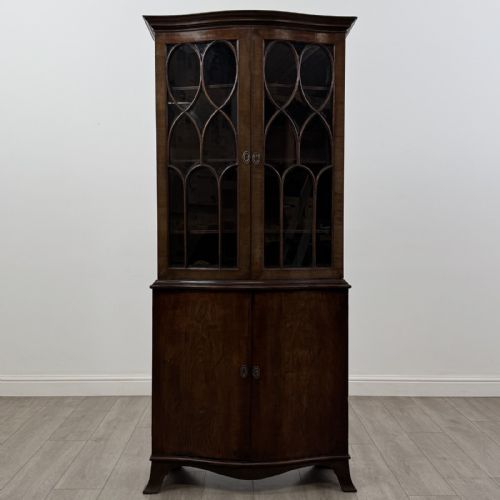
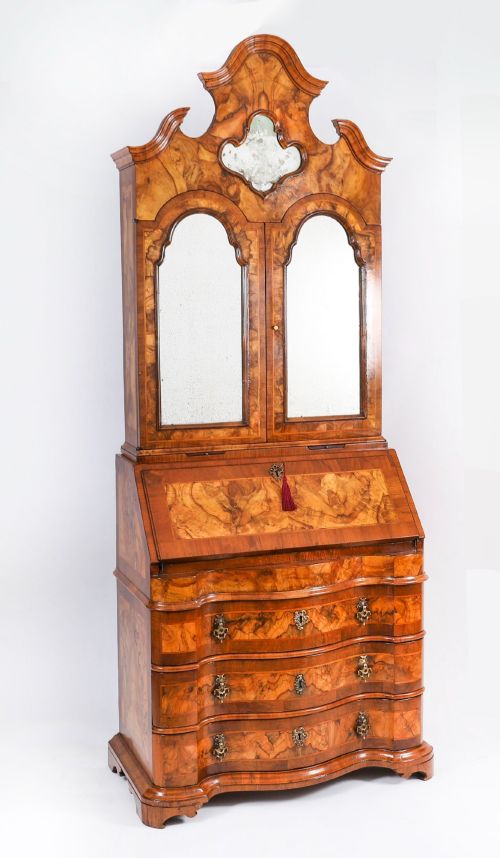
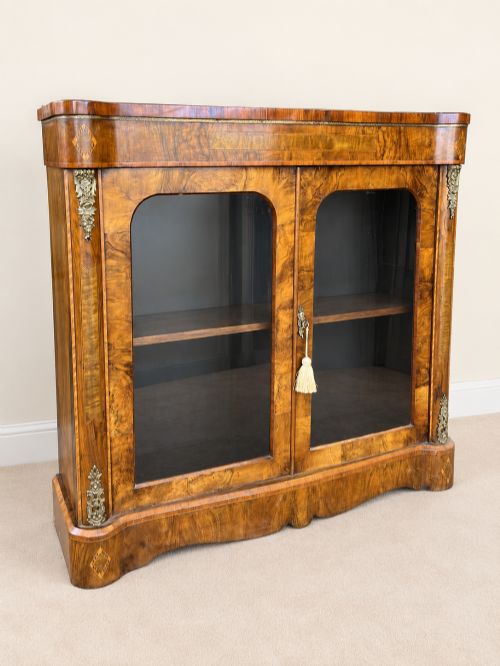
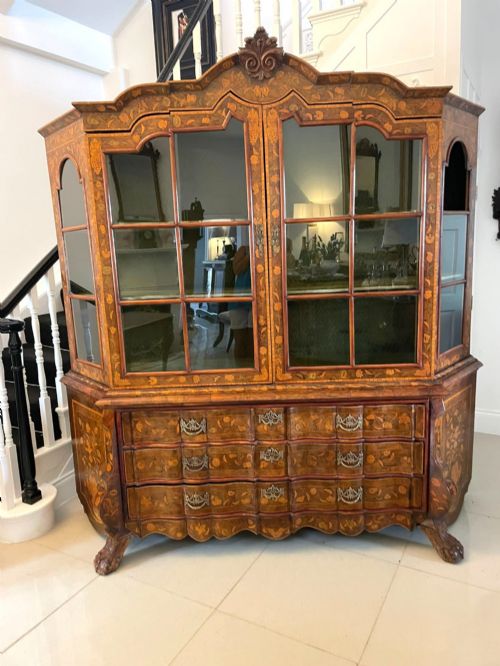
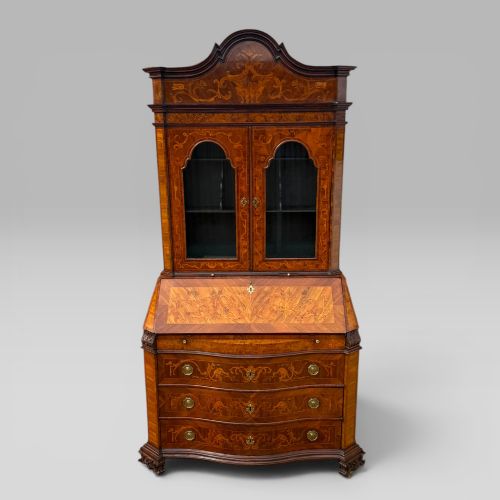
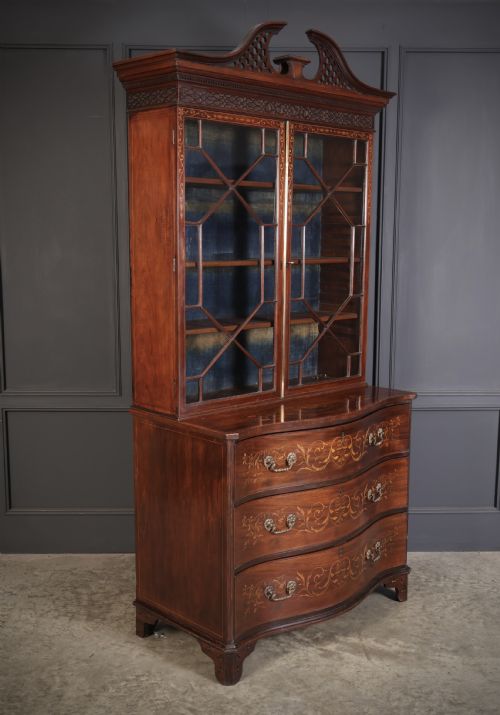


Serpentine Front Bookcase
A serpentine front bookcase brings flowing, curved lines to your room, offering deep storage for books and display space behind glass doors.
Serpentine Front Bookcase
A serpentine front bookcase is a notable form of cabinetry defined by its undulating facade, which curves outward in the centre and inward at the sides, or vice versa. When you search for a serpentine front bookcase, you encounter pieces that combine the utility of shelving and display with sophisticated cabinetwork.
The versions most commonly met on this page span several distinct periods, including the Georgian era, the Victorian period, and the Edwardian epoch. These pieces often manifest as bureau bookcases, display cabinets, and secretaire bookcases.
Origins vary across English, French, Italian, and German workshops, reflecting regional preferences in proportions and ornamentation. The fundamental shape remains consistent, yet the execution shifts according to the prevailing taste of the decade.
Materials and construction methods
Makers utilised dense timbers such as mahogany, walnut, and satinwood as the primary structural foundations. Cabinetmakers frequently applied exotic veneers like kingwood and tulipwood over these solid carcasses to achieve decorative surface patterns.
Serpentine Front Bookcase Retail Price Guide 2026
Typical asking prices for serpentine front bookcase among the pieces listed under this phrase on Sellingantiques today, from the lower quarter to the upper quarter. They describe what is for sale here now, not the wider market.
The furniture forms include bureau bookcases, display cabinets, and standing double-height corner cupboards.
Distinctions in craftsmanship and design
The standard of a serpentine front bookcase rests upon the precision of the curved wooden facade and the integration of the internal carcase. Superior examples display seamless movement along the undulating front, where drawers and doors follow the complex contour without friction.
Material selection and decorative execution further separate exceptional pieces from simpler utilitarian ones. Finely figured timbers, intricate marquetry, and well-proportioned cornices indicate a higher tier of cabinetmaking.
Edwards & Roberts
The Serpentine Front Bookcase Glossary
- Serpentine front
- A cabinet front featuring a convex centre flanked by concave sides, creating a wave-like curve. This profile requires advanced woodworking skill to shape accurately.
- Marquetry
- Decorative patterns formed by fitting together thin veneers of various coloured woods. Artisans arrange these pieces to create pictorial or abstract designs on the surface.
- Bureau bookcase
- A combination furniture piece incorporating a sloping writing flap that drops down to reveal small drawers and pigeonholes below an upper bookcase section. These double-height forms provide multifaceted utility.
- Secretaire bookcase
- A tall cabinet enclosing a fitted writing drawer with a drop-front panel, positioned beneath open shelves or glazed doors. It conceals a writing surface while maintaining the upright profile of a bookcase.
- Glazing bar
- A narrow wooden strip holding individual panes of glass within a cabinet door. These strips form geometric patterns across the upper section of the bookcase.
Serpentine Front Bookcase: Frequently Asked Questions
What is a serpentine front?
A serpentine front is a shaped cabinet face that curves outward in the middle and inward at the edges, forming an undulating line. This contour requires precise carpentry to ensure doors and drawers fit smoothly within the frame.
The design gained favour during the eighteenth century and reappeared in later revival periods. It adds visual movement and depth to large wooden furniture.
How do I identify a Georgian bookcase?
Georgian bookcases typically employ dense mahogany or walnut timbers with restrained classical proportions and fine cabinet joints. They often feature hand-cut dovetails in the drawer construction and subtle brass hardware.
Later Victorian and Edwardian iterations frequently incorporate lighter satinwood veneers or more elaborate marquetry decoration. Examining the interior construction reveals the manufacturing methods characteristic of each specific decade.
Where should I place this bookcase?
Position your bookcase against a stable interior wall away from direct sunlight and fluctuating heat sources to protect the polished wood surfaces. Ensure adequate floor clearance so that doors and drop-front writing surfaces can open fully without obstruction.
The undulating facade requires space to be seen properly, making a prominent position in a study or drawing room ideal.
How do I care for antique wood?
Maintain the timber by dusting regularly with a soft, dry cloth and applying appropriate wax polish sparingly to nourish the grain. Avoid chemical cleaners or excessive moisture that might damage delicate veneers and marquetry inlay.
Keeping the room at a stable humidity level prevents the wood from expanding or contracting excessively over time.