
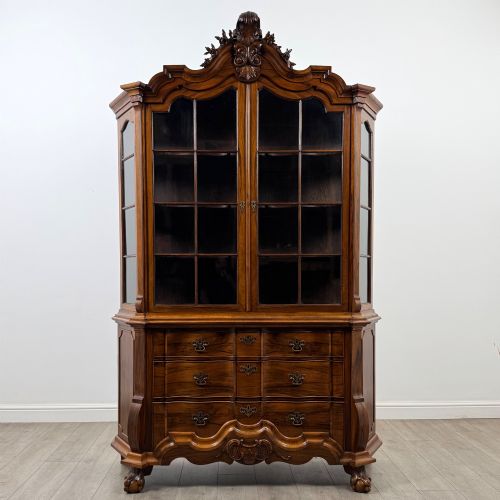
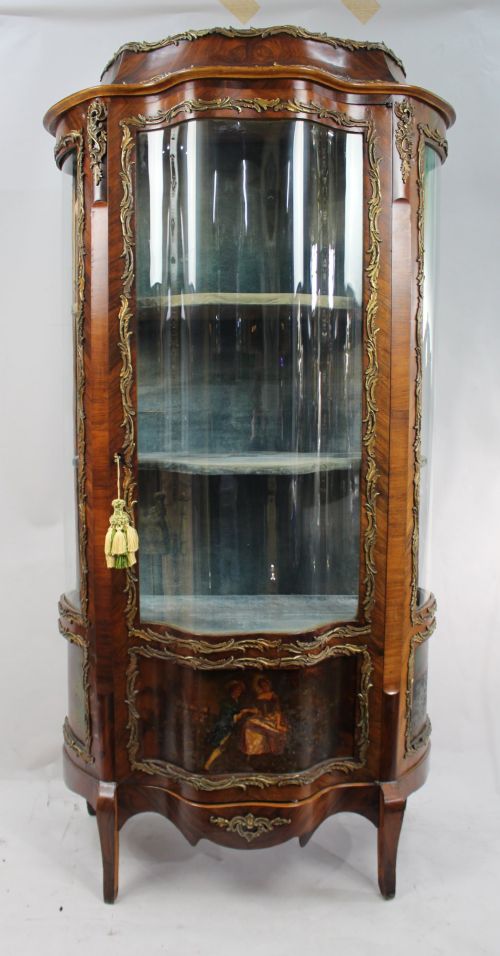
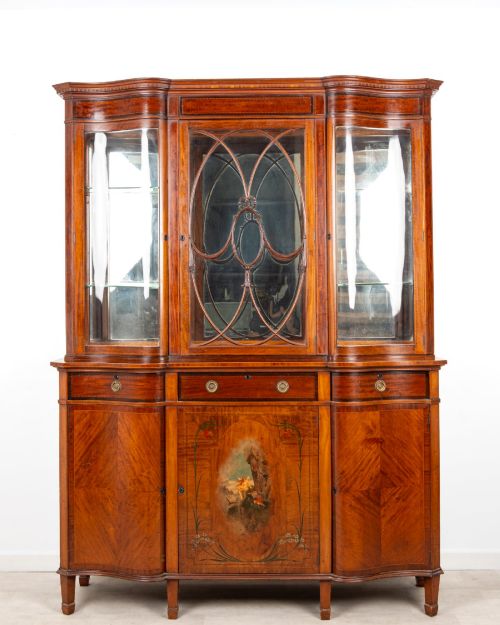
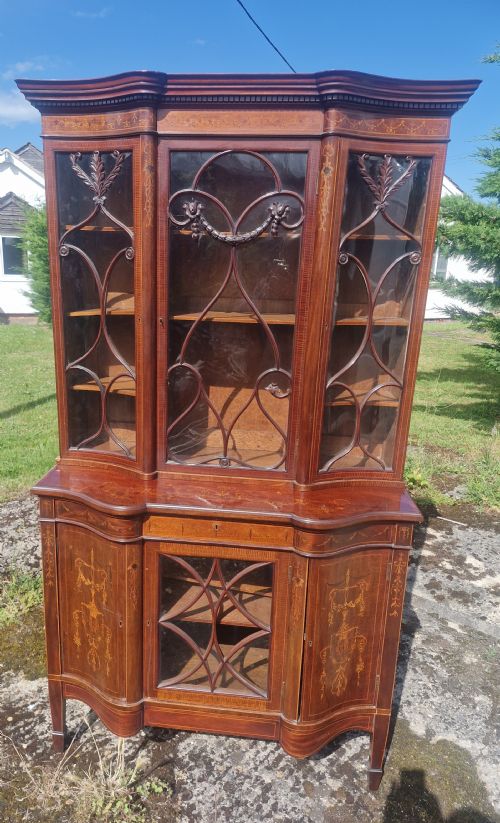


Serpentine Display Vitrine
A serpentine display vitrine brings curved glass and refined cabinetry together to hold curated collections.
Serpentine Display Vitrine
A serpentine display vitrine brings together curved glass panels, cabinetwork and framing designed to showcase precious objects. These pieces emerge from the nineteenth century and the Edwardian period, spanning French and English workshops.
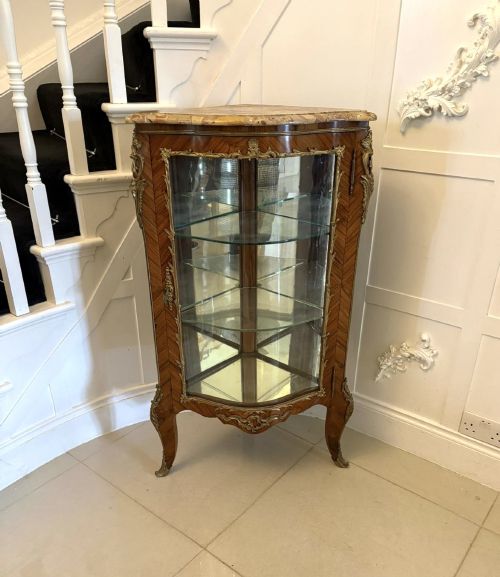
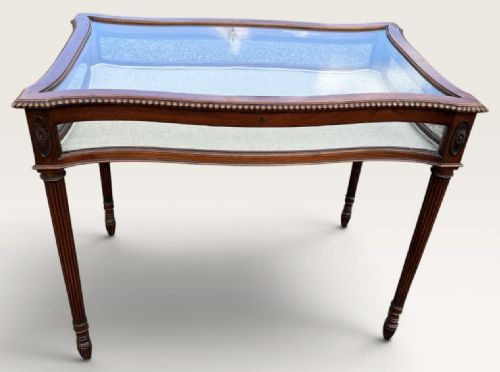
The form relies on a characteristic undulating front line, alternating convex and concave curves that soften the silhouette. Examples range from freestanding floor cabinets to corner cupboards and table-height bijouterie pieces.
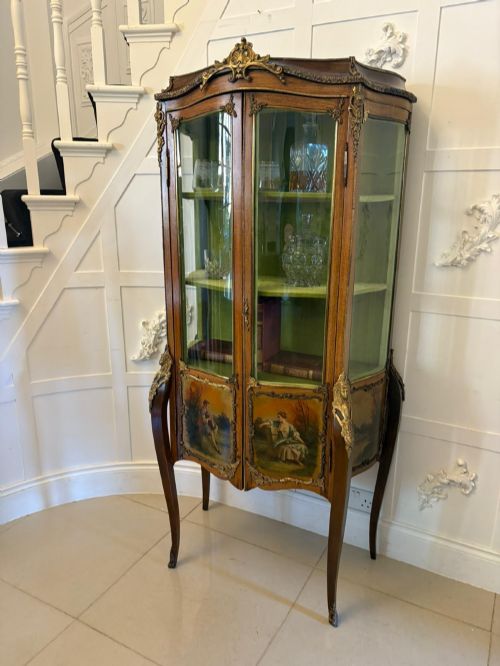
On this page, French Vernis Martin vitrines and English mahogany or kingwood cabinets dominate the selection. Makers such as Edwards and Roberts appear alongside unmarked pieces from the Victorian era and the Edwardian years.
How They Were Made
Cabinetmakers constructed these frames using dense timbers like mahogany, walnut and kingwood, often applying satinwood, fruitwood or marquetry inlay across the curved surfaces. The distinctive serpentine shape required careful shaping of the wooden framework to receive the glass panels.
Gilded bronze ormolu mounts punctuate the corners, feet and cornices, adding structural emphasis to the sweeping lines. Glass is set into doors and sides, while interiors frequently incorporate fabric-lined display surfaces.
Vernis Martin pieces utilise specialised decorative painting techniques to render pastoral scenes on the lower panels. Marquetry patterns combine various wood veneers to create floral or geometric motifs across the front.
Some bijouterie tables feature internal velvet cushions designed to keep precious rings from sliding when the glass lid opens.
What Varies in Quality
The ambition of the timber work and the precision of the marquetry define the upper tiers of production. Elaborate kingwood veneers combined with heavy, chased ormolu mounts signal high-workshop output from makers like Edwards and Roberts.
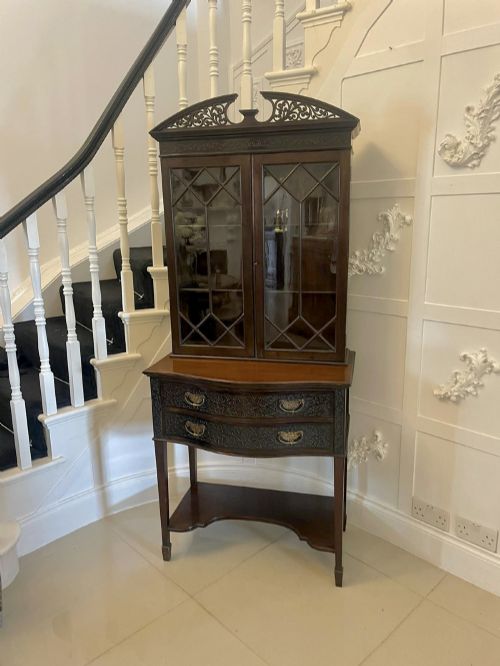
Simpler Edwardian mahogany iterations rely on clean proportions and understated stringing rather than dense brass mounts or hand-painted panels. The complexity of the curved glass bending also separates standard production from exhibition-grade examples.
Edwards and Roberts
The Serpentine Display Vitrine Glossary
- Serpentine
- A curved shape featuring a convex centre flanked by concave ends. This undulating contour defines the characteristic front profile of these cabinets.
- Vitrine
- A glass-fronted cabinet designed for displaying porcelain, curiosities and objects of art. The term derives from the French word for glass.
- Ormolu
- Gilded bronze mounts applied to furniture for decoration and edge protection. The technique involves mercury gilding on bronze bases.
- Vernis Martin
- A simulated Japanese lacquer developed in eighteenth-century France and revived in later nineteenth-century furniture. It uses resin-based varnishes over painted panels.
- Bijouterie table
- A glass-topped display table intended for jewellery and small valuables. These pieces often feature hinged lids and velvet-lined interiors.
- Marquetry
- The art of applying pieces of veneer to a structure to form decorative patterns. Craftsmen use contrasting woods to create pictorial or geometric designs.
Serpentine Display Vitrine: Frequently Asked Questions
What is a serpentine display vitrine used for?
These cabinets were built to protect and display delicate ceramics, silverware, glassware and small collectibles. The glass panels allowed owners to view collections from multiple angles while keeping dust away.
Today, they serve the same function in domestic interiors. They hold collections of porcelain, books or decorative objects while adding a distinct silhouette to a room.
How do I tell Victorian from Edwardian pieces?
Victorian examples tend to feature heavier timbers, rich kingwood veneers, and dense ormolu mounts influenced by French revival styles. They often incorporate complex marquetry and Vernis Martin painted panels.
Edwardian pieces generally lean towards lighter mahogany frames, delicate string inlay, and Sheraton revival influences. The overall aesthetic becomes somewhat more restrained while retaining the curved serpentine front.
Where should I place a corner vitrine?
Corner vitrines fit neatly into room junctions, making efficient use of space that standard rectangular cabinets cannot occupy. They work well in dining rooms or drawing rooms to anchor an empty angle.
When positioning them, consider natural light sources that might cause glare on the curved glass doors. Placing them away from direct sunlight also protects interior fabric linings from fading.
Are all serpentine cabinets French?
No, while many pieces reflect French Louis XV and Louis XVI revival styles, English makers produced substantial numbers of serpentine cabinets. English workshops often used mahogany and incorporated Chippendale or Sheraton revival motifs.
French pieces more frequently display kingwood veneers, elaborate ormolu mounts and Vernis Martin panels. Examining the secondary woods and construction methods usually reveals the origin.