


Serpentine Dining Sideboard
A serpentine dining sideboard brings curving elegance to a room, offering generous storage while shaping the dining space with distinctive grace.
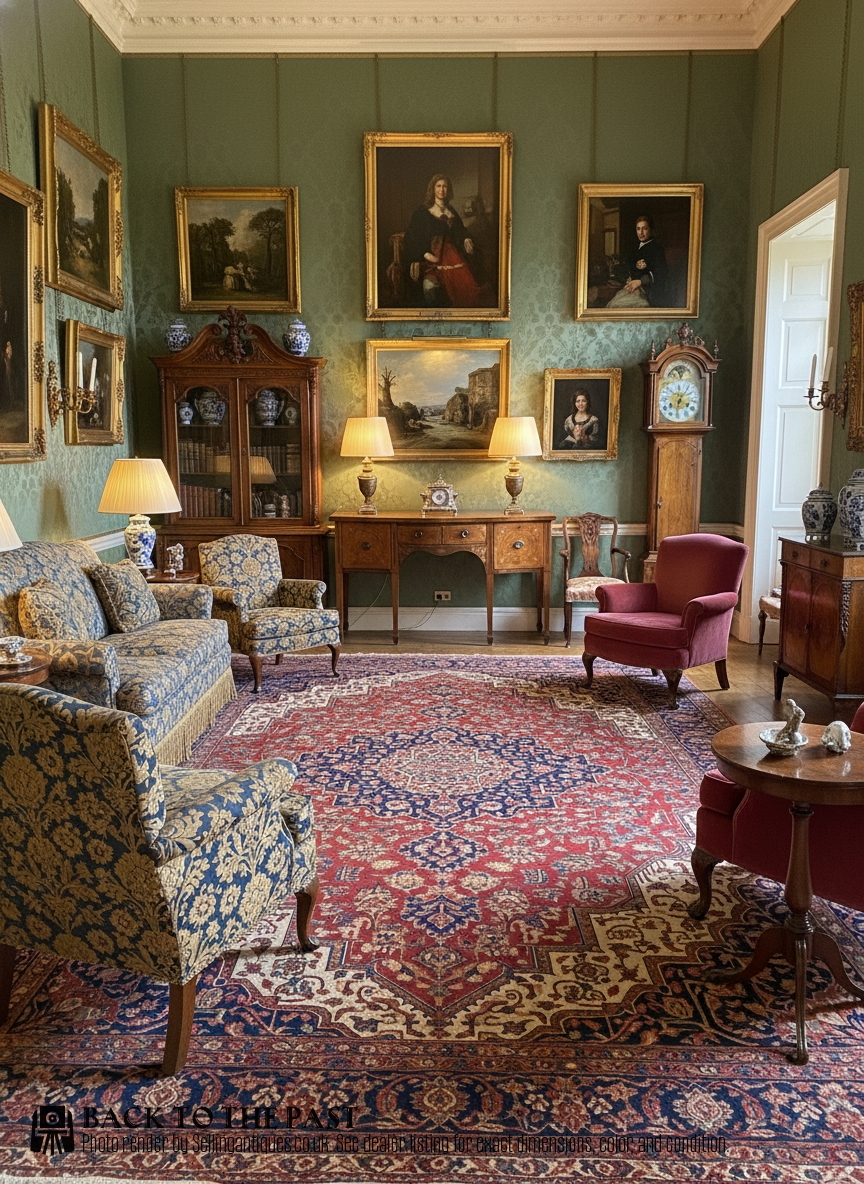
Serpentine Dining Sideboard
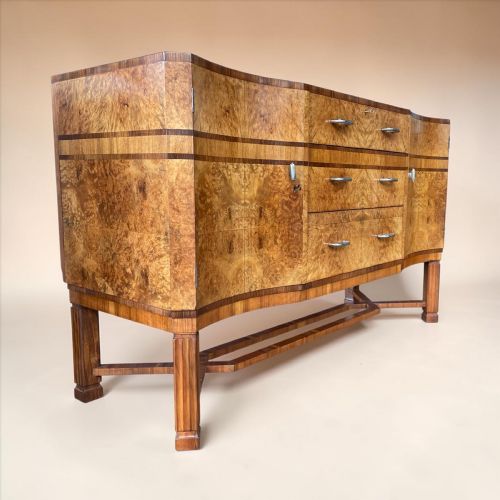
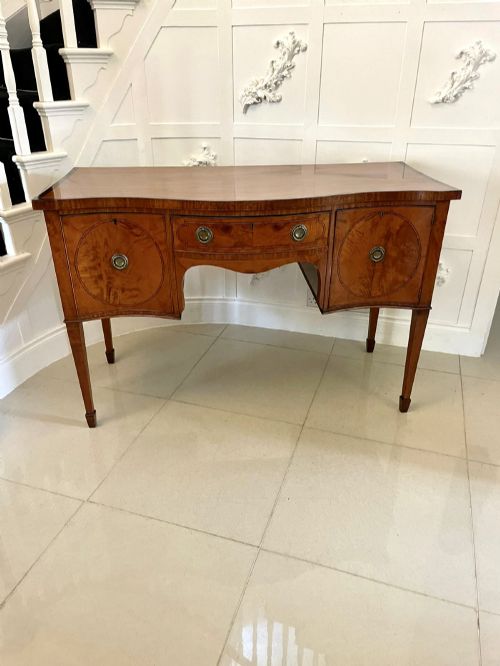
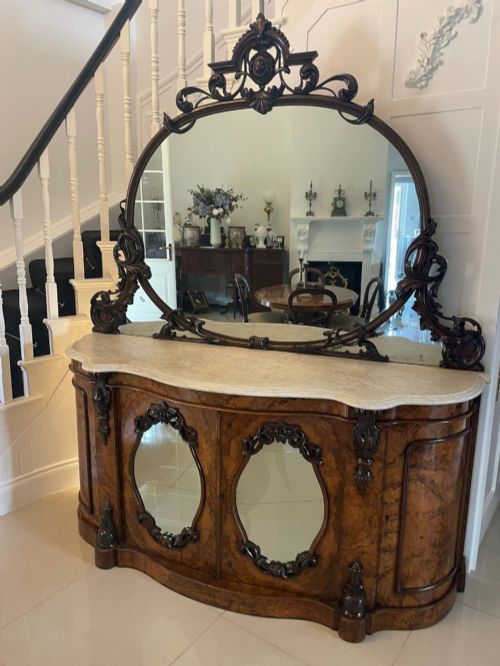
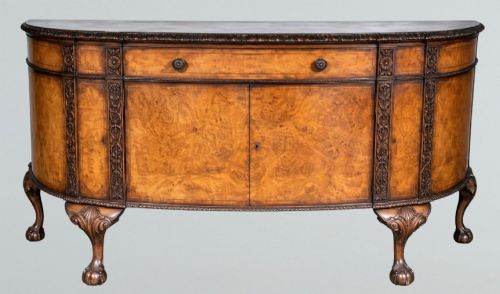
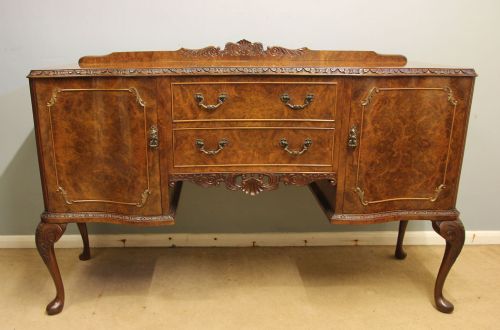
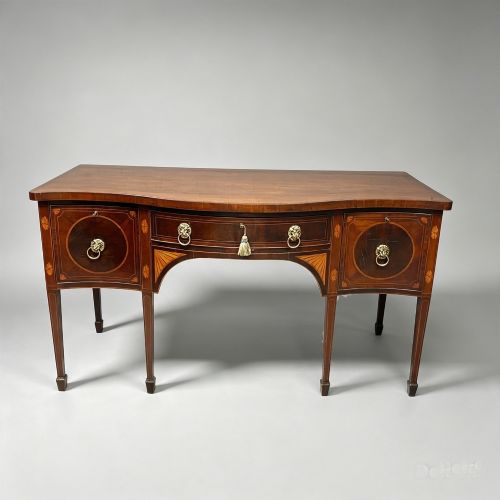
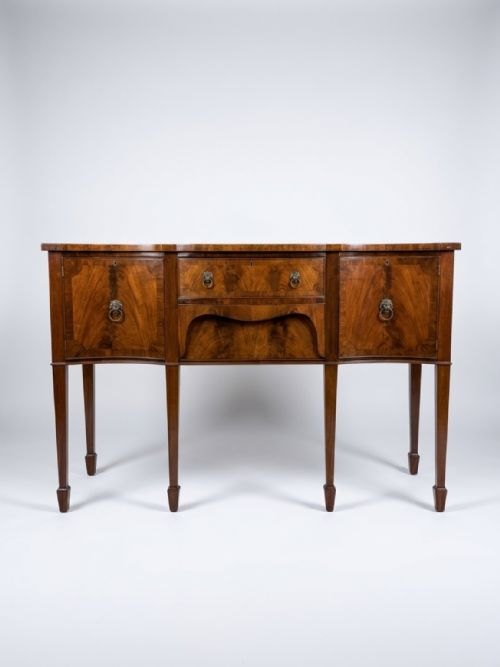
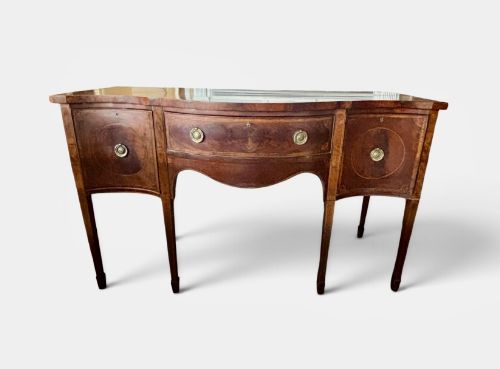
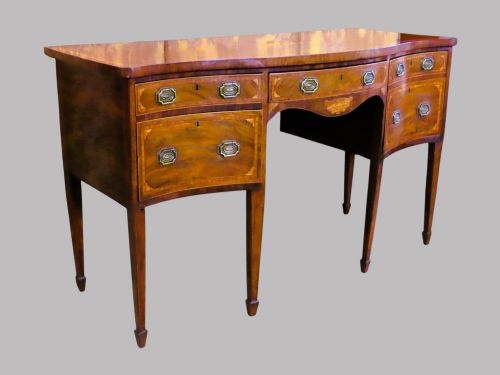
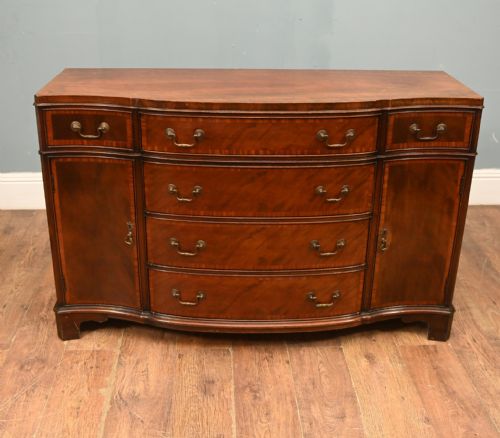
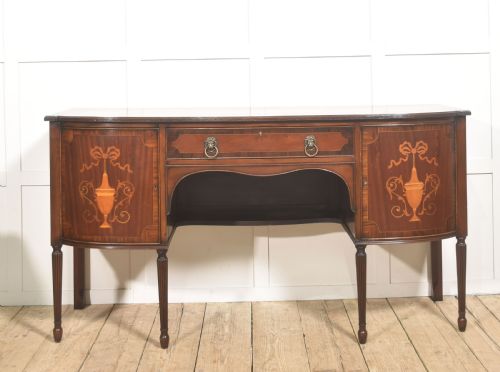
A serpentine dining sideboard is a substantial serving and storage piece defined by its undulating front, which curves inward at the centre and outward at the ends, or vice versa. When you search for a serpentine dining sideboard, you encounter formal dining room furniture built primarily during the Georgian and Victorian eras, alongside later Edwardian and Art Deco interpretations.
The pieces appearing on this page span several centuries of cabinet-making, with eighteenth-century and George III examples representing the traditional peak of the form. Alongside these grand Georgian pieces, you will find Victorian and Edwardian revivals, walnut and satinwood variations from the nineteenth century, and streamlined twentieth-century designs.
Materials and construction methods
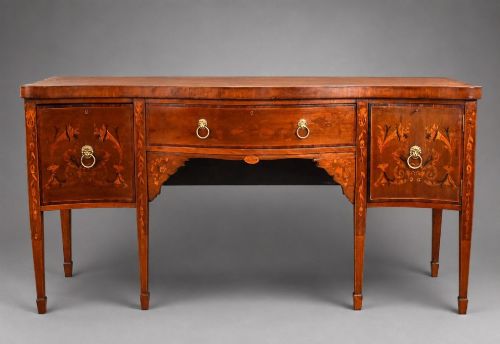
Cabinet-makers relied heavily on solid mahogany and flame mahogany veneers, often enhanced with boxwood inlay, satinwood stringing, and contrasting brass hardware. The characteristic curved front required exceptional skill in timber bending and framing to maintain structural integrity across the sweeping facade.
Workshops utilised dense secondary timbers to support the heavy primary veneers, while specialised joinery secured the distinctive undulating drawer fronts and side cabinets. Carved details and intricate banding visually define the finest examples from both the Georgian period and later revival eras.
Listings feature mahogany as the dominant primary timber, frequently accompanied by satinwood, burr walnut, and decorative boxwood inlay across multiple design periods.
What separates the finest examples
Quality rests in the precision of the serpentine curve and the balance of the timber figuring across the drawer fronts. Superior pieces display continuous grain matching across the curved surfaces and crisp, hand-cut inlay rather than printed or simplified ornamentation.
The depth of the colour in the mahogany and the crispness of any carved mouldings or brass handles separate standard workshop production from master cabinet-making. Original drawer linings, sound structural joinery, and untouched patination further elevate a piece above later adaptations.
Gillow·Epstein
The Serpentine Dining Sideboard Glossary
- Serpentine
- A furniture front shaped with a convex curve flanked by two concave curves, creating a wave-like profile. This complex geometry demands precise woodworking.
- Inlay
- A decorative technique where contrasting woods or metals are inserted into recessed cavities on the furniture surface. Boxwood and satinwood are typical examples.
- Credenza
- A sideboard or buffet cabinet, often featuring mirrored backs or glass doors in Victorian iterations. These pieces served a similar dining room function to traditional sideboards.
- Flame mahogany
- A veneer cut from timber where the grain resembles flickering flames. It provides high visual movement on prominent surfaces.
- Serving table
- A formal table designed for displaying and serving food during meals. Many share proportions and stylistic details with sideboards.
Serpentine Dining Sideboard: Frequently Asked Questions
How do I date a serpentine sideboard?
Dating relies on examining the construction of the drawers, the timber selection, and the stylistic vocabulary of the period. Georgian pieces typically feature hand-cut dovetails and solid secondary woods, whereas later Edwardian and Art Deco examples show mechanical precision and different veneer applications.
Hardware and secondary framing provide additional clues. Original brasses, casework proportions, and the presence of specific revival styles like Sheraton or Chippendale help place the piece within its historical era.
Where should I place a sideboard?
These serving pieces traditionally sit against the main dining room wall, positioned to allow easy access during meals. Their curved fronts make them focal points that break up the linear geometry of a room.
Ensure adequate clearance around the piece so that cupboard doors and drawers can open fully. They also function effectively in large hallways or drawing rooms as display surfaces.
What is the difference between a sideboard and a credenza?
A sideboard focuses primarily on dining storage with drawers and cupboards designed for cutlery, linen, and serving dishes. A credenza often includes mirrored backs, glass-fronted display compartments, or more decorative display elements.
While both served functional roles in hosting, Victorian credenzas leaned towards drawing room display, whereas Georgian sideboards remained firmly rooted in the dining room.