
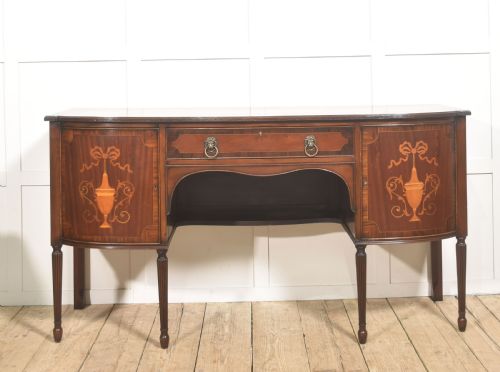


Inlaid Serpentine Sideboard
When you want an inlaid serpentine sideboard, you are looking for a curving piece of dining furniture built from timber and decorated with fine marquetry.
Inlaid Serpentine Sideboard
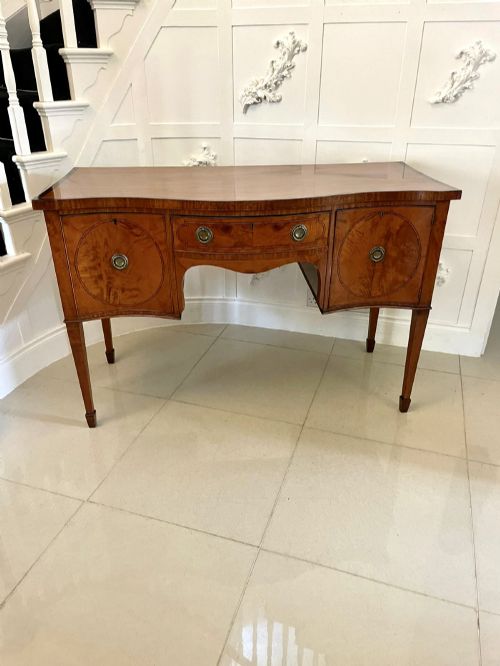
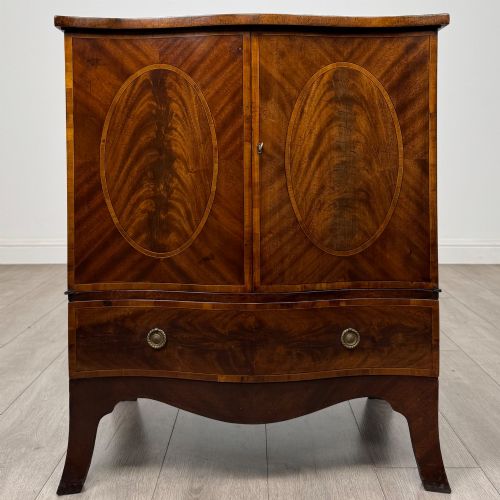
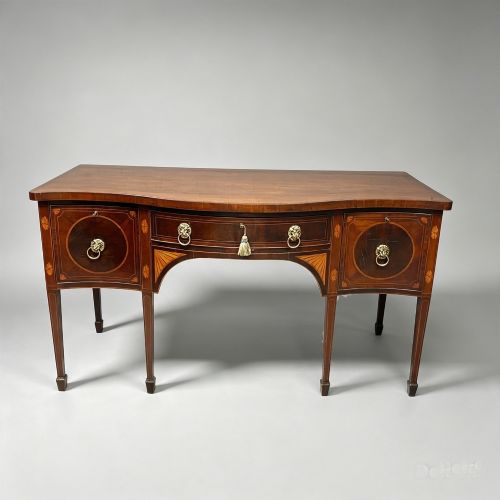
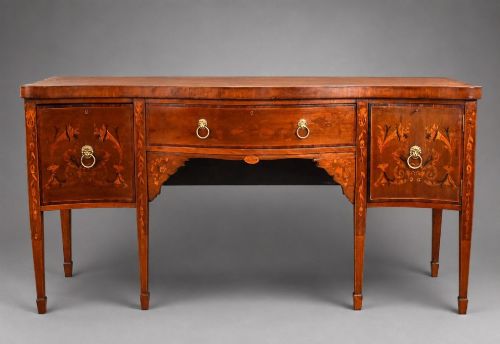
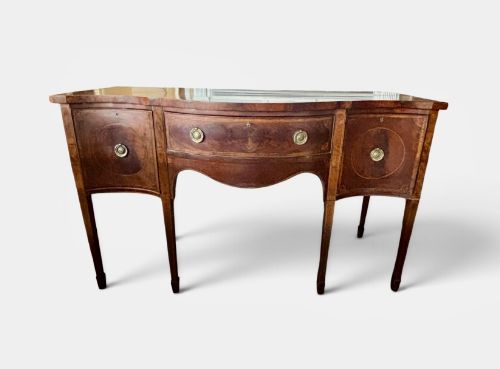
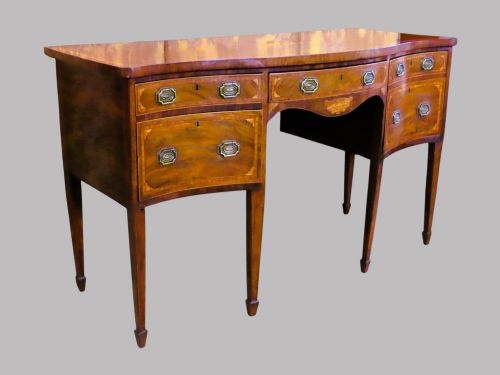
An inlaid serpentine sideboard is a substantial dining room serving piece defined by its undulating, curving front and contrasting wood ornamentation. These items originate predominantly from the Georgian and Victorian eras, alongside later Edwardian and revival periods.
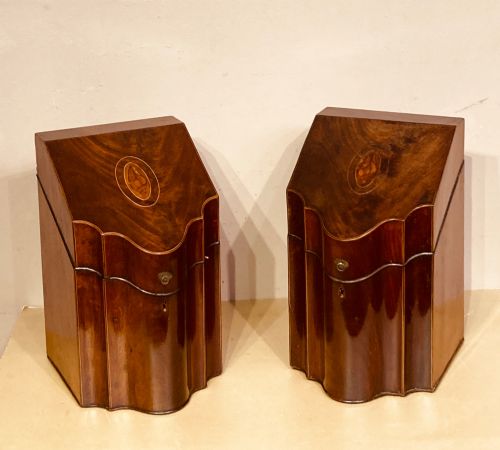
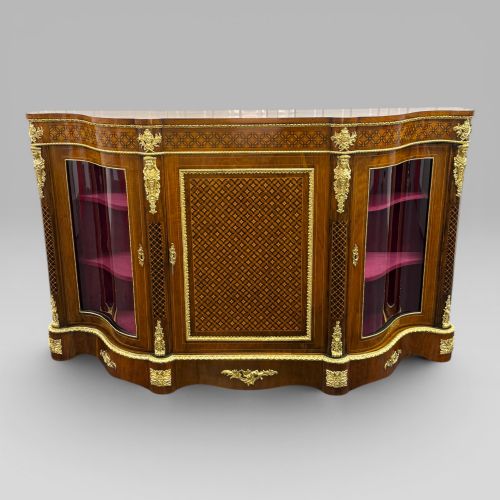
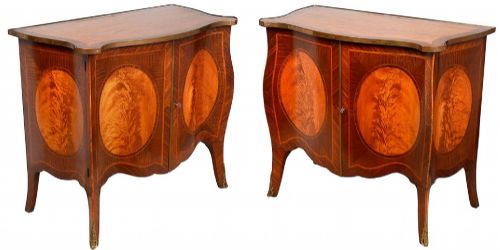
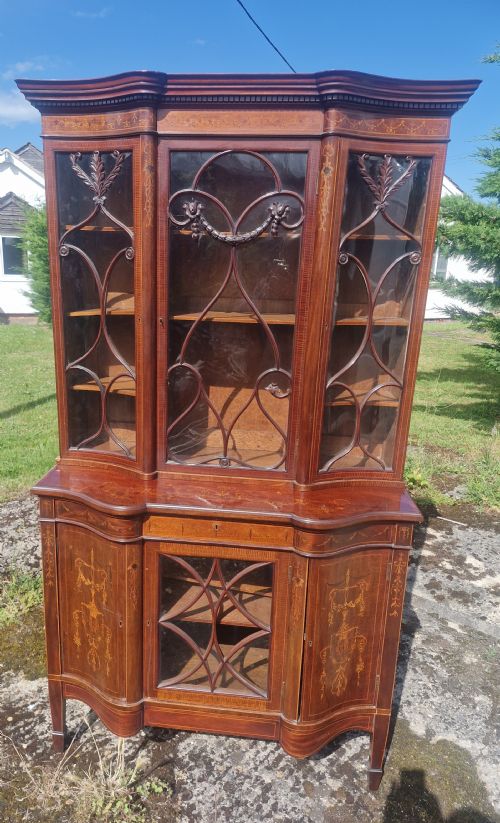
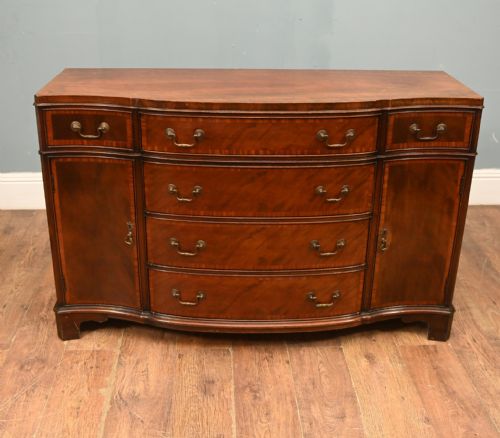
The version you are most likely to meet on this page is a mahogany carcase shaped with a convex centre flanked by concave ends, decorated with satinwood, boxwood, and floral wood inlay. Alongside standard sideboards, related forms include credenzas, serving tables, and knife boxes sharing the same curving silhouette.
How they were made
Cabinet makers built these pieces using solid mahogany and walnut foundations, often applying figured veneers to the curved front surfaces. Timber preparation required precise sawing to match the undulating serpentine profile without splitting the grain along the bends.
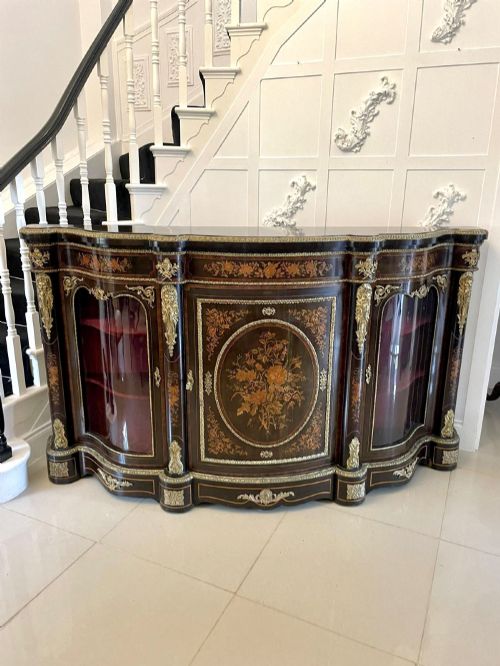
Decoration relied on contrasting lighter woods such as satinwood and boxwood cut into delicate patterns for wood inlay and floral marquetry. Finer examples integrated cast ormolu mounts, brass details, and glass panels into the architectural design.
Some serpentine sideboards hide specialised compartments designed specifically to hold cooling ice for eighteenth century wine bottles.
What varies in quality
The standard of timber selection and veneer matching defines the upper tier of these pieces. Higher grade examples display continuous, symmetrical grain patterns that follow the difficult serpentine curves smoothly.
The intricacy and execution of the wood inlay distinguish workshop output. Finer marquetry utilises tightly fitted contrasting timbers without excessive filler, complemented by crisp edge moulding and substantial brass hardware.
Gillows·Maison Gagneau
The Inlaid Serpentine Sideboard Glossary
- Serpentine
- A curved furniture front characterised by a convex centre section flanked by two concave curves. This shape requires advanced cabinet making skills to execute properly.
- Marquetry
- Decorative veneer work arranged in pictorial or geometric patterns using various coloured woods. It differs from simple inlay by covering the entire surface in assembled pieces.
- Ormolu
- Gilded bronze mounts applied as decorative ornaments to furniture. This technique adds metallic highlights to walnut and mahogany surfaces.
- Satinwood
- A durable, yellowish timber utilised extensively for contrasting stringing and detail panels. Its lustrous grain reflects light differently depending on the viewing angle.
- Credenza
- A low cabinet form frequently sharing serpentine shapes and marquetry decoration with dining room sideboards. These items often feature glass doors for display purposes.
Inlaid Serpentine Sideboard: Frequently Asked Questions
How do I care for my sideboard surface?
Apply traditional beeswax sparingly and buff gently with a soft cloth to maintain the timber lustre. Avoid placing wooden furniture near direct heat sources or strong sunlight to prevent veneer lifting.
Keep glass and brass elements clean using dry microfibre cloths. Ensure spills are wiped immediately to protect the polished mahogany and marquetry.
Where should I place a serpentine sideboard?
Position the piece against a principal dining room wall where the curved front profile can be fully appreciated. Ensure sufficient clearance around the undulating doors and drawers for comfortable access.
Because of the generous proportions typical of these serving tables, hallways and spacious landings also accommodate them well. Keep them out of heavy traffic lanes to protect the protruding corners.
How do I distinguish Georgian from later revival pieces?
Examine the timber framing and secondary woods inside the drawers for clues regarding age. Georgian pieces generally display hand-cut joinery and native secondary timbers consistent with eighteenth century workshops.
Revival items from the Victorian and Edwardian periods often show mechanised preparation and different interior construction methods. Compare the style of the marquetry and hardware against documented period examples.
What is the difference between a sideboard and a credenza?
Sideboards were primarily designed for dining rooms to serve food and store cutlery or serving dishes. They frequently stand taller and feature cupboards flanked by drawers.
Credenzas originated as low cabinets often incorporating glass display sections and elaborate ormolu mounts. Victorian makers frequently applied the term to decorative serpentine pieces intended for formal reception rooms.