


Serpentine Curio Cabinet
A serpentine curio cabinet brings together undulating curves and glazed display space, offering a sophisticated home for small collections.
Serpentine Curio Cabinet
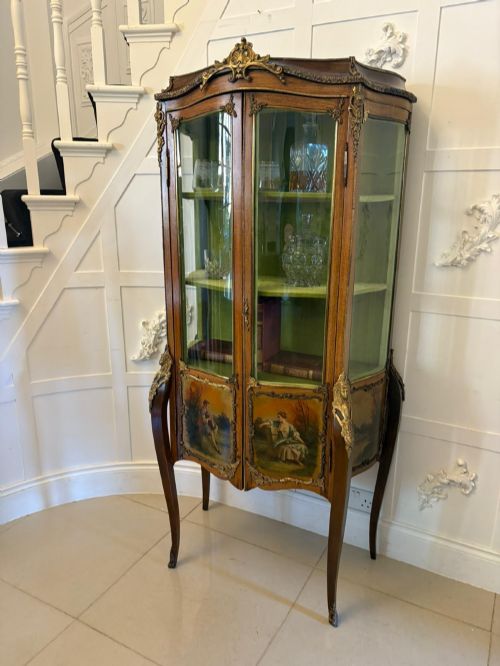
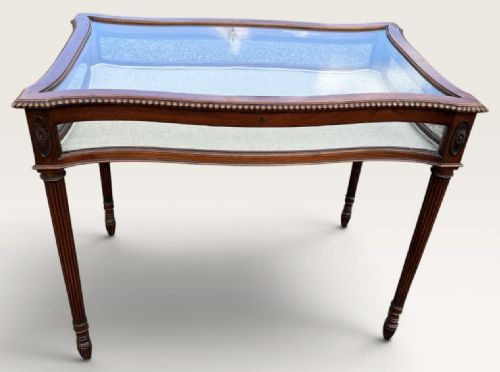
A serpentine curio cabinet presents a curved front profile that flows outward and inward, creating gentle movement across the piece. These items function primarily as display cabinets, vitrines, and bijouterie tables designed to showcase valuables under glass.
The pieces appearing here span the Victorian period into the early twentieth century, drawing heavily on French Rococo Revival and Louis styles. Cabinets emerge in various proportions, ranging from large freestanding furniture to smaller display pieces and corner formats.
Makers such as Thomas Justice and Sons contribute to the range alongside uncredited French and English workshops. Forms encompass bombe silhouettes and marquetry-inlaid structures tailored for domestic display.
Materials and Construction
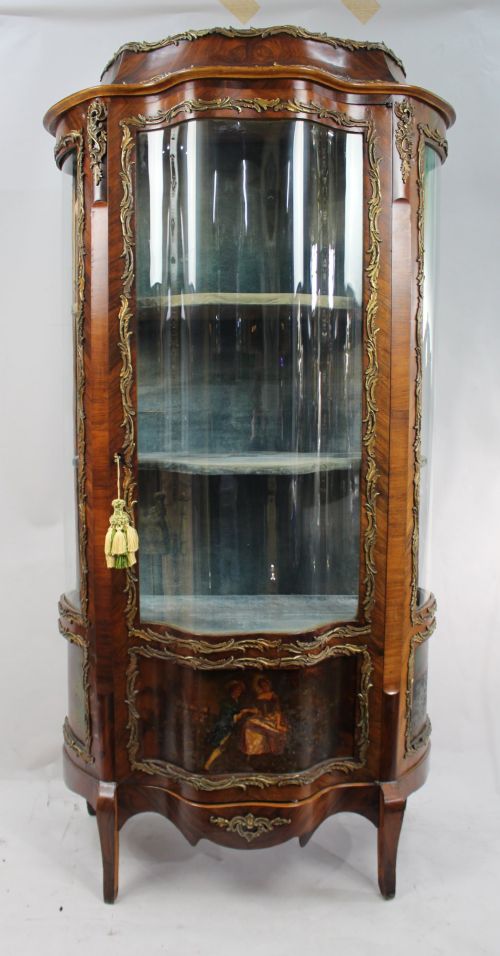
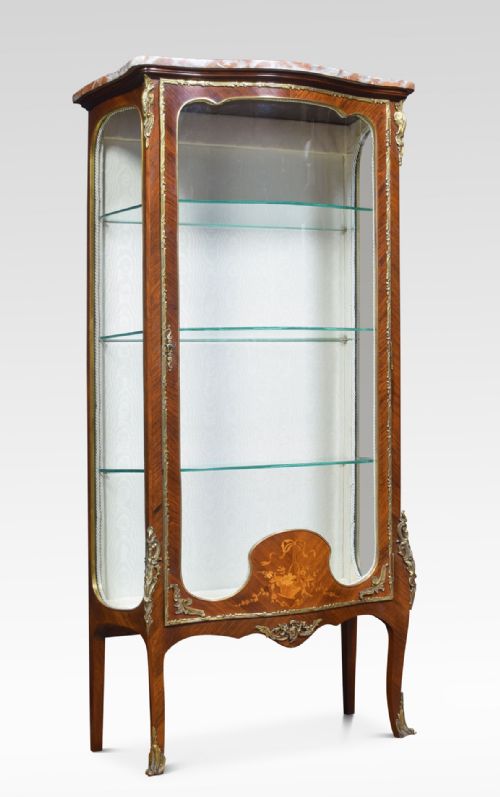
Cabinet makers utilised fine timbers including kingwood, mahogany, walnut, satinwood, and rosewood, often applying intricate fruitwood inlay and parquetry. Vernis Martin painted panels frequently adorn the lower sections of these vitrines.
Ormolu and gilt bronze mounts accent the framework, highlighting the serpentine contours and framing the glass panels. Fabric linings such as velvet provide a contrasting background within the display interior.
Listings feature numerous French-influenced designs, including Louis XV and Louis XVI style vitrines alongside Victorian mahogany and kingwood pieces.
Judging Quality
Quality rests in the precision of the serpentine curve and the crispness of the bronze or ormolu mounts fitted to the timber. Finer examples display meticulous marquetry and well-executed Vernis Martin painted scenes rather than plain panels.
Construction standards show in the integration of the glass doors, the weight of the bronze mounts, and the choice of primary cabinet woods like kingwood over standard mahogany.
Thomas Justice And Sons·Edwards And Roberts
The Serpentine Curio Cabinet Glossary
- Serpentine
- A furniture front characterised by a double-curved line that convexly swells in the centre and concavely curves at the sides. This shape requires advanced woodworking skill to achieve.
- Vitrine
- A glass-fronted cabinet designed for displaying fine objects and porcelain. These pieces often feature glass sides to maximise light exposure.
- Vernis Martin
- A simulated Japanese lacquer technique developed in France, utilised to decorate panels on fine cabinets. The finish involves multiple translucent varnish layers.
- Ormolu
- Gilded bronze mounts applied to furniture for decorative effect. High-grade pieces feature chased detailing across the metal surface.
- Parquetry
- Geometric wood-mosaic work used for flooring and cabinet surfaces. Artisans arrange contrasting timber veneers to form repeating patterns.
Serpentine Curio Cabinet: Frequently Asked Questions
How were these cabinets used?
Owners used these cabinets to display precious items, ceramics, jewellery, and curiosities while protecting them from dust. The glazed panels and glass shelves allowed light to reach the objects from multiple angles.
Many pieces included velvet-lined interiors to create a contrasting backdrop for the displayed collection.
Where were they made?
The majority of these cabinets originate from French and English workshops, heavily influenced by continental styles such as Louis XV and Louis XVI. Cabinet makers in London and Paris produced them for affluent domestic interiors.
French pieces frequently feature Vernis Martin panels and extensive ormolu mounts, while English versions often showcase mahogany or satinwood.
How do you date a vitrine?
Dating relies on examining the construction methods, timber choices, and stylistic revival influences present in the piece. Cabinets from the Victorian era and the late nineteenth century often combine French revival motifs with traditional cabinet-making techniques.
Hardware, lock mechanisms, and the composition of the bronze mounts also provide clear indicators of the period of manufacture.