



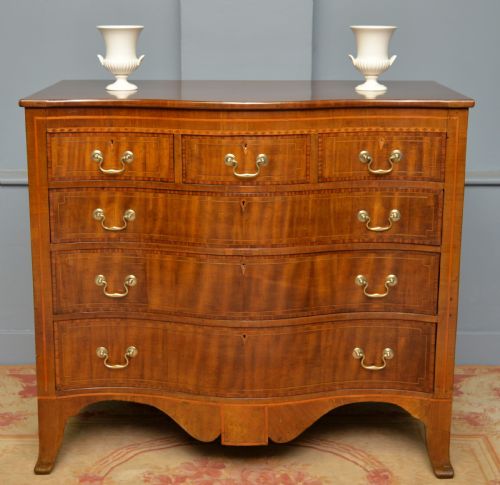
Serpentine Bedroom Furniture
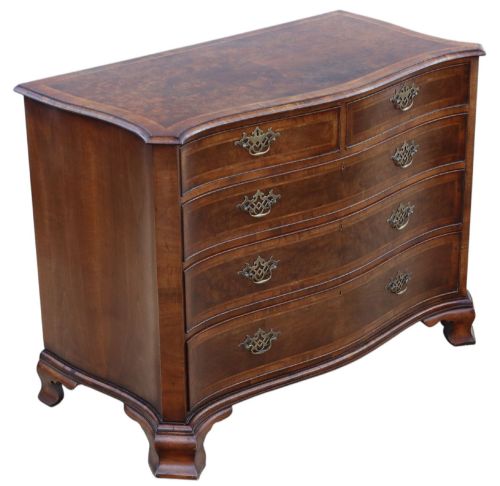
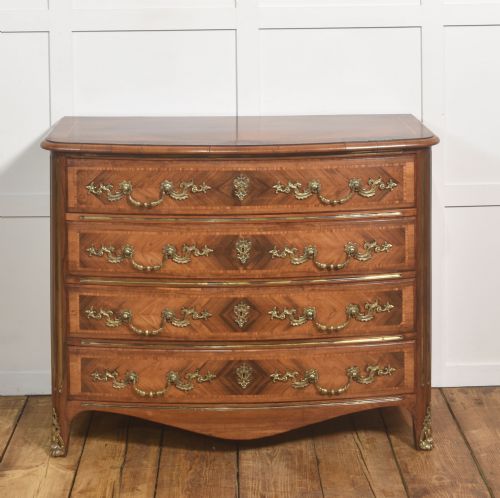
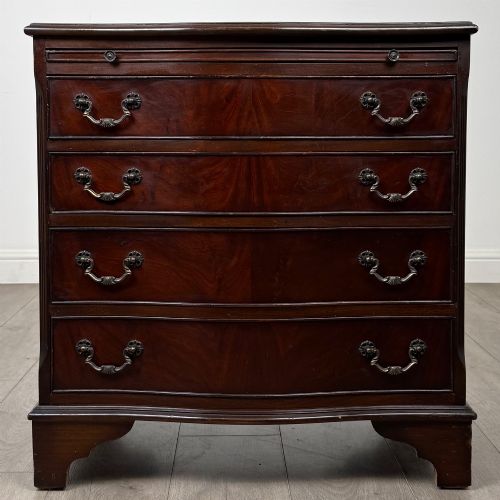
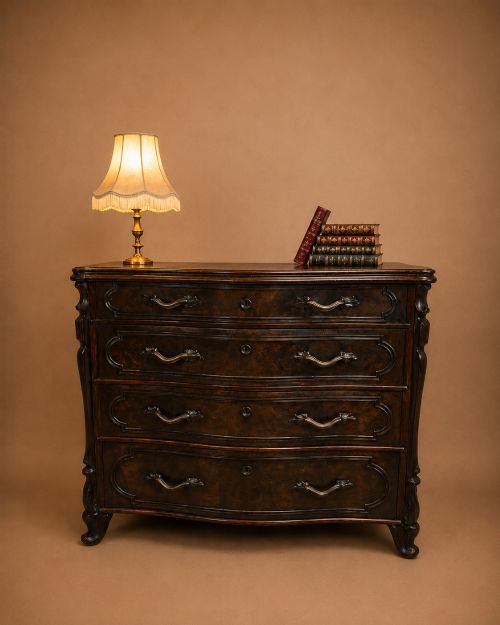
These serpentine bedroom furniture pieces combine undulating fronts with figured timbers, offering practical storage through elegant curved lines.
Serpentine Bedroom Furniture
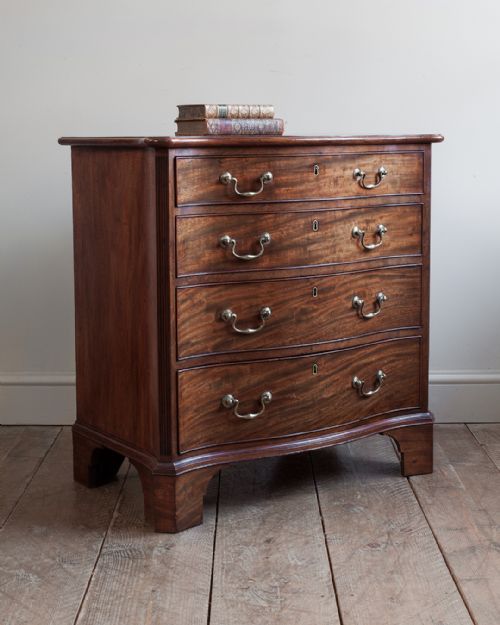
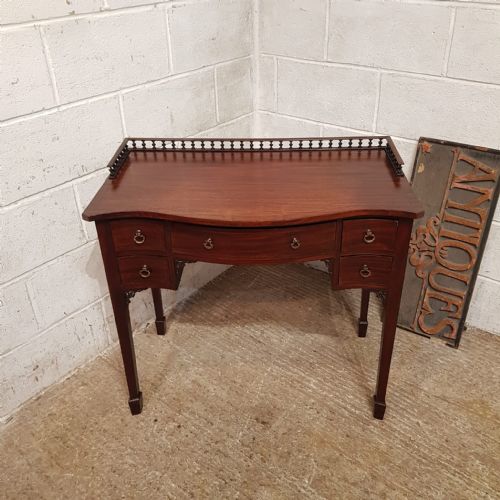
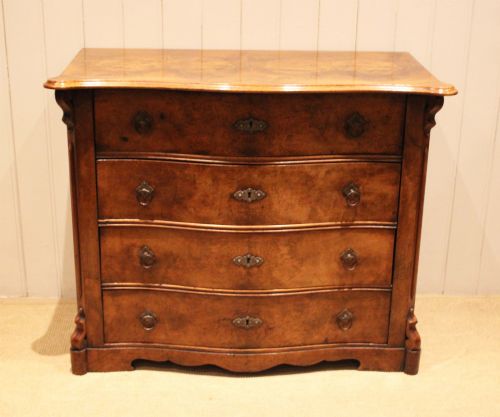
Serpentine bedroom furniture encompasses chests of drawers, commodes, writing tables, and dressing pieces shaped with distinctive curving drawer fronts. Pieces range from eighteenth-century Georgian originals to twentieth-century revivals in mahogany, burr walnut, and satinwood.
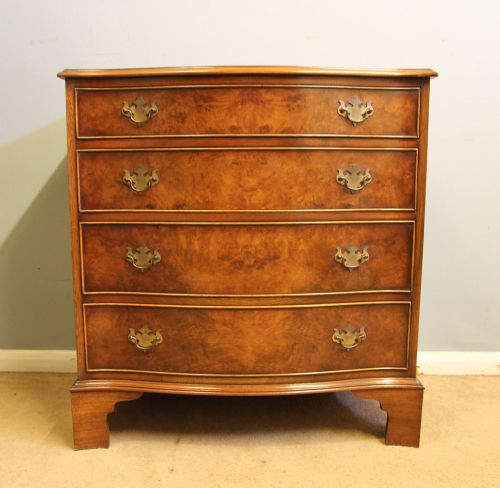
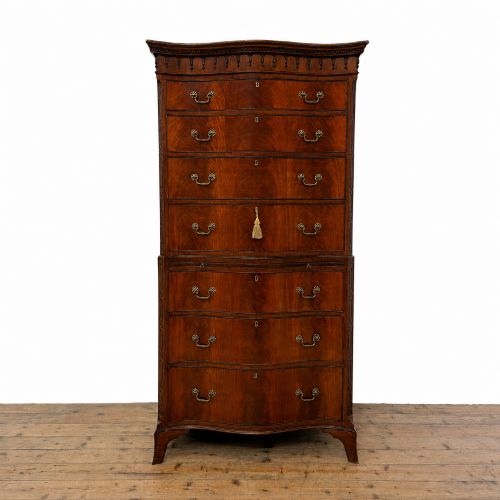
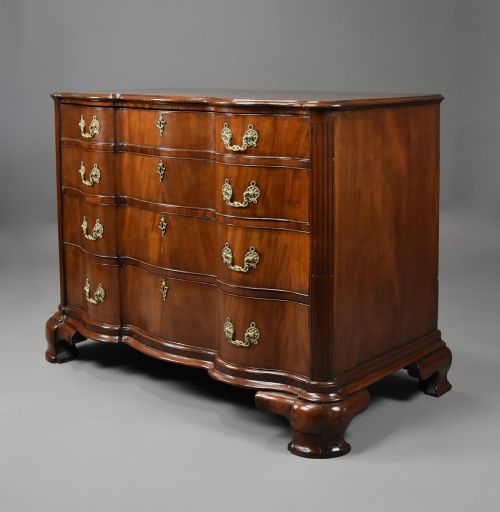
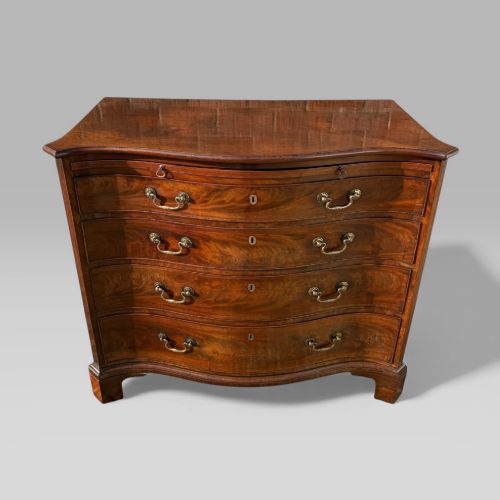
The chest of drawers remains the most common form encountered in this selection, often standing on bracket feet or slender legs. Examples span provincial French workshops to English cabinet makers, showing both understated proportions and decorative marquetry.
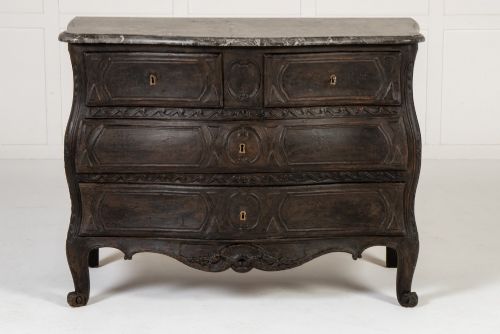
Continental commodes and English writing tables introduce marble tops, ormolu mounts, and slide shelves into the bedroom. These variations demonstrate how cabinet makers adapted the undulating silhouette across different European traditions.
Materials and Construction
Makers shaped solid timber and curved multi-layered drawer fronts using figured veneers such as mahogany, burr walnut, and satinwood. Grain patterns are matched symmetrically across the undulating drawer faces to enhance the visual movement of the curve.
Advanced joinery techniques allowed craftsmen to build rigid carcases that support the complex convex and concave curves of a serpentine front without warping. Brass handles, ormolu mounts, and occasional marble tops complete the construction.
Listings feature mahogany, burr walnut, and satinwood across periods spanning the eighteenth century through the nineteen-thirties.
Assessing Quality
The standard of a serpentine piece depends largely on the precision of the curved drawer fronts and the quality of the timber veneers. Finer examples display continuous grain alignment and tight dovetail joints that maintain their structural integrity over centuries.
Decorative elements such as hand-cut marquetry inlay, original brass hardware, and well-executed moulding distinguish higher workshops from later revival pieces. The crispness of the carving along the bracket feet and edges indicates the maker's level of skill.
The Serpentine Bedroom Furniture Glossary
- Serpentine front
- A furniture front characterised by a central convex curve flanked by two concave curves. This contour requires precise carpentry to shape both the drawer frames and the timber fascia.
- Commode
- A low chest of drawers or cabinet, frequently of French origin. These pieces often incorporate marble tops and elaborate mounts.
- Marquetry
- Decorative veneer patterns formed by fitting together thin pieces of wood, shell, or ivory. Craftsmen used this technique to create floral or geometric designs across drawer fronts.
- Crossbanding
- A strip of veneer applied around the border of a drawer front or tabletop with the grain running perpendicular to the main panel. This frames the primary timber and adds visual contrast.
- Ormolu
- Gilt bronze mounts applied to furniture for decoration. These metal details appear frequently on French nineteenth-century pieces.
Serpentine Bedroom Furniture: Frequently Asked Questions
How do I clean mahogany serpentine furniture?
Dust surfaces regularly with a soft, dry cloth to prevent grit accumulation on the polished wood. Apply a traditional beeswax sparingly to nourish the grain and maintain the natural lustre.
Avoid placing these items near direct heat sources or strong sunlight, which can dry out the timber and crack the delicate veneers on curved drawer fronts.
Are these drawers suitable for daily use?
Most antique chests of drawers function well for storing clothing and linens, provided the drawers slide smoothly along their runners. Regular use helps keep the timber conditioned through natural movement.
Take care not to overload deeper drawers, as historical joints benefit from balanced weight distribution across the baseboards.
How do I identify a Georgian original?
Examine the interior drawer construction for hand-cut dovetails and oak or deal secondary timbers. Eighteenth-century pieces generally show patination consistent with age on the internal runners and backboards.
Stylistic cues include bracket feet, cockbeading around drawer edges, and figured mahogany without modern synthetic finishes.
What is the difference between a commode and a chest?
A commode typically refers to lower, wider drawer units influenced by continental European styles, often featuring marble tops or elaborate marquetry. English chests tend to be taller and more utilitarian in their proportions.
Both serve similar storage functions in a bedroom, but commodes lean towards decorative reception or bedroom placement.