


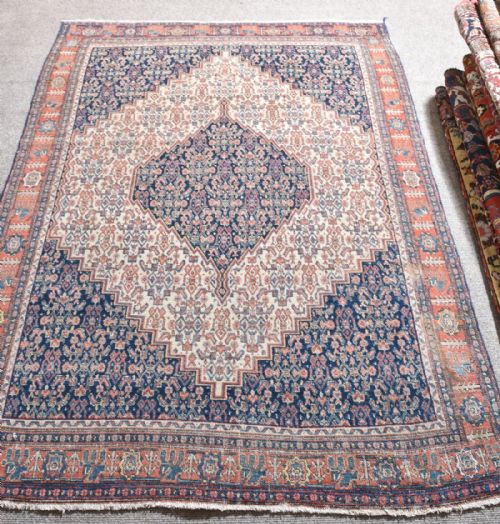

Senneh Woven Carpet
A senneh woven carpet brings fine Persian craftsmanship and intricate patterns into your home, offering lasting textile art for your floors.
Senneh Woven Carpet
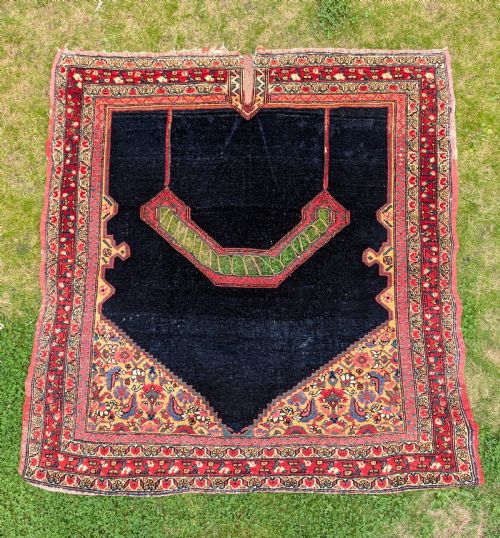
A senneh woven carpet represents traditional Persian artistry, originating from West Persia and encompassing various formats from area rugs to saddle covers and kilim runners.
Buyers encountering this selection will find pieces spanning from the mid-nineteenth century through to the early twentieth century, reflecting classic Persian and Qajar styles.
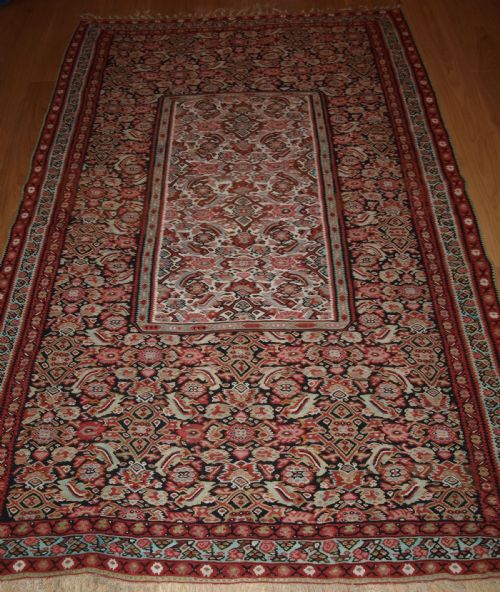
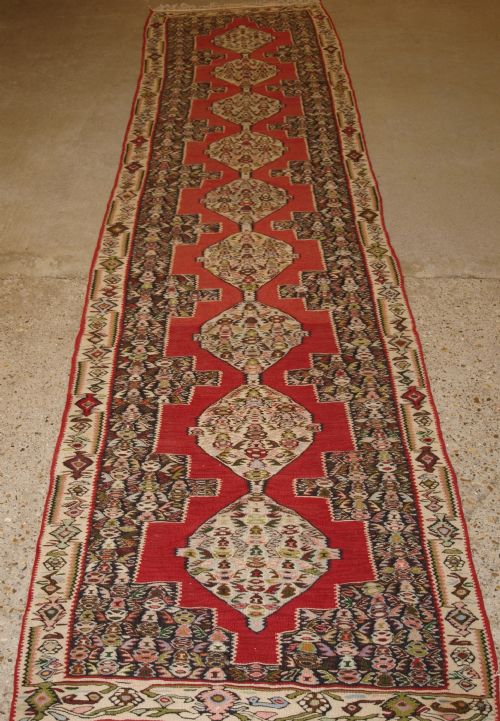
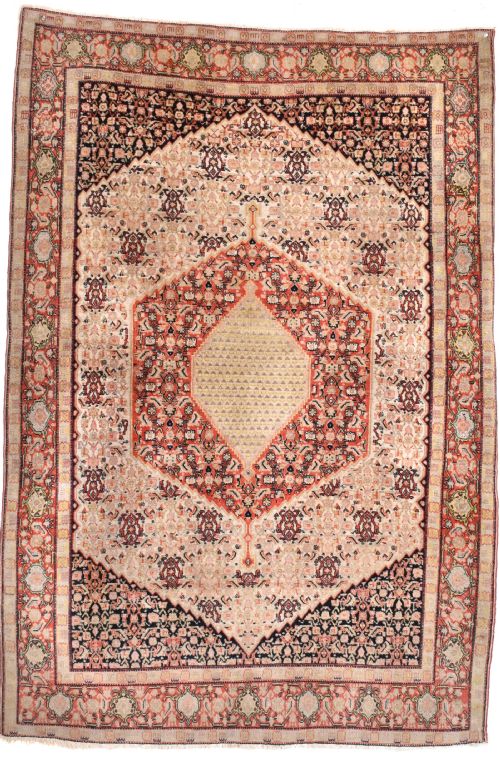
The assortment includes diverse forms such as rectangular rugs, specialised saddle covers, and flatwoven kilims featuring traditional linked medallion designs and ivory grounds.
Materials and Construction
These textiles are constructed primarily using wool and cotton, with occasional examples incorporating silk for finer detail and texture.
The weaving techniques involve traditional Persian methods, producing both pile rugs and flatwoven kilims that demonstrate enduring structural integrity across the centuries.
The selection includes pieces created from wool, cotton, and silk across periods ranging from the mid-nineteenth century to the 1920s.
Assessing Quality and Distinction
Quality in these carpets is distinguished by the precision of the weave and the complexity of the design, such as scarce patterns and linked medallions.
The choice of materials also elevates certain pieces, particularly those utilising silk or finely spun wool on cotton foundations.
The Senneh Woven Carpet Glossary
- Kilim
- A flatwoven carpet or rug produced in countries of the former Persian Empire. These pieces lack a pile, offering a flat and durable surface.
- Kelleh
- A long, rectangular format of Persian carpet traditionally suited for specific room proportions. This format provides a distinct runner-like appearance.
- Saddle cover
- A specialised textile designed for equestrian use, adapted into a collectible small rug format. Such pieces highlight utilitarian Persian craftsmanship.
- Qajar
- Relating to the Iranian royal dynasty that ruled from the late eighteenth to the early twentieth century. This period defines a distinct aesthetic in Persian arts.
Senneh Woven Carpet: Frequently Asked Questions
How do I clean a senneh rug?
Gentle surface cleaning and professional textile care preserve the natural wool and cotton fibres without damaging the traditional weave.
Avoid harsh chemical treatments and excessive water exposure to maintain the integrity of older Persian dyes.
Where were senneh carpets made?
These textiles originate from West Persia, specifically associated with the traditional weaving traditions of the region.
Local artisans utilised regional materials like wool and cotton to produce distinctive regional rugs and kilims.
Can I use a kilim runner on stairs?
Flatwoven kilim runners provide a durable surface suitable for high-traffic areas when secured with a proper underlay.
Their flat structure allows them to sit neatly on steps while displaying traditional medallion designs.
What is the difference between a rug and a kilim?
Rugs feature a knotted pile that creates a plush surface, whereas kilims are woven flat without pile.
Both methods reflect traditional Persian textile techniques spanning the nineteenth and twentieth centuries.